
 By Nana Wu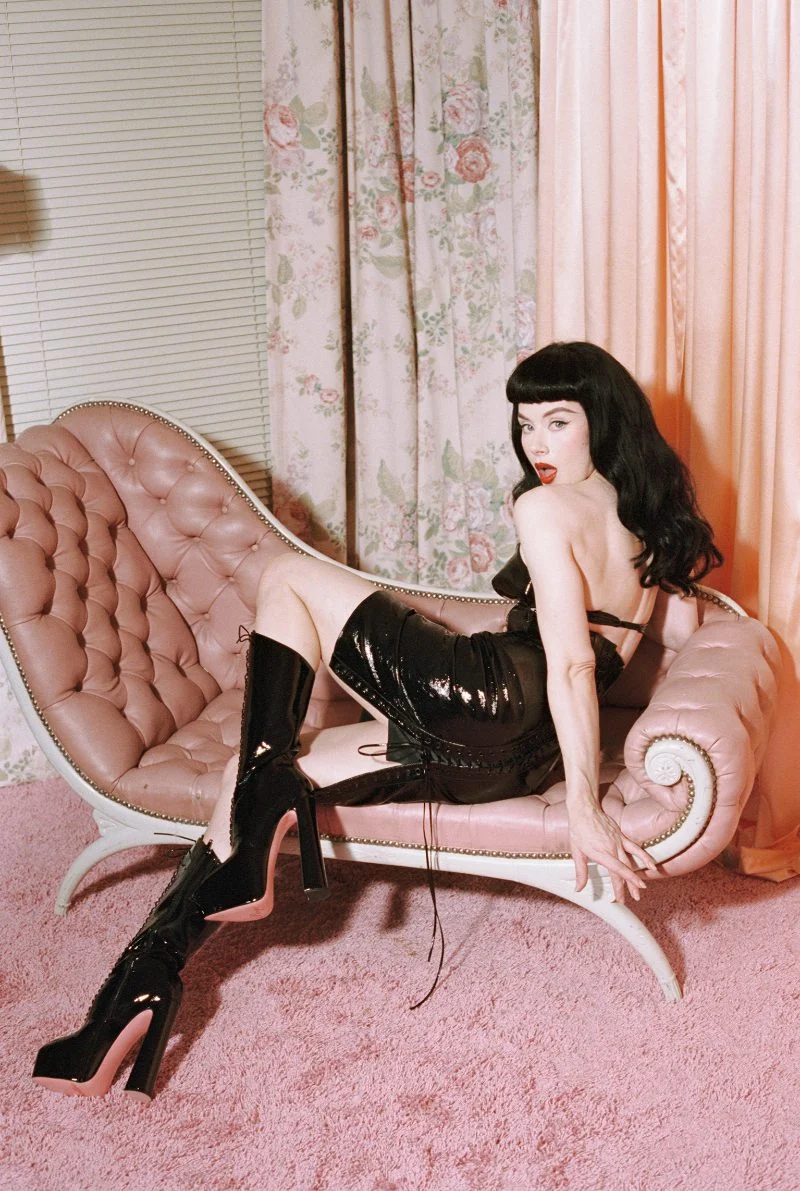
The Los Angeles-based footwear powerhouse Jeffrey Campbell has officially announced a landmark partnership with the estate of Bettie Page, unveiling a limited-edition capsule collection that bridges the gap between mid-century pin-up aesthetics and contemporary avant-garde fashion. This collaboration, scheduled for a global digital release on March 12, represents a rare venture into archival-driven design for Jeffrey Campbell, a brand typically known for its independent and often polarizing silhouettes. By securing exclusive access to the private archives of the woman widely regarded as the "Queen of Pin-ups," the design team has produced a range of footwear and apparel that serves as both a historical tribute and a modern fashion statement.
The collection is defined by its meticulous attention to historical accuracy, utilizing Page’s personal measurements and vintage garments as the blueprint for every piece. Unlike standard licensed merchandise, this capsule delves into the technical nuances of Page’s self-made image, celebrating her role as a pioneer of creative direction and independent styling. During the height of her career in the 1950s, Page was notable for designing her own lingerie and swimsuits, often commissioning custom footwear to suit her specific visual requirements. This spirit of autonomy is the central theme of the collaboration, which seeks to humanize the mythic figure of Bettie Page through the tactile medium of fashion.
A Fusion of Archival History and Modern Craftsmanship
The development of the Bettie Page x Jeffrey Campbell collection began when Mark Roesler, Page’s long-time agent and the chairman of CMG Worldwide, approached the brand. Roesler, who has managed the estates of some of the 20th century’s most iconic figures, recognized a shared DNA between Page’s rebellious, self-determined persona and Jeffrey Campbell’s "outsider" status in the fashion industry. According to Roesler, Page took immense pride in the technical aspects of her modeling, including the construction of the garments she wore. He noted that the collection reflects the same level of detail Page would have demanded herself, suggesting that the late icon would have found great affinity with the final products.
For Brigitte Campbell, the creative director of Jeffrey Campbell, the project offered a "surreal" opportunity to interact with fashion history. The design process involved a deep dive into Page’s personal effects, including her original "fetish heels"—a term used to describe the high-arched, dramatic footwear that became synonymous with her provocative 1950s photography. By examining these physical artifacts, the design team was able to identify subtle details, such as specific stitching patterns and heel curvatures, that were previously indistinguishable in the grainy black-and-white photographs of the era.
Technical Specifications and Design Elements
The footwear component of the capsule includes a variety of pumps, platforms, and "sky-high" heels. A signature feature of the collection is the inclusion of pink soles, a design choice intended to symbolize Page’s "soft feminine power" and provide a visual contrast to the often-dramatic height of the shoes. The silhouettes are engineered to mirror the extreme proportions found in Page’s most famous pin-up poses, requiring a high level of structural integrity to maintain stability at such heights.
Expanding beyond footwear, the collection introduces handmade apparel designed to evoke the specific "spirit" of the 1950s underground fashion scene. Key pieces include:
- The Lace-Up Leather Dress: Directly inspired by the custom-made fetish wear Page wore during her collaborations with photographer Irving Klaw.
- The Bullet Bra: A faithful recreation of the conical silhouette that defined the mid-century era. This piece remains a cornerstone of the Bettie Page image, representing the structured, architectural approach to 1950s undergarments.
- Hand-Numbered Exclusivity: In a move that emphasizes the artisanal nature of the project, each item in the collection is hand-numbered. Production runs are strictly limited, with only 30 to 60 pieces produced per style. This scarcity model positions the collection as a series of "wearable artifacts" rather than mass-market consumer goods.
The Legacy of Bettie Page: Context and Chronology
To understand the significance of this collaboration, one must look at the timeline of Bettie Page’s influence on the fashion world. Born in 1923, Page rose to prominence in the 1950s, a decade characterized by rigid social norms. Despite the conservative climate, Page became a cultural phenomenon, largely due to her work in "pulp" magazines and short films.
Unlike many models of her time, Page was not merely a subject; she was a creator. She famously cut her own bangs—creating the "Bettie Bangs" look that remains a staple of alternative fashion today—and sewed many of her own costumes. Her career was brief but impactful, ending abruptly in the late 1950s when she retreated from public life. However, her image underwent a massive resurgence in the 1980s and 90s, influencing designers like Jean Paul Gaultier and Vivienne Westwood.
The Jeffrey Campbell collaboration marks a new chapter in this chronology. By utilizing her actual signature as the collection’s logo, the brand reinforces the idea of personal agency. As a predominantly women-led company with a staff of fewer than 20 people, Jeffrey Campbell’s leadership has explicitly stated that the freedoms enjoyed by modern female designers and entrepreneurs are built on the foundations laid by women like Page, who challenged the status quo of their time.
Market Analysis and Strategic Implications
The decision to limit production to 30–60 units per style is a strategic move that aligns with current trends in the "ultra-niche" luxury market. In an era dominated by fast fashion and mass production, high-end consumers are increasingly seeking out items with a story and a sense of rarity. By focusing on a small, dedicated audience—or as Brigitte Campbell put it, being "loved by few than liked by many"—the brand maintains its cult-like status while ensuring the longevity of the collection’s value.
Furthermore, this collaboration taps into the broader "vintage revival" movement. Market data indicates a growing demand for authentic mid-century silhouettes among Gen Z and Millennial consumers, driven by a desire for "slow fashion" and garments with historical weight. The Bettie Page estate, by partnering with a brand known for its edgy, Los Angeles-centric identity, effectively bridges the gap between the "Old Hollywood" estate management model and the modern "drop" culture of the fashion industry.
Official Responses and Industry Impact
The announcement has garnered significant attention from both fashion historians and footwear enthusiasts. Industry analysts suggest that this collaboration could set a new standard for how celebrity estates interact with contemporary brands. Rather than simply slapping a name on a product, the Jeffrey Campbell approach involves a deep technical integration of the subject’s life and work.
"She took great pride in designing everything; it was part of the modeling and really important to her," Mark Roesler stated in a press release regarding the collection. This sentiment is echoed by the design team, who viewed the project as a responsibility to uphold the integrity of a woman who was often misunderstood during her lifetime. The focus on Page as a "real person" rather than just a "myth" suggests a shift in how the industry views the icons of the past—moving away from caricature and toward a more nuanced appreciation of their professional skills.
Conclusion and Launch Information
The Bettie Page x Jeffrey Campbell capsule collection is set to launch exclusively on the brand’s official website, jeffreycampbellshoes.com, on March 12. Given the extremely limited nature of the production runs, industry experts anticipate a rapid sell-out. The collection serves as a testament to the enduring power of Page’s aesthetic and the ability of modern designers to find fresh inspiration in the archives of the past.
As the fashion industry continues to navigate the balance between commercial viability and creative expression, the Jeffrey Campbell and Bettie Page partnership stands as a compelling case study. It proves that when a brand’s philosophy aligns with an icon’s legacy, the result is more than just a product—it is a tribute to the enduring spirit of independence and the transformative power of self-styled identity. For the "few" who manage to secure a piece of this hand-numbered collection, they will own not just a pair of shoes or a dress, but a tangible link to the woman who defined the very essence of the American pin-up.