
 By admin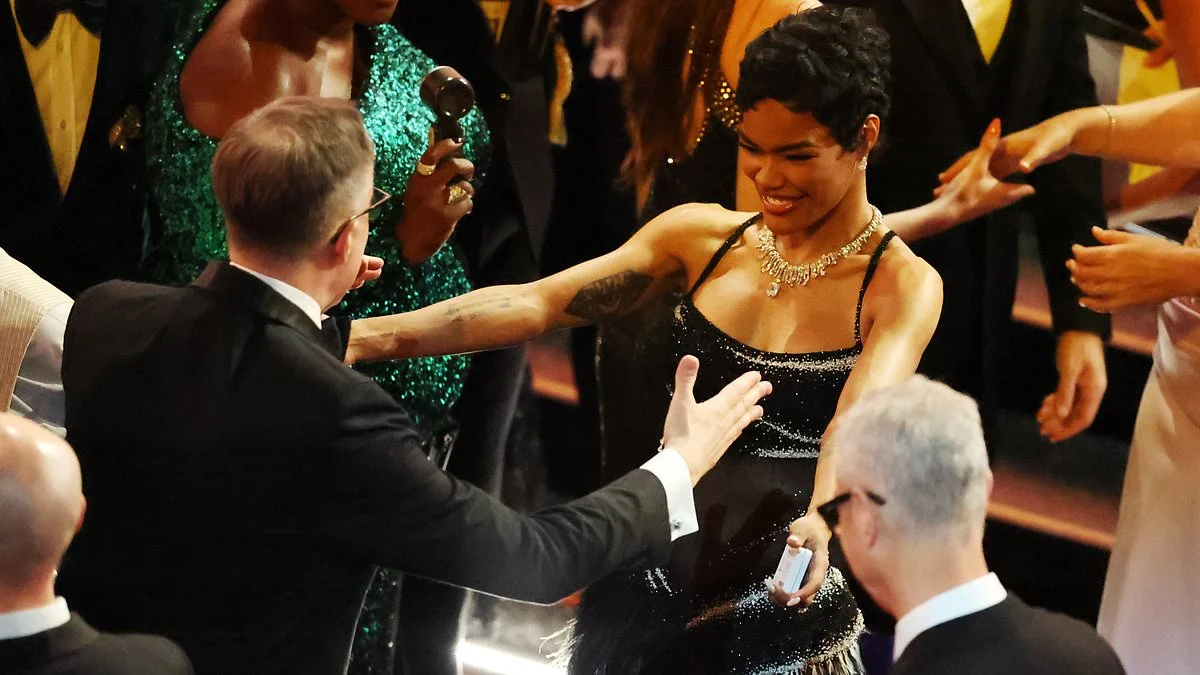
The 98th Academy Awards commenced on Sunday evening at the Dolby Theatre in Los Angeles, marking a pivotal moment for the film industry as it balanced celebratory recognition with significant geopolitical tensions. Hosted by veteran comedian Conan O’Brien, the ceremony opened with a monologue that blended his signature self-deprecating wit with sharp social commentary, setting the stage for a night that many industry analysts predicted would be dominated by genre-defying cinema. While the glitz and glamour of the red carpet remained a central focus, the evening was underscored by an unprecedented security presence and early victories that sparked immediate conversation across social media platforms.

A High-Stakes Opening and Security Under Scrutiny
The atmosphere surrounding the 2026 Oscars was notably different from previous years, characterized by a massive security apparatus. Following reports of potential retaliatory strikes against the United States from Iran, the Los Angeles Police Department (LAPD) and federal agencies coordinated an extensive protection plan. The ceremony saw the deployment of approximately 1,000 private security officers in addition to significant police presence, drone surveillance, and restricted airspaces over Hollywood.

Despite the looming external pressures, host Conan O’Brien attempted to lighten the mood with a "fiery" opening monologue. O’Brien, making his debut as the lead host for the Academy, joked about the rapid advancement of technology in the entertainment sector. "I’m Conan O’Brien and I’m honored to be the last human host of the Academy Awards," he quipped, referencing the industry’s ongoing anxieties regarding artificial intelligence. "Next year it’s going to be a Waymo in a tux."

O’Brien also took aim at the domestic political climate, referencing the film Hamnet. He noted that the character Agnes, portrayed by nominee Jessie Buckley, gives birth alone in the wilderness, which he sarcastically labeled "affordable healthcare" in America. The monologue received a mixed but vocal reception, providing a transition into the evening’s primary focus: the presentation of the golden statuettes.

Early Victories and Red Carpet Transformations
One of the night’s earliest and most discussed awards was for Best Supporting Actress. The category, which featured a competitive field of seasoned veterans and rising stars, was won by Amy Madigan for her performance in the film Weapons. Madigan, whose career has spanned decades, was greeted with a standing ovation, though the focus of many viewers shifted toward the reactions of her fellow nominees.

Social media users quickly pointed out the "excessive" celebrations of Teyana Taylor and Elle Fanning. Taylor, in particular, was seen jumping from her seat and screaming in support of Madigan. While some viewers interpreted this as a display of genuine camaraderie, others on platforms such as X (formerly Twitter) accused the actresses of "overacting" their joy to avoid the "sore loser" trope often captured by cameras. One viral post suggested that Taylor was "faking the happiness" and should "sit down and relax," while others questioned if the high-energy reactions were a strategic PR move for the cameras.

Earlier in the evening, the red carpet provided its own set of shocks, most notably from Pedro Pascal. The Materialists star, 50, appeared unrecognizable to some fans after shaving off his signature mustache. Dressed in a dapper white button-down adorned with a large floral chest piece and high-waisted black trousers, Pascal’s clean-shaven look sparked a wave of concern and debate among his fanbase, with "Mustache-gate" briefly trending as the actor made his way into the theater.

The Dominance of Sinners and Technical Triumphs
Heading into the ceremony, the film Sinners was the clear frontrunner with a record-breaking 16 nominations. The film, which has been lauded for its bold narrative and technical precision, began its evening with a powerful musical performance. Miles Caton and Raphael Saadiq led a rendition of "I Lied to You," the film’s nominated original song, which brought the audience to its feet and solidified the movie’s status as a cultural phenomenon.

In the technical categories, the reimagining of Frankenstein took home early honors for both Best Makeup and Hairstyling and Best Costume Design. The awards were presented by Vogue editor-in-chief Anna Wintour and actress Anne Hathaway. The win for Frankenstein was widely expected by critics, given the film’s meticulous attention to gothic detail and prosthetic innovation, which has been credited with revitalizing the classic monster genre for modern audiences.

The animation categories also saw significant wins. KPop Demon Hunters secured the Oscar for Best Animated Feature, a victory seen as a major win for international collaboration and modern musical integration in animation. Meanwhile, The Girl Who Cried Pearls, directed by Chris Lavis and Maciek Szczerbowski, took home the award for Best Animated Short, continuing a trend of the Academy rewarding avant-garde and visually distinct storytelling.

The Chalamet Controversy and Public Perception
While many stars were celebrated, the lead-up to the Oscars was marred by a harsh critique of Best Actor nominee Timothée Chalamet. In a scathing editorial published shortly before the ceremony, commentator Caroline Bullock took aim at the Marty Supreme star, suggesting that his "ego is bigger than Kylie’s inflated butt."

Bullock argued that Chalamet, once considered an "edgy thespian," had become a "cynical sell-out" due to his highly publicized relationship with Kylie Jenner and an aggressive campaign trail for his 1950s-set ping-pong film. The critique highlighted a growing sentiment among some industry purists that Chalamet’s brand has been "tarnished by tacky stunts." Bullock went as far as to state she "prayed he loses," suggesting that a humbling defeat might be necessary to refocus the young actor’s career. This narrative of "overexposure" hung over Chalamet as he sat in the front row, awaiting the results of the Best Actor category against heavyweights like Leonardo DiCaprio, who is nominated for One Battle After Another.

Chronology of Key Events: The 98th Academy Awards
- 4:00 PM PST: Red carpet begins; Pedro Pascal debuts a clean-shaven look; Nicole Kidman arrives with daughters Sunday and Faith.
- 5:00 PM PST: Security protocols are fully enacted as 1,000 private guards and LAPD units secure the Dolby Theatre perimeter.
- 5:30 PM PST: Conan O’Brien delivers the opening monologue, making jokes about AI and the US healthcare system.
- 5:50 PM PST: Amy Madigan wins Best Supporting Actress for Weapons; Teyana Taylor’s reaction goes viral.
- 6:15 PM PST: KPop Demon Hunters wins Best Animated Feature.
- 6:40 PM PST: Frankenstein sweeps the Makeup and Costume Design categories, presented by Anna Wintour and Anne Hathaway.
- 7:00 PM PST: A live performance of "I Lied to You" from the film Sinners takes place.
- 7:30 PM PST: The Girl Who Cried Pearls wins Best Animated Short.
Broader Industry Implications and Analysis
The 98th Academy Awards serve as a barometer for an industry in transition. The success of films like Sinners and Weapons suggests that the Academy is increasingly willing to embrace high-concept horror and psychological thrillers as legitimate contenders for top-tier honors, a departure from the "Oscar bait" dramas of previous decades.

Furthermore, the integration of figures like Anna Wintour into the presentation lineup underscores the merging of the fashion and film industries, where the red carpet is now as scrutinized as the films themselves. However, the heavy security presence and the jokes regarding AI suggest an industry that is defensive about its future. O’Brien’s comment about being the "last human host" may have been a joke, but it resonated with a guild still grappling with the fallout of labor disputes and the encroachment of generative technology in post-production.

The 2026 ceremony also highlights the double-edged sword of celebrity branding. As seen with the backlash against Timothée Chalamet, the line between "successful campaigning" and "exhausting overexposure" has become increasingly thin. In an era where every reaction is GIF-able and every red carpet look is debated in real-time, the pressure on actors to maintain a specific public image while delivering award-worthy performances has never been higher.

As the night continues, the film community remains focused on whether Sinners will fulfill its record-breaking potential or if One Battle After Another will provide Leonardo DiCaprio with another historic win. Regardless of the final tally, the 98th Academy Awards will be remembered as a ceremony that took place at the intersection of high-stakes global politics and a shifting cinematic landscape.