
 By Nila Kartika Wati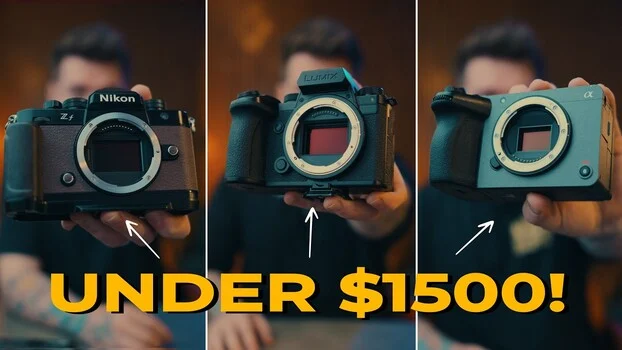
The contemporary landscape of digital imaging presents a compelling paradox: while new camera bodies continue to push boundaries in resolution, autofocus, and video capabilities, the secondary market offers increasingly sophisticated tools at accessible price points. For discerning photographers and videographers, finding a highly capable camera for under $1,500 on the used market is not only realistic but often represents a strategic financial decision. However, this burgeoning segment also introduces a critical challenge: the vast divergence in design philosophy between dedicated still photography cameras, robust video workhorses, and true hybrid systems means that an ill-informed choice can lead to significant financial regret and workflow inefficiencies.
This intricate dilemma was recently addressed in a comprehensive, independent review by content creator Thomas J. McClure, whose YouTube channel is known for its practical, real-world assessments of photographic and cinematic gear. In a move that underscores the authenticity and credibility of his findings, McClure personally acquired three distinct camera models with his own funds, eschewing manufacturer sponsorships or loaner units. These cameras – the Nikon Zf, the Sony FX30, and the Lumix S5 II X – were each purchased used, falling within a tight budget range: $1,500 for the Nikon Zf, $1,450 for the Sony FX30, and $1,420 for the Lumix S5 II X. This self-funded approach is crucial, as it provides an unfiltered perspective, free from commercial pressures that can sometimes influence product reviews. McClure, who also offers guidance on safely navigating the used gear market, positioned this comparison as a direct response to the growing demand for high-performance equipment within budget constraints.
The Quest for Value: Understanding the Used Market Landscape
The proliferation of online marketplaces and dedicated used gear retailers has transformed how consumers acquire photographic and video equipment. Economic pressures, coupled with rapid technological advancements, have created a vibrant secondary market where relatively recent models can be obtained at substantial discounts compared to their initial retail prices. This trend is particularly pronounced in the camera industry, where enthusiasts and professionals alike often upgrade their equipment every few years, feeding a steady supply of high-quality used gear into the ecosystem.
The $1,500 price point, as explored by McClure, represents a critical threshold. Below this, buyers are often limited to older generations or entry-level models. Above it, new mid-range and professional bodies become more attainable. The sweet spot just under $1,500, however, allows access to cameras that were flagship or near-flagship models just a few years prior, or highly specialized tools like the FX30. McClure’s deliberate choice to purchase these cameras used, rather than relying on new review units, not only enhances the authenticity of his findings but also directly reflects the purchasing behavior of a significant portion of the creative community. His prior content on best practices for buying used gear, including vetting sellers and assessing condition, further contextualizes this review as a guide for practical acquisition.
Nikon Zf: The Retro-Inspired Photographic Powerhouse
Released in late 2023, the Nikon Zf quickly distinguished itself in the full-frame mirrorless market by merging cutting-edge imaging technology with a nostalgic, film-camera aesthetic. Built around a 24.5-megapixel full-frame BSI CMOS sensor and Nikon’s powerful EXPEED 7 image processor, the Zf delivers exceptional image quality, particularly in low-light conditions, with an impressive native ISO range extending to 64,000. Its retro design, featuring machined brass dials for ISO, shutter speed, and exposure compensation, alongside a dedicated black-and-white mode toggle, clearly targets photographers who appreciate tactile control and a classic shooting experience.
McClure’s assessment positions the Zf as his unequivocal top pick for still photography. He emphasizes that its appeal extends far beyond its aesthetics, noting its robust performance as his primary camera for demanding professional work, including wedding photography. A significant highlight for McClure, especially coming from Sony’s camera ecosystem, is the Zf’s electronic viewfinder (EVF). He describes it as superior, offering a clear, vibrant, and lag-free viewing experience that enhances compositional precision and comfort during extended shoots. The Zf features an advanced autofocus system, inheriting capabilities from Nikon’s higher-end Z8 and Z9 models, including sophisticated subject detection for people, animals, and vehicles, ensuring sharp focus in dynamic environments.
A key technical advantage of the Nikon Zf, and indeed the entire Z-mount system, is its exceptionally short flange distance (16mm) and wide mount diameter (55mm). This design allows for unparalleled lens adaptability. McClure specifically highlights its ability to adapt a vast array of lenses, including those from other mirrorless systems like Sony E-mount glass, which he has personally utilized with his existing lens collection. This adaptability significantly enhances the value proposition for photographers transitioning from other systems or those with extensive legacy lens libraries.
The 24.5-megapixel resolution, while deemed "sufficient" by McClure for most applications, prompted a desire for a future iteration to push closer to 40MP, catering to specific needs like large-format printing or aggressive cropping. In terms of media storage, the Zf features dual card slots: one standard SD card slot (UHS-II compatible) and one microSD slot. McClure’s practical workflow involves utilizing the microSD slot for JPEG files, while raw files are routed to the main SD card, providing an immediate, in-camera redundancy system that is invaluable for professional assignments where data integrity is paramount. This strategic use of dual slots underscores the Zf’s readiness for serious photographic endeavors.
Sony FX30: A Dedicated Cinema Workhorse for the Modern Creator
The Sony FX30, launched in late 2022, represents a distinct paradigm in the sub-$1,500 used market: a camera engineered almost exclusively for video production. As part of Sony’s acclaimed Cinema Line, it inherits many professional features and color science from its higher-end siblings, such as the FX3 and FX6, but in a more compact and APS-C format. McClure is forthright in stating that the FX30 possesses "no real photo capability to speak of," underscoring its specialized nature. Its design, ergonomics, and feature set are optimized for cinematic capture, making it a powerful tool for filmmakers, documentarians, and content creators prioritizing video quality and workflow.
At its core, the FX30 features a 26.1-megapixel Super 35 (APS-C) Exmor R BSI CMOS sensor, which, despite being smaller than full-frame, is optimized for video performance. It excels in delivering stunning 4K footage at up to 120 frames per second (fps), offering impressive slow-motion capabilities. A notable strength, highlighted by McClure, is its surprisingly robust high ISO performance for an APS-C sensor, thanks to its dual base ISO architecture (ISO 800 and ISO 2500 in S-Log3), which helps manage noise effectively in challenging lighting conditions. The FX30 also benefits from Sony’s renowned S-Cinetone color profile, which provides beautiful, natural-looking skin tones directly out of the camera, minimizing post-production effort. It also supports S-Log3/S-Gamut3.Cine for maximum dynamic range (over 14 stops) and color grading flexibility.
Professional connectivity is a hallmark of the FX30. It features a full-size HDMI Type-A port, ensuring reliable output for external monitors or recorders, crucial for studio setups or live productions. It boasts dual media slots, accommodating both SD (UHS-II) and CFexpress Type A cards, providing flexibility for high-bitrate recording. The E-mount ecosystem, shared across Sony’s alpha and cinema cameras, offers an unparalleled selection of native lenses, from compact primes to versatile zooms, catering to virtually any cinematic requirement.
McClure has extensively used the FX30 as his primary video camera for a majority of his channel’s content, attesting to its reliability and image quality. He emphasizes its particular suitability for live-streaming events and church services, citing its exceptional overheating resistance – a critical factor for long takes – its low-latency HDMI output, and its rugged build quality. These attributes make it an unusually strong fit for continuous operation in demanding environments. While finding an FX30 under $1,500 that includes the highly sought-after XLR handle (which adds two professional audio inputs) can be challenging, McClure confirms that the body alone is achievable within this budget, representing significant value for serious videographers.
Lumix S5 II X: The Hybrid Contender Redefining Versatility
The Panasonic Lumix S5 II X, introduced in early 2023 as an enhanced variant of the standard S5 II, completes McClure’s trio as his definitive hybrid pick. This camera signifies a pivotal moment for Panasonic, addressing a long-standing demand for robust phase-detect autofocus (PDAF) in its Lumix S series. Built around a newly developed 24.2-megapixel full-frame CMOS sensor and a new processing engine, the S5 II X delivers both exceptional still image quality and advanced video capabilities, positioning it as a direct competitor in the increasingly crowded hybrid market.
McClure’s search for the S5 II X under $1,500 proved to be a lengthy one, underscoring its popularity and the value it commands even on the used market. He acknowledges that for many users, the standard Lumix S5 II, which he has seen listed for as low as $1,200 used, would likely suffice. However, the ‘X’ variant introduces specific features that cater to more demanding video professionals. The primary differentiators are internal ProRes recording (ProRes 422 HQ, 422, 422 LT, and 422 Proxy at various resolutions and frame rates) and the ability to record directly to an external SSD via its USB-C port. While McClure admits he hasn’t yet needed these advanced features in his own workflow, their presence significantly enhances the camera’s future-proofing and professional appeal for high-bitrate productions.
Beyond the ‘X’ specific features, the S5 II X shares the core advancements of the S5 II. This includes a significant upgrade to a 779-point phase-detection autofocus system, which dramatically improves tracking performance for both stills and video, a critical enhancement over previous Lumix models. It also boasts an active image stabilization system, combining 5-axis in-body image stabilization (IBIS) with electronic stabilization, offering up to 6.5 stops of correction, crucial for handheld shooting. The camera integrates an internal cooling fan, enabling unlimited video recording in virtually all modes without overheating concerns, a feature highly valued by videographers.
A major selling point highlighted by McClure is the shared sensor and color science across several Lumix bodies, including the S5 II, S5 II X, and the more compact Lumix S9 (recently released in mid-2024). This commonality simplifies the process of building a multi-camera setup, ensuring consistent color rendition and image characteristics across different camera angles. This consistency is invaluable for professional productions where seamless integration of footage is essential. The L-mount lens ecosystem, a collaborative effort between Panasonic, Leica, and Sigma, has also grown substantially, offering a diverse range of high-quality prime and zoom lenses. McClure specifically notes the S5 II X and S9 as an excellent "A and B camera pairing" for filmmakers and content creators, leveraging their shared image characteristics and complementary form factors. The S5 II X’s robust build, intuitive controls, and comprehensive feature set make it a formidable contender for creators demanding top-tier performance in both photographic and cinematic applications within a professional workflow.
The Independent Review’s Impact: Informing Consumer Choices
Thomas J. McClure’s independent review serves as a powerful testament to the enduring value of unsponsored, self-funded content in an industry often saturated with marketing narratives. In an era where consumers are increasingly skeptical of overtly promotional material, reviews based on personal investment and real-world usage carry significant weight. McClure’s transparency about purchasing these cameras with his own money directly addresses this skepticism, fostering a high degree of trust with his audience.
Such independent analyses empower consumers by providing objective insights into the practical strengths and weaknesses of gear, often revealing nuances that might be overlooked in manufacturer specifications or brief promotional videos. His focus on specific use cases – wedding photography for the Zf, live-streaming for the FX30, and multi-camera setups for the S5 II X – offers tangible guidance that resonates with creators facing similar challenges. Furthermore, his supplementary video dedicated to buying used gear safely underscores a commitment to educating his audience beyond mere product comparison, equipping them with the knowledge to navigate the secondary market confidently. This holistic approach makes his content a valuable resource for anyone considering a significant camera investment.
Broader Implications for the Camera Industry
The trends illuminated by McClure’s review carry significant implications for both camera manufacturers and the broader imaging market. Firstly, the sustained demand for high-performance cameras in the sub-$1,500 used segment indicates a mature market where value and longevity are increasingly prioritized. Manufacturers must contend with their own used products cannibalizing new sales, a dynamic that necessitates innovation beyond incremental upgrades.
Secondly, the distinct strengths of each camera in McClure’s comparison – the Zf’s photographic prowess and retro charm, the FX30’s dedicated video capabilities, and the S5 II X’s comprehensive hybrid approach – highlight the ongoing diversification of the camera market. While "hybrid" cameras strive for versatility, there remains a strong demand for specialized tools for specific professional workflows. Nikon’s success with the Zf demonstrates that design and user experience, particularly tactile controls and aesthetic appeal, can be powerful differentiators even in a highly technical market. Sony’s FX30 reinforces the efficacy of niche targeting, providing a cinema-grade tool for creators who demand specific video features without compromise. Panasonic’s S5 II X showcases the critical role of continuous innovation in core functionalities, such as autofocus and internal cooling, to remain competitive in the hybrid space.
Finally, the vitality of the L-Mount Alliance, as evidenced by the S5 II X, illustrates the growing importance of collaborative ecosystems in the lens market. For consumers, a strong lens roadmap and cross-brand compatibility (like adapting E-mount lenses to Z-mount) significantly influence purchasing decisions, offering greater flexibility and future-proofing. The resilience and growth of the secondary market are not merely a side effect of new product launches but a vital segment that allows more creators to access professional tools, thereby expanding the overall creative economy.
In conclusion, Thomas J. McClure’s detailed, self-funded comparison provides invaluable insights for anyone navigating the complex world of camera acquisition in 2024. His findings underscore that the "best" camera is entirely dependent on individual workflow and priorities, but that the used market currently offers an unprecedented array of highly capable, professional-grade tools well within a $1,500 budget. Whether one seeks a dedicated still photography companion, a robust video production workhorse, or a versatile hybrid system, the options available on the secondary market present compelling value propositions that continue to shape the evolution of digital imaging.