
 By admin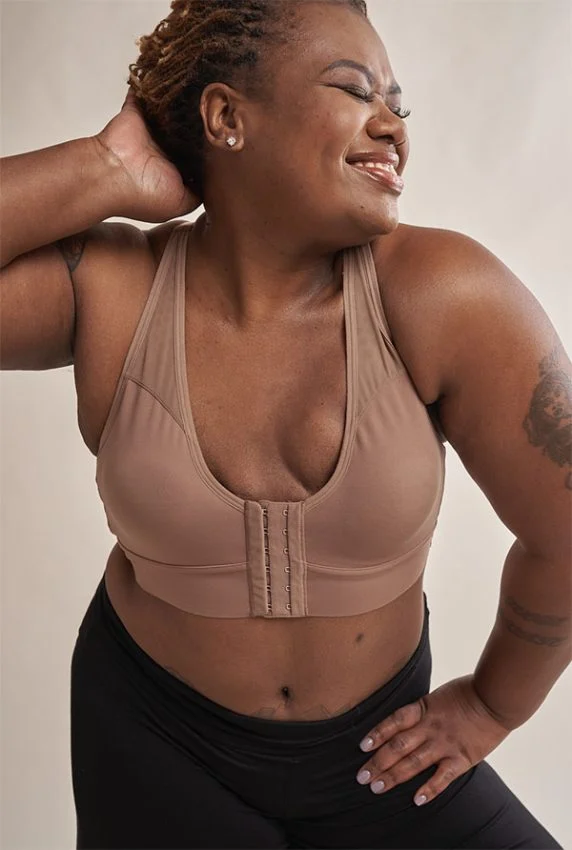
The intersection of medical recovery and specialized retail has become a critical focal point for the intimate apparel industry, particularly as the survival rates for breast cancer continue to rise and the demand for post-mastectomy care increases. For certified fitters, boutique owners, and healthcare providers, the ability to distinguish between chronic conditions and temporary post-operative side effects is no longer a niche skill but a fundamental requirement for ethical service. Central to this expertise is the understanding of two distinct yet frequently confused conditions: lymphedema and post-surgical edema. While both manifest as swelling in the chest, torso, or arms, their physiological origins, long-term management strategies, and the required garment specifications differ significantly.
The Physiological Divide: Chronic Pathology vs. Acute Recovery
To provide effective support, one must first analyze the biological mechanisms at play. Lymphedema is classified as a chronic medical condition resulting from a compromised lymphatic system. In the context of breast cancer treatment, this damage often occurs during an axillary lymph node dissection (ALND), sentinel lymph node biopsy (SLNB), or as a side effect of radiation therapy. When the lymphatic vessels are removed or scarred, the system loses its ability to adequately drain interstitial fluid. This leads to a persistent accumulation of protein-rich fluid in the tissues. According to data from the National Cancer Institute, approximately 20% to 40% of patients who undergo traditional axillary node removal will develop some degree of lymphedema during their lifetime. Because the damage to the lymphatic system is permanent, lymphedema is a condition that must be managed rather than cured.
In contrast, post-surgical edema is a localized, inflammatory response to the trauma of surgery. Whether a patient undergoes a mastectomy, lumpectomy, breast reduction, or augmentation, the body’s natural defense mechanism is to flood the surgical site with fluid to facilitate the transport of white blood cells and nutrients necessary for tissue repair. This type of swelling is acute and expected. Unlike lymphedema, post-surgical edema is a transient phase of the healing process. As the incisions close and internal tissues stabilize, the body reabsorbs the excess fluid, and the swelling naturally subsides over several weeks or months.

A Chronology of Post-Operative Care and Symptom Onset
The timeline of a patient’s recovery journey often provides the first clue in distinguishing between these two conditions. Understanding this chronology is vital for retailers who see patients at various stages of their journey.
- The Acute Phase (0–6 Weeks Post-Op): During this window, swelling is almost universally attributed to post-surgical edema. Patients are typically dealing with surgical drains, bruising, and high levels of sensitivity. The priority here is stabilization and protection of the incision sites.
- The Sub-Acute Phase (6 Weeks–3 Months Post-Op): As the primary surgical trauma heals, edema should begin to dissipate. If swelling persists or increases during this time, it may be a sign of complications such as a seroma (a pocket of clear serous fluid) or the early onset of lymphedema, though the latter is less common so early in the recovery.
- The Chronic Phase (3 Months–Years Post-Op): Lymphedema can manifest months or even years after the initial treatment. Patients may report a "heavy" feeling in the arm, a tightness in their bra that wasn’t there before, or a visible loss of definition in the hand or wrist. Because lymphedema is a progressive condition, early detection during this phase is critical to preventing Stage III (elephantiasis) complications.
Supporting Data and the Impact of Proper Compression
The role of compression in managing these conditions is a matter of precision engineering. In the medical field, compression is measured in millimeters of mercury (mmHg). Post-surgical bras are generally designed to provide "light" or "uniform" compression, usually falling below the 15 mmHg range. Their primary function is to hold dressings in place, minimize the movement of breast tissue (which can cause pain and tear internal sutures), and provide a gentle "hug" that helps the body reabsorb inflammatory fluid.
However, clinical lymphedema often requires medical-grade compression garments, which are categorized into classes:
- Class I (20–30 mmHg): Used for mild lymphedema and heaviness.
- Class II (30–40 mmHg): Used for moderate swelling and significant tissue changes.
- Class III (40–50+ mmHg): Reserved for severe cases and rarely used in standard bra formats without specialized medical supervision.
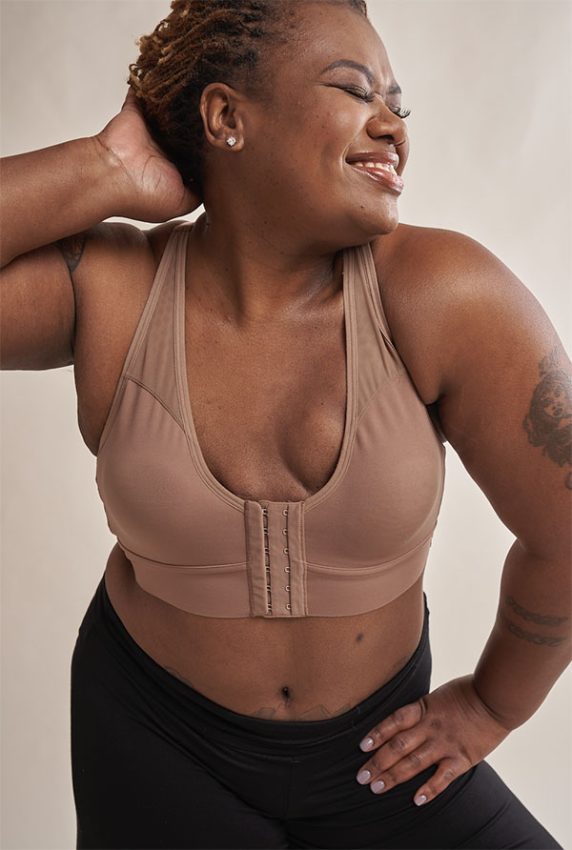
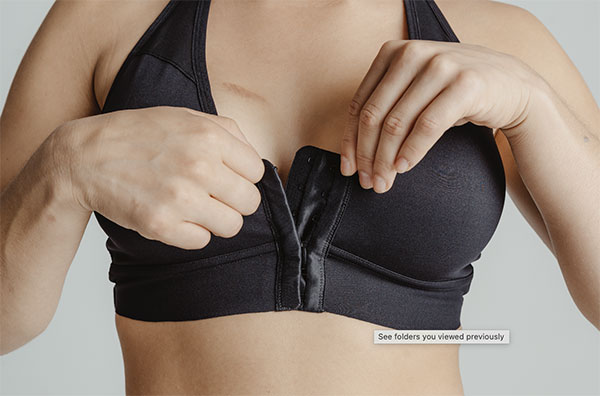
For an intimate apparel retailer, the danger lies in providing a garment that is too restrictive in the wrong areas. For a patient with lymphedema, a bra with narrow, digging straps or a tight underwire can act as a tourniquet, further obstructing lymphatic flow and exacerbating the swelling. Data suggests that improperly fitted bras are a leading cause of discomfort and "flares" in breast cancer survivors. This highlights the need for garments like the AnaOno Rora, which features wide, adjustable straps, a wireless design, and soft, non-irritating materials that provide support without creating pressure points.
Industry Standards and Professional Response
The intimate apparel industry has seen a shift toward more formalized education for fitters. Organizations such as the American Board for Certification in Orthotics, Prosthetics & Pedorthics (ABC) provide certifications for mastectomy fitters, ensuring they understand the anatomical changes following surgery.
Experts in the field, including Dana Donofree, founder of AnaOno, emphasize that the fitter’s role is one of "supportive education" rather than diagnosis. When a client presents with abnormal swelling, the industry standard is to refer the patient back to their oncology or surgical team. Inferred reactions from the medical community suggest that doctors increasingly value retailers who can identify "red flags"—such as heat, redness, or pitting edema (where a finger press leaves an indentation)—as these can signal infection or blood clots rather than simple swelling.
Retailers are also encouraged to adopt the "One to Wear, One to Wash" protocol. Post-surgical patients are at a higher risk of infection; wearing a clean, bacteria-free garment every day is a medical necessity, not just a sales tactic. This practice ensures that the surgical site remains sterile while the skin, which may be thinned by radiation, is not irritated by accumulated oils or perspiration.
Broader Implications for the Retail Landscape
The integration of medical knowledge into the lingerie space has significant economic and social implications. Historically, post-surgical "medical" bras were utilitarian, beige, and often lacked aesthetic appeal, which contributed to a sense of "patienthood" rather than womanhood. The modern movement, led by brands that prioritize both form and function, seeks to bridge this gap.
From a market perspective, the "breast health" category is expanding. As more women opt for prophylactic mastectomies due to genetic markers like BRCA1/2, and as breast reconstruction techniques become more sophisticated, the "lifecycle" of the customer has changed. A woman may enter a boutique for a post-surgical bra, return for lymphedema management, and eventually transition back into fashion-forward pocketed lingerie.
Furthermore, legislative changes are impacting this sector. The Lymphedema Treatment Act, which was signed into law in the United States and became effective in early 2024, requires Medicare to cover physician-prescribed compression garments. This shift is expected to increase the volume of patients seeking high-quality, medical-grade apparel, placing a greater responsibility on retailers to be knowledgeable about insurance coding and clinical requirements.
Conclusion: Building Trust Through Expertise
The distinction between lymphedema and post-surgical edema is a microcosm of the larger evolution in the intimate apparel industry. It represents a move away from pure aesthetics toward a holistic model of care. When a fitter can explain why a certain fabric is necessary for edema or why a specific strap width is crucial for lymphatic health, they move from being a salesperson to a trusted advisor.
Ultimately, breast health is not a niche market; it is a vital component of the healthcare continuum for women. By meeting patients with evidence-based knowledge and compassionate care, the industry ensures that women do not just "recover" from surgery, but thrive in the years that follow. The goal is to create an environment where the client feels seen and understood, ensuring that their journey from the operating room back to their daily lives is supported by the best that both medicine and design have to offer.