
 By Layla Zulfa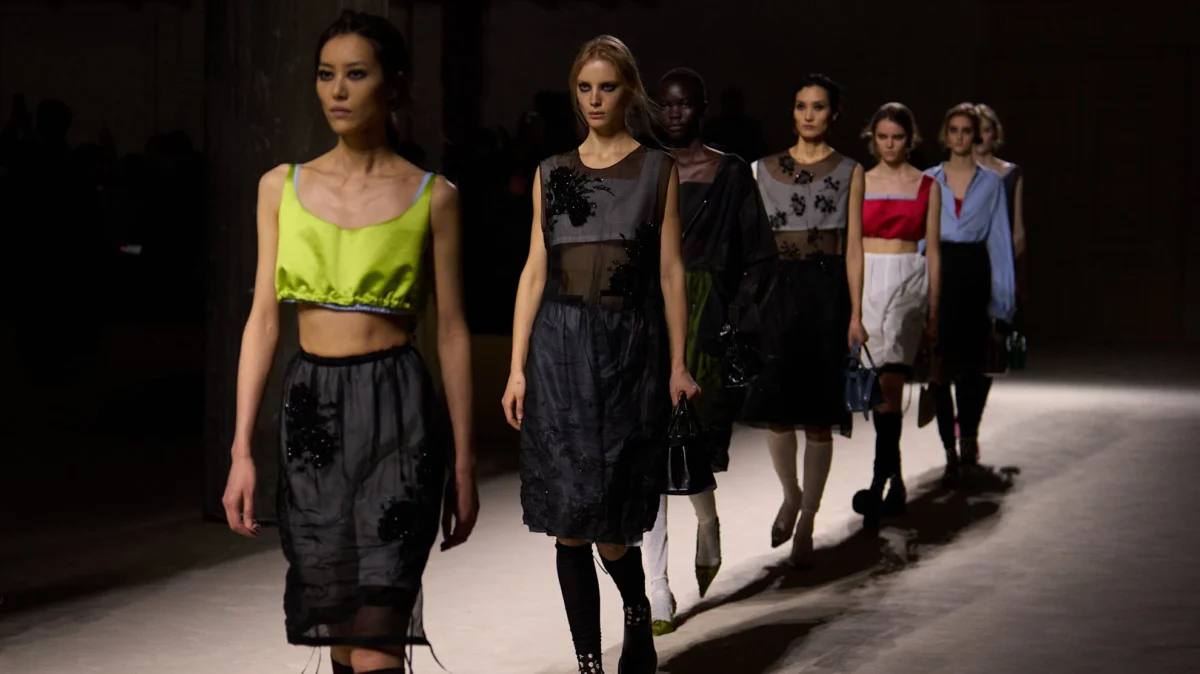
MILAN – The third day of Milan Fashion Week (MFW) unfolded with a compelling intellectual undercurrent, as some of the industry’s most influential designers presented collections that served as profound meditations on the complex and ever-evolving nature of identity. From the established avant-garde of Miuccia Prada and Raf Simons to the intriguing perspectives offered by Meryll Rogge and the generational stewardship of the Armani heirs, Silvana Armani and Leo Dell’Orco, the runways became a vibrant forum for exploring how clothing shapes, reflects, and challenges our sense of self in the 21st century. This thematic convergence on identity underscored a broader industry shift towards introspection and authenticity, moving beyond mere aesthetics to engage with deeper sociological and psychological dimensions of fashion.
Milan Fashion Week: A Global Epicenter for Innovation and Commerce
Milan Fashion Week stands as a pivotal event in the global fashion calendar, one of the "Big Four" alongside New York, London, and Paris. Historically, MFW has been synonymous with luxury, impeccable craftsmanship, and a distinctive blend of classic elegance and bold innovation, often serving as a barometer for trends in ready-to-wear and accessories. Organized by the Camera Nazionale della Moda Italiana (CNMI), MFW is not just a showcase of creativity but a significant economic engine for Italy’s fashion industry, which contributes billions to the national GDP annually. The event attracts an international contingent of buyers, journalists, celebrities, and influencers, generating substantial media attention and driving global sales.
Typically spanning five to seven days, MFW is meticulously choreographed, with each day offering a curated sequence of runway shows, presentations, and exclusive events. The third day often marks a crescendo, balancing the initial buzz with the anticipation of major heritage houses and influential contemporary labels. This particular day, with its focus on identity, highlighted the industry’s capacity to transcend commercial imperatives and engage with profound cultural dialogues. The schedule’s strategic placement of diverse voices—from Prada’s intellectualism to Armani’s enduring legacy—ensured a rich tapestry of perspectives, offering attendees a comprehensive view of current sartorial thought.
The Evolving Discourse of Identity in Contemporary Fashion
The theme of identity has become increasingly central to fashion discourse, driven by a confluence of societal shifts. In an age characterized by rapid technological advancement, heightened social awareness, and a globalized cultural exchange, individuals are continually negotiating their personal and collective identities. Fashion, as an immediate and visible form of self-expression, inherently plays a critical role in this negotiation. Designers are no longer merely dictating trends; they are acting as cultural commentators, providing frameworks through which wearers can articulate their values, affiliations, and aspirations.
The digital realm, particularly social media, has amplified this focus on identity, allowing individuals to curate and broadcast their self-image with unprecedented control. This has led to a demand for clothing that resonates with personal narratives, fosters a sense of authenticity, and allows for fluid self-definition. Furthermore, the growing emphasis on inclusivity, diversity, and sustainability has broadened the definition of identity within fashion, challenging traditional norms and embracing a wider spectrum of human experience. Brands are now expected to not only understand but also reflect these diverse identities in their designs, campaigns, and corporate values.
Prada: Deconstructing Modern Identity through Sartorial Codes
At the forefront of this exploration on Day Three were Miuccia Prada and Raf Simons, the creative co-directors of Prada. Known for their intellectual rigor and an ability to distill complex ideas into wearable yet thought-provoking collections, their joint vision for Prada has consistently challenged conventional notions of beauty, status, and selfhood. Their Autumn/Winter 2026 collection, as interpreted by industry observers, delved deep into the nuances of modern identity, particularly how it is constructed and deconstructed through the garments we choose.
Prada’s approach often involves a subtle subversion of classic archetypes and uniforms. For this collection, one could infer a deliberate play on sartorial codes that traditionally signify professionalism, domesticity, or rebellion. Through unexpected layering, juxtaposed textures, and a clever manipulation of familiar silhouettes, Prada and Simons likely explored the idea that identity is not monolithic but a fluid, often contradictory assemblage of influences. Critics frequently laud their ability to make the seemingly mundane feel profound, transforming everyday garments into tools for philosophical inquiry. For instance, a tailored blazer might be paired with an ethereal, translucent skirt, or a utilitarian coat might feature delicate, unexpected embellishments. This creates a tension that mirrors the complexities of contemporary self-perception, where roles are blurred and boundaries are increasingly permeable.
The duo’s collections are often lauded for their "ugly chic" aesthetic, a deliberate rejection of overt prettiness in favor of something more challenging and real. This season’s focus on identity would align perfectly with this ethos, suggesting that true self-expression often lies beyond conventional notions of attractiveness or conformity. The show’s staging, typically minimalist yet conceptually rich, would have further amplified the message, creating an immersive experience that encouraged reflection on the garments’ deeper meanings. Analysts often cite Prada as a brand that not only participates in fashion trends but actively shapes intellectual discourse within the industry, making their exploration of identity particularly impactful.
Meryll Rogge: A Fresh Perspective on Personal Expression
Adding a distinct voice to the day’s narrative was Meryll Rogge, an emerging designer who has rapidly gained recognition for her distinctive aesthetic and independent vision. Rogge, who launched her eponymous brand after honing her skills at esteemed houses like Marc Jacobs and Dries Van Noten, typically infuses her collections with a sense of unconventional elegance and a playful subversion of traditional femininity. Her inclusion on such a prominent day of MFW underscores the industry’s growing appetite for new talent that offers authentic, uncompromised perspectives.
For Rogge, the exploration of identity likely manifested through a more personal and intimate lens. Her collections often blend elements of menswear with womenswear, feature unexpected fabric combinations, and employ a relaxed yet sophisticated tailoring that speaks to a modern, self-assured wearer. Her take on identity might focus on the liberation found in dressing for oneself, eschewing external expectations in favor of personal comfort and idiosyncratic style. This could involve vibrant prints, luxurious textures mixed with everyday fabrics, and silhouettes that encourage ease of movement and individual styling. In a fashion landscape often dominated by corporate giants, independent designers like Rogge provide a crucial counter-narrative, proving that authenticity and a clear, singular vision can resonate deeply with a discerning audience seeking to express their unique identities. Her presence reinforced the idea that identity in fashion is not solely defined by heritage or scale, but by the power of individual creativity.
Armani’s Legacy and Future: Identity Through Succession
A particularly intriguing aspect of Day Three was the involvement of the Armani heirs, Silvana Armani and Leo Dell’Orco. While Giorgio Armani remains the iconic figurehead of his eponymous empire, the increasing prominence of his chosen successors on the MFW schedule signals a thoughtful and deliberate approach to future leadership and the preservation of brand identity. The challenge for any luxury house navigating succession is immense: how to evolve while staying true to the founder’s vision, and how to introduce new creative voices without diluting the brand’s core essence.
The collection presented by Silvana Armani (Giorgio Armani’s niece, deeply involved in the brand’s creative direction for decades) and Leo Dell’Orco (who oversees men’s lines and special projects) would have offered a compelling study in identity continuity and subtle evolution. Giorgio Armani’s legacy is built on a distinct identity of understated elegance, fluid tailoring, and a timeless aesthetic that champions natural sophistication. The heirs’ collection would likely have paid homage to these foundational codes, perhaps by reinterpreting classic Armani silhouettes with a contemporary sensibility. This could involve exploring new fabric technologies, refining proportions for a modern wearer, or introducing subtle shifts in color palettes while retaining the brand’s signature muted tones.
Their contribution to the identity theme would not just be about personal expression through clothing, but also about the identity of a brand itself – how it maintains its distinct character across generations, adapts to changing consumer desires, and preserves its cultural relevance. It signifies the ongoing dialogue between heritage and innovation, between the enduring identity of a founder and the evolving identities of those who carry the torch forward. This show would have been closely watched by industry analysts for clues about the future creative direction of one of Italy’s most venerable fashion houses, demonstrating how brand identity is a living, breathing entity that adapts while remaining true to its origins.
Beyond the Runway: The Broader Implications of Identity in Fashion
The focus on identity on Day Three of Milan Fashion Week carries significant implications for the wider fashion ecosystem.
-
Consumer Engagement and Authenticity: In an increasingly saturated market, consumers are gravitating towards brands that articulate a clear identity and foster a sense of belonging. The collections seen on this day, by engaging with personal and collective identity, reinforce the idea that fashion is a powerful tool for self-discovery and expression. Brands that successfully tap into this desire for authenticity often build stronger, more loyal customer bases. Research by consulting firms like McKinsey & Company consistently highlights consumer demand for brands that align with their personal values and offer genuine narratives, rather than just products.
-
The Digital Dimension: Social media platforms are pivotal in how individuals construct and project their identities. The garments showcased at MFW, especially those exploring identity, become fodder for digital conversations, mood boards, and personal style curation. Influencers and digital creators play a significant role in translating runway concepts into relatable everyday expressions of identity, thereby amplifying the reach and impact of these thematic explorations. The visual nature of platforms like Instagram and TikTok makes fashion a primary medium for identity formation and communication in the digital sphere.
-
Sustainability and Ethical Identity: The discourse around identity in fashion also intersects with sustainability. As consumers increasingly identify as ethically conscious, they seek brands whose practices align with their environmental and social values. While not explicitly stated in the brief, a nuanced exploration of identity in 2026 would implicitly consider how clothing is made, its lifecycle, and its impact on people and planet. A brand’s commitment to sustainable practices forms a crucial part of its identity, attracting a segment of consumers who define themselves by their responsible choices. Data from various market reports indicates a growing preference for sustainable fashion, with consumers willing to pay a premium for ethically produced goods.
-
Inclusivity and Diversity: The broadening definition of identity in contemporary society demands that fashion move beyond traditional, often narrow, representations of gender, race, and body type. Collections that thoughtfully explore identity often do so by embracing a more inclusive vision, challenging established norms and celebrating diversity. This contributes to a more representative and empathetic fashion landscape, resonating with a global audience that values authenticity and recognition of their unique selves.
The Business of Identity: Market Insights
The luxury fashion market, valued at hundreds of billions globally, is undergoing significant transformations. Reports from Bain & Company forecast continued growth, particularly driven by Gen Z and Millennials, who prioritize self-expression and brand alignment with their values. For these younger demographics, identity is not a static concept but a fluid journey, and fashion serves as a key companion. Brands that successfully articulate and adapt to these evolving identities are poised for greater market share.
The role of creative directors, as exemplified by Miuccia Prada and Raf Simons, becomes paramount in this context. Their ability to translate complex cultural themes into compelling collections directly impacts a brand’s identity and, consequently, its commercial success. Investment in creative talent that possesses a strong understanding of contemporary societal dynamics and the nuances of identity is therefore a strategic imperative for luxury conglomerates. Furthermore, the longevity of heritage brands like Armani hinges on their capacity to honor their foundational identity while allowing for modern interpretations, demonstrating that a strong brand identity is a priceless asset in a competitive market.
Conclusion
Day Three of Milan Fashion Week was more than just a parade of new garments; it was a profound cultural moment, a collective introspection on the meaning of identity in an increasingly complex world. Through the distinct lenses of Miuccia Prada and Raf Simons, Meryll Rogge, and the Armani heirs, the fashion community was invited to consider how clothing functions not merely as adornment, but as a powerful, expressive language of self. The collections served as a testament to fashion’s enduring capacity to reflect, question, and shape our understanding of who we are. As the industry continues to evolve, this deep engagement with identity will undoubtedly remain a driving force, influencing design, consumption, and the very fabric of global culture for seasons to come. The dialogues initiated on this pivotal day will resonate far beyond the runways, cementing identity as a defining theme for the future of fashion.