
 By Layla Zulfa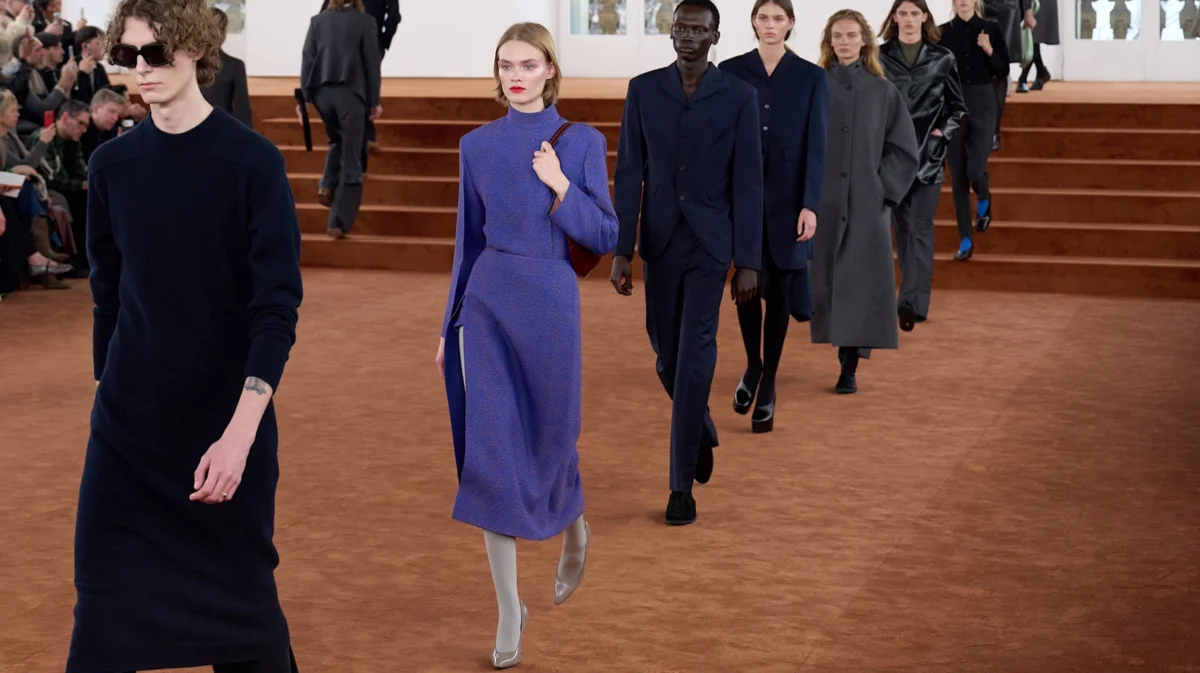
MILAN — Day two of Milan Fashion Week Autumn/Winter 2026 became a significant pivot point, marking a compelling exploration of gender dynamics as Maria Grazia Chiuri presented her highly anticipated inaugural collection for Fendi, closely followed by Simone Bellotti’s sophomore outing for Jil Sander. The collective narrative emerging from these two influential houses underscored a prevalent theme of duality, where the traditional codes of masculine and feminine engaged in a sophisticated dialogue, reflecting broader societal shifts and evolving consumer perspectives within the luxury fashion landscape. The shows, strategically positioned within the Milanese schedule, provided a rich tapestry of design philosophies, from Chiuri’s established vision of empowering femininity to Bellotti’s nuanced deconstruction of contemporary uniforms.
Milan Fashion Week Day Two: A Study in Duality and Redefinition
Milan Fashion Week (MFW), a cornerstone of the global fashion calendar, consistently serves as a barometer for the luxury market, and its Autumn/Winter 2026 edition was no exception. Day two, in particular, was charged with heightened anticipation due to the significant creative shifts taking place at two of Italy’s most prestigious labels. The underlying current of gender exploration, a recurring motif in contemporary fashion, was brought to the forefront by both Fendi and Jil Sander, albeit through distinct lenses. This theme is particularly salient in an era where consumers increasingly seek fluidity and authenticity in their sartorial choices, moving beyond rigid gender stereotypes. According to recent market analysis by Lux Research Group, the global gender-neutral apparel market is projected to reach approximately $320 billion by 2030, growing at a compound annual growth rate (CAGR) of 8.5% from 2023, indicating a substantial consumer appetite for collections that transcend traditional classifications.
The atmosphere in Milan was palpable, with industry insiders, buyers, and critics keenly observing how these established houses would interpret the current cultural zeitgeist. The city, renowned for its heritage in exquisite craftsmanship and tailored elegance, provided a fitting backdrop for a conversation that delved into the very essence of modern identity and expression through clothing. The shows were not merely presentations of new collections but rather profound statements on the evolving relationship between fashion, personal identity, and societal norms.
Maria Grazia Chiuri’s Vision for Fendi: A New Era of Feminine Power
The announcement of Maria Grazia Chiuri’s appointment as Creative Director for Fendi’s womenswear, couture, and fur collections sent ripples across the industry, signaling a strategic repositioning for the Roman luxury house. Her debut, therefore, was among the most eagerly awaited events of MFW. Chiuri, known for her powerful narrative-driven collections that champion female empowerment and historical references, was tasked with interpreting Fendi’s rich legacy—particularly its Roman roots, exquisite fur artistry, and innovative leatherwork—through her distinct feminist lens.
Anticipation and Arrival
The industry’s excitement stemmed from Chiuri’s proven track record of imbuing luxury brands with a strong, resonant message. Her previous work demonstrated a consistent ability to connect with a global audience, particularly younger demographics, through collections that are both commercially successful and culturally significant. For Fendi, a brand steeped in a century of history and innovation, Chiuri’s arrival promised a fresh perspective while maintaining its core identity of luxurious craftsmanship and Roman elegance. The show venue, transformed into a minimalist yet grand Roman architectural homage, set the stage for a collection that sought to redefine Fendi’s woman for the contemporary era.
The Collection’s Narrative: Reclaiming Femininity
Chiuri’s inaugural Fendi collection for Autumn/Winter 2026 was a masterful exploration of feminine strength, challenging preconceived notions of softness and power. The "masculine and feminine faced off" theme was articulated not as a conflict, but as a harmonious integration, where traditional elements of menswear were reinterpreted with an unmistakably feminine sensibility. We saw impeccably tailored suits crafted from luxurious Italian wools, their sharp lines softened by fluid silks and delicate lace accents peeking from beneath cuffs and lapels. Oversized, structured coats, reminiscent of classic masculine outerwear, were cinched at the waist with elegant leather belts, emphasizing a powerful silhouette that celebrated the female form without compromising on authority.
The iconic Fendi fur, a house signature, was presented with a renewed sense of ethical luxury and artistry. Chiuri showcased lightweight, almost ethereal fur coats and stoles, often dyed in muted, earthy tones or deep jewel hues, layered over delicate chiffon dresses or strong, architectural separates. These pieces conveyed a sense of timeless elegance, highlighting the brand’s commitment to craftsmanship while adapting to modern sensibilities around material sourcing and sustainability. The color palette was sophisticated and autumnal, featuring shades of charcoal, deep olive, taupe, and burgundy, punctuated by flashes of cerulean blue and fuchsia, adding a vibrant energy to the collection. Accessories, always a strong point for Fendi, featured updated iterations of classic bags, incorporating intricate embroidery and exotic leather details, reinforcing the blend of tradition and innovation.
Market and Brand Implications
Maria Grazia Chiuri’s debut for Fendi is expected to significantly impact the brand’s market positioning. Her clear narrative and strong aesthetic appeal to a discerning luxury consumer who values both heritage and a contemporary message. Industry analysts suggest that Chiuri’s ability to create commercially successful ‘it’ items, coupled with her strong brand storytelling, will likely drive increased sales in key markets, particularly among younger, affluent consumers who are drawn to brands with a clear cultural stance. "Chiuri has a unique talent for tapping into the zeitgeist while respecting a brand’s DNA," stated Dr. Elena Rossi, a luxury market strategist at the Global Fashion Institute. "Her Fendi debut showcased a sophisticated evolution, promising to expand its appeal beyond its traditional client base and solidify its relevance in a competitive landscape." The collection’s emphasis on timeless, yet modern, pieces also positions Fendi strongly within the growing "quiet luxury" movement, appealing to consumers seeking enduring quality and understated elegance.
Simone Bellotti’s Sophomore Statement at Jil Sander: Rethinking Modern Uniforms
Following Chiuri’s grand debut, Simone Bellotti presented his second collection as Creative Director for Jil Sander, building upon the foundational elements he established in his initial offering. Jil Sander, a brand synonymous with minimalist purity, architectural precision, and an intellectual approach to fashion, offered a contrasting yet complementary perspective on the day’s theme of gender duality. Bellotti’s challenge was to evolve the brand’s iconic aesthetic while injecting his own vision, maintaining relevance in a rapidly shifting industry.
Building on a Legacy
Bellotti’s first collection for Jil Sander was largely seen as a respectful homage to the brand’s founders and its core principles of functional elegance and understated luxury. His sophomore outing, however, allowed for a more pronounced articulation of his own creative voice. He continued to honor the brand’s legacy of immaculate tailoring, premium fabrics, and a clean, monochromatic palette, while subtly pushing the boundaries towards a softer, more fluid interpretation of modern uniform. The runway, stark and minimalist, allowed the clothing to speak for itself, a true Jil Sander hallmark.
The Aesthetic of Androgyny: Blending Boundaries
Bellotti’s Autumn/Winter 2026 collection for Jil Sander masterfully addressed the "masculine and feminine" theme through an aesthetic of refined androgyny. Rather than a stark confrontation, his approach was one of seamless integration and subtle subversion. He presented an array of meticulously crafted garments that blurred the lines between traditional gendered attire. Wide-shouldered blazers, traditionally masculine, were paired with flowing, pleated skirts or deconstructed trousers, creating a silhouette that was both powerful and graceful. Fabric choices played a crucial role: crisp cottons and robust wools, typically associated with menswear, were rendered in softer drapes and unexpected textures, while silks and satins were cut into sharp, architectural forms.
The collection featured an abundance of oversized knitwear, providing comfort and a sense of protective cocooning, often layered over tailored shirts and trousers. The color palette remained true to Jil Sander’s minimalist roots, dominated by shades of cream, ecru, charcoal, black, and navy, with occasional flashes of muted silver or deep forest green adding depth. Accessories were kept utilitarian and understated: sleek leather boots, structured tote bags, and minimal jewelry reinforced the brand’s commitment to functionality and quiet sophistication. Bellotti’s vision underscored the idea that true modernity lies in versatility and the freedom to appropriate elements from across the sartorial spectrum, allowing the wearer to define their own style without constraint.
Critical Reception and Commercial Outlook
Bellotti’s second collection was met with cautious optimism, with many critics commending his intelligent evolution of the Jil Sander aesthetic. His ability to maintain the brand’s core identity while subtly infusing it with contemporary relevance positions Jil Sander favorably in the competitive luxury market. Retail buyers expressed confidence in the collection’s commercial appeal, citing the timelessness and versatility of the pieces. "Bellotti is refining the Jil Sander woman, making her feel current without sacrificing the brand’s intellectual rigor," remarked Mr. Thomas Brandt, Head Buyer for a prominent European luxury department store. "His approach to gender fluidity is subtle, making the collection highly wearable and appealing to a broad range of sophisticated consumers." The focus on enduring design and high-quality materials aligns perfectly with consumer trends favoring investment pieces over fleeting trends, suggesting strong long-term commercial viability.
The Broader Milanese Context: A Dialogue on Gender in Fashion
The concurrent presentations from Fendi and Jil Sander, each exploring the interplay of masculine and feminine, highlighted a broader dialogue permeating Milan Fashion Week and the global industry at large. This conversation extends beyond mere aesthetics, touching upon inclusivity, identity, and the evolving role of fashion as a medium for self-expression. Milan, historically a hub for classic tailoring and a more defined approach to gendered dressing, is increasingly embracing this fluidity, demonstrating the industry’s capacity for adaptation and progressive thought.
Data from industry reports indicates a steady increase in consumer demand for gender-fluid and gender-neutral fashion items, particularly among Gen Z and millennial demographics. A 2024 survey by Fashion Insights Collective revealed that nearly 60% of consumers aged 18-35 expressed interest in purchasing clothing that is not specifically designed for one gender. This trend is not limited to casual wear but is increasingly influencing luxury segments, where designers are challenged to create sophisticated garments that resonate with this evolving mindset. The shows from Chiuri and Bellotti exemplify how high fashion is responding to this cultural shift, offering diverse interpretations that cater to a nuanced understanding of modern identity.
Industry Reactions and Expert Perspectives
The industry’s reaction to day two was largely positive, emphasizing the strategic depth behind both presentations.
Analyst Commentary
"Maria Grazia Chiuri’s Fendi debut was a masterclass in brand revitalization," commented Isabella Moretti, a senior fashion analyst at Vogue Business. "She successfully married Fendi’s luxurious heritage with her signature empowering vision, creating a collection that felt both new and deeply rooted. The exploration of feminine strength through tailored pieces was particularly impactful, signaling a bold direction for the house." Regarding Jil Sander, she added, "Bellotti’s work continues to be a quiet revolution. He understands the power of subtlety and precision. His second collection solidified his nuanced vision for Jil Sander, offering an intellectual approach to gender fluidity that will appeal to the brand’s loyalists and attract new, discerning customers."
Retailer Outlook
Major luxury retailers across Europe, Asia, and North America have reportedly placed significant orders, indicating confidence in both collections’ commercial performance. "Fendi under Chiuri is set to be a major sales driver," stated Pierre Dubois, buying director for a prominent Parisian luxury boutique. "Her ability to create covetable pieces with a strong message is unparalleled. For Jil Sander, Bellotti’s refined modernism offers a vital alternative to overt trends, fulfilling a growing demand for timeless, high-quality garments." The collections’ resonance with current trends in gender-fluid fashion and understated luxury is expected to translate into strong retail performance.
Economic and Cultural Impact of Milan Fashion Week
Milan Fashion Week continues to be a formidable economic engine for Italy, generating an estimated €6.5 billion annually for the national economy, encompassing direct spending on shows, events, production, and indirect impacts through tourism and hospitality. Beyond its economic contribution, MFW holds immense cultural significance, serving as a global platform for Italian design and craftsmanship. The narratives presented by Fendi and Jil Sander on day two contribute to this cultural dialogue, showcasing Milan’s ability to innovate while honoring its rich heritage.
The focus on the "masculine and feminine" dialogue by two such prominent brands reflects a maturity within the fashion industry, acknowledging and responding to the complex layers of contemporary identity. These collections are not just about clothes; they are about fostering a sense of freedom and empowerment for the wearer, allowing individuals to define their own aesthetic narratives. The successful reception of these shows underscores the industry’s ongoing evolution and its commitment to reflecting the diverse realities of its global consumer base.
In conclusion, day two of Milan Fashion Week Autumn/Winter 2026 was a powerful testament to the dynamic interplay between heritage and innovation, and a profound exploration of gender in contemporary fashion. Maria Grazia Chiuri’s Fendi debut unveiled a bold vision of feminine strength, seamlessly integrating Roman luxury with empowering narratives. Simultaneously, Simone Bellotti’s Jil Sander collection offered a masterful lesson in refined androgyny, building upon the brand’s minimalist legacy with subtle yet impactful statements. Together, these shows solidified Milan’s position as a critical platform for shaping the future of luxury fashion, driving both commercial success and cultural discourse.