
 By Nana Wu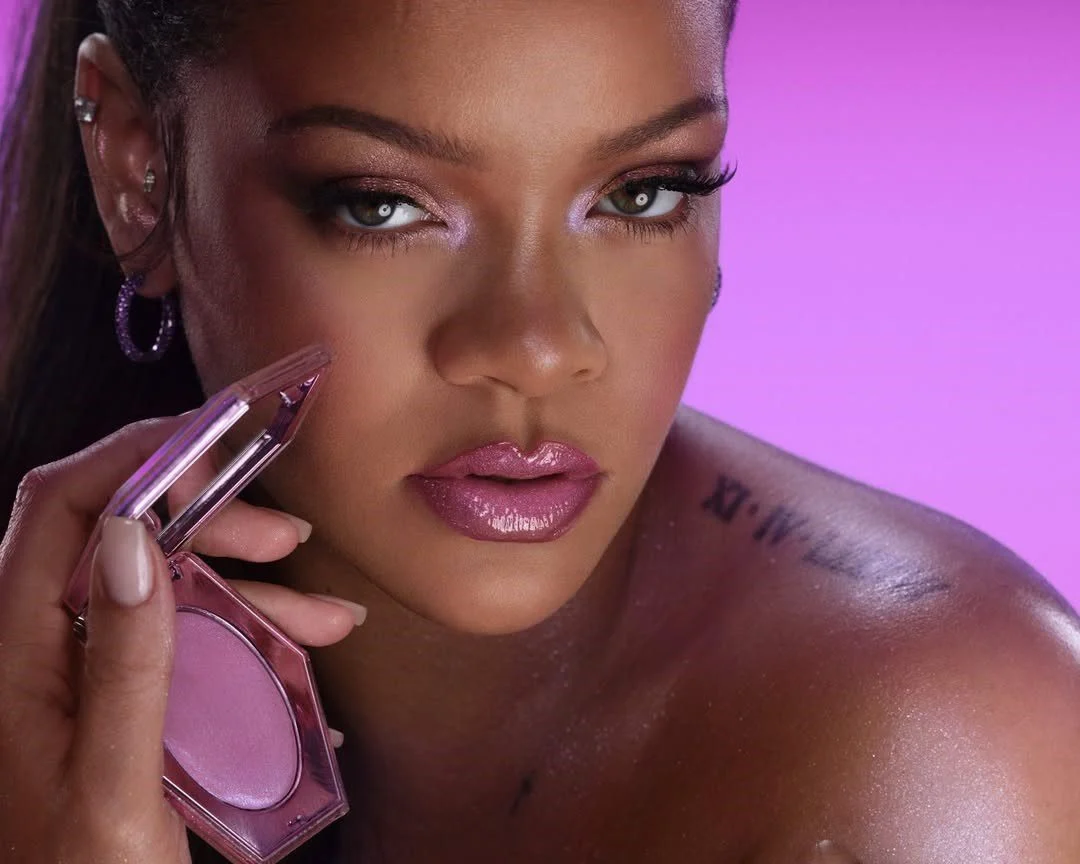
Louis Vuitton Moët Hennessy (LVMH), the world’s largest luxury conglomerate, is reportedly exploring a potential divestiture of its 50% stake in Fenty Beauty, the cosmetics powerhouse co-owned by international superstar Robyn Rihanna Fenty. According to reports from Reuters and industry insiders, the French luxury group has engaged the services of investment bank Evercore to advise on the possible transaction. While the deliberations are in the preliminary stages and may not necessarily result in a sale, the move signals a significant pivot in LVMH’s long-term strategy regarding celebrity-led partnerships and its broader beauty portfolio.
Fenty Beauty, which was launched in 2017 through LVMH’s Kendo Brands incubator, has been one of the most successful ventures in the history of the beauty industry. The brand is currently estimated to have generated approximately $450 million in sales in 2024. Market analysts suggest that a sale of LVMH’s stake could value the entire brand between $1 billion and $2 billion, reflecting its strong brand equity and its role as a pioneer in inclusive cosmetics. The potential exit comes at a time when LVMH is undergoing a "strategic cleanup," offloading non-core assets and refocusing its resources on its legacy "Maisons" such as Louis Vuitton, Dior, and its retail powerhouse, Sephora.
The Genesis of Fenty Beauty and the Inclusive Revolution
To understand the weight of a potential LVMH exit, one must look back at the brand’s transformative impact on the market. Launched in September 2017, Fenty Beauty was a collaborative effort between Rihanna and Kendo, LVMH’s San Francisco-based developer of "original" beauty brands. The partnership was founded on a gap in the market: the lack of foundation shades for women of color.
Fenty Beauty debuted with an unprecedented 40 shades of Pro Filt’r Soft Matte Longwear Foundation, a move that forced the entire beauty industry to recalibrate its offerings. This phenomenon, later dubbed "The Fenty Effect," saw competitors like Estée Lauder and L’Oréal rapidly expanding their own shade ranges to remain relevant. Within its first few weeks of operation, Fenty Beauty reportedly generated $100 million in sales, making it one of the fastest-growing launches in the history of LVMH’s beauty division.
By 2018, the brand had expanded its footprint into 29 countries and over 1,600 stores. The success of the makeup line paved the way for the launch of Fenty Skin in 2020 and Fenty Fragrance in 2021. Throughout this period, LVMH provided the logistical, manufacturing, and distribution infrastructure—largely through Sephora—that allowed Fenty to scale at a speed that most independent celebrity brands could only imagine.
Chronology of LVMH’s Partnership with Rihanna
The relationship between the French conglomerate and the Barbadian singer has seen various phases of expansion and contraction over the last seven years:
- 2017: Fenty Beauty launches under Kendo Brands, achieving instant global success.
- 2019: LVMH and Rihanna launch "Fenty," a luxury fashion house based in Paris. This was the first time LVMH had built a brand from scratch since Christian Lacroix in 1987.
- 2020: Fenty Skin is introduced, leveraging the massive social media following of the Fenty brand to dominate the skincare category.
- February 2021: LVMH and Rihanna announce the "suspension" of the Fenty fashion house (ready-to-wear) due to the challenges of the COVID-19 pandemic and the difficulty of scaling a high-end luxury fashion brand at a celebrity price point.
- 2021–2023: LVMH focuses on Fenty Beauty and Fenty Skin while Rihanna continues to grow her independent Savage X Fenty lingerie line (which is backed by LVMH’s private equity arm, L Catterton, but not LVMH itself).
- 2024: Rumors emerge regarding LVMH’s desire to divest its stake in the beauty arm as part of a broader consolidation strategy.
Analyzing the $1 Billion to $2 Billion Valuation
The estimated valuation of $1 billion to $2 billion for Fenty Beauty is rooted in several financial metrics. Historically, high-growth beauty brands have been acquired at multiples of 3x to 5x their annual revenue, or 15x to 20x their EBITDA (Earnings Before Interest, Taxes, Depreciation, and Amortization).
With Fenty Beauty generating an estimated $450 million in 2024, a $1.5 billion valuation would represent a revenue multiple of roughly 3.3x. While this is a healthy figure, it is slightly more conservative than the peak multiples seen during the 2016–2019 "beauty boom," when brands like IT Cosmetics and Drunk Elephant were acquired for higher premiums. The moderation in valuation reflects a broader cooling in the beauty sector and the rising costs of customer acquisition on digital platforms.
Strategic Realignment: The "Portfolio Cleanup"
The potential sale of Fenty Beauty is not an isolated event but part of a discernible pattern within LVMH. Under the leadership of Bernard Arnault, the group has recently shown a preference for streamlining its portfolio to focus on high-margin, legacy-driven brands that offer greater long-term stability and full ownership.
Recent divestitures and strategic shifts include:
- Off-White: In late 2024, LVMH sold Off-White, the brand founded by the late Virgil Abloh, to Bluestar Alliance. This move signaled a retreat from streetwear-centric labels that rely heavily on the creative direction of a single, highly influential figure.
- Stella McCartney: LVMH previously sold its stake in Stella McCartney back to the founder, allowing the brand to operate independently.
- Marc Jacobs: Industry rumors persist that Marc Jacobs is being prepared for a sale or an initial public offering (IPO), despite the brand’s recent resurgence in the "contemporary luxury" segment.
Analysts suggest that LVMH is moving away from the "incubator" model (Kendo) for its top-tier luxury maisons. While Kendo served as a vital testing ground for brands like Fenty Beauty and Kat Von D (now KVD Beauty), the group’s focus is shifting toward internalizing beauty operations within its core fashion houses.
A prime example is the recent debut of "La Beauté Louis Vuitton." This makeup line, spearheaded by legendary makeup artist Pat McGrath, is positioned as an ultra-luxury, craftsmanship-led extension of the Louis Vuitton brand. By focusing on in-house beauty for brands like Louis Vuitton and Dior, LVMH captures 100% of the profits and maintains total control over brand equity, rather than splitting revenue and decision-making with a celebrity partner.
Macroeconomic Headwinds and the Luxury Slowdown
The decision to explore a sale also coincides with a challenging macroeconomic environment for the luxury sector. LVMH reported a 3% decline in organic revenue in its third-quarter 2024 earnings, driven largely by a significant slowdown in consumer spending in China and inflationary pressures in the United States and Europe.
In this climate, investors often favor "pure-play" luxury assets—those with deep historical heritage and high price-point resilience. While Fenty Beauty is a massive commercial success, it operates in the "prestige" beauty category rather than the "ultra-luxury" tier. Prestige beauty is more susceptible to "trading down" by consumers during economic downturns, whereas the core Louis Vuitton or Hermès customer tends to be more insulated from market fluctuations.
Industry Reactions and Potential Buyers
While LVMH and Evercore have declined to comment officially on the matter, the industry is already speculating on potential suitors for the 50% stake.
Possible buyers could include:
- Private Equity Firms: Groups like Advent International, Blackstone, or Carlyle have a history of investing in high-growth consumer brands. They could provide the capital needed to take Fenty Beauty to its next stage of global expansion, potentially preparing it for an IPO.
- Rihanna Herself: There is a strong possibility that Rihanna, whose net worth is estimated at over $1.4 billion by Forbes, may seek to buy back the stake to gain full control of her brand. This would follow the path of other founders like Stella McCartney or the late Estée Lauder family members who sought independence from larger conglomerates.
- Strategic Competitors: While less likely due to anti-trust concerns or brand overlap, other beauty giants like Estée Lauder Companies or Coty Inc. could theoretically show interest, although LVMH’s ownership of Sephora—Fenty’s primary distribution channel—makes a sale to a direct competitor complicated.
Implications for the Future of Celebrity Brands
The potential divestiture of Fenty Beauty raises questions about the long-term viability of the celebrity-conglomerate partnership model. For years, the industry believed that a celebrity’s social media reach combined with a conglomerate’s supply chain was a foolproof recipe for success.
However, as the market becomes saturated with celebrity brands (from Selena Gomez’s Rare Beauty to Hailey Bieber’s Rhode), the "novelty factor" has worn off. LVMH’s apparent desire to exit Fenty Beauty suggests that even the most successful celebrity brands may eventually reach a ceiling within a luxury conglomerate’s ecosystem. When a brand becomes "too big" for an incubator like Kendo but doesn’t fit the "heritage maison" criteria of the core LVMH group, a divestiture often becomes the most logical financial path.
Conclusion and Outlook
The exploration of a sale for Fenty Beauty marks the end of an era in LVMH’s history—an era defined by the fusion of pop culture and traditional luxury. Under Rihanna’s creative vision, Fenty Beauty did more than just sell products; it changed the cultural conversation around beauty and inclusivity.
For LVMH, the move represents a disciplined return to its roots. By offloading its stake, the group can realize a massive return on its initial investment while freeing up capital to invest in the next generation of in-house luxury experiences. For Rihanna, the move could signify the beginning of a new chapter of total brand autonomy.
As Evercore continues its advisory role, the global beauty and luxury markets will be watching closely. Whether Fenty Beauty finds a new partner or returns to its founder’s sole control, its legacy as the brand that "shook the table" is firmly secured. The coming months will determine if the brand can maintain its meteoric momentum without the backing of the world’s most powerful luxury house.