
 By admin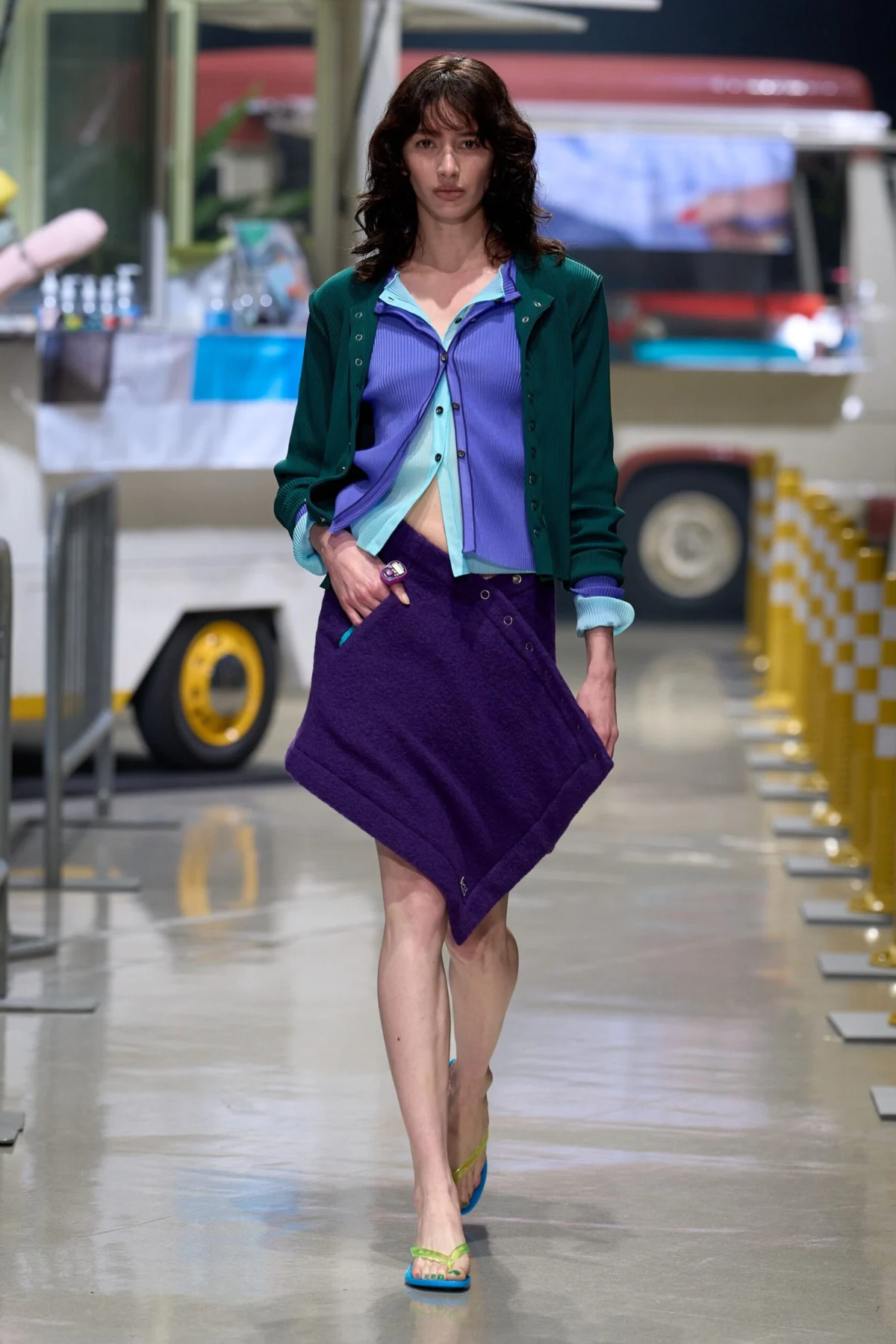
Kotoha Yokozawa, the acclaimed 34-year-old designer with a formidable background including a tenure on Uniqlo’s design team, made a resounding return to the runway for Tokyo Fall 2026, marking her first show in four years. Staged on the ninth floor of Shibuya’s iconic Hikarie building, the collection served as a vibrant sartorial homage to the pulsating energy and distinct streetscapes of Tokyo, particularly drawing inspiration from her daily observations in Nishi-Shinjuku. This highly anticipated presentation underscored Yokozawa’s robust business acumen and her uniquely bold aesthetic, which seamlessly merges practicality with an avant-garde sensibility.
The designer articulated her inspiration backstage, citing the everyday scenes she encounters in Nishi-Shinjuku, a district renowned for its bustling tourist activity and relentless urban rhythm. Her eye for detail captured the disparate elements of city life: the casual conviviality of partygoers enjoying cans of chuhai, the sleek, modern presence of LUUP scooter docking stations, and the determined figures of neon-clad joggers preparing for the Tokyo Marathon. It was this confluence of the mundane and the aspirational that fueled her creative vision. "I really like that slightly mismatched look of colors that runners wear, like they’ve bought different things and have to make it work," Yokozawa commented, highlighting a key theme. "I think color has the power to lift your spirit, and I hope that comes across." The resulting collection unfolded in a confident and audacious palette featuring electrifying punches of fuchsia, tangerine, mint, and lemon, presenting a sporty, energetic narrative that encapsulated the frenetic dynamism synonymous with the Japanese capital.
A Deep Dive into Urban Inspiration and Design Philosophy
Yokozawa’s decision to root her collection in the tangible realities of Nishi-Shinjuku speaks volumes about her design philosophy. Unlike many designers who might seek abstract or global inspirations, Yokozawa grounds her work in the immediate, the lived experience. Nishi-Shinjuku, a major commercial and administrative center, is a microcosm of Tokyo’s relentless pace and diverse demographics. It is a district where skyscrapers loom over quaint backstreets, where business professionals mingle with tourists, and where the echoes of tradition meet the demands of modernity. The observation of partygoers with chuhai – a popular, accessible alcoholic beverage – speaks to the casual nightlife culture, while LUUP scooters, an emerging micro-mobility solution, symbolize Tokyo’s embrace of technological convenience and its commitment to urban efficiency. The sight of marathon runners, clad in their often disparate but highly functional gear, directly informed the collection’s vibrant, sometimes clashing, color schemes and its underlying athletic energy.
This deliberate focus on urban authenticity is not merely a stylistic choice but a philosophical stance for Yokozawa. Her previous experience at Uniqlo, a brand celebrated globally for its high-quality, functional basics, likely instilled in her a deep appreciation for clothing that integrates seamlessly into daily life. However, Yokozawa elevates this functionality with an artistic flair, transforming everyday observations into high fashion. Her belief in the "power of color to lift your spirit" resonates deeply in a post-pandemic world, where psychological well-being is increasingly linked to environmental stimuli, including fashion choices. The collection’s vivacious palette is therefore not just aesthetically pleasing but carries an inherent message of optimism and resilience, reflecting the spirit of a city that constantly reinvents itself.
The Collection: Signature Silhouettes and Ingenious Details
The garments themselves provided a compelling interpretation of Yokozawa’s vision. The brand’s signature stretch pleat tops, known for their distinctive texture and adaptable fit, formed a foundational element of the collection. These were ingeniously styled, often paired with sheer skirts that added a layer of ethereal movement, and tight, cropped cardigans that provided a contemporary silhouette. While the collection largely garnered praise for its innovative spirit, some pieces, such as a drab fluffy jacket and a series of overly straightforward yoga pants, were noted as less impactful, perhaps lacking the distinctive edge that characterized much of the presentation.
The true highlights, however, showcased Yokozawa’s evolving design prowess and her commitment to unconventional elegance. Futuristic men’s pieces, styled with popper-lined jeans, presented a refreshing take on menswear, blending utility with a forward-thinking aesthetic. These pieces signaled a potential expansion of Yokozawa’s market reach, venturing confidently into a segment often overlooked by designers with a strong womenswear focus. Equally captivating were the slinky dresses adorned with intricate fabric cutouts. This detail, far from being a mere stylistic flourish, carries a significant origin story rooted in resourcefulness and ingenuity. "When I first started my brand, I didn’t have the money to commission a factory and I didn’t know much about patterns, so I’d cut it myself and attach leftover fabric," Yokozawa revealed. This anecdote not only provides a glimpse into her humble beginnings but also highlights a commendable approach to design that prioritizes sustainability and creative problem-solving, even if born out of necessity. In an era where conscious consumption and upcycling are gaining traction, this thrifty yet artful technique positions Yokozawa as a designer who embodies both innovation and environmental awareness.
An Immersive Experience: The Set Design and Cultural Nuances
Beyond the garments, the show’s set design was widely lauded as one of the season’s most memorable and immersive experiences. Transforming the ninth floor of Shibuya Hikarie into a bustling urban tableau, Yokozawa meticulously crafted an environment that extended her narrative beyond the clothing. Two authentic food trucks and a tuk-tuk were transported into the expansive space, immediately invoking the vibrant street-food culture and global influences prevalent in Tokyo. The runway itself was delineating with an array of traffic bollards and strategically placed huge plants, blurring the lines between urban infrastructure and natural elements, mirroring the city’s own blend of concrete and greenery.
Adding a layer of nostalgic charm and playful commentary, the models wore plastic pedometers or Tamagotchis clipped to their waists, a distinct Y2K throwback. This detail resonated with a generation nostalgic for early digital culture, simultaneously underscoring the themes of movement, urban navigation, and the passage of time. The pedometers, in particular, tied back to the marathon runner inspiration, symbolizing the constant motion of city life. "I really enjoy creating spaces, props, and even small souvenirs just as much as I enjoy making clothes. They’re essential to my work," Yokozawa emphasized, articulating her holistic approach to fashion presentation. "Simply showing clothes isn’t what I like about fashion, it’s something that exists within a landscape." This statement encapsulates her vision: fashion as an integral component of a larger cultural and environmental narrative, rather than an isolated artistic expression.
Kotoha Yokozawa’s Journey and Brand Evolution
Kotoha Yokozawa’s career trajectory offers valuable insight into the Japanese fashion industry’s unique ecosystem. Her foundational experience at Uniqlo, a global giant in casual wear, provided her with a pragmatic understanding of manufacturing, market demands, and consumer behavior. This background likely equipped her with the commercial acumen necessary to build a successful independent brand. Launching her eponymous label and navigating the early challenges of limited resources, as evidenced by her innovative fabric cutout technique, demonstrates a resilience and creative spirit that are hallmarks of successful independent designers. The four-year hiatus from the runway, while potentially a period of quiet development or strategic re-evaluation, has clearly culminated in a powerful return, signaling a mature and confident brand vision.
Tokyo Fashion Week (TFW), officially known as Rakuten Fashion Week Tokyo, serves as a crucial platform for both established and emerging Japanese designers to showcase their collections to a global audience. While not as historically dominant as Paris, Milan, New York, or London, TFW has carved out a distinctive niche by celebrating a unique blend of avant-garde design, street style influence, and meticulous craftsmanship. Yokozawa’s show, with its strong narrative and immersive presentation, contributed significantly to the week’s overall impact, reinforcing Tokyo’s position as a vital hub for innovation and cultural expression in fashion. Her collection’s embrace of athleisure elements, vibrant color blocking, and resourceful design aligns with several broader global fashion trends, suggesting her work possesses both local relevance and international appeal.
Critical Reception and Commercial Outlook
The initial reception to Kotoha Yokozawa’s Tokyo Fall 2026 collection has been overwhelmingly positive, particularly for its cohesive vision and immersive execution. Industry analysts have noted the collection’s commercial viability, particularly the signature stretch pleat tops and the newly introduced men’s pieces, which offer distinct market appeal. Buyers are expected to respond favorably to the collection’s energetic color palette and its practical yet stylish separates, which cater to a modern consumer seeking comfort, individuality, and a touch of artistic flair. The fabric cutout dresses, while more avant-garde, are likely to attract fashion-forward retailers and consumers appreciative of unique craftsmanship and a designer’s origin story.
Beyond the immediate commercial prospects, Yokozawa’s return signals a significant moment for her brand. It solidifies her artistic identity and reinforces her position as a designer capable of creating not just clothes, but entire experiential narratives. The meticulous attention to detail in the set design, combined with the deeply personal inspiration, elevates her presentations beyond mere fashion shows, transforming them into cultural statements. This holistic approach is increasingly vital in a competitive fashion landscape, where designers must offer more than just garments to capture attention and foster loyalty. Her ability to translate the raw energy of Tokyo into a sophisticated yet playful collection positions her as a key voice in contemporary Japanese fashion, with the potential to influence global trends in urban-inspired design and immersive fashion experiences.
Conclusion: A Future Forged in Tokyo’s Heartbeat
Kotoha Yokozawa’s Tokyo Fall 2026 collection at Shibuya Hikarie was more than a fashion show; it was a vivid tableau vivant, a celebration of Tokyo’s relentless pulse and the designer’s profound connection to her urban environment. From the vibrant, almost clashing colors inspired by marathon runners to the resourceful elegance of her fabric cutout dresses, every element spoke of a designer deeply attuned to her surroundings and unafraid to infuse her work with personal history and optimistic energy. By creating a truly immersive "landscape" for her clothes, Yokozawa demonstrated that fashion can be a powerful medium for storytelling, cultural commentary, and a source of genuine uplift. Her compelling return to the runway not only marks a pivotal moment for her brand but also reaffirms Tokyo’s enduring influence as a crucible of creativity and a dynamic force in the global fashion narrative, promising an exciting future for a designer who understands that fashion, at its heart, exists within the fabric of life itself.