
 By admin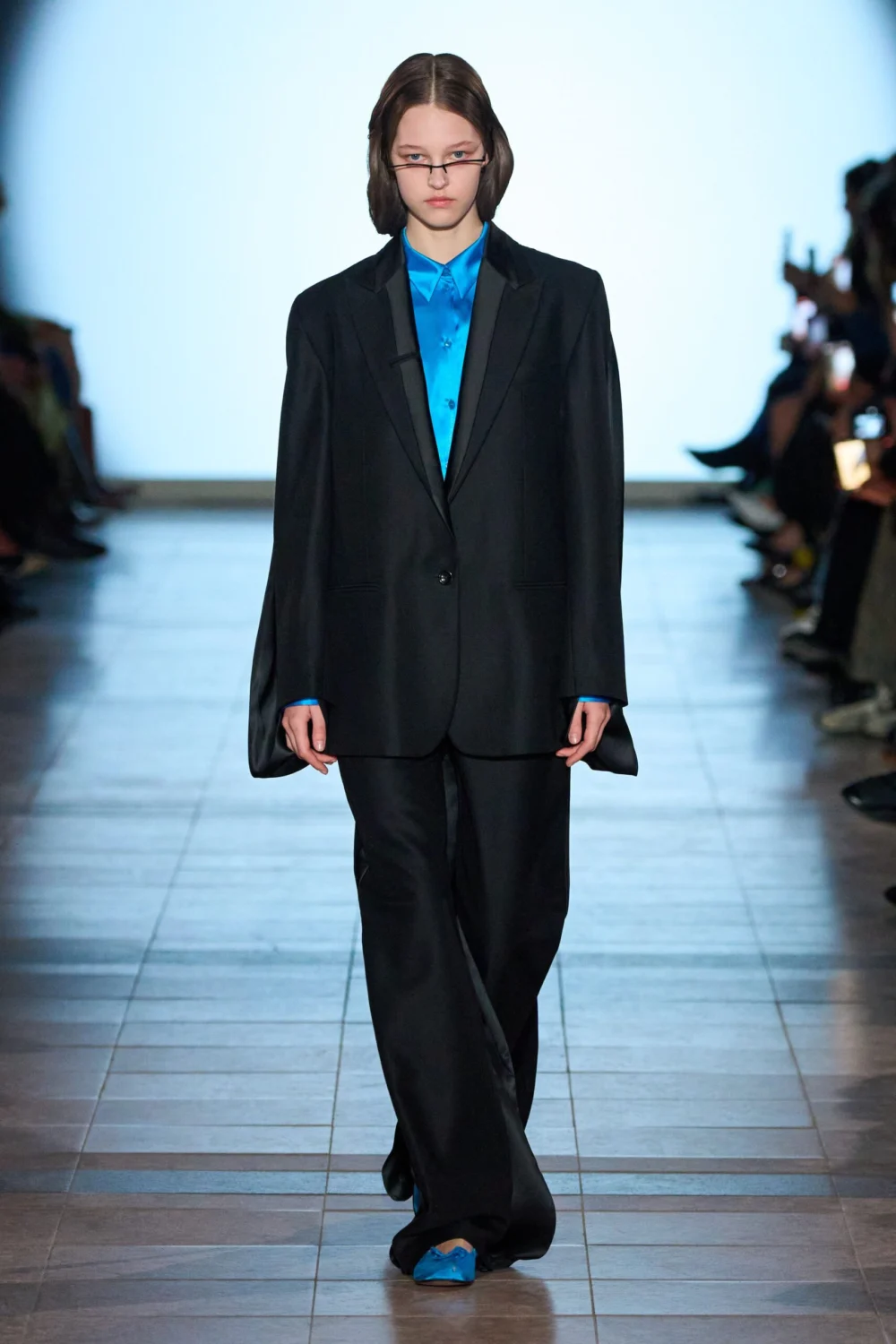
LVMH Prize semi-finalist Julie Kegels recently unveiled her highly anticipated fall collection, aptly titled "Aura," marking a profound exploration into the capability of clothing to alter how individuals are perceived by the world. Diverging sharply from the ephemeral internet lexicon surrounding the term "aura," Kegels’ collection delves into a more philosophical and nuanced understanding, positioning garments not merely as aesthetic statements but as sophisticated tools for self-presentation, protection, and even illusion in an increasingly public sphere. The collection, presented to critical acclaim, underscores Kegels’ growing reputation as a designer who masterfully blends conceptual depth with innovative sartorial execution, challenging conventional notions of visibility and identity in contemporary fashion.
The Conceptual Genesis: Decoding "Aura"
Kegels’ starting point for "Aura" was deeply rooted in intellectual inquiry, drawing significant inspiration from Andy Warhol’s seminal work, The Philosophy of Andy Warhol (From A to B and Back Again). Warhol famously posited that everyone possesses a certain aura until they open their mouth, a notion that resonated profoundly with Kegels. "I really love Warhol’s thinking," Kegels stated in a preview, highlighting its pertinence in today’s hyper-connected world. "It’s quite funny and it’s true. We live in a very public time, where everything is visible. So I wanted to explore how your clothes can shield the real you." This philosophical underpinning forms the bedrock of the collection, guiding every design decision from silhouette to fabric choice.
In an era saturated with digital imagery and constant self-documentation, where personal "brands" are meticulously curated online, the concept of a hidden, authentic self becomes particularly poignant. Kegels’ collection offers a tangible counter-narrative, proposing that fashion can serve as a deliberate barrier or a curated facade, allowing the wearer to control the external perception while safeguarding their inner reality. This idea transcends fleeting trends, tapping into a fundamental human desire for privacy and self-determination in an age of unprecedented exposure.
Further enriching her conceptual framework, Kegels looked to the work of Korean artist Kyungwoo Chun. Chun is renowned for his unique portraiture, capturing subjects over extended periods of conversation, resulting in blurred, ethereal images. These photographs, which deliberately obscure facial features, are said to "speak to a person’s aura" without revealing their literal identity. This artistic parallel provided Kegels with a visual metaphor for her garments: clothes that hint at an essence, evoke a presence, yet retain a certain ambiguity, allowing the wearer’s true self to remain subtly concealed or selectively revealed. The blending of Warhol’s philosophical wit and Chun’s evocative visual artistry provided a robust foundation for Kegels’ ambitious undertaking.
Innovations in Silhouette and Form: Manifesting the Unseen
At the heart of the "Aura" collection’s design methodology was an intricate experimentation with shadow. Kegels treated shadow not merely as an absence of light but as a malleable, almost sentient extension of the self, capable of being manipulated by the cut and drape of fabric. This innovative approach manifested vividly during the show, where models’ shadows were projected behind them. These projected shadows, pre-recorded in a studio, sometimes "misbehaved," displaying movements or forms distinct from the models themselves. This deliberate disjunction served to illustrate the core thesis: that outward appearance might not always align with inner reality, and that there is always an element of imperfection and humor in the human experience. "It’s important to me that a Julie Kegels girl might always try to control everything, but there’s always imperfection, and always some humor," the designer remarked, emphasizing the human element in her meticulously crafted illusions.
The collection’s palette marked a notable departure for Kegels, gravitating towards darker, more subdued tones than her previous, often more vibrant offerings. This shift aligned with the protective, almost austere silhouettes that dominated the runway. Longer lines and more structured forms characterized the garments, a thematic resonance also observed among other prominent women designers in Milan, signaling a broader industry trend towards more considered, substantial fashion that offers a sense of security and gravitas.
Before embarking on the construction of tailored jackets and skirts, Kegels meticulously studied how shadow forms could distort or enhance a garment. This exploration resulted in distinctive design elements:
- Wonky Navy and Gray Skirts: Featuring curved thigh slits, these skirts played with the viewer’s perception of form and movement, creating an unexpected dynamism.
- Manipulated Jacket Sleeves: Kegels ingeniously cut jacket sleeves in a rounded shape. When models walked with their hands by their sides, the sleeves created the optical illusion of hands confidently placed on hips. "It’s so you look confident, even if you’re not," Kegels explained, demonstrating the subtle yet powerful psychological effect embedded in the design. This detail exemplifies her pragmatic approach to conceptual fashion – design with a deliberate, empowering function.
- Shifted Armholes and Spilling Linings: The armholes on shirts and jackets were strategically shifted backward, with some of the lining deliberately allowed to spill over the shoulders. This architectural detail was intended to "give the feeling of being ahead of yourself," suggesting an active, forward-moving stance.
- Asymmetrical, Super-Starched Collars: Collars were lined with wool, then subjected to a hot wash, resulting in an imperfect, super-starched stiffness and striking asymmetry at the neck. This detail added an element of controlled rebellion and individuality, contrasting with the overall austere lines.
- Aggressive and Protective Accessories: Footwear and leather caps were crafted from raw, jagged-cut leather in a bold palette of tangerine, black, and teal. These accessories were designed to project an "aggressive, and protective" aura, completing the ensemble with a sharp, assertive edge.
The Dynamic Garment: Bubbles, Layers, and Optical Illusions
Beyond static silhouettes, Kegels injected a dynamic, transformative quality into "Aura" through innovative garment construction and optical illusions. A standout feature was the "bubble-like" cape of fabric integrated at the back of several dresses. Kegels described these as "a double of your garment that always follows you as a protection." These ethereal, modular additions appeared in various iterations, from a subtle green silk bubble trailing behind navy trousers to a more dramatic, voluminous white silk bubble billowing from the back of a nightgown. Crucially, these elements were designed for versatility: they could be clipped at the nape of the neck or the waistband to create the signature bubble effect, or allowed to fall freely, transforming into a dramatic train, thereby adapting to the wearer’s mood or desired level of theatricality. This modularity not only enhances the garment’s functionality but also reinforces the theme of adaptable self-presentation.
Building on her previous season’s fascination with "quick change looks" inspired by magicians’ techniques, Kegels concluded "Aura" with a compelling series of looks that responded to each other, creating intricate tricks of the eye. The finale sequence was a masterclass in visual storytelling and conceptual layering. It began with a model exiting in a pristine white silk gown, carrying several white bags and hat boxes. This was immediately followed by a gray tailored wool coat, meticulously constructed to mimic the exact silhouettes of the preceding bags and boxes. In shadow form, the coat and the accessories appeared identical, blurring the lines between garment and object. The ultimate reveal came with a silk dress bearing the imprint of a gray look, as if the tailored coat had blocked its light, leaving a phantom trace. "It’s three layers of appearance," Kegels elaborated, encapsulating the profound commentary on perception. "Your appearance is always perceived differently by everyone, so I also wanted to show that." This climactic sequence served as a powerful summation of the collection’s core message: that identity and perception are fluid, multi-layered, and subject to interpretation.
Broader Industry Context and Implications
Julie Kegels’ journey as an LVMH Prize semi-finalist positions her at the forefront of emerging design talent, signaling a future-forward direction for the luxury fashion landscape. The LVMH Prize, known for its rigorous selection process and its track record of identifying designers who possess both creative vision and commercial potential, provides an unparalleled platform for designers like Kegels to gain international recognition and support. Her inclusion is a testament to her unique voice and her ability to push conceptual boundaries while maintaining a strong sartorial identity. The prize’s emphasis on innovation aligns perfectly with Kegels’ approach, which consistently seeks to integrate philosophical inquiry with practical garment design.
The "Aura" collection transcends mere aesthetic appeal, serving as a potent piece of social commentary. In an age dominated by digital personas and the performative aspects of social media, Kegels prompts a crucial dialogue about authenticity, vulnerability, and the protective mechanisms individuals employ. Fashion, in her hands, becomes a tool for navigating complex psychological landscapes, offering solace, confidence, or an intriguing veil. This approach aligns with a growing trend among contemporary designers who are increasingly using their collections to explore deeper socio-cultural themes, moving beyond superficial trends to address issues of identity, sustainability, and mental well-being.
The collection’s engagement with the internet-popularized term "aura" versus its philosophical roots highlights a broader cultural tension between superficial digital trends and enduring human experiences. While "aura" might be TikTok shorthand for a vibe, Kegels elevates it to a discourse on self-preservation and the intricate dance between inner self and outer presentation. This intellectual depth sets her apart, demonstrating how fashion can both reflect and shape contemporary consciousness.
Ultimately, "Aura" offers a compelling vision for the future of fashion—one that is thoughtful, transformative, and deeply resonant. By focusing on the psychological impact of clothing and its power to manipulate perception, Julie Kegels not only presents a visually stunning collection but also invites consumers to engage with their garments on a more profound, introspective level. Her work suggests that the clothes we choose are not just about style, but about strategy; they are about crafting our narrative, asserting our presence, and ultimately, protecting our most authentic selves in a world that increasingly demands visibility. As Kegels continues to evolve, her ability to blend art, philosophy, and innovative design solidifies her position as a significant voice shaping the discourse and direction of contemporary fashion.