
 By admin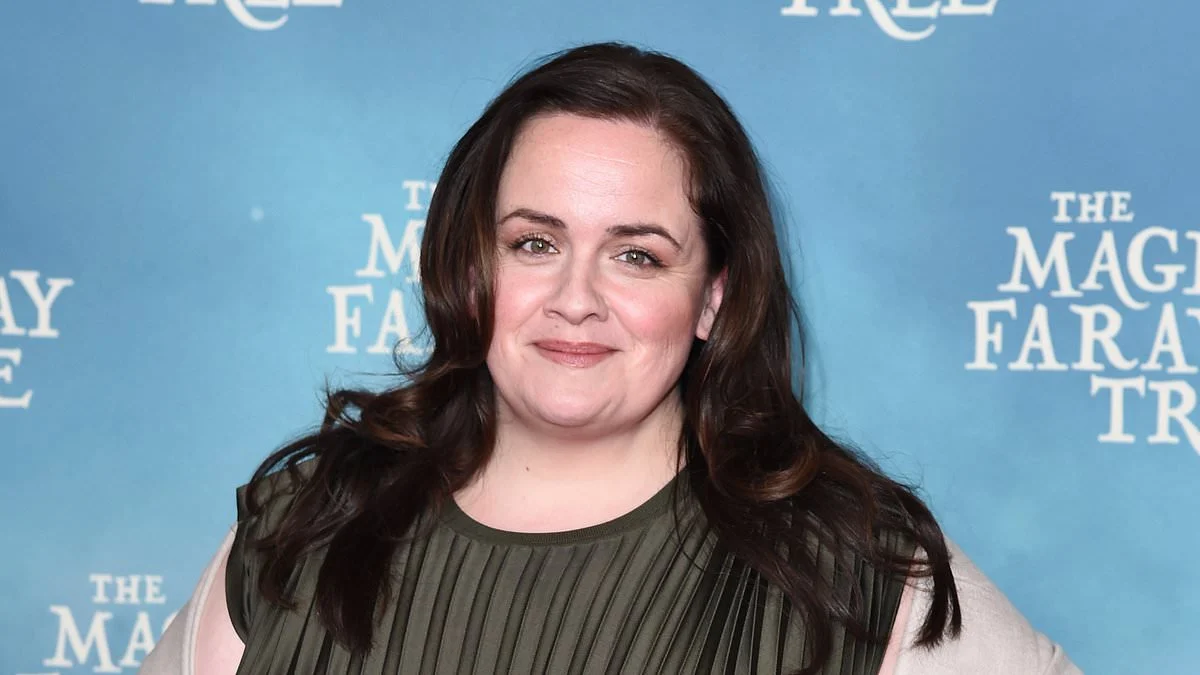
In a candid and wide-ranging interview that has resonated across the entertainment industry, Jessica Gunning, the breakout star of the global Netflix phenomenon Baby Reindeer, has shared the intimate details of her journey toward self-discovery. Speaking with The Sunday Times Magazine, the 40-year-old actress revealed that she remained celibate until the age of 36, a period that concluded only when she came out as gay in 2022. The revelation offers a poignant look at the intersection of professional dedication, body image, and the delayed realization of sexual identity in the modern age.
Gunning, whose portrayal of the complex and haunting Martha Scott in Richard Gadd’s Baby Reindeer earned her international acclaim, explained that her primary identity for decades was rooted almost exclusively in her craft. "I’ve never been in a relationship before. With anyone," she told the publication, reflecting on her life prior to 2022. For Gunning, the absence of romantic or sexual connections was not a source of active distress during her twenties and early thirties; rather, it was a byproduct of a life deeply immersed in the lives of the characters she portrayed on stage and screen.
The Catalyst for Change and the "Otherness" of Identity
The turning point for Gunning occurred during a conversation with a lesbian acquaintance in 2022. This interaction served as a catalyst, allowing her to frame her feelings in a way she had not previously considered. Up until that point, Gunning described a sense of fulfillment that came from her social circle and her career. Living with her best friend and working steadily in the British television and theater circuits, she noted that she did not feel "lonely" or that she was "lacking anything."
However, Gunning provided a nuanced analysis of why she believes her realization took nearly four decades to manifest. She pointed to a sense of "otherness" that she felt was partly connected to her physical size. In the interview, she carefully articulated that being a plus-size woman in an industry often obsessed with narrow beauty standards created a protective barrier. This "otherness," she mused, perhaps shielded her from the societal expectation to pursue traditional heteronormative relationships.
"The otherness, I suppose, looking back, protects me from having to go, ‘I don’t fancy men,’" Gunning explained. "So I was just like, ‘Oh, it’s not the time for me,’ or whatever. And then, before I knew it, I was in my thirties." This reflection highlights a significant psychological phenomenon often discussed in LGBTQ+ discourse: the way in which external factors—such as body image or career focus—can delay the process of coming out by providing alternative explanations for a lack of romantic engagement.
Professional Success and Personal Milestones
The timing of Gunning’s personal revelation is particularly striking when viewed alongside her career trajectory. Her decision to come out at 36 coincided almost exactly with the production and subsequent release of Baby Reindeer, the project that would change her life. Since coming out, Gunning confirmed she has been in two relationships, marking a significant departure from her previous decades of celibacy.
The actress emphasized that while she was celibate, she did not feel disconnected from herself. "I felt very sexual, and I felt very connected to myself, so I was so happy in so many ways," she stated, challenging the stereotype that a lack of sexual activity equates to a lack of self-awareness or vitality. Her experience suggests a "vicarious" living through her roles, where the emotional depths of her characters provided the catharsis she was not yet seeking in her private life.
A Chronology of Artistic Growth: From The Outlaws to Baby Reindeer
To understand the magnitude of Gunning’s recent success, it is necessary to look at the steady foundation she built over twenty years in the industry. Born in Holmfirth, West Yorkshire, Gunning’s career began with a series of well-regarded roles in British television.
- 2007–2010: Gunning made her mark in shows like Doctor Who and Mutual Friends, establishing herself as a versatile character actress.
- 2014: She gained critical attention for her role as Sian James in the hit film Pride, which told the story of LGSM (Lesbians and Gays Support the Miners). Ironically, she was portraying a key figure in LGBTQ+ history years before her own coming out.
- 2021–2024: She starred as Diane Pemberley in Stephen Merchant’s The Outlaws, a role that showcased her comedic timing and further solidified her presence on mainstream television.
- 2024: The release of Baby Reindeer on Netflix. The series, based on Richard Gadd’s autobiographical play, became a cultural touchstone, with Gunning’s performance as the stalker Martha Scott being hailed as one of the finest of the year.
The success of Baby Reindeer was monumental. Within weeks of its release, the show topped streaming charts globally, and Gunning became a frontrunner for major acting awards. The intensity of the role—a woman struggling with severe mental health issues and an obsessive fixation—contrasted sharply with the "nice world" Gunning sought to escape to in her subsequent projects.
Broader Implications: Late Coming Out in the Public Eye
Gunning’s story adds a significant voice to the growing visibility of "late bloomers" within the LGBTQ+ community. Sociological data suggests that while the average age for coming out has decreased in younger generations, a substantial number of individuals in their 30s, 40s, and 50s are increasingly feeling empowered to re-evaluate their sexuality later in life.
Industry analysts suggest that Gunning’s honesty regarding her celibacy and her body image provides a rare and necessary representation. In a Hollywood landscape that often hyper-sexualizes young actors or relegates plus-size performers to the role of the "asexual best friend," Gunning’s assertion that she felt "very sexual" and "connected" to herself during her celibacy is a powerful reclamation of agency.
Furthermore, her success serves as a rebuttal to the industry myth that an actor’s "peak" is in their twenties. At 40, Gunning is entering the most prolific and high-profile stage of her career, armed with a new sense of personal authenticity.
Future Projects: From Enid Blyton to Apple TV+
As Gunning navigates her newfound global fame, her upcoming slate of projects indicates a refusal to be typecast. This Friday marks the cinema release of The Faraway Tree, a film adaptation of the Enid Blyton classic. Gunning stars as Dame Washalot, appearing alongside a powerhouse cast including Nicola Coughlan, Claire Foy, and Andrew Garfield.
Gunning admitted to Refinery29 that landing the role of Dame Washalot the same week Baby Reindeer premiered was a welcome change of pace. "It was a very different contrast, in a good way," she remarked. "I think it was quite a nice world to escape to."
Looking further ahead, Gunning is set to tackle another complex real-life figure. She will portray the legendary Cass Elliot in My Mama Cass, a biographical drama based on the memoir by Elliot’s daughter, Owen Elliot-Kugell. Cass Elliot, a member of The Mamas & the Papas, was an icon of the 1960s who, much like Gunning, dealt with public scrutiny regarding her size while possessing an undeniable, world-class talent. This role is expected to be a significant awards-season contender, further cementing Gunning’s status as a leading dramatic actress.
Additionally, Apple TV+ announced this week that Gunning has joined the ensemble cast of its upcoming untitled series based on Metropolis, adapted from Philip Kerr’s Berlin Noir book series. The project, set against the backdrop of pre-war Germany, represents Gunning’s move into high-budget, prestige international television.
Conclusion: A New Chapter of Authenticity
Jessica Gunning’s journey from a self-described "fulfilled" but celibate actress to a globally recognized star living her truth as a gay woman is a testament to the non-linear nature of personal growth. By speaking openly about her 36 years of celibacy and the role that body image played in her self-perception, she has opened a dialogue about the diverse ways in which people experience identity.
As she moves from the dark, psychological depths of Baby Reindeer to the whimsical world of Enid Blyton and the historical weight of the Berlin Noir series, Gunning remains focused on her work, but now with the added strength of personal clarity. Her story serves as a reminder that major life milestones—both professional and personal—do not have a fixed expiration date and that for many, the most authentic chapters are often the ones written later in life.