
 By admin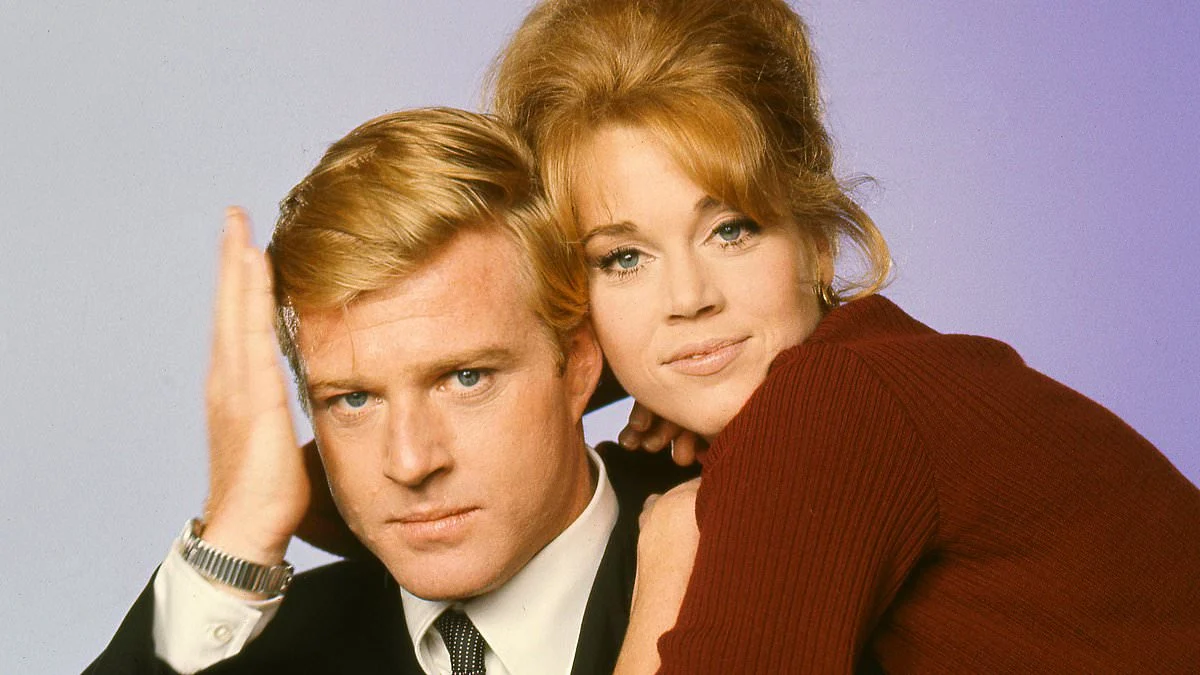
The atmosphere of the most recent Academy Awards, typically a night of industry-wide unity and celebration, has been punctuated by an unexpected public disagreement between two of Hollywood’s most enduring figures. Octogenarian icons Jane Fonda and Barbra Streisand have become the center of a high-profile dispute concerning the appropriate representation of the late Robert Redford during the ceremony’s prestigious "In Memoriam" segment. The tension arose after Streisand was selected by the Academy of Motion Picture Arts and Sciences to deliver the keynote tribute and a musical performance honoring Redford, who passed away in September at the age of 89.
Jane Fonda, 88, expressed her dissatisfaction with the Academy’s choice, arguing that her extensive professional history with Redford made her the more logical candidate to lead the tribute. Speaking with Entertainment Tonight, Fonda questioned the decision-making process that placed Streisand on stage, citing the disparity in the number of films each actress had shared with the legendary actor and director. The disagreement highlights the complexities of legacy and the competitive nature of Hollywood tributes, even among veterans with decades of accolades.
The Foundation of the Dispute: A Comparison of Collaborations
The core of Fonda’s argument rests on the sheer volume of work she produced alongside Redford throughout their careers. Fonda and Redford’s professional partnership spanned nearly six decades, beginning with the 1960 film Tall Story, which served as Fonda’s cinematic debut. They followed this with the 1966 thriller The Chase, the 1967 romantic comedy classic Barefoot in the Park, and the 1979 neo-Western The Electric Horseman. Their collaboration concluded in 2017 with the Netflix original film Our Souls at Night, a project that served as a poignant bookend to their shared history.
"I want to know how come Streisand was up there doing that for Redford," Fonda told Entertainment Tonight during a post-Oscar interview. "She only made one movie with him; I made four!" Fonda further elaborated on her deep personal and professional affection for Redford, describing him as "the most gorgeous human being" who possessed "such great values." She credited Redford with significantly elevating the status of independent cinema through his work and the founding of the Sundance Institute. Fonda’s remarks suggest a belief that a tribute should reflect the depth and duration of a professional relationship rather than the singular cultural impact of a specific project.
Conversely, Barbra Streisand’s connection to Redford is inextricably linked to the 1973 romantic drama The Way We Were. While it remains their only collaboration, the film is widely regarded as one of the most iconic romances in American cinema. The chemistry between Streisand’s character, Katie Morosky, and Redford’s Hubbell Gardiner became a cultural touchstone, and the film’s title song, performed by Streisand, won the Academy Award for Best Original Song.
The Academy Award Tribute and Streisand’s Performance
During the Oscar Sunday broadcast, Streisand took the stage to honor Redford with a speech that blended personal anecdote with professional admiration. She recounted the difficulties of casting Redford in The Way We Were, noting that he initially rejected the script because he felt the character of Hubbell Gardiner lacked "backbone."
"He said the character doesn’t stand for anything—and he was right," Streisand shared with the audience. "So many drafts later, Bob finally agreed to do it. He was a brilliant, subtle actor, and we had a wonderful time playing off each other because we never quite knew what the other one was going to do in a scene." Streisand concluded her tribute by singing a rendition of "The Way We Were," a performance that served as the emotional centerpiece of the segment. She described Redford as a "little intellectual cowboy who blazed his own trail," adding that she misses him "now more than ever."
Streisand’s involvement in the tribute was also supported by her public history of mourning Redford. Following his death in September, she released a statement via social media reflecting on their time on set. She noted their differences—highlighting that Redford was a horseman while she was allergic to them—and praised his intelligence and charisma. This long-standing public association likely influenced the Academy’s decision to choose her for the performance.
The Broader Context of the "In Memoriam" Segment
The dispute between Fonda and Streisand occurred within a larger, more extended "In Memoriam" segment than in previous years, necessitated by the loss of several high-profile industry figures. The ceremony also featured a significant tribute to the late actor and director Rob Reiner, who passed away under tragic circumstances in December.
Billy Crystal, a long-time friend of Reiner, opened the segment with an emotional reflection on their relationship, which began in 1975 on the set of All in the Family. Crystal spoke of Reiner’s evolution from a comedic actor to a "master storyteller" behind such classics as The Princess Bride, When Harry Met Sally, and A Few Good Men. The tribute was a collective effort, ending with more than a dozen stars from Reiner’s films—including Meg Ryan, Kiefer Sutherland, and Demi Moore—standing on stage in a show of solidarity.
The inclusion of the Reiner tribute added a layer of gravity to the evening. Reiner and his wife, Michele Singer Reiner, were found dead in their Los Angeles home last December. Their son, Nick Reiner, has since been charged in connection with their deaths and has pleaded not guilty. The Academy’s decision to provide an extended segment for Reiner underscored the profound impact of his career and the shocking nature of his passing.
Additionally, the segment included a tribute to living legend Diane Keaton, delivered by Rachel McAdams. McAdams praised Keaton’s "absolute singularity" and recited a poem Keaton frequently used on film sets to emphasize the importance of long-standing friendships. While the Keaton tribute was celebratory, it reinforced the theme of the evening: the importance of acknowledging the personal bonds that define Hollywood careers.
Chronology of the Redford Legacy and the Present Conflict
The timeline of events leading to the current friction between Fonda and Streisand illustrates the deep roots of their respective claims to Redford’s legacy:
- 1960: Jane Fonda and Robert Redford first appear together in Tall Story.
- 1967: Barefoot in the Park solidifies the Fonda-Redford pairing as a major box-office draw.
- 1973: The Way We Were is released, creating an indelible cinematic link between Streisand and Redford.
- 1979: Fonda and Redford reunite for The Electric Horseman.
- 2017: The duo releases their final collaboration, Our Souls at Night, receiving critical acclaim for their enduring chemistry.
- September Preceding the Oscars: Robert Redford passes away at age 89, leading to an outpouring of grief from the global film community.
- Oscar Sunday: Barbra Streisand performs the tribute to Redford. Jane Fonda subsequently questions the Academy’s choice in an interview with Entertainment Tonight.
Analysis of Academy Production Decisions
The dispute between Fonda and Streisand highlights a perennial challenge for Academy Award producers: the balance between professional longevity and cultural iconography. When selecting a presenter for a tribute, producers often weigh several factors, including the celebrity status of the presenter, the emotional resonance of their most famous collaboration, and the potential for a musical performance that fits the show’s pacing.
In this instance, Streisand’s status as a double-threat—both a legendary actress and a world-renowned vocalist—likely gave her an advantage. The song "The Way We Were" is synonymous with Redford’s filmography in the public consciousness, providing a ready-made emotional climax for the segment. While Fonda’s four-film history with Redford represents a more substantial body of work, Streisand’s single film offered a more concise and musically driven narrative for a live television broadcast.
However, Fonda’s critique touches on a sensitive issue within the industry regarding how professional contributions are measured. By highlighting the volume of her work with Redford, Fonda argues for a standard of recognition based on the reality of long-term partnership rather than the "event" status of a single blockbuster.
Implications for Hollywood’s Senior Guard
This public disagreement serves as a reminder of the enduring passion and competitive spirit among Hollywood’s veteran elite. Both Fonda and Streisand have remained active and influential well into their eighties, continuing to advocate for their legacies and the legacies of their peers.
The friction also underscores the importance of the "In Memoriam" segment as a site of significant cultural and personal meaning. For the actors involved, these tributes are not merely television segments but final statements on a lifetime of shared work. As the industry continues to lose members of its "Golden Age," the question of who is best suited to tell their stories remains a subject of intense debate.
The Academy has not officially commented on Fonda’s remarks or the selection process for the Redford tribute. As of the time of reporting, representatives for Barbra Streisand have also declined to respond to Fonda’s statements. The situation remains a rare public glimpse into the internal politics of Hollywood’s most prestigious night, proving that even after decades in the spotlight, the fight for recognition and the right to honor a friend remains a potent force.