
 By Layla Zulfa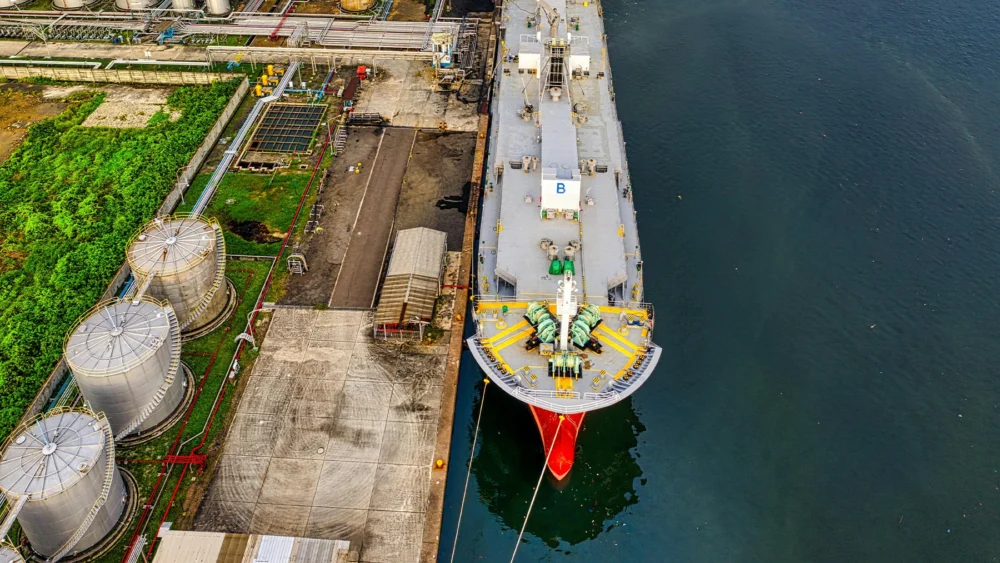
The escalating conflict between the US-Israel alliance and Iran has reverberated far beyond the immediate battlegrounds, sending shockwaves through global commodity markets and forcing industries worldwide to re-evaluate their operational resilience. While the initial focus has rightly been on the devastating human toll and the immediate disruption to travel and commerce within the Gulf region, the wider economic implications, particularly for sectors like fashion, are rapidly coming into sharper focus. An industry traditionally perceived as detached from the intricacies of crude oil futures and geopolitical flashpoints now finds itself grappling with the precise definition of force majeure and the volatile trajectory of Brent crude.
The Geopolitical Nexus: Strait of Hormuz and Oil Volatility
The conflict’s profound economic impact stems directly from the Strait of Hormuz, a critical maritime chokepoint. Situated between Iran and Oman, this narrow waterway is arguably the world’s most strategically important oil transit route, through which approximately 20 percent of the world’s total petroleum liquids consumption, or roughly 21 million barrels per day, passes. Any disruption or perceived threat to shipping in this strait immediately triggers global market instability, given its vital role in supplying crude oil and refined products to major economies across Asia, Europe, and North America.
The recent escalation, characterized by Iran’s reported missile and drone attacks on neighboring states, has shattered the carefully cultivated image of Gulf capitals like Dubai and Qatar as secure havens for luxury commerce and international business. For years, these emirates have successfully diversified their economies, attracting substantial foreign investment, high-net-worth individuals, and major fashion events, positioning themselves as burgeoning luxury hubs in an otherwise turbulent geopolitical landscape. The current hostilities, however, directly challenge this perception of stability, leading to immediate concerns about business continuity, investment security, and consumer confidence in the region.
Immediate Economic Repercussions: Energy Markets and Consumer Sentiment
The most immediate and tangible effect of the heightened tensions has been a dramatic surge in global energy prices. Brent crude futures, the international benchmark, registered their most significant weekly gain on record following the conflict’s intensification, closing on Friday at $92.69 per barrel—a level not seen in over two years. This sharp upward trajectory reflects market anxieties over potential supply disruptions, even as analysts scrutinize the precise definition of force majeure clauses in oil contracts, indicating a widespread fear of contractual obligations being voided due to unforeseen circumstances arising from the conflict.
The ripple effect of this crude oil spike is already being felt at the consumer level globally. In the United States, average gasoline prices have surged by over 40 cents per gallon in a single week, according to data from the American Automobile Association (AAA). This rapid increase in fuel costs acts as a direct tax on consumers, eroding discretionary income and forcing immediate adjustments to household budgets. Historical data from previous energy crises, such as those in the 1970s or the early 2000s, consistently demonstrates a direct correlation between soaring fuel prices and a contraction in non-essential consumer spending. For the fashion industry, which relies heavily on discretionary expenditure, this translates into a potential downturn in sales, particularly for mid-range and accessible luxury segments. The already weak consumer sentiment reported in many markets, impacted by persistent inflation and economic uncertainties, faces further erosion, posing a significant challenge for retailers anticipating holiday season demand.
Chronology of Escalation and Market Response (Hypothetical Timeline)
- Week 1 (Early October 2026): Initial reports emerge of heightened tensions following a significant incident in the Gulf. Global media coverage focuses on diplomatic efforts and initial market jitters. Brent crude sees a modest rise, perhaps 2-3%. Shipping insurance premiums for the Strait of Hormuz region begin to tick up.
- Week 2 (Mid-October 2026): Direct military actions commence, with reports of missile and drone strikes originating from Iran targeting strategic assets and neighboring states. The perception of Gulf stability is severely undermined. Brent crude futures surge by over 10% in a single trading session, pushing prices past $85/barrel. Global stock markets experience volatility, particularly sectors exposed to energy and international logistics. Major airlines begin rerouting flights, impacting travel to and from the Gulf.
- Week 3 (Late October 2026): Sustained military exchanges are reported, and international condemnation mounts. Concerns about the Strait of Hormuz’s security intensify, leading to calls for naval escorts. Brent crude breaches the $90/barrel mark, registering its largest weekly gain on record, closing near $92.69. Gasoline prices in key markets like the US jump by over 40 cents per gallon. Luxury travel bookings to the Gulf region plummet, and major fashion houses begin to assess the viability of planned events and retail operations in Dubai and Qatar.
- Week 4 (Early November 2026): The conflict enters a more entrenched phase, with no immediate resolution in sight. Energy analysts warn of potential sustained high prices. Fashion companies begin issuing conservative earnings guidance, acknowledging the impact of rising operational costs and weakened consumer spending. Discussions about supply chain diversification and reshoring intensify within industry boardrooms.
The Fashion Industry’s Vulnerability: From Luxury Havens to Global Supply Chains
The fashion sector, despite its glamorous facade, is deeply intertwined with global logistics and energy markets. Beyond the immediate concerns for luxury sales and tourism in the Gulf, the wider ripple effects of sustained high crude prices threaten to impact every level of the industry.
Firstly, the cost of transporting goods skyrockets. Apparel manufacturing is a globally distributed enterprise, with raw materials sourced from one continent, production often occurring in another, and final products shipped to markets worldwide. This intricate web relies heavily on air and sea freight. Jet fuel and bunker fuel, derived from crude oil, constitute a significant portion of operating expenses for shipping companies and airlines. A 40-50% increase in fuel costs, as seen in previous spikes, can translate into substantial hikes in freight charges, sometimes by 15-25% or more for specific routes and modes. For fashion brands, especially those operating on thin margins, these increased logistics costs directly erode profitability and necessitate either price increases for consumers or absorption of losses. This burden disproportionately affects fast fashion retailers, whose business model hinges on rapid, cost-effective global distribution.
Secondly, the very fabric of fashion is intimately linked to petroleum. A vast majority of synthetic fabrics—including polyester, nylon, acrylic, and spandex—are petrochemical derivatives. Polyester, for example, which accounts for over 50% of all textile fiber production globally, is primarily made from ethylene, a chemical derived from crude oil or natural gas. An increase in oil prices directly translates to higher feedstock costs for textile manufacturers, driving up the price of synthetic yarns and fabrics. This cost pressure then cascades down the supply chain, affecting apparel manufacturers and ultimately leading to higher wholesale prices for brands. For an industry that has increasingly relied on the affordability and versatility of synthetics, this presents a fundamental challenge to production costs and pricing strategies.
Corporate Responses and Strategic Adjustments
In the face of these looming challenges, major fashion brands and retailers are already signaling caution. Companies reporting earnings in the weeks following the initial escalation have offered notably conservative guidance for the upcoming quarters, even those that posted strong results for the preceding period. For instance, a hypothetical statement from a major sportswear brand’s CFO might read: "While Q3 2026 saw robust performance, we are anticipating significant headwinds in Q4 and early 2027 due to unprecedented volatility in energy markets and a projected decline in consumer discretionary spending. Our guidance reflects a cautious outlook, accounting for increased freight costs and potential impacts on raw material pricing."
Industry bodies are also weighing in. The Council of Fashion Designers of America (CFDA) or the British Fashion Council (BFC) might issue advisories to their members, recommending a thorough review of supply chain contracts, contingency planning for logistics disruptions, and a renewed focus on inventory management. "We urge our members to stress-test their supply chain resilience against prolonged energy price shocks," an inferred statement from a European fashion federation might advise, "and to explore immediate-term mitigation strategies such such as hedging fuel costs where possible, or optimizing existing inventory to reduce reliance on immediate resupply."
Luxury conglomerates, while potentially more insulated by their high-net-worth clientele, are nonetheless vulnerable to the erosion of consumer confidence and the disruption of key markets. A representative from LVMH or Kering might internally circulate memos emphasizing heightened security protocols for staff in affected regions, reviewing travel policies, and re-evaluating marketing spend in potentially unstable markets. The disruption to the "safe haven" perception of cities like Dubai directly impacts luxury tourism and retail sales, prompting a re-allocation of resources and a potential shift in focus to more stable markets in Europe, North America, or parts of Asia.
Long-Term Outlook: Supply Chain Resilience and Sustainable Shifts
Should the conflict persist or inflict lasting damage on the region’s energy infrastructure, the fashion industry faces not just short-term adjustments but a fundamental re-evaluation of its operational model. A sustained period of elevated energy prices would fundamentally alter the economics of globalized manufacturing and material sourcing.
One significant long-term implication could be a marginal, yet perceptible, shift towards natural fibers. While synthetics currently dominate due to their cost-effectiveness and performance attributes, a persistent increase in petrochemical prices could make natural alternatives like cotton, linen, wool, and newer bio-based fibers more competitive. Brands committed to sustainability, already exploring alternatives to fossil fuel-derived materials, might find a stronger economic incentive to accelerate these transitions. This could spur greater investment in agricultural innovation for textiles, improved recycling technologies for natural fibers, and a more localized sourcing of these materials.
Furthermore, the concept of "reshoring" or "nearshoring" manufacturing could gain significant momentum. The current global supply chain model prioritizes cost efficiency, often involving production in distant low-wage economies. However, if shipping costs remain prohibitively high and supply chain vulnerabilities are exposed, the economic calculus shifts. Manufacturing closer to major consumer markets—for example, producing for the European market within Europe, or for the North American market within North America—could become more attractive. While initial investment costs for such a shift are substantial, the long-term benefits of reduced lead times, lower transportation expenses, greater supply chain control, and reduced carbon footprint could outweigh the disadvantages. This trend, already observed pre-conflict due to geopolitical trade tensions and pandemic-induced disruptions, would likely accelerate under sustained energy price pressure.
Finally, the crisis could inadvertently provide a boost to the clean energy sector. When fossil fuel prices are high, the economics of renewable energy sources—solar, wind, geothermal—become significantly more favorable. For fashion companies aiming to decarbonize their operations, investing in renewable energy for factories or distribution centers could offer both environmental benefits and greater cost predictability compared to a volatile fossil fuel market. This aligns with broader corporate sustainability goals and could accelerate the industry’s transition towards a more circular and energy-independent future.
Humanitarian Concerns and Regional Stability
Ultimately, while the economic implications for the fashion industry are significant and far-reaching, the primary concern remains the human toll of the conflict. Civilians caught in the crossfire face unimaginable hardship, displacement, and loss. The humanitarian crisis unfolding in the region underscores the broader instability that such conflicts unleash. The fashion industry, like all global sectors, operates within a fragile geopolitical ecosystem. The long-term stability of the Gulf region, its people, and its vital role in global energy markets will continue to dictate the pace of economic recovery and the future trajectory of international commerce, including the intricate world of fashion. For now, the focus remains acutely on de-escalation, humanitarian aid, and the hope for a swift return to peace.