
 By Layla Zulfa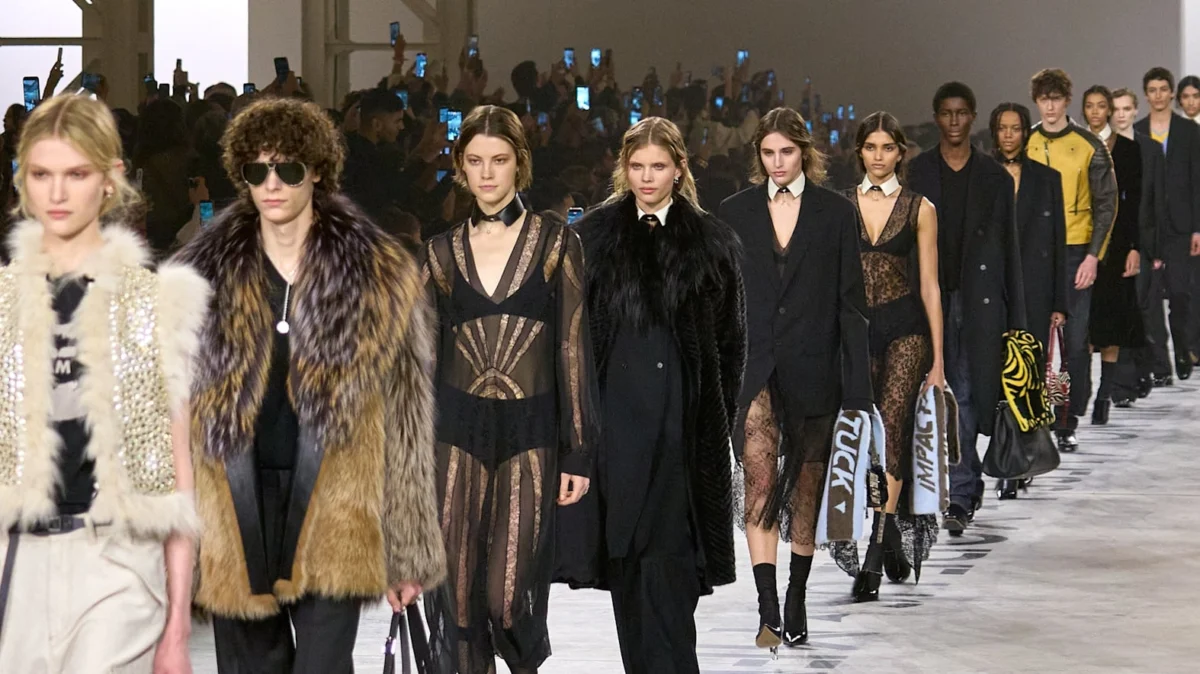
MILAN — The global fashion community, ever-hungry for directional shifts and definitive statements, was met with a profound recalibration from the house of Fendi at Milan Fashion Week for its Autumn/Winter 2026 collection. The designer at the helm, whose identity the brand has been strategically positioning as a purveyor of unadulterated craft over ephemeral trends, focused intently on clarifying the brand’s core silhouette and forging a unified cross-gender wardrobe. This debut, presented in a strikingly monochromatic palette that eschewed the vibrant theatrics often associated with high fashion, underscored a deliberate pivot, encapsulated by the designer’s succinct yet powerful declaration: “I’m not an entertainment designer.”
This statement, delivered amidst a collection characterized by its thoughtful restraint and sartorial precision, resonated deeply within an industry frequently criticised for prioritising viral moments and spectacle over the intrinsic value of clothing. The Fendi Autumn/Winter 2026 presentation was a testament to the power of design integrity, stripping away extraneous elements to reveal a vision rooted in essentialism, wearability, and a profound respect for the house’s storied heritage, reinterpreted for a contemporary, increasingly discerning audience.
The New Direction: A Philosophy of Essentialism
The clarion call for the Autumn/Winter 2026 collection was a radical simplification of Fendi’s aesthetic codes, focusing on the absolute essence of its silhouette. This was not merely a reduction but a precise articulation of form, a meticulous refinement that sought to distil the brand’s identity into its purest expression. Garments were characterised by clean lines, architectural precision, and an almost sculptural quality, emphasising structure and drape. Tailoring, a perennial hallmark of sophisticated dressing, took centre stage, reimagined with an understated confidence that spoke volumes without resorting to overt embellishment.
This strategic move towards essentialism is indicative of a broader industry trend often termed "quiet luxury" or "stealth wealth." In an era of overt branding and transient trends, a segment of the luxury consumer base is increasingly gravitating towards pieces that speak of intrinsic quality, craftsmanship, and timeless design rather than conspicuous logos. Fendi’s designer appears to be firmly positioning the brand within this evolving landscape, offering a wardrobe that serves as an investment in enduring style rather than fleeting fashion. The collection showcased impeccably cut coats, precisely tailored trousers, and elegantly draped dresses that prioritised comfort and functionality without compromising on an elevated aesthetic. The focus on silhouette clarification suggests a commitment to creating foundational pieces that can be integrated seamlessly into a sophisticated wardrobe, transcending seasonal whims.
A Unified Wardrobe for a Fluid Future
Perhaps one of the most significant and forward-thinking aspects of the Autumn/Winter 2026 collection was the explicit creation of a unified cross-gender wardrobe. This approach moves beyond the traditional binary divisions of menswear and womenswear, presenting a collection where garments are designed with inherent versatility and adaptability, intended to be worn and interpreted by individuals regardless of their gender identity. This is not merely about oversized proportions or borrowing from traditional menswear tropes for women, but a holistic design philosophy that considers the universal principles of fit, form, and function.
The concept of gender fluidity in fashion has been gaining considerable traction over the past decade, driven largely by Generation Z and younger Millennials who often reject conventional gender norms. Market research data from various industry reports indicates a significant rise in demand for gender-neutral apparel, with projections suggesting this segment could account for a substantial portion of the global apparel market in the coming years. Brands that successfully cater to this demographic, not just with token pieces but with genuine design intent, are poised for considerable growth. Fendi’s embrace of this unified wardrobe concept is therefore not just a creative statement but a shrewd commercial strategy, acknowledging and responding to the evolving socio-cultural landscape. The collection featured trousers with adaptable waistlines, jackets designed for various body types, and knitwear that offered a universal appeal, all crafted with the unparalleled quality Fendi is renowned for. This deliberate blurring of lines signifies a progressive step, aiming to cultivate a more inclusive and contemporary brand identity.
The Power of Paleness: A Monochromatic Statement
The "surprisingly colourless debut" was, in fact, a deeply strategic choice, rather than a lack of imagination. The collection was dominated by a sophisticated palette of greys, blacks, whites, and subtle beiges – a testament to the enduring power of neutrals. This monochromatic approach served several critical functions. Firstly, it amplified the focus on silhouette, cut, and texture. Without the distraction of vibrant hues, the intricate details of tailoring, the luxurious feel of fabrics, and the precise construction of each garment came to the fore. The interplay of matte and shine, the subtle differences in weave, and the nuanced textures of wool, cashmere, and leather became the collection’s true colours.
Secondly, a monochromatic palette inherently speaks to timelessness and versatility. These are garments designed to integrate seamlessly into an existing wardrobe, to be mixed and matched, and to transcend seasonal trends. In an era where sustainability is becoming an increasingly important consideration for luxury consumers, investing in pieces that offer longevity and enduring style is paramount. The absence of bold colour can be seen as a deliberate rejection of "dopamine dressing," a trend that prioritises bright, mood-lifting colours but often results in highly seasonal and less versatile pieces. By anchoring the collection in a neutral spectrum, Fendi reinforces its commitment to creating foundational, investment-worthy attire. This strategic choice also subtly communicates a sense of sophistication and understatement, appealing to a clientele that values refined elegance over flamboyant display.
"Not an Entertainment Designer": A Bold Declaration
The designer’s declaration, "I’m not an entertainment designer," stands as a powerful manifesto, not only for Fendi but potentially for the broader direction of luxury fashion. This statement directly challenges the prevailing paradigm where fashion shows have increasingly morphed into elaborate spectacles, often overshadowing the clothing itself. In recent years, fashion presentations have frequently been criticised for prioritising viral social media moments, celebrity appearances, and immersive, often fantastical, sets over the meticulous craft and innovative design of the garments.
This critique isn’t new; industry veterans and purists have long lamented the commercialisation and theatricalisation of fashion, arguing that it dilutes the artistic integrity of the collections. By asserting a focus on design over entertainment, Fendi’s designer signals a return to core principles: the creation of beautiful, well-made clothes that serve the wearer, rather than merely performing for an audience. This perspective aligns with a growing sentiment among consumers and critics alike who yearn for authenticity and substance in an increasingly digitised and image-saturated world. It suggests a renewed emphasis on wearability, utility, and the profound connection between garment and individual, rather than fashion as a fleeting, consumable performance. This stance could mark a significant cultural shift, encouraging other luxury houses to re-evaluate their presentation strategies and re-centre the product itself.
Fendi’s Heritage Reimagined
The Autumn/Winter 2026 collection, while marking a bold new direction, did not disregard Fendi’s rich heritage. Instead, it reimagined it through a minimalist and modern lens. Fendi, founded in Rome in 1925, built its legacy on exquisite fur and leather craftsmanship. While the presentation might have toned down overt fur use in line with contemporary ethical considerations and evolving consumer preferences, the essence of meticulous craftsmanship, innovative material treatment, and luxurious tactility remained paramount. The leathers, for instance, were treated with an almost fabric-like softness, while the precision of tailoring echoed the brand’s historical expertise in structured garments.
References to Fendi’s Roman roots could be subtly inferred in the architectural precision of the silhouettes, reflecting the city’s timeless structures and sculptural artistry. The double F logo, a symbol of the house’s legacy, might have been sublimated into textural patterns or discreet hardware, allowing the design to speak for itself. This reinterpretation demonstrates a sophisticated understanding of brand evolution – honouring the past by translating its core values into a contemporary idiom, rather than merely replicating historical designs. It’s a testament to the brand’s adaptability and its ability to remain relevant while staying true to its DNA.
The Road to Autumn/Winter 2026: Context and Precursors
The presentation of Fendi’s Autumn/Winter 2026 collection in Milan is not an isolated event but the culmination of a strategic evolution within the luxury house. Following the passing of Karl Lagerfeld in 2019, who had been Fendi’s creative director for women’s wear and fur for over five decades, the brand entered a new era. Silvia Venturini Fendi, Lagerfeld’s long-time collaborator and the granddaughter of the founders, took on an expanded role, and the appointment of Kim Jones as Artistic Director of women’s wear couture and ready-to-wear in 2020 marked another significant chapter.
Jones’s initial collections for Fendi carefully navigated the brand’s legacy, often weaving in historical references and collaborating with Venturini Fendi on accessories. The lead-up to the Autumn/Winter 2026 collection likely involved a period of intense strategic introspection, perhaps a desire to consolidate the brand’s identity and refine its vision amidst the dynamic landscape of post-pandemic luxury. This shift towards a clarified silhouette and gender-fluid approach could be seen as a natural progression, building upon previous efforts to modernise the house while firmly establishing a distinct and forward-looking aesthetic under its current creative leadership. The industry buzz leading into this collection suggested a significant strategic re-alignment, moving towards a more streamlined, impactful brand message designed to resonate with the sophisticated tastes of a new generation of luxury consumers.
Industry Reactions and Market Implications
Initial reactions from fashion critics and industry insiders following the Fendi Autumn/Winter 2026 show were largely positive, albeit with a nuanced appreciation for its daring restraint. Many lauded the designer’s courage to step away from the prevalent spectacle, praising the collection’s focus on authentic design and craftsmanship. Reviewers highlighted the impeccable tailoring, the luxurious quality of the fabrics, and the intelligent approach to gender-fluid dressing as key strengths. Some analysts quickly pointed to the collection as a potential benchmark for "post-maximalist" luxury, suggesting it could influence other major houses to reconsider their own strategies.
From a commercial perspective, this collection is poised to appeal to a highly affluent and discerning clientele that values longevity, versatility, and understated elegance. Buyers from major luxury retailers are likely to see strong potential in the timeless appeal of the monochromatic palette and the adaptability of the cross-gender silhouettes, which align with emerging consumer demands for sustainable and investment-worthy pieces. The emphasis on essentialism also simplifies merchandising, allowing for clearer storytelling in retail environments. Furthermore, Fendi’s bold stance against "entertainment" in fashion could resonate with consumers who are fatigued by the constant churn of trends and seek genuine substance. This strategic pivot could solidify Fendi’s position as a leader in refined luxury, attracting new demographics while reinforcing loyalty among its established base.
The Future of Luxury Fashion: Beyond Spectacle
The Fendi Autumn/Winter 2026 collection and its accompanying philosophical declaration mark a potentially pivotal moment for the luxury fashion industry. It prompts a critical re-evaluation of what constitutes value in high fashion. Is it the fleeting viral moment, or the enduring quality of a garment? The designer’s commitment to "not being an entertainment designer" challenges the very fabric of modern fashion shows, suggesting a return to the core purpose of creating clothing that is beautifully designed, expertly crafted, and inherently wearable.
This move could catalyse a broader industry trend where authenticity, sustainability (in terms of longevity and timeless design), and a genuine connection to craft become paramount. As consumers become more environmentally conscious and seek greater value from their investments, the shift away from ephemeral spectacle towards considered, enduring design will likely accelerate. Fendi, with this collection, has positioned itself at the vanguard of this movement, proposing a future for luxury fashion that is less about fleeting performance and more about profound, lasting impact. The Autumn/Winter 2026 collection is not merely a display of new clothes; it is a powerful statement about the evolving identity of luxury and its renewed commitment to the art of dressing.