
 By Nila Kartika Wati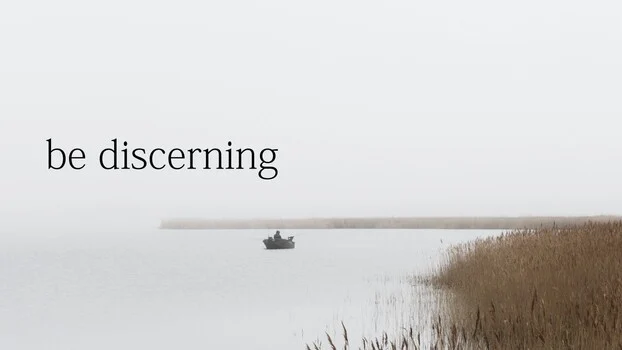
A recent video featuring photographer Andrew Banner documents a compelling expedition into the subtle beauty of Hickling Broad Nature Reserve, situated within the expansive Norfolk Broads. The work transcends a mere visual tour, serving instead as a profound discourse on the intentionality behind image creation. Banner’s meticulous approach to capturing an almost entirely colorless, fog-laden landscape challenges prevailing photographic trends, advocating for a return to observational rigor and deliberate composition as the cornerstones of impactful photography. This exploration into muted tones and the art of "seeing" provides a critical perspective on the difference between a fleeting snapshot and a truly considered photograph, emphasizing the invaluable role of time and thoughtful engagement.
The Enigmatic Canvas: Hickling Broad and the Norfolk Broads
Hickling Broad, the largest of the Norfolk Broads, offers a unique and often understated beauty, particularly under atmospheric conditions such as the dense fog encountered by Banner. This vast freshwater lake and its surrounding reedbeds, fens, and woodlands form a crucial part of the Broads National Park, an area often likened to a National Park but managed by the Broads Authority. Unlike most National Parks, the Broads are a largely man-made landscape, a legacy of medieval peat excavations that subsequently flooded, creating a labyrinthine network of rivers and broads. This unique ecological system is internationally recognized for its biodiversity, designated as a Site of Special Scientific Interest (SSSI), a Ramsar wetland site, and a National Nature Reserve. It supports a rich array of wildlife, including rare butterflies, dragonflies, and iconic bird species such as bitterns, marsh harriers, and common cranes, making it a vital habitat and a magnet for nature enthusiasts and photographers alike.
The Norfolk Broads as a whole encompass over 200 kilometers of navigable waterways, making them a premier destination for boating and wildlife watching in the United Kingdom. Their tranquil beauty, however, is not always defined by vibrant sunrises or dramatic sunsets. Often, as Banner demonstrates, the most profound visual narratives emerge from the atmospheric conditions that strip away color, compelling the observer to focus on form, texture, and light’s subtle interplay. These ‘dull’ days, frequently overlooked by those seeking immediate visual gratification, hold a particular charm for photographers attuned to the nuances of natural light and composition. The socio-economic importance of the Broads region is significant, with tourism forming a substantial pillar of the local economy, attracting hundreds of thousands of visitors annually who come to experience its unique blend of natural heritage and recreational opportunities. Conservation efforts in the Broads are ongoing, addressing challenges such as water quality, habitat restoration, and managing the delicate balance between human activity and ecological preservation.
Andrew Banner’s Photographic Ethos: A Call for Deliberation
Andrew Banner’s video essay at Hickling Broad is more than a technical guide; it is a manifesto for a more mindful approach to photography. His core argument posits that the distinction between a casual snapshot and a compelling photograph hinges entirely on the investment of time and intellectual effort. In an era dominated by instantaneous digital capture and the proliferation of mobile phone cameras, Banner’s philosophy stands in stark contrast to the prevailing culture of rapid-fire image acquisition. He openly expresses frustration with several contemporary trends: the pervasive over-saturation of colors, the heavy-handed application of High Dynamic Range (HDR) processing, and the prevalent habit of raising a camera or phone and indiscriminately firing the shutter without pausing to observe, analyze, and compose.
Banner contends that a photographer’s most powerful tool is not their camera’s megapixels or a lens’s sharpness, but their ability to see deeply and critically. He illustrates this by demonstrating how merely shifting one’s physical position by a single foot can transform a mediocre, throwaway snap into a carefully considered and impactful photograph. This emphasis on subtle adjustments and patient observation resonates with traditional photographic principles, which often stress the importance of pre-visualization and meticulous framing. His work at Hickling Broad serves as a practical demonstration of these principles, showcasing a methodical process that prioritizes careful consideration over impulsive capture.
A Morning of Meticulous Observation and Problem-Solving
The chronology of Banner’s shoot unfolds over nearly two hours within a relatively confined area around a dock and landing stage at Hickling Broad. The morning began under a blanket of dense fog, which acted as both a challenge and an artistic opportunity, muting the landscape into a palette of grays, beiges, and subtle ochres. Rather than being deterred by the lack of vibrant color, Banner embraced it, viewing the monochromatic scene as an exercise in focusing on form, texture, and the subtle interplay of light and shadow.
His technical approach involved using a tripod, raised significantly above head height to clear the tall reeds that typically obstruct views of the broad. This elevation allowed him to gain a clearer vantage point and to incorporate foreground elements more effectively. He frequently zoomed out to approximately 18mm, a wide-angle perspective, not merely to capture more of the scene, but strategically to pull in surrounding branches and other environmental details that could serve as leading lines or framing elements, thereby directing the viewer’s eye through the composition.
Throughout the two-hour period, Banner continually unearthed new compositional possibilities within the limited space. He meticulously worked to isolate a basin of water reflecting pale light through the reeds, demonstrating the effort required to achieve a clean, uncluttered frame. This involved navigating around numerous environmental obstacles: stray branches intruding into the frame, young saplings poking into the sightline, and an uneven slope that repeatedly cost him the desired view of the water with every minor adjustment. His video provides a real-time, practical lesson in the extensive problem-solving inherent in crafting a single, well-executed photograph.
The shifting nature of the fog was another dynamic element that Banner adeptly managed. Rather than perceiving it as an impediment, he utilized its changing density to his advantage, allowing it to alternately reveal and obscure elements, thus constantly altering the scene’s character. At one point, he exhibited remarkable patience, waiting for approximately 15 minutes as a lone fisherman drifted across the broad. This deliberate pause was not merely to document the scene but to strategically incorporate the fisherman’s position into the left side of his frame, using the human element to fill an otherwise empty space and add a narrative dimension to the landscape. This patient waiting underscores his commitment to creating a composition that feels balanced, deliberate, and resonant.
The Art of Seeing: A Detective’s Eye
Banner’s most striking analogy compares the act of noticing things to the difference between a good detective and a bad one: one sees everything, the other sees nothing. This blunt, yet effective, comparison underscores his argument that superior photography stems from superior observation. It’s about more than just looking; it’s about actively processing, analyzing, and interpreting the visual information available. This keen sense of observation allows a photographer to identify the subtle details, the fleeting moments, and the unique perspectives that others might overlook.
This philosophy extends beyond mere technical proficiency, delving into the cognitive processes that underpin artistic creation. It advocates for a conscious engagement with the environment, a deep understanding of light, form, and texture, and the ability to anticipate how these elements will interact within a frame. For Banner, the camera is merely an extension of the eye and the mind, a tool to translate a carefully conceived vision into a tangible image. This approach stands in stark contrast to the increasingly automated and algorithm-driven photographic processes prevalent today, where artificial intelligence often dictates aesthetic choices, potentially diminishing the role of human intuition and observation.
Challenging Contemporary Photographic Norms and Broader Implications
Andrew Banner’s work at Hickling Broad serves as a timely critique of certain contemporary photographic practices. The prevalence of heavily processed, hyper-realistic, and often artificial-looking images on social media platforms can inadvertently set a benchmark for what is considered "good" photography. This often leads to a devaluation of subtlety, natural light, and authentic representation. Banner’s video implicitly advocates for a re-evaluation of these standards, promoting a return to foundational principles that prioritize genuine observation and skilled composition over digital manipulation.
The implications of Banner’s philosophy extend beyond the realm of amateur photography. For aspiring professionals, his emphasis on problem-solving in real-time and adapting to challenging conditions offers invaluable practical lessons. It highlights that mastery of photography is not just about understanding camera settings, but about developing an acute awareness of one’s surroundings and the ability to react creatively to unforeseen circumstances.
Moreover, by showcasing the beauty of Hickling Broad under "dull", foggy conditions, Banner contributes to a broader appreciation for nature in all its forms, not just its most vibrant or dramatic manifestations. This can foster a deeper connection between individuals and natural landscapes, encouraging a more nuanced understanding of ecological aesthetics. Such portrayals can also subtly contribute to conservation efforts by demonstrating that even the seemingly unremarkable moments in nature possess profound visual and emotional value, thereby encouraging greater stewardship and protection of these vital environments.
While no direct official statements from the Broads Authority or conservation groups are provided in the original content, it is logical to infer that such organizations would welcome and endorse photographers like Banner. His work, by highlighting the diverse and often overlooked beauty of the Broads, even on atmospheric days, serves to raise public awareness and appreciation for these unique ecosystems. Such imagery can inspire responsible tourism and greater engagement with conservation initiatives, reinforcing the message that the Broads are a place of enduring natural significance, deserving of careful preservation and mindful interaction. Photography, in this context, becomes a powerful tool for advocacy, translating ecological value into accessible visual narratives.
In conclusion, Andrew Banner’s journey through the fog at Hickling Broad is a compelling reminder that the true essence of photography lies not in the pursuit of perfection or the application of excessive post-processing, but in the disciplined act of seeing, the patience of observation, and the thoughtful crafting of a frame. His work champions a return to a more deliberate, reflective photographic practice, offering a valuable counter-narrative to the fast-paced, often superficial world of digital imagery. It underscores that even in the absence of vibrant color, a scene imbued with atmospheric depth and carefully considered composition can yield images of profound and lasting impact, elevating the humble snapshot to the realm of true photographic art.