
 By admin
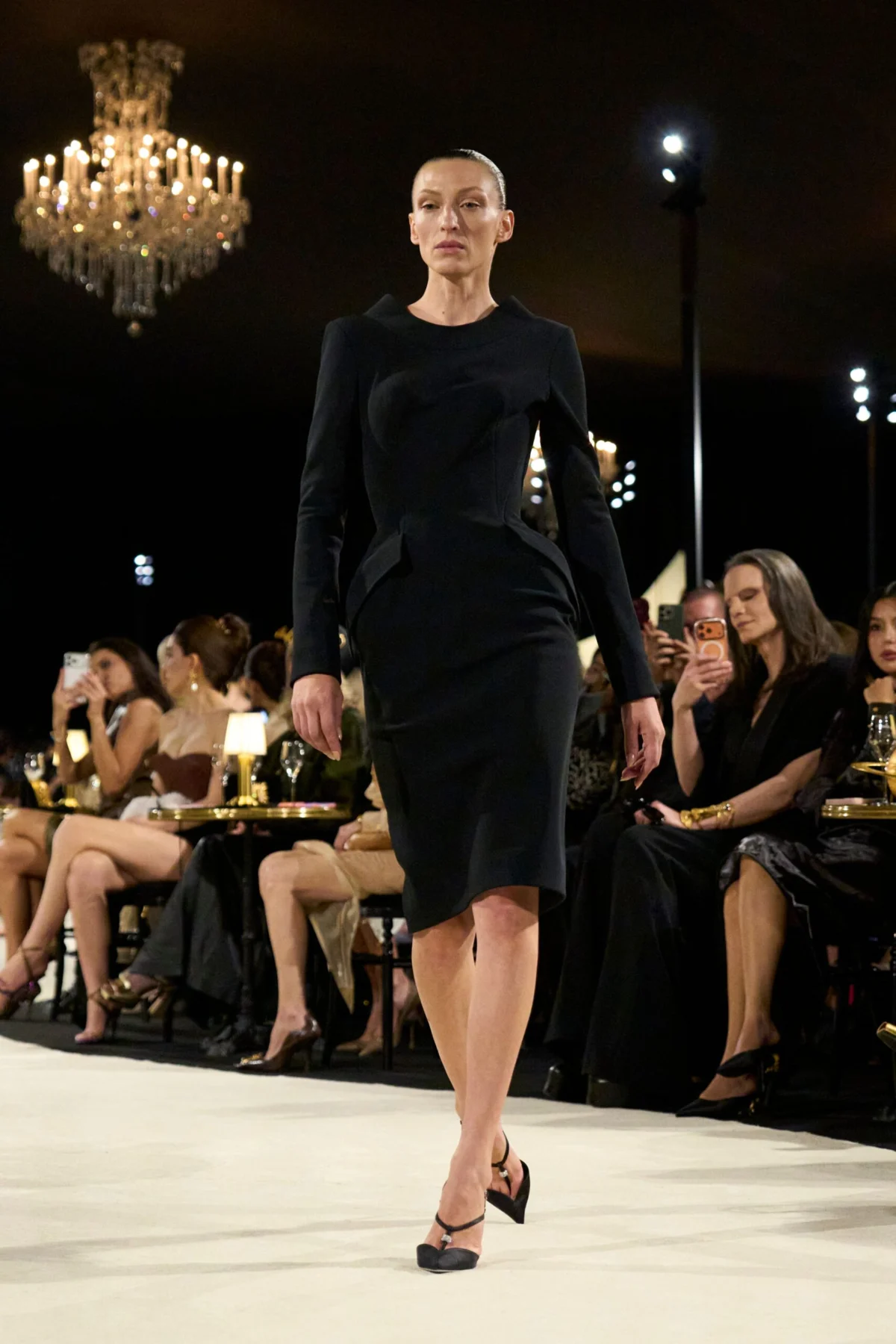
Paris, France – Schiaparelli, under the creative direction of Daniel Roseberry, presented a ready-to-wear collection that meticulously wove the house’s surrealist heritage with a pragmatic vision for modern luxury. The show’s setting, meticulously designed to evoke an exclusive, after-dark atmosphere, immediately signaled a departure from traditional runway presentations, immersing attendees in a world where glamour and artistic provocation converged. The scene was that of a chic nightclub, featuring chairs arranged around intimate tables circling a winding runway, all illuminated by an array of chandeliers casting a captivating glow. The ambiance was further enhanced by the evocative sound of Barbara Streisand’s spontaneous ad-libs from a 1962 performance of "Cry Me a River," including the playfully provocative lines, "This is my boyfriend’s suit. Ooh! The herringbone just bit me!" This sonic backdrop perfectly encapsulated the collection’s spirit: confident, slightly irreverent, and deeply rooted in a sophisticated femininity that appropriates traditional masculine codes.
A Legacy Reimagined: The Iconic Schiap Jacket
At the heart of Roseberry’s latest ready-to-wear offering was a profound reinterpretation of the iconic "Schiap jacket." This garment, a cornerstone of Elsa Schiaparelli’s original design philosophy, stands in stark contrast to the utilitarian approach of her famed rival, Coco Chanel. While Chanel championed comfort and understated elegance, crafting jackets that felt as effortless as a cardigan, Schiaparelli envisioned her jackets as dynamic canvases. Collaborating with avant-garde artists such as Jean Cocteau and Salvador Dalí, she transformed simple garments into wearable works of surrealist art. These were not mere coverings but statements, worn by the era’s sophisticated women to dinner as an alternative to the ubiquitous cocktail dress. Roseberry eloquently articulated the historical context: "The bottoms were always plain because that was under the table, and everything above the table was meant to be attention-grabbing. That’s where the Schiap embroideries were sort of born." This foundational principle—that the visible upper half of an ensemble serves as the primary focal point for artistic expression and attention—continues to inform Roseberry’s designs, even as he adapts them for a contemporary wardrobe.
Roseberry’s modern interpretations of the Schiap jacket are a testament to exquisite craftsmanship and luxurious materiality. The collection featured versions crafted from rich velvets, adorned with intricate scrolling black threadwork that evoked a sense of opulent antiquity, yet felt undeniably fresh. Other iterations shimmered in delicate pink satin, seemingly inset with precious gemstones, creating a play of light and texture that captured the eye. This re-emergence of the statement evening jacket signifies a broader trend in fashion, one where women increasingly seek versatility and individuality in their formal and semi-formal attire. Today’s wearer is just as likely to pair these luxurious jackets with a pair of well-tailored jeans as they are with a traditional plain skirt or elegant trousers, reflecting a fluid approach to dressing that blurs the lines between day and evening, casual and formal. This strategic versatility is crucial for luxury brands seeking to connect with a discerning, modern clientele that values investment pieces capable of transitioning across various occasions.
Strategic Evolution: Embracing the Casual Luxury Market
While the surrealist grandeur of Schiaparelli’s haute couture remains its undisputed artistic zenith, Roseberry is acutely aware of the commercial imperative to develop a robust and appealing ready-to-wear business. This strategic pivot towards a more casual, yet still inherently luxurious, offering is a significant move for a house historically synonymous with high-octane, often theatrical, couture. Roseberry made it clear that while consumers shouldn’t anticipate straightforward, five-pocket denim from Schiaparelli, the brand is actively cultivating a more accessible side to its ready-to-wear line.
This evolution was notably inspired by a pivotal post-mortem discussion with supermodel Bella Hadid. Hadid had captivated global attention at the Cannes Film Festival wearing Roseberry’s internet-breaking interpretation of Jane Birkin’s famous back-to-front broderie anglaise dress. The moment was a viral sensation, generating immense media buzz and cementing Roseberry’s reputation for creating unforgettable, conversation-starting pieces. Following this high-profile event, Hadid reportedly inquired if the brand could produce separates inspired by the couture gown. This direct feedback from a key influencer, coupled with the immense public response, served as a powerful catalyst for Roseberry’s ready-to-wear strategy. "As we were recapping, she asked me if we could make her separates from it. Here, we did it in knit, because it’s so much easier, and we broke it down into tops and skirts," Roseberry explained. This practical transformation of a complex couture concept into versatile, commercially viable knit separates exemplifies Roseberry’s astute understanding of both artistic vision and market demand. It represents a sophisticated translation of high fashion into everyday luxury, making the aspirational essence of Schiaparelli more attainable for a broader, albeit still exclusive, audience. This move is indicative of a wider trend across the luxury sector, where brands are increasingly focusing on strong ready-to-wear collections to drive growth and market relevance, leveraging the spectacle of couture to create desirability for their more accessible lines.
Aerodynamic Elegance: Athleticism Meets Haute Fashion
Daniel Roseberry himself embodies a dynamic fusion of high fashion’s demands and personal discipline. Currently in training for the rigorous New York City marathon, he sports a striking mohawk, humorously noting, "I wanted something easy and aerodynamic." This personal philosophy of streamlined efficiency and understated power subtly permeates his latest collection, particularly in the creation of stretch knit cocktail dresses. These pieces draw inspiration from the sleek, architectural lines of the legendary American designer Geoffrey Beene’s evening wear. Beene, celebrated for his innovative use of knit fabrics and his ability to sculpt the body with sophisticated simplicity, championed a modern, liberated approach to evening dressing that resonates deeply with Roseberry’s current direction.
The challenge, and indeed Roseberry’s brilliance, lies in seamlessly incorporating distinctive elements from his haute couture collections into these ready-to-wear pieces without diluting their unique identity. This is a delicate balancing act, as the ready-to-wear must feel distinct yet undeniably connected to the brand’s highest artistic expressions. Roseberry articulates this synergy perfectly: "The client actually wants a distilled version of the couture, and not this completely different proposal. So I just think of it as the same woman, just a different part of her life, a different corner of her brain." This philosophy underpins the entire collection, ensuring that the ready-to-wear offerings are not merely simplified versions but rather sophisticated interpretations of couture themes, tailored for different facets of a woman’s life.
A prime example of this "distilled couture" approach is evident in the inclusion of inset breastplates on a striped body-con dress and other select pieces. These striking elements were directly lifted from his critically acclaimed July couture show, most notably from the silvery Marilyn Monroe dress that famously glowed from within. While the ready-to-wear versions eschew the internal light-up pyrotechnics of their couture counterparts, their sculptural quality and inherent drama ensure they would still be the focal point of any dinner party or elegant gathering. This clever adaptation allows the brand to maintain a coherent aesthetic narrative across its collections, from the most elaborate haute couture to its more commercially focused ready-to-wear, providing consumers with a consistent brand experience and reinforcing Schiaparelli’s unique visual language.
Schiaparelli’s Resurgence: A Timeline of Innovation and Influence
To fully appreciate Roseberry’s impact, it’s essential to contextualize his tenure within Schiaparelli’s rich, albeit sometimes turbulent, history. Founded in 1927 by Elsa Schiaparelli, the house quickly rose to prominence, challenging the prevailing aesthetic of the time with its bold, surrealist designs and collaborations with artists. Schiaparelli was a pioneer, introducing innovations like the built-in bra, wedge heels, and synthetic fabrics, forever changing the landscape of fashion. Her designs were not just clothing; they were statements, embodying wit, intellect, and a playful defiance. The house famously closed in 1954 amidst changing fashion tastes and economic pressures, remaining dormant for decades.
The revival of Schiaparelli began in 2013 under the ownership of Diego Della Valle, with Marco Zanini initially at the helm, followed by Bertrand Guyon. However, it was the appointment of Daniel Roseberry in 2019 that truly marked a new era of global recognition and creative resurgence for the brand. Roseberry, an American designer with a background steeped in American sportswear and later at Thom Browne, brought a fresh, yet deeply respectful, perspective to the venerable Parisian house. His initial collections quickly garnered critical acclaim for their audacious silhouettes, intricate craftsmanship, and a potent blend of surrealism and powerful femininity. His ability to create viral moments, such as the aforementioned Bella Hadid dress or Kylie Jenner’s lion head gown, has propelled Schiaparelli back into the global fashion conversation, making it one of the most talked-about brands on the couture calendar. This consistent media visibility, fueled by celebrity endorsements and striking visual narratives, has been instrumental in rebuilding brand awareness and desirability across a new generation of luxury consumers.
Broader Implications and Future Trajectory
Daniel Roseberry’s strategic direction for Schiaparelli’s ready-to-wear collection carries significant implications for the brand and the broader luxury market. By deliberately "distilling" the essence of couture into more wearable forms, Schiaparelli is effectively broadening its commercial appeal without compromising its artistic integrity. This approach addresses a crucial contemporary market demand: luxury consumers, particularly younger demographics, are increasingly seeking pieces that combine high-fashion aesthetics with practicality and versatility for their diverse lifestyles. The days of strictly demarcated formal and casual wardrobes are rapidly fading, replaced by a fluid approach where an exquisite evening jacket can be paired with tailored jeans, and a couture-inspired knit top can transition seamlessly from a sophisticated daytime event to an evening soiree.
This careful calibration of artistry and commercial viability positions Schiaparelli uniquely in a competitive luxury landscape. While its haute couture continues to define its artistic prowess and generate immense brand prestige, the ready-to-wear collection is poised to become a significant driver of revenue and market penetration. By offering pieces that carry the unmistakable DNA of Schiaparelli’s surrealist glamour and Roseberry’s bold vision, yet are designed for the realities of modern dressing, the brand is strengthening its foundation for sustained growth. The focus on iconic pieces like the Schiap jacket and the intelligent translation of couture concepts into accessible separates demonstrates a forward-thinking strategy that honors the past while decisively embracing the future. Roseberry’s tenure thus far signals a commitment to making Schiaparelli not just a historical icon, but a vibrant, relevant, and commercially successful force in the 21st-century luxury fashion world, ensuring its legacy continues to evolve and inspire.
