
 By admin
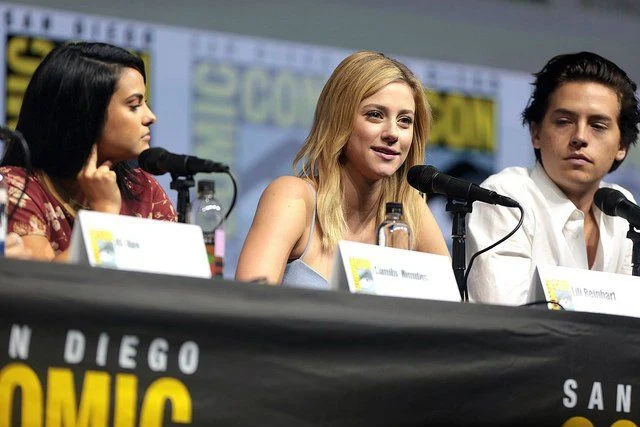
Actress and producer Lili Reinhart has ignited a significant discussion within Hollywood, revealing that her attempts to develop a film based on a novella about lesbian vampires have been met with resistance from studios, who label the project as too risky. This revelation, made during an interview with Hits Radio, highlights a persistent tension in the entertainment industry between artistic innovation and perceived commercial viability, especially concerning LGBTQ+-centric narratives. Reinhart’s direct appeal to entertainment executives, questioning the rationale behind deeming such a project unfeasible for contemporary audiences, underscores a broader industry struggle to embrace diverse storytelling and challenge conventional market assumptions.
Reinhart’s Advocacy for Creative Courage
Lili Reinhart, widely recognized for her role as Betty Cooper in The CW’s Riverdale, has increasingly expanded her professional footprint beyond acting, venturing into producing and project development. This career evolution reflects a growing trend among established actors to exert greater creative control and champion narratives they believe in. Her current endeavor to adapt an unspecified novella featuring lesbian vampires represents a bold step, aiming to inject a fresh perspective into established genres. Reinhart articulated her frustration, stating, "It’s a novella that I’m trying to get adapted that is about lesbian vampires, and people are too afraid to make that." This candid statement not only sheds light on her personal passion for the project but also critiques a pervasive cautiousness among major studios.
The core of Reinhart’s argument rests on the commercial potential and cultural relevance of such a story. In an era where audiences are increasingly seeking authentic and diverse representation, the hesitation to greenlight a queer-focused genre piece appears anachronistic to many creators. Her comments resonate with a collective sentiment among filmmakers, screenwriters, and producers who frequently face uphill battles in securing financing for projects that deviate from traditional blockbuster formulas or established intellectual properties. This reluctance often stems from a conservative interpretation of market demand, prioritizing perceived "safe" investments over potentially groundbreaking, yet less conventional, narratives.
The Enduring Allure of Vampire Narratives and Queer Subtext
Vampire mythology has proven to be one of entertainment’s most adaptable and enduring supernatural concepts, traversing horror, romance, drama, fantasy, and young-adult genres. From Bram Stoker’s Dracula to Anne Rice’s Interview with the Vampire, and from Buffy the Vampire Slayer to the Twilight saga, these creatures of the night have continuously captured the public imagination. Their inherent themes of immortality, forbidden desire, eternal struggle, and outsider status lend themselves to endless reinterpretation. A lesbian vampire narrative, therefore, is not an entirely new concept but rather a rich vein within this established lore, offering unique avenues for exploration.
Historically, the figure of the lesbian vampire has been a significant, albeit often controversial, trope, particularly in Gothic literature and early cinema. The most prominent example, and the one most speculated to be Reinhart’s chosen source material, is Sheridan Le Fanu’s 1872 novella Carmilla. Predating Dracula by 26 years, Carmilla tells the story of Laura and the mysterious Carmilla, a female vampire who preys on young women, often with a distinct erotic undertone. This novella is widely considered a foundational text for the lesbian vampire archetype, influencing countless subsequent works. Its themes of suppressed desire, female intimacy, and societal taboos have made it a subject of academic study and numerous adaptations, from Hammer Films’ The Vampire Lovers (1970) to more contemporary web series and graphic novels.
The appeal of adapting Carmilla, or a similar novella, lies in its ability to combine multiple compelling genres: the atmospheric dread of Gothic horror, the intensity of supernatural romance, and the depth of LGBTQ+-centered storytelling. Such a project could appeal to diverse audience segments interested in genre reinvention, queer narratives, and classic literary adaptations. However, despite the historical precedence and thematic richness, the continued perception of such stories as "risky" highlights how deeply ingrained commercial biases can be, even for concepts with a proven, albeit niche, lineage.
Lili Reinhart’s Expanding Role as a Producer
Reinhart’s push for this project is not an isolated incident but part of her broader strategic pivot into producing. Her involvement in The Love Hypothesis, an upcoming Prime Video adaptation of Ali Hazelwood’s bestselling romance novel, exemplifies her commitment to shaping stories from behind the camera. In The Love Hypothesis, Reinhart stars as Olive Smith alongside Tom Bateman as Adam Carlsen, and crucially, she is credited as one of the film’s producers, working alongside Elizabeth Cantillon, Catherine Hagedorn, Ali Hazelwood, and J. Michael Williams. The novel itself, published in 2021, quickly became a sensation, celebrated for its witty dialogue, engaging characters, and exploration of women in STEM fields. Its adaptation to the screen, with Reinhart at the helm, demonstrates her capacity to identify popular intellectual property and guide its transition to film, a valuable skill in Hollywood. The film’s release on Prime Video, scheduled for September 23, 2026, will be a significant milestone in her producing career, showcasing her ability to manage complex projects from development to distribution.
This experience with The Love Hypothesis underscores Reinhart’s growing understanding of the intricacies of film production, from securing rights to assembling creative teams. This practical knowledge makes her advocacy for the lesbian vampire novella even more impactful; it is not merely an actor’s wish but a producer’s informed assessment of a project’s potential. Her trajectory mirrors that of other actors, such as Reese Witherspoon (Hello Sunshine) and Margot Robbie (LuckyChap Entertainment), who have leveraged their platforms to establish production companies dedicated to bringing underrepresented stories and female-led narratives to the screen. These actor-producers often fill a critical void, investing in projects that traditional studios might shy away from, thereby diversifying the cinematic landscape.
The Challenging Climate for LGBTQ+ Representation in Film
Reinhart’s comments arrive at a critical juncture for LGBTQ+ representation in mainstream cinema, marked by a measurable decline in visibility. GLAAD’s 2026 Where We Are in Film study, which analyzed 225 films released by 10 major distributors during 2025, revealed a concerning trend. The study found that only 46 of these movies (20.4%) included at least one LGBTQ+ character. This figure represents a decrease from 23.6% in the previous year and marks the third consecutive annual decline since the peak of 28.5% recorded for 2023 releases. These statistics provide stark context for Reinhart’s assertion that decision-makers remain hesitant about queer-focused projects.
The decline in LGBTQ+ representation is not merely a statistical anomaly but reflects a broader industry challenge. While streaming services have shown some propensity for more diverse storytelling, theatrical releases, particularly from major studios, often lag. Analysts suggest several factors contribute to this trend, including a renewed focus on global box office appeal in certain markets where LGBTQ+ content faces censorship or cultural resistance, as well as a general risk-aversion in an increasingly competitive and financially precarious industry. This cautious approach can lead to "queer-baiting" or the sidelining of queer characters, reducing them to minor roles or subplots, rather than embracing them as central figures.
The sentiment of difficulty in financing LGBTQ+ stories is echoed by other prominent filmmakers. Lilly Wachowski, acclaimed co-director of The Matrix franchise, recently shared her struggles in securing funding for The Hunted, a political thriller featuring an entirely transgender cast. Despite positive reactions to the screenplay, Wachowski noted financiers’ reluctance due to the "wall-to-wall trans cast." Her experience, like Reinhart’s, illustrates how the perceived commercial risk of a project can be disproportionately inflated when it centers on marginalized identities, even for established creators. Both examples underscore a systemic issue where financing, representation, and commercial viability intersect, often to the detriment of diverse storytelling.
The Broader Implications for Hollywood and Aspiring Filmmakers
The lack of a green light for Reinhart’s lesbian vampire project, despite her advocacy and growing industry influence, sends a complex signal to aspiring filmmakers and actors. It reinforces the notion that even compelling concepts and passionate creators face significant hurdles when their visions challenge established commercial paradigms. The development process in Hollywood is notoriously arduous, often requiring years of persistence, the alignment of creative partners, secure financing, and distributor interest. A compelling concept, even with an established name attached, does not automatically guarantee production.
For actors and crew members, the situation means that opportunities in groundbreaking, diverse projects often remain elusive until a courageous studio or independent financier steps forward. While Reinhart’s project currently has no confirmed production schedule, director, studio, or release date, its potential impact, should it move forward, is significant. It could open doors for actors seeking unconventional roles that transcend traditional romantic leads or standard horror archetypes, and for crew members eager to contribute to narratives that push creative boundaries.
The ongoing conversation spurred by Reinhart and Wachowski highlights the critical need for continued advocacy for diversity and inclusion across all aspects of filmmaking. It also emphasizes the importance of independent cinema and alternative financing models, which often serve as incubators for projects that mainstream studios deem too risky. Film festivals, philanthropic organizations, and direct-to-consumer streaming platforms can play a crucial role in nurturing these stories and demonstrating their audience appeal.
The Path Forward: Persistence and Market Potential
Lili Reinhart clearly believes in the audience for her lesbian vampire project, a conviction shared by many within and outside the LGBTQ+ community. The enduring popularity of vampire stories, coupled with a demonstrable hunger for fresh perspectives and diverse representation, suggests a significant market for such an adaptation. A queer Gothic vampire film could uniquely tap into both the horror and romance markets, offering a rich tapestry of themes including identity, desire, power dynamics, and the outsider experience, all within a familiar yet reinvented genre framework.
The ultimate decision of whether a studio will embrace this vision remains uncertain. However, the very act of Reinhart actively pursuing this project, and openly discussing the obstacles she faces, contributes significantly to the ongoing dialogue about creative risk and representation in Hollywood. Her persistence, along with the voices of other advocates like Lilly Wachowski, is vital in gradually shifting industry perceptions and challenging entrenched biases. If the project eventually receives a green light, it would not only be a triumph for Reinhart but also a hopeful indicator of Hollywood’s increasing willingness to take genuine creative risks and embrace the full spectrum of human experience in its storytelling. The industry, and its audience, will be watching closely for official production and casting updates, hopeful for a future where diverse narratives are not just tolerated, but celebrated.
