
 By admin
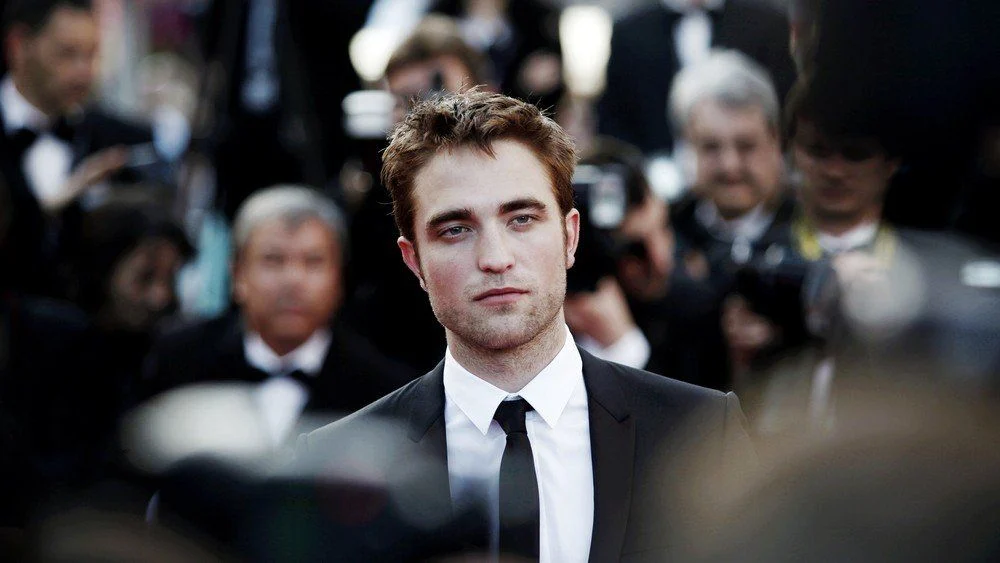
Robert Pattinson has offered significant insight into one of the most persistent inquiries regarding the future of the iconic Caped Crusader: the feasibility of his iteration of Bruce Wayne joining James Gunn’s expansive and newly reconfigured DC Universe. Pattinson’s comments suggest that such a crossover would present considerable creative and narrative hurdles, underscoring the distinct artistic vision behind Matt Reeves’ The Batman franchise.
Speaking in an interview with LADbible, Pattinson articulated the challenges inherent in detaching his portrayal of Bruce Wayne from the meticulously crafted world established by director Matt Reeves. He emphasized the deeply ingrained atmosphere and specific narrative parameters that define his Batman, stating, “I think it would be kind of tough to have this version of Bruce outside of that world.” This statement provides crucial context to the ongoing discourse among DC enthusiasts who have speculated intensely about the possibility of Pattinson’s Dark Knight sharing the screen with David Corenswet’s forthcoming Superman and the myriad other heroes slated for the interconnected DCU. For the present, however, DC Studios maintains its clear distinction, treating Reeves’ The Batman franchise as a wholly separate entity from its burgeoning primary cinematic universe.
The Immersive Nature of Reeves’ Gotham and Pattinson’s Portrayal
Pattinson’s explanation extends beyond mere continuity concerns, delving into the profound impact of The Batman‘s unique atmosphere on his performance and overall experience during production. The actor described how spending extended periods, often months, immersed within Reeves’ stark, neo-noir interpretation of Gotham City became a psychologically pervasive process. He recounted being enveloped by a pervasive darkness, not only in the narrative’s grim mood but also in the tangible lighting conditions and production design that characterized the film’s set. This immersive environment, Pattinson suggests, is not merely a backdrop but an intrinsic component of his character’s very essence.
Released in March 2022, The Batman distinguished itself by presenting a younger, more emotionally vulnerable Bruce Wayne, still grappling with his identity and methods as Gotham’s nascent protector. Diverging sharply from traditional superhero narratives that often prioritize a larger interconnected universe, Reeves’ film leaned heavily into the genres of detective fiction, gritty crime thrillers, political corruption, and psychological drama. The film garnered critical acclaim for its grounded approach, atmospheric cinematography, and Pattinson’s brooding performance, ultimately grossing over $770 million worldwide against a production budget of approximately $185-200 million. Critics lauded its distinct tonal identity, with many drawing comparisons to classic noir films and psychological thrillers rather than conventional comic book adaptations. This grounded reality is fundamental to Reeves’ vision; Pattinson’s Batman is a product of this specific, gritty Gotham. Introducing such a character into a universe populated by overtly fantastical heroes, alien beings, and metahumans would inevitably necessitate a significant, potentially jarring, tonal shift.
DC Studios’ Strategic Separation: Two Batmen for Two Universes
It is imperative to clarify that Pattinson’s recent comments do not signal a novel separation between the franchises. DC Studios formally established this distinction well in advance. When James Gunn and Peter Safran, co-CEOs of DC Studios, unveiled the initial slate of projects for their revitalized DC Universe in January 2023, Gunn explicitly confirmed the introduction of a completely new Batman for the interconnected continuity. This new iteration of the Dark Knight is slated to appear in The Brave and the Bold, a pivotal film within the DCU’s inaugural chapter, "Gods and Monsters." Gunn emphatically stated that this character would not be Robert Pattinson’s version. Instead, Pattinson would continue his collaboration with Matt Reeves on The Batman Part II, solidifying the existence of two concurrent, live-action Batman franchises operating under the DC Studios umbrella: Reeves’ critically acclaimed, standalone interpretation and a distinct Batman specifically designed to inhabit the broader, interconnected DCU. This strategic bifurcation allows for creative independence while also building a unified cinematic narrative.
The DCU’s Batman: A Family Affair in The Brave and the Bold
The Brave and the Bold stands as one of the cornerstone projects announced for the DCU’s opening chapter, "Gods and Monsters." This forthcoming film is poised to introduce the DC Universe’s primary Batman alongside Damian Wayne, Bruce Wayne’s biological son and one of the most significant characters to assume the mantle of Robin. Gunn has indicated that the project draws substantial inspiration from Grant Morrison’s acclaimed run on Batman comics, known for its intricate storylines and exploration of the broader Bat-Family. Furthermore, DC Studios co-chair Peter Safran has affirmed that the movie is intended to delve into additional members of the Bat-Family, signaling a more established and expansive portrayal of Batman’s world from the outset.
This conceptual framework already marks a significant divergence from Pattinson’s Bruce Wayne. Reeves’ The Batman depicts a comparatively early stage in the vigilante’s career, focusing on his solo evolution and initial encounters with Gotham’s criminal underworld. In contrast, The Brave and the Bold is being conceived around a Batman who is not only a father but also already connected to a larger network of crime-fighting allies, suggesting a more mature, experienced Dark Knight. As of the current date, no actor has been officially cast or announced as the DCU’s Batman for The Brave and the Bold, leaving fans eagerly anticipating who will embody this family-oriented iteration of the hero.
The Enduring Appeal of a Batman-Superman Crossover
The persistent desire among fans for Pattinson’s Batman to join the DCU is readily understandable, rooted deeply in comic book lore and cinematic tradition. Batman and Superman are arguably the two most recognizable and iconic heroes in the DC Comics pantheon, and their enduring partnership has been a central pillar in countless comics, animated series, television shows, and feature films. James Gunn’s Superman, starring David Corenswet, is slated to launch in theaters in July 2025 as the inaugural feature film in the new DCU, establishing its foundational hero. Given that Pattinson’s Batman had already successfully established a critically and commercially viable franchise, the notion of seamlessly integrating him into the new interconnected universe might appear, on the surface, to be a straightforward and appealing proposition for many.

However, as Pattinson’s remarks highlight, the creative and tonal disparities between their respective cinematic worlds are substantial and deeply embedded. Gunn’s DCU is designed to embrace a universe where superheroes, extraterrestrial beings, mythical creatures, and other extraordinary characters coexist as a natural part of its fabric. This approach aligns more closely with the fantastical elements prevalent in mainstream comic book narratives. Conversely, Reeves’ The Batman films have, thus far, purposefully emphasized Gotham’s gritty criminal underworld and adopted a distinctly grounded, detective-driven methodology, largely eschewing overt supernatural or extraterrestrial elements. Pattinson appears acutely aware of this fundamental contrast, even light-heartedly joking that his version of Batman, if introduced into a more fantastical setting, would likely just make everyone else "more serious," a testament to the inherent gravity and psychological weight of his character.
The "Elseworlds" Strategy: Creative Freedom and Brand Management
The decision to maintain two separate Batman continuities aligns with DC Studios’ broader "Elseworlds" strategy. Borrowed from a popular DC Comics imprint, the "Elseworlds" label is applied to projects that exist outside the main DCU continuity, allowing filmmakers creative freedom to explore unique interpretations of beloved characters without being constrained by an overarching narrative or established canon. This strategy was first formally introduced in 2023, confirming that films like The Batman and Todd Phillips’ Joker (and its upcoming sequel, Joker: Folie à Deux) would fall under this banner.
This approach offers several strategic advantages. It mitigates potential narrative inconsistencies and tonal clashes that could arise from forcing disparate artistic visions into a single continuity. It also empowers filmmakers like Matt Reeves to pursue their distinct creative ambitions without the pressure of having to integrate their world into a larger, shared universe, fostering originality and diverse storytelling. For audiences, the "Elseworlds" label serves as a clear indicator, managing expectations and allowing viewers to appreciate each project on its own terms, whether it’s a standalone, grounded crime saga or an expansive, interconnected superhero epic. This dual-track approach ensures that DC can cater to different fan preferences and creative impulses simultaneously, maximizing its intellectual property’s potential.
Implications for Franchise Building and Performance
For actors, Pattinson’s comments offer a fascinating glimpse into the intricate process of inhabiting highly stylized characters over extended periods. A compelling performance is rarely created in isolation; it is deeply influenced and shaped by a confluence of elements including production design, lighting, costuming, directorial vision, cinematography, set construction, script, and the performances of fellow actors. Pattinson’s articulation of Reeves’ Gotham becoming inextricably linked to his interpretation of Bruce Wayne underscores this symbiotic relationship. This is particularly relevant for actors engaged in long-term productions, where maintaining the emotional and physical characteristics of a complex role over many months demands extraordinary consistency and immersion, especially for a character as globally recognized and intensely scrutinized as Batman.
It also vividly demonstrates why the same comic book character can feel dramatically different across various cinematic iterations, entirely dependent on the specific filmmaker’s vision and the surrounding production environment. Christian Bale’s pragmatic, grounded Batman in Christopher Nolan’s The Dark Knight trilogy, Ben Affleck’s weary, brutalized veteran in the DCEU, and Michael Keaton’s eccentric, gothic take in Tim Burton’s films all exemplify how distinct directorial approaches fundamentally reshape the character. Pattinson’s comments reinforce that his Batman is intrinsically tied to Reeves’ particular vision of Gotham, making a seamless transition into a different tonal universe inherently difficult without fundamentally altering the character’s core.
The Road Ahead for The Batman Part II
Despite the ongoing discussions about crossovers, Robert Pattinson is far from finished with his tenure as Gotham’s Dark Knight. The Batman Part II is currently slated to arrive in theaters on October 3, 2025, a slight adjustment from its previously announced release schedule. This highly anticipated sequel will continue Matt Reeves’ distinct Batman storyline, firmly cementing its status as a standalone narrative rather than attempting to integrate Pattinson into Gunn’s interconnected DC Universe. This strategic decision ensures that audiences can anticipate the continued exploration of Reeves’ distinctive, gritty Gotham, a crucial component of DC Studios’ multifaceted film strategy, even as the main DCU independently develops its own expansive narrative.
The Enduring Possibility (However Remote)
While Pattinson did not issue an absolute declaration that a crossover could never materialize, his comments predominantly focused on the profound creative difficulties inherent in transplanting his specific interpretation of Bruce Wayne outside the meticulously constructed confines of Reeves’ world. However, DC Studios’ publicly announced strategy remains unequivocally clear: Robert Pattinson’s Batman and the primary DCU Batman are established as distinct and separate characters. James Gunn has consistently described The Brave and the Bold as the definitive introduction of the DCU’s Batman, explicitly differentiating that character from Pattinson’s iteration. Barring a significant and unforeseen strategic shift in DC Studios’ long-term plans, fans should continue to anticipate the development of two separate, yet equally compelling, versions of the Dark Knight on screen.
For both actors and filmmakers, this unusual situation serves as a compelling demonstration of how major entertainment franchises can adeptly support dramatically different interpretations of the same foundational source material. Pattinson’s Batman can continue to thrive within the grounded realism of Reeves’ dark crime saga, while the DCU simultaneously cultivates another Bruce Wayne, one fully capable of engaging with Superman and the broader pantheon of heroes and villains within its burgeoning universe. With The Batman Part II progressing towards its 2025 release, Pattinson still has ample opportunity to further define his impactful portrayal under the cowl, promising more dark nights in Gotham for eager audiences.
