
 By admin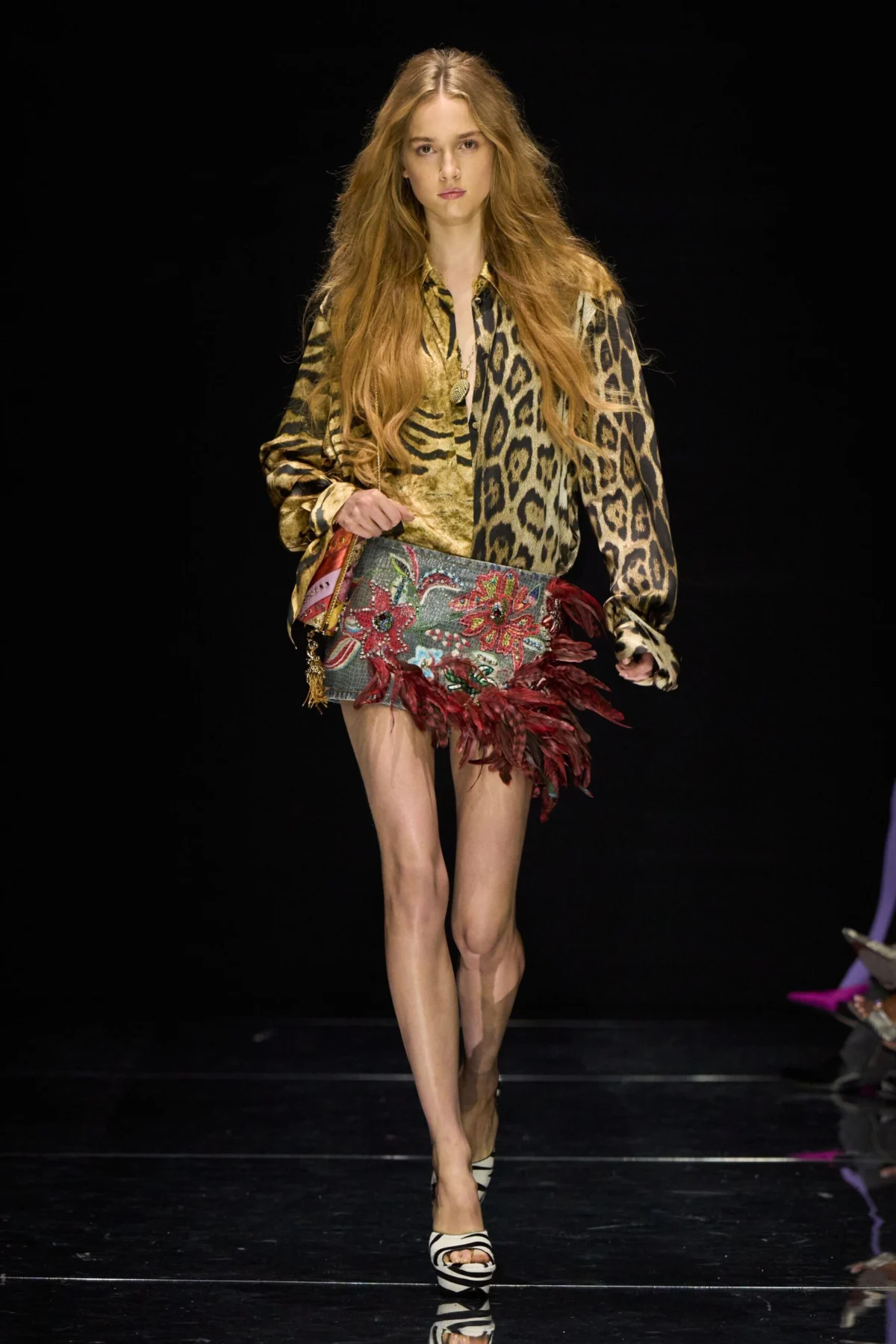
The fashion world is witnessing a significant resurgence of Roberto Cavalli’s iconic aesthetic, a movement emphatically underscored by Fausto Puglisi’s latest collection. Earlier this month, the palpable excitement around vintage Cavalli reached a fever pitch with a rare exhibition and sale of the designer’s distinctive 1970s printed leathers at Reracked, a prominent vintage store located in upstate New York. This event, which drew collectors and fashion enthusiasts alike, showcased the enduring appeal of Cavalli’s early, experimental works. Concurrently, the resale market has seen a notable surge in demand for pieces from the brand’s younger, punk-infused Just Cavalli line, particularly from the early 2000s, indicating a broader cultural embrace of the brand’s diverse heritage across different generations of fashion consumers.
Fausto Puglisi, the creative director who has helmed the Roberto Cavalli brand for the past five years, has demonstrated an astute understanding of this burgeoning nostalgia for Cavalli’s deep cuts. Throughout his tenure, Puglisi has often explored various facets of the house’s rich archives, occasionally venturing far from its signature glamazon standbys to inject his own distinct vision. However, with this latest collection, presented to critical acclaim, Puglisi committed wholeheartedly to an immersive interpretation of Cavalli’s legacy, spiking the brand’s characteristic animal prints, luxurious velvet devoré fabrics, and intricate embroideries with a bold, unapologetically clubby edge. This collection, as observers noted, was unequivocally designed "for the girlies," signaling a decisive shift towards youthful exuberance and overt glamour.
The Enduring Allure of Roberto Cavalli’s Legacy
Roberto Cavalli founded his eponymous label in the early 1970s, quickly establishing himself as a pioneer in luxury fashion with his revolutionary techniques for printing on leather. His innovative approach transformed humble animal hides into canvases for vibrant, exotic patterns, elevating them to high fashion status. Cavalli’s early collections were characterized by a bohemian sensuality, infused with a distinct rock-and-roll sensibility that resonated with the jet-set crowd of the era. The 1990s and early 2000s saw a renewed surge in the brand’s popularity, as Cavalli embraced a more overtly glamorous and maximalist aesthetic. His signature leopard, zebra, and python prints became synonymous with red-carpet opulence, often gracing the bodies of Hollywood’s elite and music icons. This period also gave rise to the Just Cavalli diffusion line, launched in 2000, which offered a more accessible yet equally daring interpretation of the main line’s extravagant spirit, catering to a younger, more rebellious demographic with its denim, casual wear, and distinctive accessories. The brand’s consistent celebration of the female form, its embrace of audacious prints, and its commitment to luxurious craftsmanship solidified its position as a powerhouse of Italian glamour.
The Vintage Market Renaissance: A New Chapter for Cavalli
The current fervor for archival Roberto Cavalli pieces is not merely a fleeting trend but a reflection of several converging factors within the contemporary fashion landscape. The exhibition and sale at Reracked, for instance, offered a curated selection of Cavalli’s rare 1970s leather creations, including intricately printed jackets, flared trousers, and patchwork skirts. Such events serve to re-educate consumers on the brand’s foundational artistry and craftsmanship, highlighting the timelessness of designs that predated its more widely known Y2K era. Industry analysts suggest that niche vintage boutiques, by showcasing these unique pieces, play a crucial role in shaping collector interest and elevating the perceived value of historical fashion.
Simultaneously, the digital age has democratized access to vintage luxury, with platforms like The RealReal, Vestiaire Collective, Depop, and Grailed becoming virtual treasure troves for fashion enthusiasts. On these platforms, pieces from the Just Cavalli line, particularly those from the early 2000s, have experienced a meteoric rise in popularity. This phenomenon is largely driven by Gen Z and younger millennial consumers who are deeply invested in the Y2K aesthetic revival. Searches for "Just Cavalli top" or "Cavalli denim" have reportedly seen a year-over-year increase of over 150% on some resale sites, with specific items like low-rise jeans, embellished camisoles, and printed bodycon dresses commanding premium prices. This demographic is drawn to the line’s playful, audacious spirit, its inherent sense of fun, and its distinctive blend of luxury and youthful rebellion—a stark contrast to the minimalist "quiet luxury" trends that have dominated recent years. The appeal also extends to the sustainability aspect of buying pre-owned, offering a unique and environmentally conscious way to engage with high fashion.
Fausto Puglisi: Navigating Heritage and Innovation
Fausto Puglisi’s appointment as creative director in 2020 came at a pivotal moment for Roberto Cavalli. The brand, while still synonymous with Italian glamour, had experienced shifts in ownership and creative direction, leading to a period of re-evaluation. Puglisi, known for his own bold, maximalist aesthetic and a deep appreciation for Italian culture and craftsmanship, was tasked with revitalizing the house while honoring its flamboyant heritage. Over his five-year tenure, he has deftly navigated this complex mandate, introducing collections that sometimes leaned into more understated elegance, at other times pushing the boundaries with contemporary interpretations of Cavalli’s iconic animalier prints and bohemian flourishes.
This latest collection marks a significant turning point in Puglisi’s journey with the brand. Recognizing the powerful resonance of archival Cavalli in the current cultural zeitgeist, he decided to lean fully into the brand’s most recognizable codes, but with a fresh, youthful twist. He eschewed the more traditional "glamazon standbys"—the opulent, often floor-length gowns designed for grand red-carpet moments—in favor of a more dynamic, everyday-glam approach. This strategic pivot aims to connect with a younger generation of consumers who appreciate luxury but demand versatility and a playful edge. His approach is not about replicating the past but distilling its essence and recontextualizing it for today’s sartorial sensibilities.
A Collection for the Modern "Girlies": Decoding the Aesthetic
The focus of Puglisi’s latest collection was unequivocally on separates, offering a versatile wardrobe that allows for individual expression and encourages mixing and matching. The runway was a riot of vibrant energy, showcasing micro-miniskirts that barely grazed the thigh, sleek bike shorts designed to be worn both casually and as part of a more dressed-up ensemble, and an array of halter tops that exuded a confident sensuality. Hot pants, rendered in luxurious fabrics and adorned with intricate details, made a strong statement, alongside delicate, lace-edged camisoles that added a touch of feminine allure.
Perhaps the most talked-about elements were the embellished low-rider jeans, paired daringly with strappy thongs peeking out above the waistbands—a direct nod to the provocative fashion of the early 2000s, re-imagined with a high-fashion sensibility. This detail, while controversial to some, perfectly encapsulated the collection’s audacious spirit and its embrace of a confident, body-positive aesthetic. The kaleidoscope of patterns and textures—from vibrant animal prints in unexpected colorways to rich velvet devoré with intricate burn-out effects, and shimmering embroideries that caught the light—stood in stark contrast to the often minimalist, black, white, and beige palettes that dominated much of the season’s fashion week presentations. This deliberate maximalism served as a visual palate cleanser, asserting Cavalli’s unique identity in a landscape that has long favored understatement.
The craftsmanship inherent in these pieces was evident in every detail. The animal prints, a Cavalli signature, were rendered with new vitality, often layered or combined with other motifs, creating complex visual narratives. The velvet devoré, a technique that involves chemically treating velvet to create sheer and opaque patterns, showcased the brand’s commitment to luxurious textiles and intricate surface design. Embroideries, ranging from subtle embellishments to elaborate, shimmering motifs, added depth and opulence, transforming everyday separates into statements of high fashion. This collection was not just about clothes; it was about an attitude—one of confidence, self-expression, and a desire to stand out.
The Zeitgeist Reflected: "Milan is Partying Again"
Backstage, Fausto Puglisi articulated the driving philosophy behind his collection, stating, "I’m thinking about the time we’re living in." This sentiment resonated deeply with industry observers, many of whom noted a significant shift in the broader cultural and fashion landscape. For years, the industry had leaned into "quiet luxury" and practical, comfortable silhouettes, largely influenced by global economic uncertainties and the extended period of remote work and social distancing. However, recent seasons have seen a pronounced pivot.
Puglisi’s instincts appear to be spot on. Following years of subdued elegance and practical dressing, there is a palpable desire for overt glamour, celebration, and unbridled self-expression. This shift is evident not just on the runways but also in the front rows, where high heels are making a definitive comeback, replacing the ubiquitous sneakers and flats. As an astute observer remarked hours after the Cavalli show at an industry dinner packed into the perennial Milanese hotspot Bice, "Milan is partying again." This simple yet profound observation encapsulates a broader societal yearning for joy, escapism, and hedonism after a period of collective restraint. Fashion, as a mirror of society, is reflecting this desire for exuberance and the reclaiming of social life. Milan, with its inherent sense of Italian vitality and glamour, is ideally positioned to lead this charge, offering a vibrant counterpoint to more conservative fashion capitals. The Cavalli collection, with its clubby edge and celebratory mood, perfectly encapsulates this renewed spirit of revelry.
An Eclectic Tapestry of Inspiration
Puglisi’s reference list for this collection, as is often his custom, was impressively expansive and eclectic, reflecting his unique ability to synthesize disparate cultural elements into a cohesive vision. He name-checked icons of rebellion and glamour like Courtney Love, whose "grunge splendor" undoubtedly informed the collection’s raw edge and rebellious undertones, juxtaposing it with Cavalli’s inherent luxury to create a new kind of opulent punk. The aspirational youth culture of the 1990s, particularly the iconic television series Beverly Hills 90210, provided a visual lexicon for youthful confidence and West Coast cool, influencing the collection’s focus on separates and its playful, spirited vibe.
Contemporary style icon Zendaya, celebrated for her fearless and impactful red-carpet choices, served as an emblem of modern glamour and empowered femininity, inspiring looks that are both bold and effortlessly chic. More unexpectedly, Puglisi drew inspiration from the art world: the Antonello da Messina masterpiece, Portrait of a Man, stolen from a Sicilian museum, likely resonated not just for its inherent beauty and historical significance but perhaps also for its narrative of loss and reclamation, or the sheer richness of its color palette and the intensity of its subject’s gaze. This could be interpreted as a metaphor for reclaiming Cavalli’s lost glamour or infusing the collection with a profound, almost dramatic, visual storytelling.
Finally, Todd Gray’s "Octavia’s Gaze" exhibition at LACMA, which Puglisi appreciated for its ability to "put different worlds dialoguing together," clearly informed the collection’s core philosophy. Gray’s work often explores complex historical narratives and cultural intersections, and this concept of diverse elements engaging in a dialogue directly parallels Puglisi’s approach to blending Cavalli’s archival signatures with contemporary club culture, grunge, and art historical references. While these inspirations serve as rich "subtext," their ultimate manifestation is clear: these are clothes designed to ignite good times and facilitate joyful self-expression, a feat that Puglisi is indisputably adept at achieving.
Broader Impact and Future Outlook
The latest Roberto Cavalli collection under Fausto Puglisi’s direction carries significant implications for the brand and the broader fashion industry. Commercially, by tapping into the potent Y2K nostalgia and offering a collection that is both desirable on the vintage market and relevant in its contemporary interpretation, Cavalli is poised to attract a new generation of consumers while reaffirming its appeal to long-time loyalists. The focus on separates also makes the collection more commercially viable, offering individual pieces that can be integrated into existing wardrobes, thereby broadening its market appeal beyond exclusive occasion wear.
Culturally, Cavalli’s resurgence signals a definitive shift away from austerity and towards a more celebratory, expressive mode of dressing. This move aligns with a global sentiment of post-pandemic liberation and a collective desire for joy, glamour, and optimism. As fashion continues to reflect and shape societal moods, Cavalli’s maximalist, club-ready aesthetic could become a benchmark for this new era of overt luxury. The symbiotic relationship between the brand’s new collections and its burgeoning vintage market also highlights a sustainable model for heritage brands, where contemporary designs can drive interest in archival pieces, and vice-versa, creating a continuous cycle of relevance and desirability. Fausto Puglisi’s masterful synthesis of Cavalli’s flamboyant legacy with a keen eye for contemporary desires has not only revitalized the brand but has also positioned it at the forefront of a dynamic and exciting new chapter in fashion, where glamour is not just back, but ready to party.
