
 By admin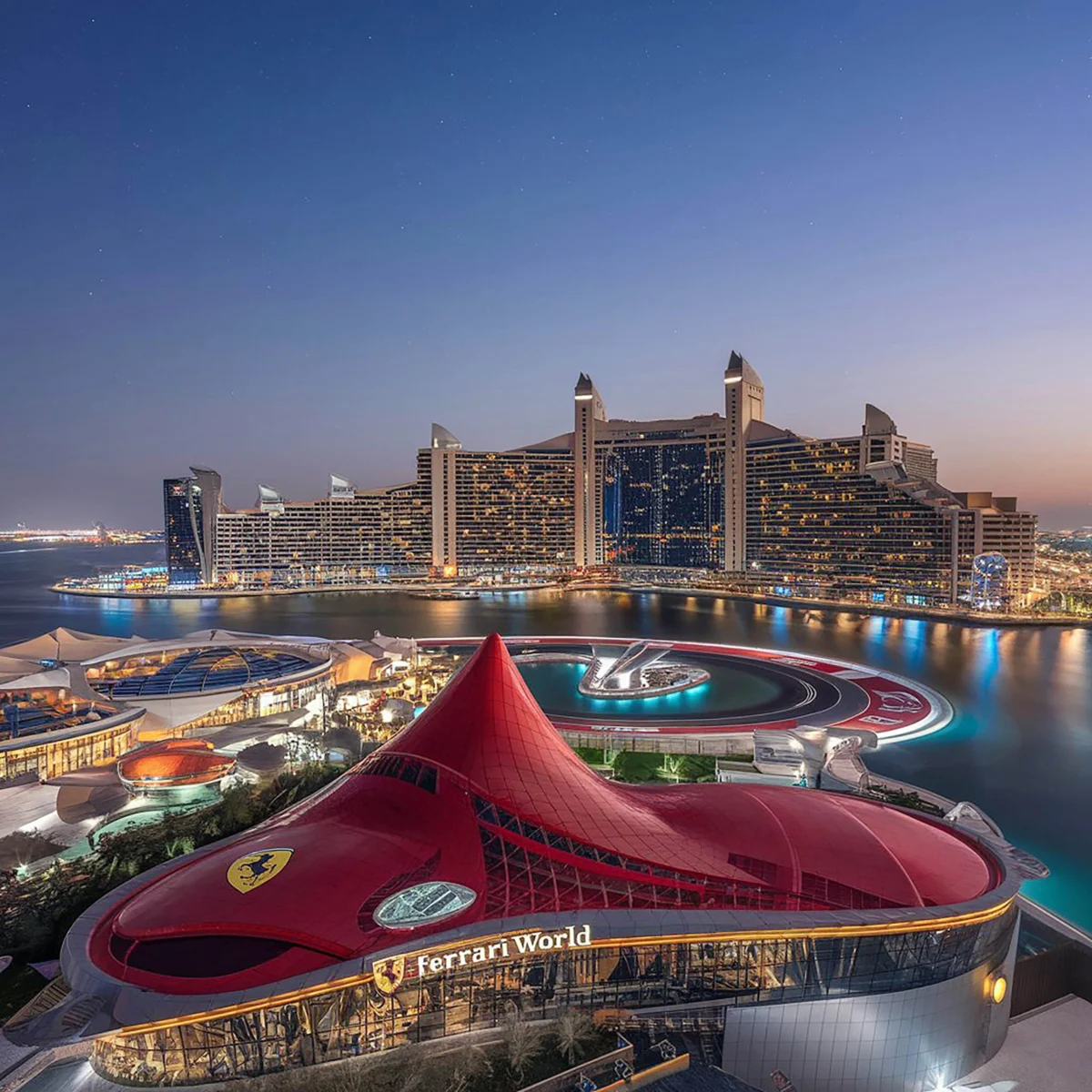
The skyline of Abu Dhabi is undergoing a fundamental transformation that extends beyond the traditional pursuit of verticality. While neighboring regional hubs have often prioritized record-breaking heights, the capital of the United Arab Emirates is executing a multi-decade master plan centered on cultural depth, environmental sustainability, and the creation of specialized districts. From the museum-dense corridors of Saadiyat Island to the immersive entertainment hubs of Yas Island, Abu Dhabi is utilizing world-class architecture to pivot its national identity from an oil-reliant economy to a global center for knowledge, arts, and high-tier tourism.
This strategic evolution is largely guided by the Abu Dhabi Economic Vision 2030, a government roadmap aimed at diversifying the economy and fostering a highly skilled, culturally enriched society. The current wave of architectural projects represents billions of dollars in investment, bringing together Pritzker Prize-winning architects like Frank Gehry, Jean Nouvel, and Lord Norman Foster to interpret Emirati heritage through a contemporary lens.
A Chronology of Transformation: 2024–2030
The timeline for Abu Dhabi’s current architectural expansion reveals a deliberate, phased approach to city-building. The opening of the BAPS Hindu Mandir in February 2024 marked a significant milestone in the emirate’s "Year of Tolerance," showcasing traditional hand-carved stone craftsmanship. Following this, the spring of 2025 saw the launch of teamLab Phenomena, an immersive digital art space. By late 2025, the cultural landscape will expand further with the inaugurations of the Natural History Museum and the Zayed National Museum.
The momentum continues into 2026 with the scheduled opening of the Guggenheim Abu Dhabi, a project nearly two decades in the making. Looking toward the end of the decade, the Sphere Abu Dhabi is slated for completion in 2029, while the residential and performing arts components of Saadiyat and Yas Island, including Dar al Funoon and the Yas Point neighborhood, are expected to reach full handover by 2030.
Zayed National Museum: A Synthesis of Heritage and Engineering
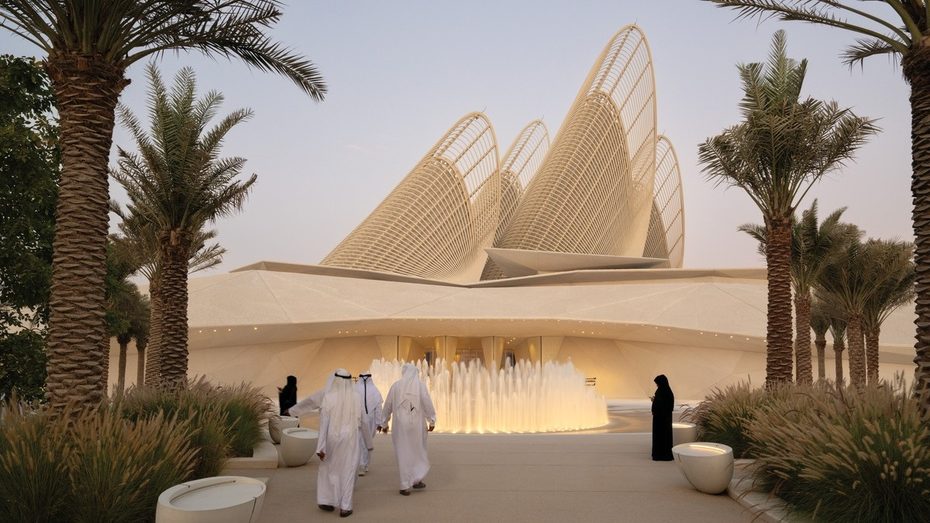
Designed by Foster + Partners and opened in December 2025, the Zayed National Museum serves as the centerpiece of the Saadiyat Cultural District. The building is a physical tribute to the late Sheikh Zayed bin Sultan Al Nahyan, the founding father of the UAE. The most striking features of the museum are the five aerodynamic steel structures that rise from a landscaped mound, designed to resemble the tips of a falcon’s wings—a nod to the traditional Emirati sport of falconry.
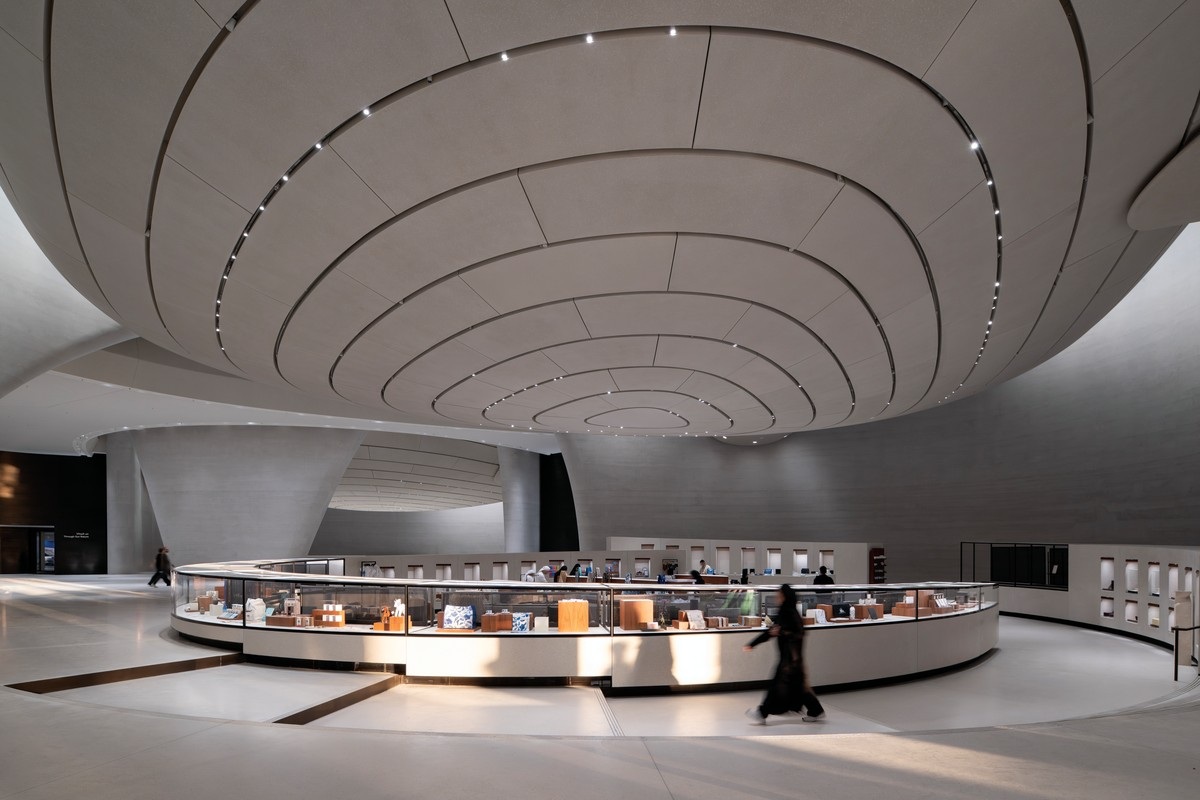
However, the architecture serves a rigorous environmental purpose. These "wings" function as thermal chimneys. In a climate where summer temperatures regularly exceed 45°C (113°F), the towers draw hot air upward and out of the building, while cooler air is pulled through underground pipes and released into the museum’s lobby. This passive cooling system significantly reduces the carbon footprint of the 66,000-square-meter facility. By placing the primary galleries within a man-made hill, the architects further utilized the earth’s thermal mass to maintain stable internal temperatures, blending ancient Middle Eastern wind-tower principles with high-tech aerospace engineering.
The Natural History Museum: Documenting the Arabian Landscape
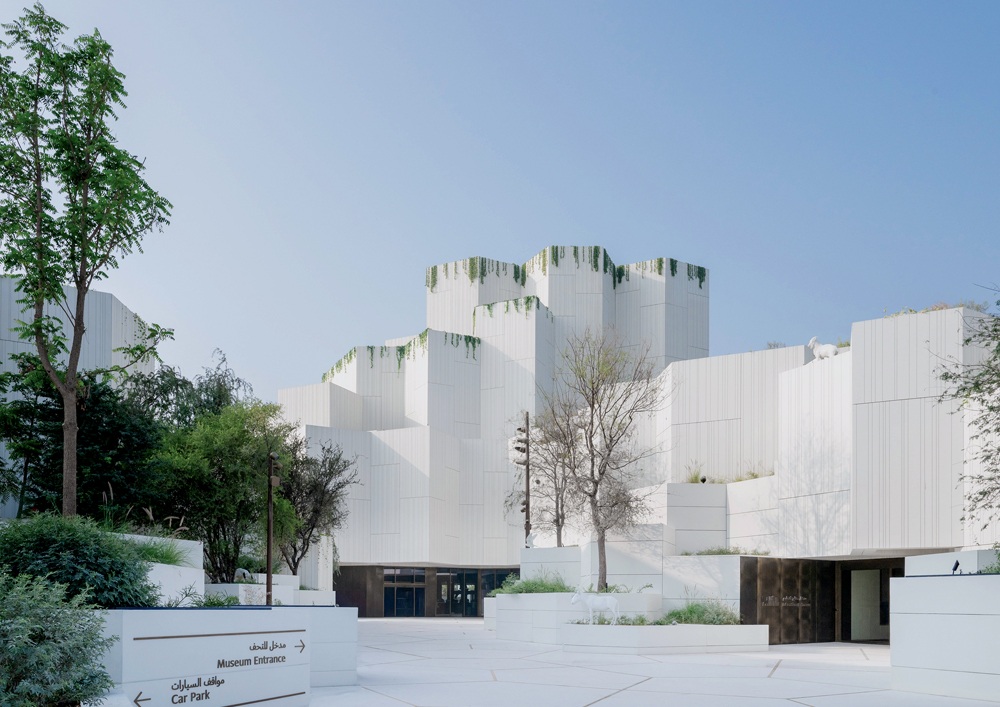
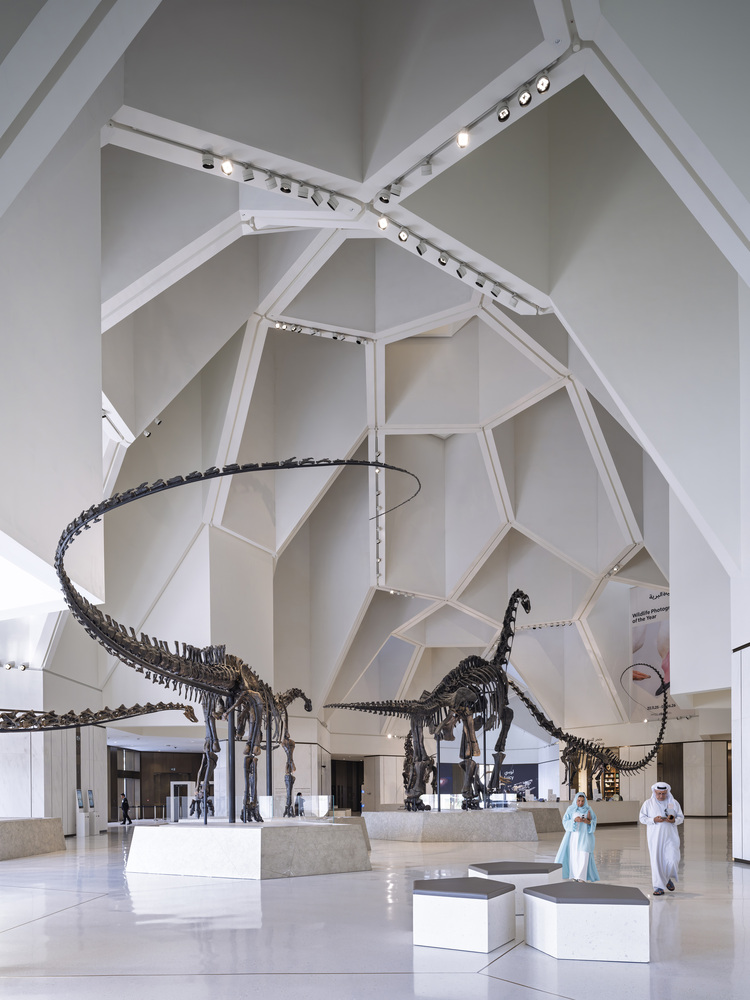
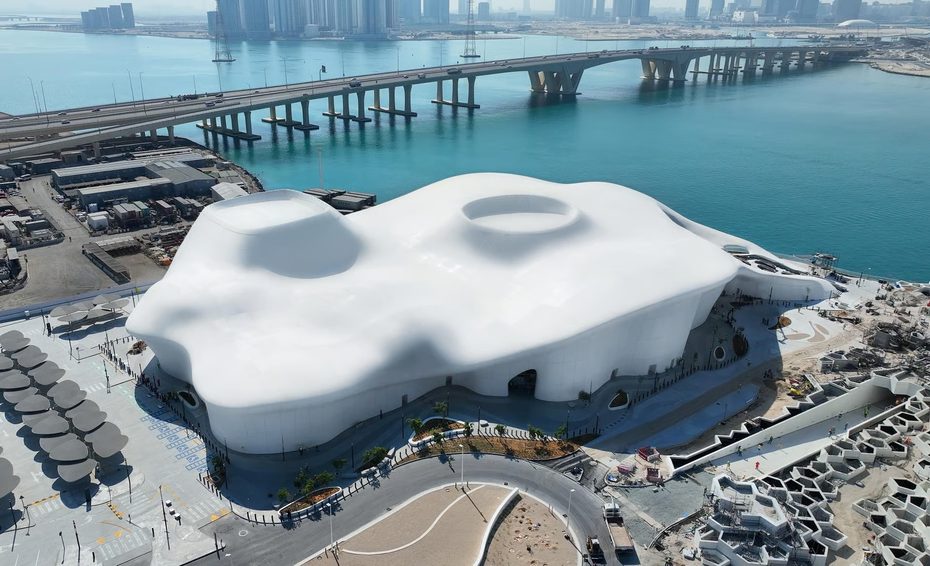
Adjacent to the Zayed National Museum is the Natural History Museum Abu Dhabi, which opened in November 2025. Designed by the Dutch firm Mecanoo, the 35,000-square-meter facility focuses on the geological and biological evolution of the Earth, with a specific emphasis on the Arabian Peninsula’s unique ecosystems.
Mecanoo’s design utilizes pentagonal geometries inspired by cellular structures and natural rock formations. The building’s "porous" architecture allows for the integration of water features and desert vegetation into the gallery spaces, blurring the line between the exhibits and the external environment. This project reflects a broader trend in Abu Dhabi’s development: move away from "black box" museums toward structures that participate in the story they are telling. The facility houses rare specimens, including "Stan," the world-renowned Tyrannosaurus rex skeleton, and the Murchison meteorite, which provides scientific data on the origins of the solar system.
Guggenheim Abu Dhabi and the Gehry Legacy
Set to open in December 2026, the Guggenheim Abu Dhabi represents the largest of the Guggenheim outposts globally. Designed by Frank Gehry, the 80,000-square-meter museum is a complex arrangement of cones, blocks, and clusters situated on a peninsula at the northwestern tip of Saadiyat Island.
The design is quintessential Gehry—deconstructivist and sculptural—yet it is deeply informed by regional context. The ten sculptural cones that surround the central building are inspired by traditional regional wind towers. These structures provide shade and facilitate natural ventilation for the exterior courtyards, creating a bridge between the indoor galleries and the waterfront. The museum’s collection will focus on West Asian, North African, and South Asian (WANASA) modern and contemporary art, positioning Abu Dhabi as a primary interlocutor in the global art dialogue.
Digital Frontiers: teamLab Phenomena and Sphere Abu Dhabi
While Saadiyat Island focuses on historical and fine arts, Yas Island is emerging as a laboratory for the intersection of technology and architecture. teamLab Phenomena Abu Dhabi, a 17,000-square-meter "home for environmental phenomena," opened in April 2025. Unlike traditional museums where art is static, the architecture of teamLab Phenomena was designed from the inside out. The building’s internal volumes were shaped to facilitate specific interactions between light, water, and sound.
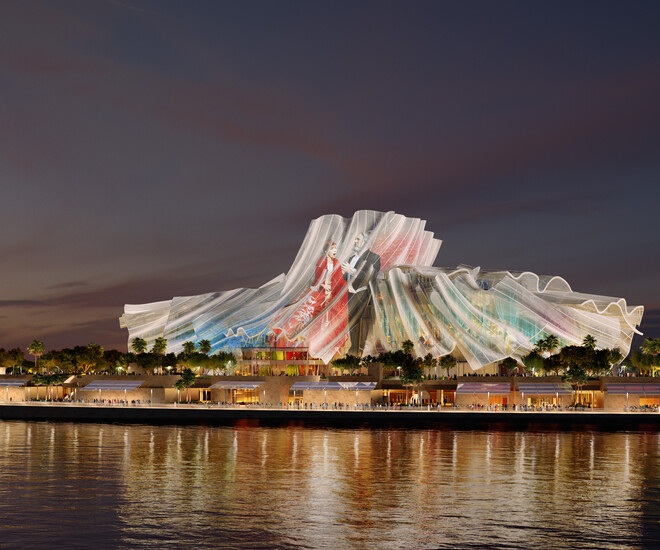
Further pushing the boundaries of entertainment architecture is the Sphere Abu Dhabi. With an estimated construction cost of USD 1.7 billion and a capacity for 20,000 spectators, the project follows the success of the Sphere in Las Vegas but is tailored for the Middle Eastern market. The building is essentially a massive, programmable LED screen on the outside and an immersive haptic theater on the inside. By appointing AtkinsRéalis as the lead consultant, the Abu Dhabi government has signaled its intent to integrate this massive structure into the existing infrastructure of Yas Mall and SeaWorld, creating a seamless "experience economy" corridor.
Yas Point: Shifting Toward Pedestrian-Centric Urbanism
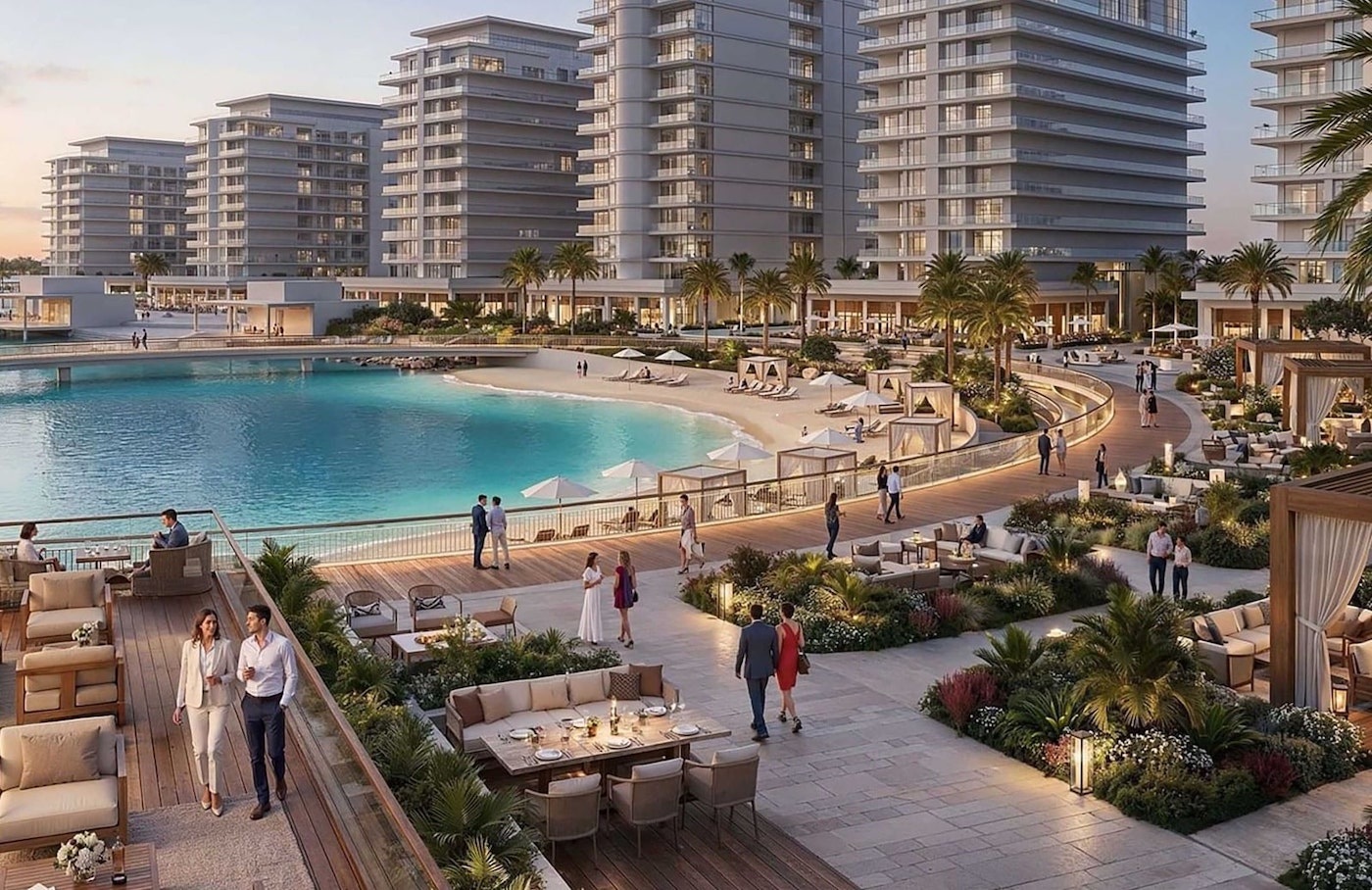
The AED 6 billion (USD 1.63 billion) Yas Point development, unveiled by Aldar Properties, represents a shift in Abu Dhabi’s residential philosophy. Traditionally, Gulf cities have been designed for automobile transit. Yas Point, however, is a 600,000-square-meter masterplan designed around a 700-meter waterfront promenade and a series of "canopy" walkways.
The first phase, "The Canopies," includes 592 apartments across six mid-rise buildings. The architectural focus here is not on the height of the towers but on the "connective tissue" between them. With over 10,000 square meters of landscaped open space, the project aims to foster a walkable community. This reflects a growing demand among both locals and expatriates for urban environments that prioritize public health, social interaction, and access to green spaces—elements that were often secondary in earlier phases of the city’s rapid expansion.
BAPS Hindu Mandir: Traditional Craftsmanship in a Modern Capital
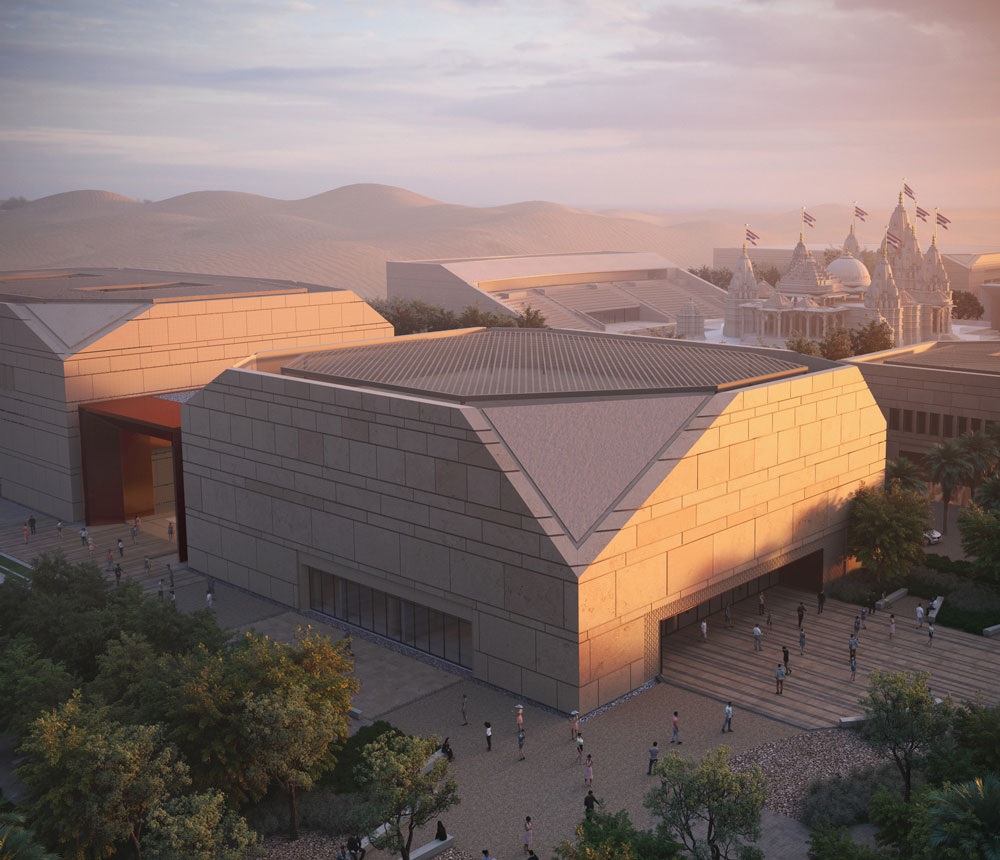
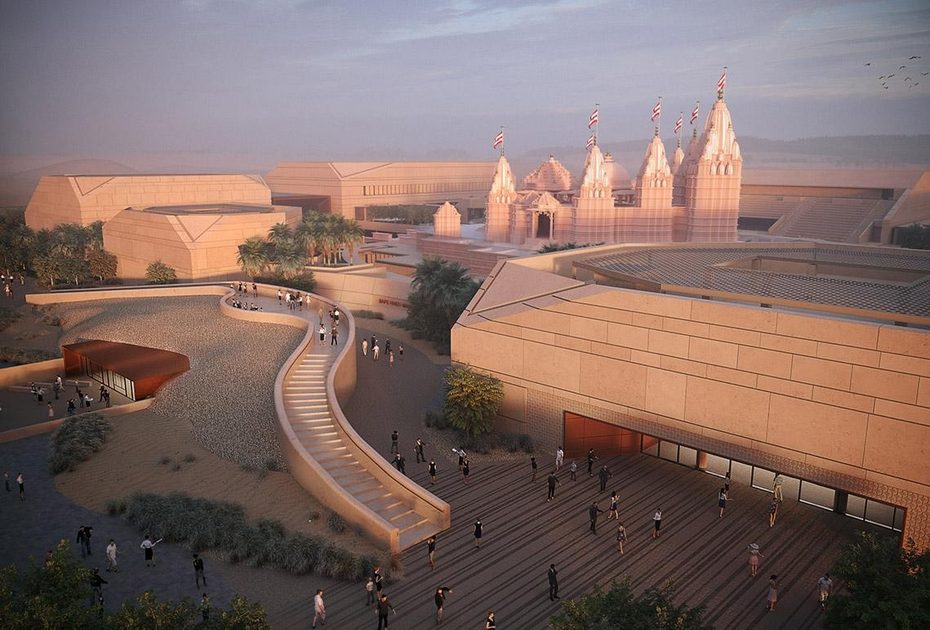
In a city of steel and glass, the BAPS Hindu Mandir offers a profound architectural contrast. Opened in February 2024, it is the first traditional Hindu stone temple in the Middle East. While the wider complex was designed by the Singapore-based firm RSP, the temple itself was constructed using ancient Vedic architectural principles (Shilpa Shastras).
More than 3,000 artisans in Rajasthan, India, hand-carved 180,000 cubic feet of pink sandstone and white marble, which were then shipped to Abu Dhabi and assembled like a giant jigsaw puzzle without the use of structural steel or reinforced concrete in the main prayer halls. This project serves as a diplomatic and cultural statement, symbolizing the UAE’s commitment to religious pluralism. Architecturally, it demonstrates that traditional manual techniques can coexist with—and even enhance—a modern urban landscape.
Economic and Cultural Implications
The aggressive pace of construction in Abu Dhabi is backed by significant data. The Department of Culture and Tourism (DCT) Abu Dhabi has invested heavily to ensure these projects are not merely "vanity assets." The Saadiyat Cultural District alone is expected to contribute billions to the emirate’s GDP through tourism and the creative industries.
Analysts suggest that Abu Dhabi is successfully creating a "cluster effect." By grouping the Louvre Abu Dhabi (opened in 2017), the Guggenheim, the Zayed National Museum, and the Natural History Museum in a single district, the city ensures that it becomes a multi-day destination for international travelers. Furthermore, the focus on sustainable architecture—demonstrated by the Estidama Pearl Rating System, the UAE’s local equivalent to LEED—ensures that these massive investments are viable in a future defined by climate constraints.
Conclusion: Architecture as Identity
Abu Dhabi’s architectural trajectory reveals an emirate that is no longer content with being a secondary player in the global cultural arena. By commissioning buildings that function as environmental systems, social hubs, and artistic statements, Abu Dhabi is defining a new type of modern capital—one that balances the hyper-futurism of digital entertainment with the tactile permanence of hand-carved stone and passive desert cooling.
As the projects slated for 2026 and 2030 come online, the city will move from a phase of construction to a phase of activation. The true success of this architectural vision will be measured not by the striking silhouettes on the desert horizon, but by how effectively these spaces foster a sense of community, preserve regional heritage, and provide a sustainable blueprint for urban life in the 21st century.
