
 By Nila Kartika Wati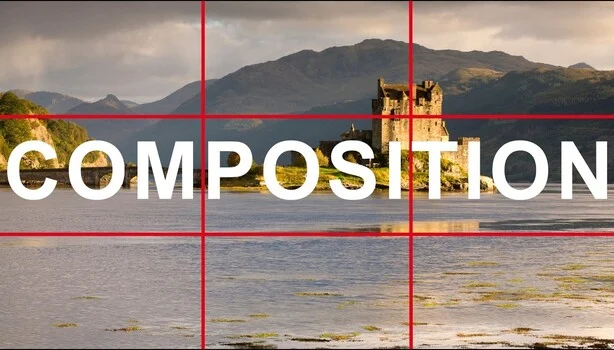
Every aspiring photographer embarks on a journey through the fundamental principles of composition, often starting with the ubiquitous "rule of thirds" before delving into an expansive toolkit of guidelines designed to achieve visual balance, dynamism, and narrative impact. However, the true essence of photographic mastery often lies not in rigid adherence to these established techniques, but in their deliberate absorption and eventual transcendence—a profound insight explored by acclaimed videographer Craig Roberts, whose recent discourse offers a compelling perspective on the evolution from technical proficiency to intuitive artistry, even as he navigates the physical challenge of filming with a slipped disc pressing on a nerve, a circumstance he transparently acknowledges as potentially influencing occasional speech patterns.
Roberts, a prominent voice in the online photography community via his e6Vlogs channel, meticulously deconstructs the conventional wisdom surrounding compositional theory, guiding viewers through a comprehensive lineup of tools. His presentation is particularly noteworthy for its pedagogical structure, commencing with the most universally recognized rule and progressively advancing to more nuanced concepts, before culminating in a deeply personal revelation about what truly constitutes effective composition. This approach mirrors the typical learning trajectory of photographers, who initially rely heavily on prescriptive rules as scaffolding for their developing visual literacy.
The Foundation: The Rule of Thirds and its Ubiquity
The journey into compositional mastery, as outlined by Roberts, invariably begins with the Rule of Thirds. This guideline, perhaps the most widely taught and universally applied compositional principle, suggests dividing an image into nine equal segments using two equally spaced horizontal lines and two equally spaced vertical lines. Key compositional elements should then be placed along these lines or at their intersections, creating a more balanced and engaging photograph than simply centering the subject. Originating from artistic principles that predate photography, often simplified from the more complex ‘golden ratio’ or ‘golden mean’ observed in classical art and nature, the Rule of Thirds has become the cornerstone of introductory photography curricula worldwide. Its appeal lies in its straightforward application and its consistent ability to produce visually pleasing results, making it the "king of composition" in Roberts’s estimation.
However, Roberts quickly issues a crucial caveat: while foundational, an over-reliance on the Rule of Thirds can lead to predictable and, at times, monotonous imagery. As digital photography has democratized access to image-making, the widespread application of this rule has also led to a certain uniformity, prompting more experienced photographers to seek techniques that offer greater dynamism and originality. This highlights a critical phase in a photographer’s development: moving beyond mere application to understanding the why and when of a rule, and recognizing its limitations.
Expanding the Toolkit: Dynamism, Depth, and Flow
Beyond the elementary grid, Roberts introduces a suite of compositional devices designed to inject greater energy and depth into photographs.
Diagonal Lines: The transition from the static balance of the Rule of Thirds often leads to an exploration of diagonal lines. By positioning subjects or environmental elements so that lines run corner-to-corner rather than flat across the frame, photographers can introduce a powerful sense of movement, tension, and dynamism. Psychologically, diagonal lines are perceived as less stable than horizontal or vertical lines, creating a visual journey that pulls the viewer’s eye through the frame, evoking action or leading towards a focal point. This technique is particularly effective in landscape, architectural, and street photography, where natural or man-made structures can be leveraged to create compelling visual pathways.
The Vanishing Point: A technique deeply rooted in the Renaissance masters’ pursuit of perspective, the vanishing point is presented as a method to create profound depth and draw the viewer’s eye towards a singular subject or a distant horizon. This "tunnel effect," often achieved through leading lines converging in the distance, creates an illusion of three-dimensionality on a two-dimensional surface. Roberts emphasizes that this is a technique one "finds" rather than "forces," suggesting that successful application often comes from observing existing environments for natural convergences, rather than artificially constructing them. This distinction underscores the importance of perceptive observation in photography—a key skill that differentiates mere picture-takers from true visual storytellers.
Curves and the S-Curve: Roberts dedicates significant attention to the power of curves, singling out the S-curve as a compositional "jackpot" when encountered in a scene. The S-curve, often referred to as Hogarth’s "Line of Beauty," is known for its elegant, flowing quality that guides the eye smoothly through an image, conveying grace, tranquility, and aesthetic pleasure. Think of winding rivers, meandering roads, or the graceful curve of a human body. Roberts broadens this principle, noting that any curve within a rectangular frame—even a simple C-shape or a half-circle—tends to enhance a photograph, adding softness, rhythm, and an organic feel that contrasts with the often rigid structures of other compositional rules. The psychological impact of curves is often one of comfort and naturalness, making them powerful tools for evocative imagery.
Framing: The technique of framing involves using elements within the scene to create a natural border around the main subject. This can involve using trees to frame other trees, doorways to frame a person, or foreground elements to obscure distracting backgrounds or empty sky. Framing serves multiple purposes: it isolates the subject, drawing immediate attention to it; it adds layers and depth to the image; and it can be used to hide undesirable elements, thereby cleaning up the composition. Roberts highlights its utility in concealing "empty sky and dead space" behind a silhouetted foreground element, effectively transforming potential distractions into complementary compositional components.
Dead-Center Placement: While often eschewed in favor of the Rule of Thirds, Roberts acknowledges a specific, albeit limited, role for dead-center placement. Reserved for simple, impactful subjects where the middle is genuinely the only place the subject belongs, this technique can convey monumentality, directness, and stark simplicity. Examples include portraits designed for maximum impact, minimalist landscapes featuring a singular dominant element, or abstract compositions. Its power lies in its defiance of conventional "balance" to achieve a deliberate, often bold, statement.
The Chronology of Learning: From Conscious Application to Unconscious Competence
The progression Roberts outlines mirrors the pedagogical timeline observed in many creative disciplines. Students typically begin with explicit rules, consciously applying them in their practice. This stage, characterized by deliberate effort and frequent reference to guidelines, is essential for building a foundational understanding of what constitutes an aesthetically pleasing or impactful composition. Just as a musician meticulously practices scales and arpeggios, or a writer studies grammar and narrative structures, a photographer drills the Rule of Thirds, practices framing, and hunts for vanishing points.
This initial phase, often spanning hundreds, if not thousands, of photographs, involves constant analysis: "Is my subject on a third? Are there leading lines? Is there a frame?" With repetition, these conscious decisions gradually recede into the subconscious. The eye becomes trained, the brain begins to recognize patterns, and the application of rules becomes less an intellectual exercise and more an intuitive response. This transition from conscious incompetence to conscious competence, and eventually to unconscious competence, is the bedrock of true mastery in any skilled endeavor.
The Pinnacle of Practice: Composing by Feel
Roberts’s most profound insight, and the ultimate "payoff" of his video, is that his actual favorite compositional technique is the absence of a rule—composing by feel. This seemingly contradictory statement is not an endorsement of haphazard shooting but rather the culmination of diligent practice. True instinct, he posits, only emerges after every guideline has been absorbed, practiced, and understood to such an extent that it can be deliberately dropped.
This earned freedom is critical. One cannot meaningfully break a rule one has never learned or mastered. The ability to ignore the Rule of Thirds, for example, is only legitimate after having consciously applied it dozens, if not hundreds, of times. This process ensures that "just go with your gut" transforms from a vague, often unproductive suggestion into a defensible, highly effective creative strategy rooted in deep experiential knowledge. This perspective resonates strongly with seasoned professionals across various artistic fields, who often report reaching a point where strong compositions emerge not from analytical checklists, but from an almost automatic, pre-visualized response to a scene.
The implications for aspiring photographers are clear: treat each technique as a deliberate assignment. Dedicate a week to shooting nothing but diagonals, or spend another hunting exclusively for vanishing points. This focused practice is not merely about memorizing rules; it’s about training the eye, internalizing visual principles, and developing a sophisticated aesthetic sensibility. The ultimate goal is to achieve a state of fluency where one can compose a compelling frame without consciously articulating why it works—a testament to the deep integration of theory into intuitive practice.
The Enigmatic Exception: A Painter’s Technique?
In a refreshing display of intellectual honesty, Roberts also addresses a compositional technique he has encountered in descriptions but has never successfully managed to integrate into his own photographic work. He suspects this particular design might be more naturally suited to painters working with oils or other mediums that allow for complete control over every element within the frame, rather than photographers capturing existing reality with a sensor. This acknowledgment underscores the distinctions between different artistic mediums and their inherent constraints and freedoms. While painters can construct entire worlds from imagination, photographers often work within the confines of what is present, making certain abstract or highly manipulated compositional forms more challenging to "find" in the real world. Roberts’s candid admission to "give that one a miss" offers a valuable lesson in self-awareness and the recognition of personal creative boundaries, serving as a reminder that not every technique is universally applicable or necessary for every artist. He extends an open invitation for viewers to share examples if they ever manage to pull it off, fostering a spirit of collaborative learning and exploration.
Broader Impact and Implications for Creative Education
Roberts’s framework for understanding photographic composition offers significant implications for creative education across various disciplines. His emphasis on deliberate practice leading to intuitive mastery aligns with contemporary pedagogical theories that advocate for deep learning and the cultivation of expertise through structured engagement. This model challenges the notion that creativity is purely innate; instead, it posits that true artistic freedom is often forged through disciplined study and relentless application of foundational principles.
The debate between "rules" and "breaking rules" is a perennial one in art. Roberts’s contribution clarifies that this is not an either/or proposition but a developmental continuum. Rules function as crucial "training wheels" that teach the eye about balance, tension, harmony, and narrative. As these lessons are internalized, the need for conscious adherence diminishes, replaced by an intuitive understanding that allows for purposeful deviation. This "unconscious competence" is where innovation and genuine artistic voice truly emerge, as artists can then bend, reinterpret, or outright ignore conventions with informed intent, rather than out of ignorance.
In an era of ubiquitous digital imagery, where technical barriers to entry are lower than ever, the discerning eye and sophisticated compositional sense remain paramount. Roberts’s insights serve as a vital guide for photographers seeking to elevate their craft beyond mere snapshot-taking. His video, delivered with the authentic voice of a creator who understands both the technical grind and the elusive pursuit of artistic expression, stands as a testament to the idea that the greatest freedom in art is earned through the most rigorous discipline. For those willing to put in the work, the reward is a fluent visual language that transcends mere guidelines, allowing the photographer to compose a strong frame not just because of a rule, but because it simply feels right.
To fully appreciate the nuances of Roberts’s perspective, including the specific technique he candidly writes off and his demonstration of composing where classic rules appear absent, viewers are encouraged to watch the full video. His authentic approach provides not just instruction, but also inspiration for navigating the complex yet rewarding world of photographic composition.
