
 By Nila Kartika Wati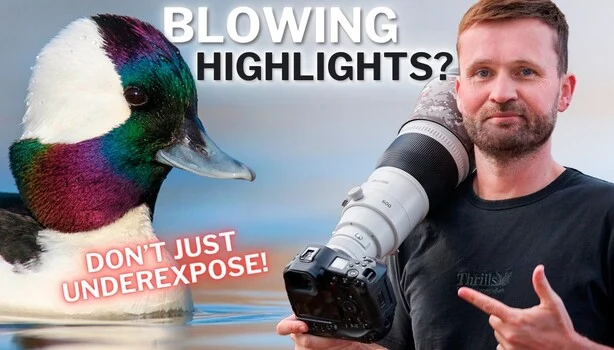
Wegener candidly admits to his own past adherence to aggressively guarding highlights, citing dull, flat photographs from as early as 2005 as evidence of this overcorrection. His journey, mirroring the broader evolution of photographic technology, has led him to a refined philosophy that challenges conventional wisdom. Wild birds present an exceptionally difficult exposure puzzle; scenarios range from dark plumage silhouetted against a brilliant sky to a sun-drenched bird where some feathers reflect intense light while others remain shrouded in deep shadow. Wegener’s central contention is that neither extreme—obsessive highlight protection nor reckless overexposure—serves the photographer effectively. Burying the subject in darkness to prevent any highlight clipping renders an image lifeless, while striving for maximum brightness risks irreversible data loss in critical areas. His current methodology advocates for a precise balance: safeguard only the highlights that truly matter to the image’s narrative and aesthetic, allowing the rest of the frame to remain bright, detailed, and engaging.
The Evolving Landscape of Photographic Exposure
The historical context of exposure management in photography is crucial to understanding Wegener’s contemporary approach. In the era of film, and even during the early years of digital single-lens reflex (DSLR) cameras, sensors possessed a significantly narrower dynamic range compared to today’s advanced models. Dynamic range refers to the spectrum of light intensities, from the darkest shadows to the brightest highlights, that a camera sensor can record in a single image. Early digital sensors, often capable of capturing around 8-10 stops of dynamic range, were notoriously prone to clipping highlights—losing all detail in the brightest areas—if overexposed even slightly. This limitation led to the widespread adoption of the "expose to the right" (ETTR) principle, a technique where photographers deliberately overexposed images as much as possible without clipping highlights, to gather maximum light information and minimize noise in the shadows. While effective for maximizing data, ETTR often resulted in images that appeared visually underexposed straight out of the camera, requiring significant post-processing to bring them to a desirable brightness.
Wegener’s journey from 2005, a time when DSLRs like the Canon EOS 5D (released that year) offered around 11 stops of dynamic range, to today’s mirrorless cameras boasting 14-15 stops, reflects a fundamental shift in technical capabilities. This increase in dynamic range provides photographers with far greater latitude in capturing scenes with extreme contrasts, reducing the necessity for such aggressive highlight protection. The ability to recover detail from shadows has improved dramatically, making it less imperative to "expose to the right" to mitigate noise, as shadow noise is now much more manageable in modern sensors. This technological leap underpins Wegener’s confidence in allowing more brightness into his frames without fear of irrecoverable data loss.
Mastering the Levers: Light, Background, and Camera Settings
Before delving into camera settings, Wegener emphasizes that the most significant controls over exposure lie in the fundamental elements of light and background. Harsh, direct sunlight inherently exacerbates the dynamic range challenge, creating vast differences between the brightest and darkest parts of a scene that can easily exceed a sensor’s capabilities. Conversely, soft, even light—such as that found on overcast days or in open shade—compresses this range, making it far easier for the camera to capture detail across the entire tonal spectrum. The background also plays a critical role; a background that harmonizes with the subject’s tone and brightness simplifies exposure considerably. A bright bird against a dark, shadowed tree line, for instance, presents a much greater challenge than the same bird against a uniformly lit, complementary backdrop.
For precise control, Wegener predominantly shoots in full manual mode. This allows him to independently set the shutter speed, aperture, and ISO, fixing the exposure specifically for the bird and the ambient light. This manual control prevents the camera’s automatic metering system from reacting to a constantly changing background—a common pitfall when a bird flies from water to trees to sky—which can lead to inconsistent exposures within a burst of shots. In manual mode, Wegener relies heavily on the live histogram displayed in his electronic viewfinder (EVF), leaving just a small, deliberate gap on the right side. This gap signifies that he is capturing all necessary highlight information without pushing pixels into irreversible clipping, while simultaneously ensuring the image retains brightness and vitality. This real-time feedback loop is a cornerstone of his methodology, allowing for immediate, informed adjustments before the shutter even fires.
For situations where full manual control might feel overwhelming, especially for those transitioning from semi-automatic modes, Wegener suggests a hybrid approach: manual mode with auto ISO. In this configuration, the photographer locks in the desired shutter speed (critical for freezing bird motion) and aperture (controlling depth of field), while the camera intelligently adjusts the ISO sensitivity to achieve correct exposure. Even in this mode, exposure compensation remains a vital tool, allowing the photographer to fine-tune the camera’s automatic ISO selection if it consistently leans too bright or too dark based on the scene’s nuances.
Advanced Metering Modes and Camera-Specific Innovations
When employing manual with auto ISO, or any semi-automatic mode, the camera’s metering system becomes paramount. Wegener discusses various metering options available across different camera brands:
- Evaluative/Matrix Metering: This is the default, general-purpose metering mode that analyzes the entire scene to determine an average exposure. While versatile, it can be easily fooled by highly contrasting scenes, leading to underexposure of a bright subject against a dark background or vice-versa.
- Highlight-Weighted Metering: Found on cameras from Sony and Nikon, this mode specifically prioritizes protecting highlights. It aims to expose the image so that the brightest areas are not clipped, effectively acting as a safeguard against blown-out details. While useful, it can sometimes lead to an overall darker image, reinforcing the very problem Wegener seeks to overcome if not used judiciously with exposure compensation.
- Canon’s Highlight Tone Priority (HTP): Canon offers a distinct feature called Highlight Tone Priority. Rather than simply underexposing, HTP works by underexposing the image by approximately one stop and then applying a specific tone curve to bring the mid-tones and shadows back to a more natural brightness. This clever algorithm creates additional headroom in the highlights, preserving detail without sacrificing overall image brightness as severely as a simple underexposure would. Wegener uses HTP almost constantly, turning it off only in extremely low-light conditions where its application can introduce visible digital noise. He also notes a practical consideration: not all raw converters interpret Canon’s HTP metadata correctly, meaning the effect might not be fully visible in some third-party software until specific adjustments are made.
Beyond these general metering strategies, camera manufacturers have begun to integrate more subject-aware exposure systems. Wegener highlights a Canon subject-tracking setting that bases exposure calculations specifically on the tracked bird rather than the entire frame. This intelligent feature significantly reduces the chances of the background influencing the subject’s exposure, providing greater consistency and accuracy in challenging environments.
The Mirrorless Revolution: Real-Time Feedback as a Game Changer
The advent of mirrorless camera bodies represents a seismic shift in how photographers approach exposure, particularly for fast-moving subjects like birds. Unlike traditional DSLRs, where the optical viewfinder showed a direct, unadulterated view of the scene, mirrorless cameras utilize an electronic viewfinder (EVF) that displays a digitally processed image. This distinction is critical because the EVF, coupled with the camera’s live view display, provides several invaluable real-time feedback tools:
- Live Histogram: As Wegener emphasizes, the ability to see a live histogram before the shutter is pressed transforms exposure from a post-shot guess into a real-time, informed decision. Photographers can instantly assess the tonal distribution of their scene and make immediate adjustments to aperture, shutter speed, or ISO to achieve the desired exposure balance. This eliminates the frustration of discovering a blown-out highlight after the bird has already flown away, rendering the shot unusable.
- Exposure Simulation: The EVF accurately simulates the final exposure, showing the photographer exactly how bright or dark the image will be. This visual feedback is far more intuitive and effective than relying solely on a light meter reading or making an educated guess.
- Zebras: Many mirrorless cameras offer "zebra patterns" which overlay stripes on areas of the image that are at risk of being overexposed (or underexposed, depending on settings). While zebras can be incredibly helpful for identifying potential highlight clipping, Wegener offers a nuanced perspective. He notes that while they clearly indicate areas approaching pure white, they sometimes appear in non-critical areas (like specular reflections on water or distant bright clouds) that don’t necessarily need protection. Over-reliance on zebras can, therefore, inadvertently lead to underexposing the main subject. Understanding which highlights are critical, rather than just where highlights exist, is key to using zebras effectively.
For photographers who began their careers with film cameras or early DSLRs, retraining themselves to trust and utilize the histogram and exposure simulation in the EVF is perhaps the single most impactful change they can make. This shift in workflow is precisely what enables Wegener’s "protect only the critical highlights" philosophy to be practically applied in the field, making it possible to achieve precise exposure with confidence. The underlying technique—a keen understanding of light and its interaction with the sensor—is universal, transcending specific camera brands or photographic subjects.
Post-Processing: The Art of Raw Recovery
Despite the best efforts in-camera, not every shot can achieve perfect balance, especially when dealing with extreme dynamic range scenarios. This is where the flexibility of raw files and advanced post-processing techniques become indispensable. Wegener delves into various raw recovery methods for shots that defy ideal in-camera exposure:
- Raw File Advantages: Shooting in raw format is paramount for recovery. Unlike JPEGs, which are compressed and processed files, raw files contain all the unprocessed data captured by the camera’s sensor. This higher bit depth (typically 12-bit or 14-bit compared to 8-bit for JPEGs) provides significantly more latitude for adjusting exposure, recovering highlights, and lifting shadows without introducing severe artifacts or noise.
- Local Adjustments and Masking: Modern raw converters like Adobe Lightroom, Capture One, or DaVinci Resolve offer powerful local adjustment tools. These allow photographers to selectively brighten shadows, recover highlights, or adjust contrast in specific areas of the image without affecting the entire frame. Masking techniques, whether automated (e.g., subject select, sky select) or manual (e.g., brush masks, gradient masks), enable precise control over these local edits, ensuring that corrections are applied only where needed.
- Manual Blending for Extreme Dynamic Range: For scenes with truly exceptional dynamic range that push even modern sensors to their limits, Wegener describes a more advanced technique: manually blending multiple exposures. This can involve merging two or more distinct exposures (one optimized for highlights, another for shadows) of the same scene, or even creating two different interpretations (bright and dark) from a single raw file and blending them in software like Photoshop. This meticulous process allows for the creation of a composite image that preserves detail across an incredibly broad tonal range, yielding a final result that is rich in detail from the deepest shadows to the brightest highlights.
Broader Implications and Impact
Wegener’s refined exposure philosophy and his emphasis on leveraging modern mirrorless technology carry significant implications for the wider photographic community.
For Wildlife Photography Education: His approach provides a clear, actionable framework for aspiring and experienced wildlife photographers alike. It shifts the focus from rigid rules to an understanding of light and sensor capabilities, empowering photographers to make creative, informed decisions in the field. This education is crucial for raising the overall quality of wildlife imagery.
For Camera Manufacturers: Wegener’s insights underscore the ongoing demand for improved sensor dynamic range, more sophisticated metering systems, and increasingly intuitive and informative EVF feedback mechanisms. The continued innovation in these areas directly benefits photographers striving for optimal image quality in challenging conditions. Features like highlight-weighted metering and intelligent subject-tracking exposure are direct responses to the needs highlighted by experts like Wegener.
For Artistic Expression: By freeing photographers from the fear of highlight clipping, Wegener’s method encourages a brighter, more vibrant aesthetic. This allows for greater artistic freedom and the creation of more impactful, true-to-life images that better convey the beauty and energy of wild birds. The emphasis on real-time feedback means more time spent observing and composing, and less time second-guessing technical settings.
For Wildlife Conservation: High-quality, compelling wildlife photography plays a crucial role in conservation efforts. Images that vividly capture the essence and habitat of wild birds can evoke empathy and inspire action. By enabling photographers to produce technically superior and aesthetically pleasing images, Wegener’s philosophy indirectly contributes to the broader mission of wildlife awareness and protection.
In conclusion, Jan Wegener’s evolution from a conservative exposure approach to his current "critical highlights" philosophy is a testament to the transformative power of technological advancements and a deep understanding of photographic principles. His method, which embraces the capabilities of mirrorless cameras for real-time feedback and prioritizes the artistic vitality of the image, offers a compelling blueprint for photographers seeking to capture wild birds with unparalleled precision and impact. His comprehensive video tutorial, which visually demonstrates his real-time histogram reading and metering mode setup, serves as an invaluable resource for anyone looking to master the art of exposing wild birds in the modern photographic landscape.
