
 By Jia Lissa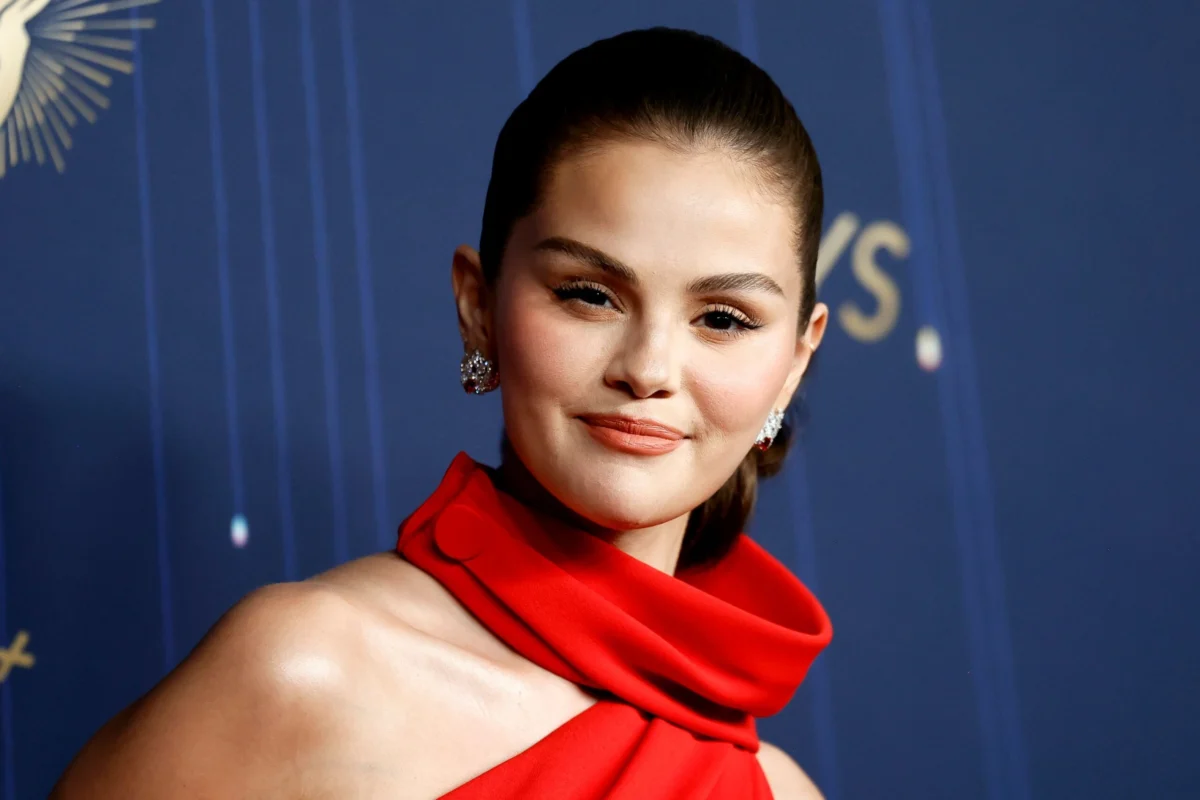
Selena Gomez, a prominent figure straddling the millennial generation and a global style icon, has inadvertently ignited a conversation about hairstyling preferences, specifically the age-old debate between side and middle parts. Her recent public appearances in New York City, showcasing a sophisticated middle part with a modern, ’60s-inspired blowout, have prompted many, including this publication’s resident millennial, to reconsider their long-held follicular loyalties.
The Genesis of a Trend: Gomez’s Stylistic Evolution
The catalyst for this renewed interest in the middle part can be traced to Gomez’s appearance on September 17th, where she was photographed in New York City sporting her newly extended hair. The style, meticulously crafted by renowned hairstylist Renato Campora, featured a distinct ’60s-inspired blowout. This was not a voluminous, gravity-defying creation, but rather a sleek, polished look characterized by a precisely defined middle part that extended seamlessly from her forehead. The hair was smoothed flat on either side, with the front sections artfully tucked behind her ears. The lengths were then expertly blow-dried to achieve a smooth finish, culminating in subtly curled-under ends that added a touch of dynamic movement, gracefully sweeping over her shoulders.
This particular styling choice by Gomez, a fellow millennial born in 1992, carries significant weight. For years, the side part has been the dominant aesthetic for many within this demographic, often perceived as a more mature and sophisticated option compared to the middle part, which some associate with childhood hairstyles. The author of the original piece, identifying as a "bona fide millennial," confessed to feeling a sense of discomfort with the middle part, likening it to a return to childhood and noting that her hair naturally gravitated towards a side parting. Gomez’s endorsement, however, offers a compelling counterpoint, presenting the middle part not as a nostalgic throwback but as a contemporary and chic statement.
The Business of Beauty: Rare Beauty and the Innovation Festival
Gomez’s presence in New York City was not solely for sartorial purposes. She was in town to participate in the Fast Company Innovation Festival, a prestigious event that convenes leaders, entrepreneurs, and innovators across various industries to discuss groundbreaking ideas and future trends. Gomez, a successful entrepreneur in her own right, was a featured speaker on a panel focused on her widely acclaimed beauty brand, Rare Beauty.
The choice of hairstyle for such a high-profile professional engagement is noteworthy. The sleek, precisely parted blowout projected an image of confidence, polish, and business acumen, perfectly aligning with the professional atmosphere of the festival. The "business-chic" aesthetic was undeniably effective, and it’s plausible that the deliberate and sharp middle part contributed to this perception. This stylistic choice can be interpreted as a subtle yet powerful communication of control and attention to detail, attributes highly valued in the business world.

A Day of Double Down: The Tribeca Appearance
Further solidifying the resurgence of the middle part, Gomez was seen the day prior to the Innovation Festival, on September 16th, in Tribeca. On this occasion, she showcased a different, yet equally striking, interpretation of the middle part. This look featured a full, wavy "bombshell" blowout, again originating from a clear center parting. While Gomez is known for her versatility, having sported various lengths and styles including popular bobs, her current long hair, when styled with a middle part, appears to possess a particular allure that has captivated observers. This second instance of a middle part within a short timeframe underscores Gomez’s apparent affinity for the style and its potential to be a defining look for her during this period.
The Generational Divide: Side Part vs. Middle Part
The discourse surrounding hair partings has often been framed through a generational lens. Anecdotal evidence and social media trends suggest that millennials, particularly those who came of age in the late 1990s and early 2000s, largely favored the side part. This preference may have been influenced by prevailing trends of the era, which often emphasized asymmetry and a more "effortless" or "undone" look. Conversely, the middle part was often associated with younger children and, in some cultural contexts, with a more rigid or formal aesthetic.
However, fashion is cyclical, and what was once considered passé can be reinvented and reintroduced with a fresh perspective. The current embrace of the middle part by figures like Gomez suggests a potential shift in these generational perceptions. It’s possible that the middle part is being re-evaluated not as a childish style, but as a sophisticated and versatile option that can be adapted to various looks, from sleek and professional to voluminous and glamorous.
The Psychology of a Hair Part
Beyond generational preferences, the choice of a hair part can also be influenced by personal preference, hair texture, and facial structure. A middle part can help to frame the face symmetrically, drawing attention to the eyes and cheekbones. For individuals with certain facial shapes, such as those with round or square features, a middle part can create the illusion of a longer, more elongated face. Conversely, a side part can add softness and asymmetry, which can be flattering for individuals with heart-shaped or oval faces.
Hair texture also plays a role. For those with fine or thinning hair, a middle part might make the hair appear thinner at the crown. In such cases, a side part can create the illusion of more volume. However, with modern styling techniques and products, even finer hair can be manipulated to achieve volume and structure with a middle part. Renato Campora’s styling of Gomez’s hair exemplifies this, showcasing how a precise middle part can be integrated into a voluminous yet controlled blowout.
Data and Trends: What the Numbers Say
While definitive statistical data on hair part preferences by generation is scarce, online trends offer some insight. Social media platforms like TikTok and Instagram have witnessed a surge in content related to hair styling, with "middle part" and "side part" trending at various times. For instance, the "middle part challenge" on TikTok saw a significant number of users experimenting with the style, often in response to the perceived generational divide. This indicates a broader cultural interest in exploring different hairstyling options.

Furthermore, searches for "how to style a middle part" and "middle part hairstyles" have seen consistent interest over the past few years, suggesting that the trend is not merely fleeting. The resurgence of ’90s and early 2000s fashion has also contributed to a renewed appreciation for styles that were popular during those decades, including the middle part.
Expert Analysis and Future Implications
The impact of a style icon like Selena Gomez cannot be underestimated. Her influence extends beyond fashion and beauty, impacting consumer behavior and trend adoption on a global scale. When Gomez embraces a particular look, it often signals a potential shift in mainstream aesthetics. Her recent appearances with a middle part could very well encourage more individuals, particularly millennials who may have previously shied away from it, to experiment with this parting.
Hairstylists may see an uptick in requests for middle parts, prompting them to refine their techniques for achieving various middle-parted styles. This could lead to a broader acceptance and normalization of the middle part across all age groups and style preferences. The "generational debate" surrounding hair parts may evolve from a point of contention to one of appreciation for the diversity of styling choices available.
The fact that Gomez chose a precisely defined middle part for a professional event like the Fast Company Innovation Festival is particularly telling. It suggests that the middle part is no longer solely associated with casual or youthful looks but can also convey professionalism and sophistication. This evolution in perception is crucial for its widespread adoption.
Broader Impact: A Shift in Beauty Standards
The potential shift towards a more universal acceptance of the middle part signifies a broader evolution in beauty standards. It moves away from rigid, generationally defined rules towards a more inclusive and adaptable approach to personal style. The ability to wear a hairstyle that resonates with one’s personality and occasion, rather than adhering to perceived generational norms, is a liberating concept.
Selena Gomez, through her consistent and stylish adoption of the middle part, is not just making a fashion statement; she is challenging established notions and encouraging self-expression. Her influence, coupled with the inherent versatility of the middle part, suggests that this style is poised for a significant comeback, not just as a trend, but as a timeless option in the repertoire of personal grooming. The conversation started by her elegant hair may well lead to a more open-minded and experimental approach to hairstyling for many, transcending generational boundaries.
