
 By admin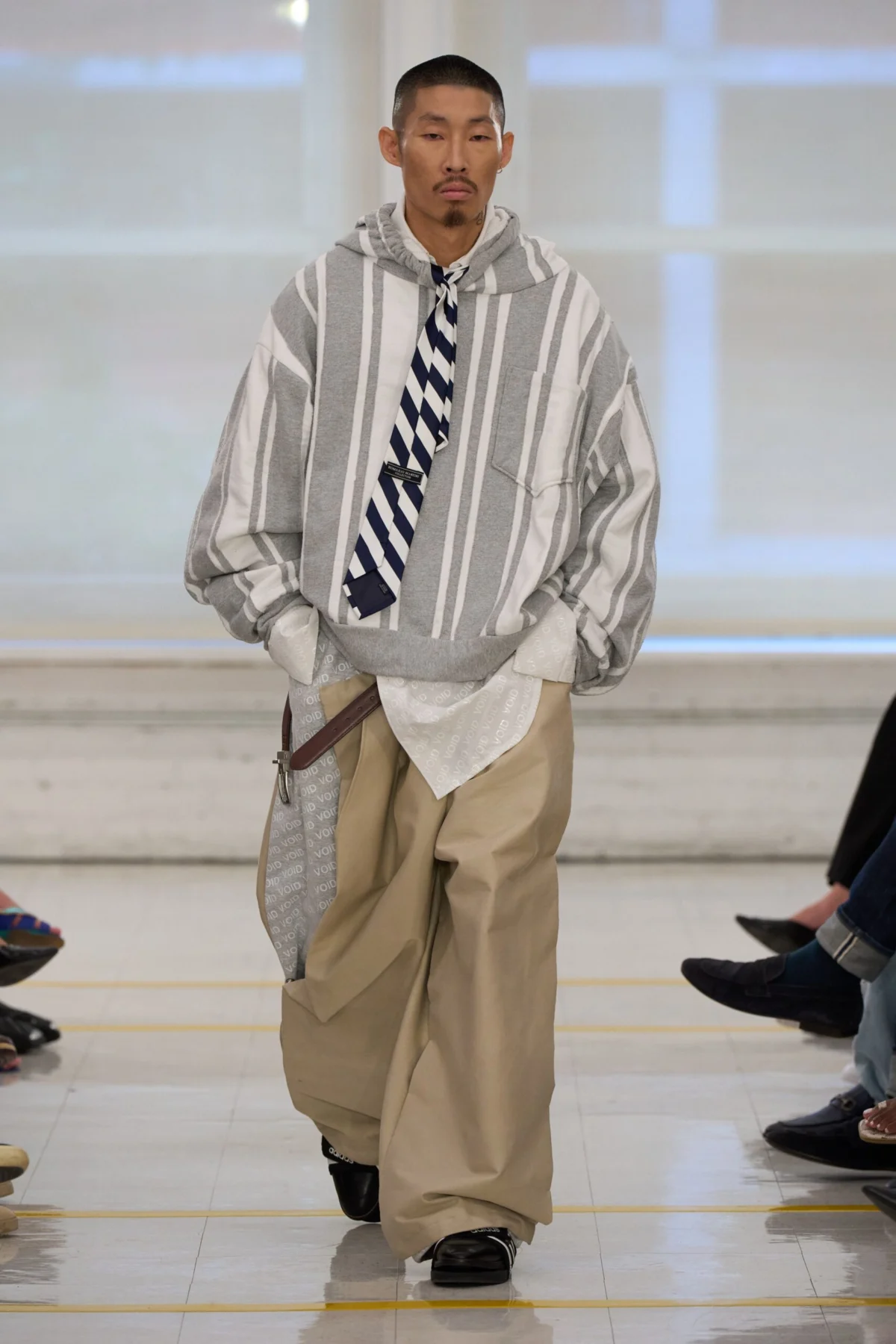
The typical fervor and commercial drama often associated with New York Fashion Week (NYFW) receded into the background as the Parsons MA show unfolded, offering a refreshing and deeply authentic counter-narrative within the hallowed, cleared-out atelier of the school. This setting provided an intimate, almost familial environment, perfectly suited for the presentation of fifteen graduate collections that collectively represented a stellar cohort of emerging talent. Far from the transactional nature of established brands, this event served as a critical platform for nascent designers to articulate profound personal and political statements through their sartorial creations, underscoring Parsons’ enduring legacy as a crucible for avant-garde thought and technical mastery in fashion design.
Parsons’ Legacy and the MA Program’s Significance
Parsons School of Design, part of The New School, stands as one of the preeminent institutions globally for art and design education. Established in 1896, its fashion department has consistently been a vital pipeline for industry leaders, counting luminaries like Tom Ford, Donna Karan, Marc Jacobs, and Alexander Wang among its alumni. The Master of Arts (MA) program in Fashion Design and Society is particularly esteemed for its rigorous curriculum, which challenges students to push creative boundaries, engage in critical discourse, and develop a distinctive design philosophy. Unlike undergraduate programs, the MA often emphasizes conceptual development, research, and a highly individualized approach to design, fostering designers who are not merely skilled technicians but also thoughtful innovators and cultural commentators.
The MA show, therefore, is not just a student exhibition; it is a significant event within the broader fashion ecosystem. Industry scouts, critics, and potential investors attend to identify the next generation of visionary talent. In an industry increasingly grappling with questions of sustainability, diversity, and technological integration, these graduate collections often serve as a barometer for future trends, reflecting societal shifts and artistic aspirations before they permeate mainstream fashion. The intimate atelier setting, stripped of elaborate staging often seen at major NYFW venues, consciously redirected focus solely onto the garments and the narratives they conveyed, reinforcing the academic and conceptual rigor inherent to the Parsons MA experience.
A Stage for Unfiltered Vision: Personal Narratives and Sociopolitical Commentary
The collective presentation underscored a prevailing sentiment within contemporary fashion education: design is a powerful medium for storytelling and social commentary. The fifteen collections were unified by their deeply personal and often politically charged themes, moving beyond mere aesthetics to explore identity, societal norms, and cultural heritage. This thematic depth resonates with a growing consumer demand for authenticity and purpose-driven design, a trend that market analysts predict will continue to shape the fashion industry’s trajectory in the coming decades.
The show commenced with Elijah Turner, a menswear designer whose collection was a compelling exploration of rebellion against conventional workplace attire. Turner articulated his design philosophy as a direct challenge to the often rigid and monotonous sartorial codes of professional environments. His methods included the strategic juxtaposition of casual and formal garments, deliberately blurring traditional distinctions to create a new lexicon of professional dressing. Furthermore, he injected a distinctive comic element into his pieces, an unexpected subversion that introduced levity and irony into a typically serious domain. One particularly striking piece was described as being as flat and two-dimensional as the art installations seen at Tom Sachs’s new "Chanel" store, a direct reference that speaks to both artistic commentary and consumerism. Turner elaborated on the conceptual underpinnings, stating, "In the workplace, there’s this idea of having to sell yourself." His "human billboard" look was a literal manifestation of this corporate imperative, transforming the wearer into a walking advertisement for their own ambition, offering a poignant critique of self-commodification in modern professional life. This concept aligns with broader discussions in sociology about the performance of self in digital and corporate spheres, illustrating how fashion can become a tool for both conformity and critique.
The journey through the collections continued with an embrace of exaggerated forms and dynamic movement. Cody Gallegos presented work characterized by cartoonish proportions, injecting a playful, almost surreal quality into his designs. This approach speaks to a growing trend of "escapist fashion," where designers use fantasy and hyperbole to provide respite from everyday realities. Following Gallegos, Carolin Habermann accelerated the pace with her zippy motocross-style performance looks. Habermann’s collection was not merely about clothing but about encapsulating speed, energy, and a sense of athletic dynamism, reflecting an increasing intersection between sportswear and high fashion, a segment that has seen significant growth in recent years due to its appeal to younger demographics and its emphasis on comfort and functionality.
Gender Fluidity and Cultural Reinterpretations
The exploration of gender identity and its representation in fashion was a recurring and potent theme. Annette Levin, despite having studied womenswear, presented a captivating men’s collection, drawing inspiration from the iconic character of John Travolta’s Tony Manero from Saturday Night Fever. Levin was fascinated by the inherent paradox of Manero’s character – his overt machismo juxtaposed with an underlying, almost theatrical femininity. Her collection deliberately eschewed the expected white disco suit, instead opting for models in flowing fabrics and headbands, exuding a glam rock sensibility rather than a disco aesthetic. Levin articulated her innovative approach: "For my garment technique, I focus on taking aspects of womenswear and displacing them onto men’s bodies. I worked with womenswear silhouettes using stretch fabrics to adapt the fit for men. In this way, femininity is not layered onto hyper masculine form as decoration, but built into its structure." This statement highlights a sophisticated understanding of gender as a construct, moving beyond superficial embellishment to integrate feminine principles into the very core of menswear construction, aligning with contemporary dialogues around gender fluidity and non-binary fashion expressions.
From Switzerland, Cilia Dahl presented a charming collection that masterfully blended Victorian volumes with whimsical elements inspired by Tove Jansson’s beloved Moomins. Dahl’s work exemplifies the power of historical referencing combined with fantastical narratives, creating garments that are both elegant and imbued with a sense of playful storytelling. This approach speaks to a desire for fashion that transcends mere utility, offering wearers a connection to imaginative worlds and historical aesthetics.
Melissa Rosales Parra introduced the fascinating concept of "border femininity," a theme deeply rooted in her academic study of photographers from her hometown of Ciudad Juárez, Mexico. Parra defined this concept as "the Disney princess ideal taken out of context," a critical lens through which to examine the imposition and reinterpretation of Western beauty standards in a specific cultural and geographical context. Her methodology, which she termed "ill fits," was a deliberate strategy to "explain this out of context ideal, a U.S. imported femininity." Through her designs, she conjured magic from unconventional materials and techniques, employing exposed underwires, plastic coating, and paper plastered on chamois. These elements, often associated with vulnerability or deconstruction, were skillfully manipulated to create a powerful commentary on the idealized yet often unattainable standards of femininity, particularly as they intersect with issues of cultural identity and globalization. Her work resonates with academic discussions on post-colonial fashion and the deconstruction of Western hegemonies in aesthetic representation.
Mythological Power and Ancestral Echoes
The show seamlessly transitioned from sociological methodologies to rich mythological narratives with Sabahat Javed. Her collection, rendered primarily in striking black and white, featured ravishing volumes achieved through off-loom weaving. Many of her pieces drew inspiration from the opulent Mughal era, imbuing them with a sense of historical grandeur and intricate craftsmanship. Javed’s conceptual framework challenged prevailing stereotypes, stating, "These garments are all inspired by these women who are often [described as] scary. People are trying to tell us that these women are basically evil and there to hunt men, but I want to show them as these powerful, badass women trying to conquer the world." This powerful reappropriation of narratives, transforming figures often demonized in folklore into symbols of strength and agency, speaks to a broader feminist movement in art and design that seeks to redefine female power and challenge patriarchal storytelling. Her use of off-loom weaving also highlights a commitment to artisanal techniques, emphasizing the value of handcraft in an increasingly mechanized industry.
Texture played a similarly central role in the work of Akylai Sydykova, who grew up in Kyrgyzstan. Her collection was a poignant homage to her grandmothers, evoking the intimate scenes of women gathered to sew and gossip, a universal image of community and shared heritage. The chenille bedspreads of her childhood informed some of the patterns and tactile qualities of her beautiful garments, creating a sense of nostalgic comfort and personal history. Sydykova articulated a fascinating synthesis of influences, stating that she merged her love of Soviet culture with that of Surrealism. This explains the often-outsized volumes and unexpected forms within her clothes, which create a dreamlike quality while simultaneously grounding them in personal memory and cultural context. Her work demonstrates how designers can draw from diverse cultural and artistic movements to forge a unique aesthetic identity, offering a fresh perspective on historical and personal narratives.
Celebrating Black Excellence and Expanding Horizons
The catwalk culminated with the powerful and aspirational work of Robinson Brown. Brown, named after the legendary baseball pioneer Jackie Robinson, integrated references to his namesake into two of his four compelling looks. The remaining two looks drew inspiration from two other iconic figures of Black excellence: the musician Prince and President Barack Obama, specifically referencing his Internet-breaking tan suit. Brown’s collection was a deliberate celebration of Black pioneers and their indelible contributions to culture, particularly in spaces where their presence was historically unconventional or groundbreaking. As the designer eloquently put it, his characters are "pioneers of black culture in spaces that they’re not traditionally in."
Inspired by the late Virgil Abloh, a transformative figure in contemporary fashion known for his boundary-pushing designs and advocacy for diversity, Brown articulated a clear mission: to open and expand the playing field "for the next generation of young black designers because I feel like there’s just so much talent in the world." This statement is not merely a personal ambition but a powerful call to action within an industry that has historically struggled with issues of representation and equitable opportunity. Brown’s collection, therefore, serves as both an artistic statement and a sociopolitical manifesto, championing diversity and advocating for a more inclusive future in fashion. His work resonates deeply with ongoing conversations about systemic biases in creative industries and the imperative to foster environments where diverse voices can flourish. The talent on display in this Parsons MA class, particularly in Brown’s closing collection, undeniably underscored the vast, untapped potential awaiting recognition and opportunity within the global fashion landscape.
Broader Implications: The Future of Fashion, Diversity, and Innovation
The Parsons MA show transcended a mere exhibition of student work; it served as a microcosm of the evolving fashion industry itself. The themes explored—from workplace rebellion and gender fluidity to cultural identity, mythological power, and the celebration of Black excellence—reflect pressing global conversations. The designers’ innovative use of materials, their commitment to conceptual depth, and their willingness to challenge conventional aesthetics signal a future where fashion is increasingly intertwined with social commentary and personal narrative.
The event highlights several key implications:
- Talent Incubation: Graduate shows like Parsons’ are indispensable for nurturing and identifying the next wave of design talent, providing a critical bridge between academic training and professional practice.
- Industry Evolution: The bold, often experimental nature of these collections suggests a shift away from purely commercial, trend-driven design towards more thoughtful, conceptual, and purpose-driven fashion. This aligns with a consumer base that is increasingly demanding transparency, ethics, and meaning from brands.
- Diversity and Inclusion: The strong presence of designers exploring themes of cultural heritage, identity, and representation underscores the growing imperative for diversity not just in front of the camera, but crucially, behind the design studio doors. This enriches the creative output and ensures fashion truly reflects the multifaceted global community.
- Sustainability and Craft: While not explicitly detailed for every designer, the emphasis on unique material manipulation, artisanal techniques (like off-loom weaving), and conceptual longevity over fleeting trends often implicitly aligns with principles of sustainable and responsible design practices.
In conclusion, the Parsons MA show was a powerful demonstration of unbridled creativity and intellectual rigor. Set against the backdrop of an industry often characterized by its rapid pace and commercial pressures, this presentation offered a vital space for introspection, innovation, and the authentic expression of emerging voices. It reaffirmed Parsons’ reputation as a launchpad for designers who are not only technically proficient but also profoundly engaged with the cultural, social, and political currents of their time, promising a dynamic and thought-provoking future for fashion.
