
 By Nila Kartika Wati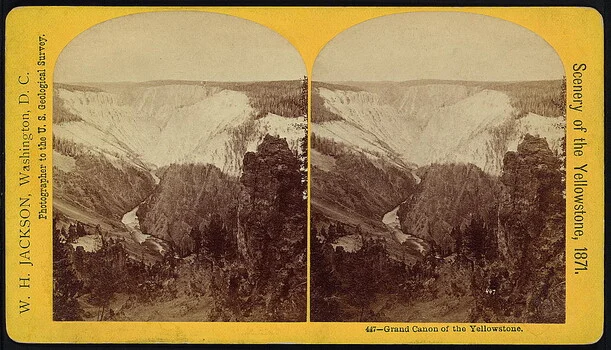
The year 1872 marked a pivotal moment in American conservation, as President Ulysses S. Grant signed into law the act establishing Yellowstone as the world’s first national park. While the terse, few-hundred-word legislation makes no mention of visual evidence, it was, in fact, the compelling power of photographs and paintings that proved instrumental in transforming skeptical lawmakers’ perceptions and securing this landmark preservation. Long before the ink dried on the bill on March 1, the vibrant visual documentation of Yellowstone’s unparalleled geysers, canyons, and thermal features had reached Washington, serving as an undeniable testament to its wonders and a potent lobbying tool that left an indelible, if largely unrecorded, trace on the legislative process.
The Untamed West and the Challenge of Disbelief
The mid-19th century American West was a realm of both myth and burgeoning scientific inquiry. Tales of its grandeur, its vastness, and its peculiar geological phenomena often veered into the realm of the unbelievable for those in the East. Prior to the pivotal 1871 expedition, several parties had ventured into the Yellowstone region. Most notably, the Cook-Folsom-Peterson Expedition of 1869 and the Washburn-Langford-Doane Expedition of 1870 returned with incredible accounts of boiling rivers, steaming ground, and water shooting hundreds of feet into the air. Nathaniel P. Langford, a member of the Washburn party, even embarked on a lecture tour and published articles attempting to convey the region’s marvels. Yet, these narratives, whether written reports or verbal testimonials, were frequently dismissed as "tall tales," exaggerations typical of frontier exploration, or the product of overactive imaginations. Lawmakers, accustomed to the practicalities of westward expansion focused on resources and settlement, found it difficult to reconcile these fantastic descriptions with reality. The challenge was not merely to report the existence of Yellowstone’s wonders, but to make them tangible and credible to a distant, skeptical audience.
Hayden’s Visionary Expedition: Science, Art, and Advocacy
In the summer of 1871, geologist Ferdinand V. Hayden, a seasoned explorer and leader of the United States Geological and Geographical Survey of the Territories, embarked on what would become the definitive expedition to the Yellowstone region. Departing from Ogden, Utah, on June 8, his federally funded party of approximately 32 men spent late July and August immersed in the landscapes that would soon become a national park. Hayden, a shrewd scientist and an astute political operator, understood that mere scientific data would not suffice to sway public and political opinion. He deliberately assembled a diverse team that extended beyond geologists and cartographers, recognizing the crucial role of visual documentation.
Central to Hayden’s strategy was the inclusion of William Henry Jackson, a 28-year-old photographer who had already demonstrated his skill on Hayden’s 1870 survey. Jackson was tasked with capturing the raw, objective reality of Yellowstone’s features. Alongside him was Henry Wood Elliott, the survey’s official artist, whose watercolors and sketches would complement the photographic record. A crucial addition, facilitated through the political and financial influence of Jay Cooke, the financier behind the Northern Pacific Railroad, was Thomas Moran. Moran, an artist with no prior experience of the West, was sponsored by Cooke because the railroad recognized the immense advertising potential of dramatic Western scenery to attract future tourists to its lines. Though Jackson and Moran had never met, their collaborative efforts, scouting viewpoints side-by-side – one exposing glass plates, the other filling sketchbooks with color notes – would prove to be an invaluable, synergistic force.
The Herculean Task of Wilderness Photography
Jackson’s photographic endeavor in 1871 was an extraordinary feat of endurance and technical skill. This was the "wet plate collodion" era, a demanding process decades removed from modern roll film. Each negative was a sheet of glass that required meticulous, on-the-spot preparation: coating with collodion, sensitizing in a silver nitrate bath, loading into the camera, exposing, and developing – all before the emulsion dried. Missing this narrow window meant a ruined plate and the loss of precious time and effort. This entire cycle, from coating to a finished, washed negative, could consume the better part of an hour for a single photograph.
Jackson performed this arduous process at elevations often exceeding 8,000 feet, navigating treacherous, roadless terrain on foot and by mule. His photographic division, comprising five to seven men, hauled an estimated 400 pounds of fragile cameras, glass plates, and volatile chemicals across rough country. For the 1871 survey, he primarily used an 8×10 inch camera and a stereographic camera, the latter producing images for the popular parlor stereoscope market, which offered a compelling 3D viewing experience. The darkroom was a cramped, portable tent, often requiring Jackson to crawl on his knees to prepare a plate. In a rare stroke of luck afforded by the landscape itself, he utilized the naturally hot spring water from the geyser basins, reaching temperatures of around 160 degrees Fahrenheit, to significantly speed up the drying process of his negatives. By the expedition’s end, Jackson had produced over 150 photographs in the 8×10 format alone, in addition to numerous stereographs. These Yellowstone views were the first comprehensive photographic record of the terraces, canyons, and geysers to reach a wide national audience, fundamentally shifting perceptions of the region.
From Wilderness to Washington: The Campaign for Congressional Approval
Upon the survey’s conclusion in October 1871, Hayden immediately recognized the immense persuasive power of Jackson’s photographs and Moran’s field watercolors. He wasted no time in deploying them as strategic lobbying tools. That fall, Hayden presented Congress with an extensive and detailed report on Yellowstone. According to accounts by the House historian, the combination of Moran’s evocative paintings and Jackson’s starkly realistic photographs provided lawmakers with vivid, undeniable accounts of the region’s natural wonders.
The survey’s formal illustrated report, featuring Jackson’s photographs alongside illustrations by Moran and Elliott, was published shortly thereafter. More direct, however, were Hayden’s alleged personal presentations. Later, often repeated, accounts describe Hayden putting prints directly in front of individual congressmen while the bill was under consideration, with lawmakers reportedly crowding around, captivated by the images. While the congressional record, by its nature, does not document which legislator saw which picture or precisely what impact it had, the anecdotes underscore the perceived effectiveness of this visual strategy. These images continued to circulate even after the park’s establishment, with a bound volume of 76 Albertype prints of Jackson’s 1871 Yellowstone photographs, produced by Edward Bierstadt in New York in 1874, surviving to this day at the Buffalo Bill Center of the West, testifying to their enduring impact and reach.
Moran’s contribution during the legislative debate primarily consisted of his on-site watercolor sketches, which were then developed into more elaborate pieces. His monumental oil painting, "The Grand Canyon of the Yellowstone," a work that remains synonymous with Yellowstone art, was later purchased by Congress for $10,000 to hang in the Capitol. However, this acquisition occurred months after the park was already established. During the critical debate phase, it was the immediate, raw impact of the photographs, the field watercolors, and Hayden’s comprehensive written report that served as the primary persuasive instruments. The grand canvas, while a powerful symbol, became a monument to the successful campaign rather than a direct weapon wielded within it.
The Legislative Journey and the Complexities of Creation
The bill to establish Yellowstone National Park moved with remarkable speed through Congress. A version passed the Senate on January 30, 1872. The House of Representatives approved it decisively with a vote of 115 to 65 on February 27, just weeks later. Finally, President Ulysses S. Grant signed the bill into law on March 1, 1872, setting aside the vast expanse of land as a "public park or pleasuring-ground for the benefit and enjoyment of the people."
It is tempting, and indeed, a popular narrative, to draw a direct causal link: Jackson pressed a shutter, Congress saw the truth, and a park was born. However, the historical record, while acknowledging the profound influence of the images, reveals a more intricate interplay of forces. The text of the act itself, accessible in the National Archives, makes no explicit mention of the photographs, nor do committee reports explicitly hinge their arguments upon them.
Behind the scenes, the Northern Pacific Railroad wielded significant lobbying power. With a direct financial stake in creating a protected scenic attraction that could draw tourists to its burgeoning rail lines, its influence was undeniable. Hayden’s meticulously detailed scientific report provided the proposal with crucial official weight and credibility. Furthermore, earlier expeditions, particularly the 1870 Washburn party, had played a role in seeding the concept of setting aside the land, with members lecturing and publishing about the region in the East.
The beloved origin story of the national park idea being conceived around a campfire at Madison Junction in 1870, where a member of the Washburn party supposedly proposed preserving the land for the public good, has largely been debunked by park historians like Lee Whittlesey and Paul Schullery. They point out that none of the approximately 20 firsthand accounts from that trip mention such a conversation, and the story only surfaced decades later. While a charming founding myth, it lacks documentary support.
The Unassailable Evidence: What the Pictures Truly Achieved
The photographs were one potent force among several, not a singular "magic bullet." Yet, their impact was distinct and, in many ways, irreplaceable. While railroad money and a scientist’s detailed report could sway a committee, the photographs accomplished something fundamentally different: they removed the excuse of disbelief. A representative from Ohio or Massachusetts, who might never in their lifetime witness a geyser or a sulfurous hot spring, could no longer dismiss Yellowstone as mere frontier exaggeration once Jackson’s photographs provided tangible, objective evidence. The images presented a visual argument that was, in 1871, close to unassailable. They implicitly carried the weight of authenticity, conveying that a person had stood on that very spot, aimed a lens, and recorded precisely what the glass plate captured. Jackson and Moran, though they held no vote, made it considerably more difficult for legislators to vote against the park’s creation on the grounds that the place itself was fabricated or too fantastical to exist.
The Unseen Narrative: Indigenous Peoples and the Park’s Origins
Crucially, what the pictures did not show, and what the legislative debate barely mentioned, was that the land designated for Yellowstone National Park was far from empty. For over 11,000 years, numerous Indigenous tribes had inhabited, traversed, and utilized the Yellowstone region for hunting, gathering, and spiritual practices. The National Park Service now officially recognizes 27 tribes with deep historical and cultural ties to the area and its abundant resources.
The establishment of the park boundaries, while framed as an act of preservation against private development, simultaneously asserted a federal claim over ancestral hunting grounds, established travel routes, and sacred gathering places. The decades of park administration that followed the 1872 act often involved policies and practices designed to exclude Native peoples from these lands. The photographs, by vividly showcasing an ostensibly pristine wilderness devoid of human presence, inadvertently helped solidify an argument for preservation that regrettably overlooked and ultimately marginalized the Indigenous populations who had stewarded the land for millennia. This omission represents a complex and often painful aspect of the park’s legacy, one that modern conservation efforts are striving to acknowledge and address.
Enduring Legacy: Photography, Preservation, and the Future
Jackson’s unwavering commitment – his willingness to crawl into a hot, chemical-soaked tent to prepare one more plate, to gamble 400 pounds of fragile gear on a mule trail – is the fundamental reason this visual evidence exists today. The persuasive power lay not solely in the artistry, though Jackson possessed considerable skill, but in the medium’s claim to objective truth. This commitment continues to resonate with contemporary photographers who still practice wet plate collodion or carry large format gear into the backcountry, understanding the immense physical and mental dedication required. A modern 8×10 field camera and a box of film holders still represent a significant commitment of weight and patience, a testament to the challenges Jackson faced daily.
The negatives themselves have outlasted almost everyone involved in their creation. Jackson’s 1871 plates are meticulously preserved in public collections, allowing anyone to view the Grand Canyon of the Yellowstone on the Library of Congress website, more than 150 years after a mule carefully carried the glass down from the plateau. Yellowstone National Park endures because a confluence of powerful forces – scientific rigor, commercial interests, nascent conservation ideals, and, critically, undeniable visual proof – converged in the winter of 1872. While some of these forces may have faded from public memory or become obscured by myth, the photographs of William Henry Jackson continue to perform their essential job, captivating new generations and reminding us of the profound impact images can have on shaping history and preserving our natural heritage.
