
 By Nila Kartika Wati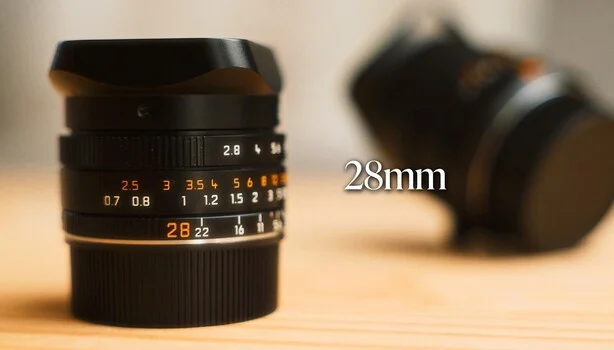
In the dynamic world of photography, particularly within the realm of street and documentary work, the choice of a prime lens often becomes a deeply personal and philosophical statement. While the 35mm focal length has long been celebrated as a versatile, go-to option capable of adapting to a multitude of photographic scenarios—from intimate portraits to expansive landscapes—a compelling argument is now being made for the wider 28mm lens as a superior tool for capturing raw, unvarnished truth. This assertion, championed by photographer Mike Chudley, posits that the 28mm, despite its inherent challenges, offers a perspective that is fundamentally more honest and yields more intriguing photographic narratives, shifting the focus from mere technical quality to the profound authenticity of the captured moment.
Chudley’s position, articulated through his extensive body of work, critically evaluates the perceived strengths of the 35mm. He acknowledges its "clean, neat, and tidy" aesthetic, describing it as a focal length that allows a photographer to navigate various subjects—be it a human face, a bustling street, a sweeping vista, or a meticulously arranged meal—and consistently achieve a "fine" result. However, it is precisely this notion of "fine" that becomes the pivot point of his argument. For Chudley, if one were to commit to a single perspective for a lifetime of photography, "fine" represents a ceiling rather than an aspiration, suggesting a compromise on the potential for profound visual storytelling. In contrast, he champions the 28mm as a bolder, more interesting choice, one that forces a deeper engagement with the scene and ultimately produces images imbued with a greater sense of reality. His personal preference is evident in his choice of equipment: a Leica MP paired predominantly with a 28mm Elmarit lens, with a 35mm Summilux reserved only for low-light conditions demanding extra aperture stops, such as his nocturnal excursions to Coney Island.
The Case for 28mm: Unfiltered Reality and Contextual Depth
The core of Chudley’s advocacy for the 28mm focal length rests on its unique ability to render a scene in a manner that closely approximates human vision without introducing overt optical distortion. He argues that 28mm represents the critical boundary before a lens’s perspective begins to overtly manipulate reality. Stepping wider to 24mm, 21mm, or even 16mm, the characteristic effects of ultra-wide lenses—such as converging verticals in architecture, exaggerated perspectives, and stretched elements at the frame’s edges—become pronounced. In these instances, the lens itself, with its distinct optical signature, often becomes the most interesting element of the photograph, rather than the subject matter. Chudley’s objective is to create images that are inherently captivating, where the narrative and the captured moment take precedence over the technical spectacle of the glass. The 28mm, he contends, sits at the precise limit where the photograph still convincingly conveys the impression of a human observer standing in a particular place, witnessing an event, and choosing to record it. He labels it a "truthful focal length," extending this principle to the telephoto end as well, asserting that the heavy compression achieved by a 200mm lens is no more an honest representation of human perception than the expansive view of an ultra-wide. Nobody, he argues, naturally perceives the world with such extreme flattening of perspective.
A significant evolution in Chudley’s own photographic philosophy underscores his embrace of the 28mm. What he once perceived as compositional flaws—unwanted elements like a stray hand, an incidental face, a looming tree branch, or a ubiquitous street bin creeping into the 28mm frame—he now reinterprets as crucial evidence of a candid, unposed moment. These "imperfections" are no longer seen as sloppiness but as vital contextual information, grounding the image in its immediate reality and enhancing its documentary value. This shift in perspective highlights a deeper appreciation for the uncontrolled chaos of life, allowing the frame to breathe and tell a more complete story.
Chudley supports his theoretical framework with compelling visual examples from his own portfolio. He cites an image of two horses in the Tibetan mountains, where the wider 28mm allowed him to capture the tail of one horse but not the other, creating a "puzzle-piece effect" that would have been impossible with a tighter 35mm lens, especially given the constraint of having his back against a wall. Another example, featuring three men traversing a London street, demonstrates how the expansive context provided by the 28mm lens communicates the spatial dynamics around them, revealing "how much room they had to breathe." Perhaps most strikingly, a photograph of a man struggling with an umbrella in a blustery Brighton wind tunnel illustrates the 28mm’s capacity to reveal serendipitous details, such as a sleeve appearing like a "third arm"—a detail Chudley admits he only noticed upon later review. These examples collectively underscore the 28mm’s ability to capture the broader environment, enriching the narrative and often revealing unexpected, truthful nuances that a narrower field of view would omit.
The Enduring Appeal of 35mm: Versatility and Classicism
Despite his strong advocacy for 28mm, Chudley is forthright about the limitations and challenges inherent to this wider perspective. He candidly acknowledges that a visually uninteresting scene, when captured with a 28mm lens, can appear even more desolate than if shot with a 35mm. The expansive frame of the 28mm, in such instances, tends to fill with empty sky, vast stretches of pavement, or other mundane elements, exacerbating the lack of a compelling subject. This underscores a crucial point: the 28mm demands a photographer to be highly attuned to their environment and to possess a keen sense of composition to effectively manage the increased visual information. Furthermore, the suitability of the 28mm can be highly dependent on the location. Chudley notes that London’s densely layered streets, with their complex visual tapestry, are well-suited to the 28mm’s ability to capture intricate detail and depth. Conversely, a quiet rural village, with its simpler visual elements, might leave the photographer "shooting a lot of nothing," as the wider lens struggles to find sufficient subject matter to fill the frame compellingly.
The 35mm, in contrast, offers a slightly more constrained but often more manageable field of view. Its angle of view (approximately 63 degrees diagonally on a full-frame sensor) is often considered the closest to natural human vision in terms of perspective, making it incredibly intuitive for many photographers. It provides enough context to establish a scene without the extreme edge distortion of wider lenses, and it allows for a comfortable distance between the photographer and subject, fostering a sense of intimacy without being overly intrusive. This balance has made it a perennial favorite among street photographers and photojournalists for decades. Legends like Robert Frank, whose seminal work "The Americans" was largely shot with a 35mm lens, demonstrated its power in capturing nuanced human experience within a broader social context. Its ability to isolate subjects effectively while still including environmental details contributes to its reputation as a versatile workhorse, often described as a "documentary" focal length.
Historical Context and Notable Proponents
The debate between different prime focal lengths is deeply rooted in the history of photography, particularly with the advent of 35mm film cameras. While Henri Cartier-Bresson famously preferred the 50mm lens for its "normal" perspective, many other pioneers gravitated towards wider options. Garry Winogrand, a titan of American street photography, is perhaps the most iconic advocate for the 28mm lens. His prolific output, characterized by dynamic, often chaotic compositions filled with multiple subjects and layers of information, perfectly exemplified the 28mm’s capacity to capture the sprawling energy of urban life. Winogrand’s philosophy, often summarized by his quote, "I photograph to find out what something will look like photographed," resonates deeply with Chudley’s embrace of the 28mm as a tool for discovery, rather than merely recording a predetermined vision. Winogrand’s use of the 28mm was not about precision or aesthetic perfection in the traditional sense, but about immersing the viewer in the raw, unedited flow of life.
The 35mm lens, meanwhile, has its own illustrious lineage. From the early photojournalists covering major global events to contemporary street photographers documenting daily life, its versatility has made it indispensable. Photographers like Elliott Erwitt, with his whimsical and often poignant street scenes, frequently employed the 35mm, appreciating its ability to capture both the subject and their immediate environment in a balanced manner. Its slightly narrower field of view compared to 28mm often makes it easier to achieve cleaner compositions, reducing extraneous elements and allowing for a more deliberate framing. This historical usage underscores that both focal lengths are powerful tools, each with distinct strengths that appeal to different photographic sensibilities and objectives.
Technical Considerations and Perceptual Impact
Beyond the aesthetic preferences, there are distinct technical differences that contribute to the unique character of 28mm and 35mm lenses. The 28mm lens typically offers an angle of view of approximately 75 degrees diagonally on a full-frame sensor, whereas the 35mm provides about 63 degrees. This seemingly small difference of 12 degrees significantly impacts how much of the scene is included and how elements within the frame relate to each other. The wider 28mm inherently brings more of the background and foreground into play, creating a greater sense of depth and context. It also exaggerates perspective more than the 35mm, making nearby objects appear larger and distant objects smaller, which can be used creatively to draw the viewer into the scene or emphasize a leading line.
Depth of field is another factor. While both are wide-angle lenses, a 28mm lens, all else being equal (aperture, subject distance), will inherently have a slightly greater depth of field than a 35mm lens. This characteristic can be advantageous for street photography, where achieving sharp focus across multiple planes is often desired to capture the complexity of a scene. Conversely, the 35mm allows for a slightly shallower depth of field at wider apertures, which can be used to isolate a subject more effectively while still retaining some environmental context.
The "truthful" aspect Chudley refers to with the 28mm also touches upon the psychology of perception. The human eye has a much wider field of view than either lens, but our central, focused vision is much narrower. The 28mm, by encompassing more of the peripheral information that we subconsciously process, can often create an image that feels more encompassing and immersive, replicating the subjective experience of "being there" more closely than a tighter frame that deliberately crops out context.
The Crop Cushion and Modern Camera Design
A significant practical advantage of the 28mm lens, particularly in the age of high-resolution digital sensors, is the "crop cushion" it provides. This principle, which Chudley emphasizes, recognizes that a photographer can always crop into a wider 28mm frame in post-production to achieve a tighter composition, but it is impossible to "uncrop" a 35mm shot to widen its perspective. This flexibility is invaluable in fast-paced documentary and street photography environments where predicting the precise moment of composition is often impossible. The ability to capture a slightly wider scene and then refine the framing later offers a significant degree of creative freedom and reduces the risk of missing a crucial element just outside the frame.
Camera manufacturers have begun to integrate this philosophy into their hardware design, notably Leica. The Leica Q2 and its successor, the Leica Q3, exemplify this approach. These cameras feature a fixed 28mm lens but incorporate digital crop frame lines in the electronic viewfinder and on the LCD screen, simulating 35mm and 50mm focal lengths. This allows photographers to compose with the option of a tighter crop in mind, while the camera still records the full 28mm image. The Leica Q3, with its impressive 60-megapixel full-frame sensor, provides ample resolution to support these digital crops without a significant loss of image quality, making the 35mm and 50mm cropped images still highly usable for most applications. This technological innovation perfectly aligns with Chudley’s argument, empowering photographers to "shoot wide, decide the tighter composition in post, keep the option open." This approach resonates strongly with the unpredictable nature of street photography, where opportunities are fleeting and decisive moments often emerge unexpectedly.
Beyond Focal Length: The Discipline of a Single Prime
While the debate between 28mm and 35mm is central to Chudley’s discussion, a more profound and universally applicable takeaway emerges: the transformative power of committing to a single focal length. Chudley’s blunt assertion that "five years on one focal length beats one year across five" encapsulates this philosophy. By limiting oneself to a single prime lens, a photographer is compelled to transcend the technical aspects of equipment and instead develop a deep, intuitive understanding of that specific field of view.
This discipline forces a photographer to "see the world" through the lens’s perspective even before the camera is raised to the eye. It cultivates an almost instinctual ability to predict how subjects will appear within the frame, how light will fall, and when a scene will reach its compositional peak, often from a distance of several feet. This process hones one’s compositional skills, encouraging greater mindfulness, anticipation, and a more deliberate approach to photography. Rather than relying on the versatility of zoom lenses or frequently switching primes, the single focal length challenge encourages mastery over a specific visual language. It fosters a unique intimacy with one’s equipment and, more importantly, with one’s own vision.
The implications for photographic education and practice are significant. For aspiring photographers, this approach can accelerate the development of critical observational skills and a personal aesthetic. For seasoned professionals, it can serve as a powerful tool for artistic refinement, pushing boundaries and fostering new creative insights. It is a philosophy that prioritizes depth over breadth, encouraging photographers to fully exploit the potential of a single tool before seeking new ones.
Conclusion
Mike Chudley’s impassioned case for the 28mm lens as the "truthful" focal length for street and documentary photography offers a compelling re-evaluation of long-held conventions. By dissecting the nuanced differences between 28mm and 35mm, he highlights how the wider lens, despite its challenges, can facilitate a more candid, contextual, and ultimately more intriguing representation of reality. His argument, enriched by historical context and contemporary technological advancements like Leica’s Q series, positions the 28mm not just as a technical choice but as a philosophical stance on photographic honesty.
Yet, the most enduring lesson from Chudley’s insights transcends the specific focal length debate. It is the profound impact of disciplined practice with a single prime lens that resonates most deeply. The commitment to mastering one perspective, allowing it to shape one’s vision and instincts, is presented as the true path to photographic growth and authenticity. Whether photographers ultimately align with the 28mm for its "truth" or maintain their loyalty to the versatile 35mm, Chudley’s message serves as a powerful reminder that the most compelling images often emerge not from the endless pursuit of new gear, but from a deep, intuitive understanding of the tools at hand and a singular, unwavering vision. His insights challenge photographers to look beyond mere technical specifications and engage with the deeper, more subjective aspects of visual storytelling.
