
 By Jia Lissa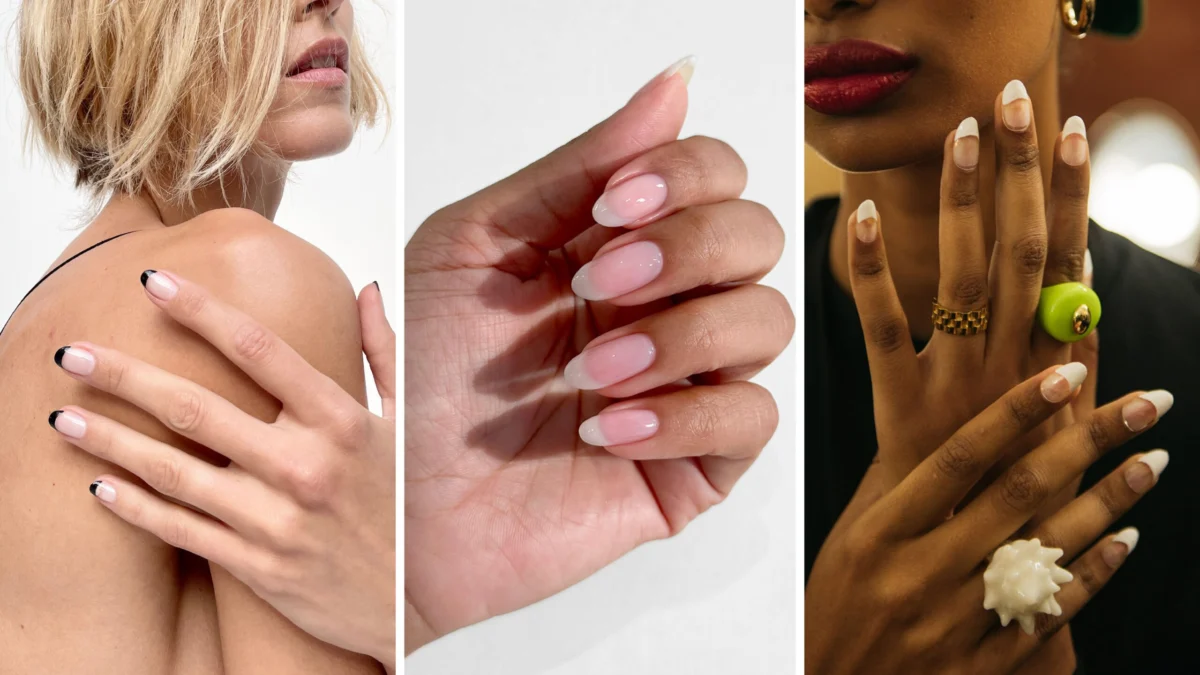
The year 2010 marked a significant rite of passage for many teenagers, and for the author, it was the year of her first professional manicure. At 13, stepping into a bustling New Jersey nail salon, nestled between the savory aroma of a pizza parlor and the energetic posters of a martial arts studio, felt like an initiation into a new stage of life. The impending eighth-grade dance was the catalyst, a tangible symbol of her transition towards womanhood and the daunting, yet exciting, prospect of high school. The style of choice, a classic French manicure, adorned with its signature opaque pink base and a crisp white tip, was, in her young eyes, the epitome of sophistication, femininity, and burgeoning style. This iconic look, seen on glamorous celebrities and fictional icons alike, from Jennifer Lopez to Elle Woods, represented a perceived standard of grown-up elegance. However, the author hints at a later shift in perception, a foreshadowing of the style’s complex and evolving journey through the cultural landscape.
The French manicure, a ubiquitous symbol of Y2K-era beauty, boasts a history that predates the turn of the millennium. Its genesis is widely credited to Jeff Pink, the visionary founder of Orly, who is said to have created the distinctive style in 1976. Pink, reflecting on the manicure’s enduring legacy, recently shared the origin story of his iconic creation, a tale intrinsically linked to the demands of Hollywood filmmaking.
The Birth of Versatility: Hollywood’s Demand for a Universal Look
In the vibrant era of 1970s Hollywood, Pink operated a beauty supply business that catered extensively to the film industry. His enterprise provided a wide array of beauty products, including hair essentials, makeup, and crucially, nail polish, to television and movie sets. The turning point for the French manicure arrived when a frustrated film director approached Pink with a common industry problem: the time-consuming process of constantly altering actresses’ nail colors to match their diverse costumes. The director’s plea was simple yet profound: could Pink devise a nail style that would seamlessly complement any outfit?
Pink’s ingenuity was sparked by a readily available tool in his office: a white pencil commonly used for cleaning beneath the fingernails. This observation led to the concept of a white nail polish tip. However, white nail polish was a rarity in the 1970s. Pink recounts the considerable effort involved in persuading a manufacturer to produce a custom gallon of white polish, a testament to his determination to bring his innovative idea to fruition. This struggle for a novel shade underscores the experimental nature of beauty trends and the entrepreneurial spirit required to drive them.

From Set to Studio: The "Natural Nail Look" Takes Flight
The result of Pink’s endeavor was a neutral-toned manicure designed to enhance the natural appearance of the nail, presenting an idealized, almost exaggerated version of its inherent beauty. The director, delighted with the practical solution, reportedly remarked that Pink’s invention saved the industry significant time and money, even jokingly suggesting he deserved an Oscar for his contribution – a sentiment Pink humorously continues to await.
Following its on-set debut, Pink’s company, Orly, promptly launched the style as a kit named the "Natural Nail Look" in 1976. While the product was available, the manicure itself would take a few more years to gain widespread recognition and be formally christened the "French manicure."
The Paris Connection: Naming a Global Icon
The pivotal moment in the French manicure’s trajectory arrived in 1978. Pink had the opportunity to showcase his "Natural Nail Look" at Paris Fashion Week. The experience in the City of Love proved to be a source of inspiration. Reflecting on the journey back to Los Angeles, Pink decided the name "Natural Nail Look" lacked a certain panache. He sought a more evocative moniker, and drawing from his recent Parisian sojourn, he christened it the "French manicure." This strategic renaming transformed a functional beauty solution into a chic and desirable style, inextricably linked to the allure of Parisian fashion and sophistication.
Suzanne E. Shapiro, a respected nail historian and author of "Nails: The Story of the Modern Manicure," elaborates on the manicure’s appeal during the 1970s. She notes that Orly’s emphasis on the style’s versatility was particularly resonant for women of that era. The ability to transition seamlessly from professional settings to social engagements, all while maintaining a polished appearance that matched any wardrobe, was a significant draw. Shapiro further likens the French manicure’s effect to "dental veneers for the hands," describing it as an artificial yet refined ideal of flawlessness that aligned with the prevailing aesthetic sensibilities.
While Pink may not have received an Oscar, his creation undeniably became one of the most enduring nail styles in history. Its universal appeal transcended linguistic barriers, making it a recognizable request in nail salons worldwide. Interestingly, the manicure was initially perceived as an "American thing" in Europe. However, by November 1995, Allure reported on its burgeoning popularity among women in France, underscoring its global conquest. Pink’s attempt to trademark the phrase "French manicure" in 1980 was unsuccessful, as the term was deemed too universally recognized. He subsequently secured the trademark for "Original French Manicure," a designation Orly continues to use today.

Celebrities, Pop Culture, and the French Manicure’s Rise to Prominence
The French manicure’s ascent into the beauty lexicon was significantly bolstered by its adoption by Hollywood celebrities. Cher and Barbra Streisand are often cited as key figures who, on separate occasions, drew significant attention to their manicures during appearances on "The Tonight Show With Johnny Carson." Jin Soon Choi, a prominent nail artist, also recalls Streisand’s fondness for the style, describing it as "glamorous."
During the 1990s, the white-tipped manicure became synonymous with the salon experience. Choi remembers her early career in the early 1990s in New York City, where the classic French manicure was the extent of her nail art repertoire, alongside solid colors. Tom Bachik, a renowned nail artist whose clientele includes Jennifer Lopez and Selena Gomez, also witnessed the style’s peak popularity during his formative years in the nail industry. He describes the French manicure as a ubiquitous choice, appealing to a broad demographic due to its polished, glamorous, yet neutral aesthetic. The iconic look graced the hands of fictional characters like Jennifer Aniston’s Rachel Green in "Friends" and Lindsay Lohan’s Hallie Parker in "The Parent Trap." Even Princess Diana was known to wear the French manicure for both formal royal engagements and more casual occasions, further cementing its status as a refined and adaptable style.
Innovation and Subversion: The French Manicure as a Canvas for Artistry
The advent and increasing popularity of acrylic nails in the 1990s provided a fertile ground for manicurists to experiment with the French manicure, leading to more elaborate designs. Choi observed a notable shift during this decade, where women of color, in particular, became pioneers in pushing the boundaries of nail trends. They embraced the French manicure as a foundational element for creative expression.
A groundbreaking example of this innovation came in the mid-1990s when Bernadette Thompson, a celebrity nail artist and founder of her own nail line, designed a unique French manicure for rapper Lil’ Kim. This design incorporated actual $100 bills on the tips of her nails. Thompson, known for her artistic approach, famously told her hip-hop clients, including Mary J. Blige, that she would not be creating "typical French manicures" for them, opting instead for more avant-garde interpretations. Thompson’s money manicure achieved historical significance, with a reproduction now part of the collection at the Museum of Modern Art in New York City, illustrating the manicure’s capacity for cultural commentary and artistic elevation.
The Evolution of the Smile Line: From Subtle Enhancement to Bold Statement
Acrylics not only facilitated decorative nail art but also led to a reimagining of the classic French manicure. Choi notes that while the original French manicure aimed to subtly enhance the natural nail, the rise of acrylics saw the white tip evolve into a wider, brighter, and more pronounced statement. By the late 1990s, this amplified version of the French manicure appeared on more flamboyant characters, such as Jennifer Coolidge’s Stifler’s Mom in "American Pie" and Elle Woods, the aspirational law student in "Legally Blonde." Cher Horowitz from "Clueless" and Carmela Soprano from "The Sopranos" also sported variations of the look, showcasing its widespread cultural adoption. As the new millennium dawned, the French manicure continued its journey, becoming a popular choice for everyday women across the country, including those frequenting the author’s local New Jersey salon.

The Decline and Perceived Tarnish: Overexposure and Shifting Aesthetics
As the French manicure’s popularity surged through the late 2000s and early 2010s, a discernible shift in perception began to occur. The once-ubiquitous style, previously lauded for its chicness, started to be viewed by some as passé, even gauche. Bachik attributes this decline in favor to the manicure’s overexposure. He explains that the classic combination of a stark white tip and a bright pink base had become so prevalent that it lost its novelty. Simultaneously, beauty trends were diverging, with a growing preference for either minimalist, understated nails or highly expressive, artistic nail designs.
Several factors contributed to the French manicure’s perceived tackiness. The exaggerated versions, often seen on characters like Carmela Soprano, or the prevalence among Playboy Bunnies like Pamela Anderson and Carmen Electra, and its frequent appearance at proms, lent it an air of being overly familiar or even gaudy. Choi recalls the cast of "The Real Housewives of Orange County," which premiered in 2006, largely favoring long acrylic nails with an extreme square shape and thick white "smile lines." This amplified interpretation, she notes, became increasingly common, transforming the subtle French manicure into a markedly different, and for many, less appealing, aesthetic.
The finish of acrylic-based French manicures, often described as less smooth and excessively thick, further contributed to this perception. Choi suggests that the attempt to replicate celebrity styles with overly bold lines led to a less refined look. Furthermore, the turn away from "deep French manicures" was also tinged with classist and anti-Black undertones. Long acrylic nails and intricate designs were often stigmatized as unprofessional, particularly when worn by women of color, reflecting broader societal biases within the beauty industry.
Generational Divides and Critical Scrutiny
Like many iconic fashion and beauty trends, the French manicure became a style that certain age groups were reluctant to abandon, which, in turn, may have contributed to younger generations dismissing it as dated. Shapiro explains that a significant segment of the population tends to cling to the styles of their youth, leading to trends appearing outdated over time. When women of a particular generation continued to sport long, squared-off French manicures, it likely failed to resonate with younger demographics, prompting a pushback against the style.
Allure magazine, a prominent voice in the beauty landscape, did not shy away from expressing its critical stance on the French manicure during this period. In a January 2004 sidebar, the publication unfavorably compared the style’s aesthetic appeal to "French’s mustard." In April 2005, former Allure beauty features editor Amy Keller described French manicures as "cheap," aligning with the prevailing sentiment among many beauty editors who favored short, understated nails in nude or dark red shades. An article from September 2013 titled "Men On Manicures" quoted an anonymous source who suggested that a French manicure signaled a woman who "spends lots and lots of time on herself," implying an excessive focus on appearance. David Denicolo, a long-time contributor and former editor-at-large, characterized the French manicure as being associated with "porn stars, Jersey girls, or bottle blondes with blue eye shadow," reflecting a snapshot of popular opinion at the time.

Sophia Panych, who was a staff assistant at Allure during the 2010s and is now its content director, previously noted the challenge of getting nail art featured in the magazine’s print pages. However, as nail decoration gained broader acceptance and nails began to be viewed as an art form, the pendulum began to swing back, leading to a re-evaluation of the French manicure as a potential staple. Panych posits that the increased focus on nail artistry helped shift the narrative away from the manicure being perceived as tacky, opening the door for its resurgence.
The Renaissance: Reimagining the French Manicure for a New Era
Fast forward to the present day, and the French manicure is experiencing a significant renaissance. Over the past decade, the style has undergone a remarkable rebirth. Current Allure staffers no longer echo the critical sentiments of their predecessors, and celebrities are enthusiastically embracing the trend. While nail art itself is an ancient practice, predating the 21st century by millennia, the nail-art boom of the 2010s provided the impetus for the French manicure to find new life.
Bachik explains that nail art encouraged a shift in perception, allowing individuals to view the French manicure not as a rigid, singular look, but as a versatile framework. As artists began to experiment with different colors, proportions, finishes, and textures, the inherent adaptability of the style became evident, ultimately contributing to its comeback. Thompson adds that the French manicure serves as a "blank canvas," allowing for boundless creativity while maintaining a clean foundation. She emphasizes that it doesn’t need to be "pure" or "clean"; it can be "wild" while still adhering to the core concept.
Choi recently created a contemporary interpretation of the classic style for her client, Zoë Kravitz, which she terms the "invisible French." Kravitz, known for her natural aesthetic, desired a subtle enhancement for her long, almond-shaped nails. Choi applied JinSoon Dew for a clean finish, followed by JinSoon Pixie for a delicate touch on the tips, resulting in a refined and modern take on the iconic design.
The Future of a Timeless Classic
Looking ahead, the enduring appeal of the French manicure suggests a long and prosperous future. Choi confidently asserts that the French manicure "gets the crown all the way," highlighting its unparalleled status in the realm of nail artistry. Jeff Pink, the originator of this beauty phenomenon, shares an optimistic outlook, likening the French manicure not merely to a fleeting fashion trend, but to a lasting style. He believes that "style lasts forever," and consequently, "The French manicure is going to last forever." This enduring legacy speaks to its fundamental design principles and its remarkable capacity for adaptation across generations and evolving aesthetic sensibilities.
