
 By Nila Kartika Wati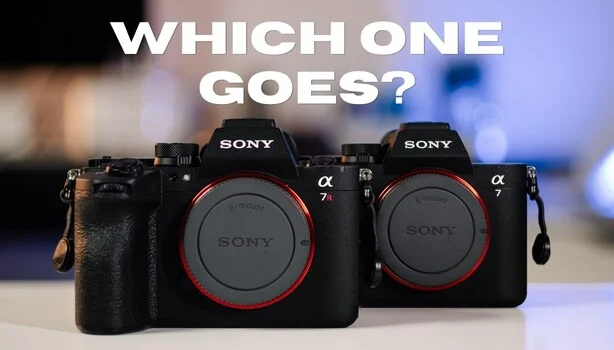
In a surprising revelation that challenges conventional wisdom and the allure of superior specifications, a recent side-by-side comparison has cast doubt on the expected image quality dominance of Sony’s higher-tier mirrorless cameras. Despite a significant $1,600 price difference and double the resolution, the premium Sony a7R VI struggled to decisively outperform the more accessible Sony a7 V in crucial areas of still photography, prompting a seasoned professional to second-guess a planned upgrade. This unexpected outcome highlights the complex interplay of sensor technology, internal processing, and subjective aesthetic preferences in modern digital imaging.
The Genesis of a Doubt: A Photographer’s Quest for Justification
Alex Barrera, a prominent portrait photographer based in Miami with over a decade of experience within the Sony ecosystem, embarked on a seemingly straightforward mission: to justify the replacement of his Sony a7 V with the more advanced Sony a7R VI. Barrera’s familiarity with the Sony Alpha line, particularly the "R" series known for its high-resolution capabilities, made him an ideal candidate to assess the practical benefits of such an upgrade. His professional work demands exceptional image quality, and the perceived advantages of a flagship "R" model typically include enhanced detail, superior dynamic range, and improved low-light performance. However, after meticulously running files from both cameras through his standard Lightroom workflow, Barrera found himself in an unforeseen dilemma, questioning the very premise of his upgrade.
Barrera’s methodology was designed for objectivity and control. Both camera bodies were securely mounted on a tripod, ensuring identical framing and stability. He utilized the same premium lens, the Sony 50mm f/1.4 GM, a personal favorite renowned for its sharpness and beautiful bokeh, to eliminate lens-based variables. White balance settings were matched, and a consistent preset was applied to the raw files unless specific testing conditions necessitated a deviation. This rigorous approach aimed to isolate the performance differences attributable solely to the camera bodies and their respective sensors and image processing engines. While acknowledging the a7R VI’s clear advantages in hardware—boasting a superior viewfinder, a larger capacity battery for extended shooting sessions, and a convenient tally light—Barrera’s primary focus remained on the fundamental output: the still image quality. Both cameras shared the same rear screen, ensuring no bias in on-camera review.
Unpacking the Technical Showdown: Dynamic Range and Noise
The true test of a camera often lies in its ability to capture detail across extreme lighting conditions and maintain image fidelity in challenging low-light scenarios. Barrera’s comparisons in these areas yielded nuanced results, offering both expected outcomes and surprising reversals.
Dynamic Range: A Closer Call Than Anticipated
Dynamic range refers to a camera’s ability to capture detail in both the brightest highlights and the deepest shadows within a single exposure. In a controlled test involving significant overexposure—specifically, by three stops—the a7R VI demonstrated a marginal but discernible edge. When attempting to recover details from a deliberately overexposed white dress, the a7R VI managed to pull back more highlight information, whereas the a7 V exhibited a slightly blown-out appearance in the central bright areas. This outcome aligns with the general expectation that higher-end, often larger, or more sophisticated sensors tend to offer superior dynamic range.
Conversely, when both files were subjected to a five-stop underexposure—a severe "torture test" designed to push the limits of shadow recovery—the a7R VI again showed a slight advantage. It retained more color fidelity within the deep shadows, indicating a more robust ability to preserve subtle tonal variations in underexposed regions. However, Barrera himself was quick to qualify these findings, acknowledging that such extreme underexposure is rarely, if ever, a practical shooting scenario for professional work. The slight difference, while present, might not translate into a significant real-world advantage for most photographers operating within reasonable exposure parameters.
High ISO Performance: Shattering Conventional Wisdom
Perhaps the most startling revelation came in the realm of high ISO performance, a critical metric for photographers working in challenging low-light environments. Conventional wisdom has long held that sensors with higher megapixel counts tend to produce noisier files at elevated ISO settings due to smaller individual photosites. Yet, at ISO 12,800, Barrera observed that the higher-resolution a7R VI actually produced a "touch cleaner" background compared to the a7 V. This finding directly contradicts the long-standing assumption and underscores the rapid advancements in sensor technology and in-camera noise reduction algorithms.
Modern sensor designs, such as backside-illuminated (BSI) and stacked architectures, along with sophisticated on-chip noise processing, have significantly mitigated the traditional trade-off between resolution and low-light performance. These technologies allow more light to reach the sensor’s photosites and process the signal more efficiently, resulting in cleaner images even at very high pixel densities. Furthermore, when both files were processed through Adobe Lightroom’s AI denoise feature—a powerful tool leveraging machine learning to intelligently remove noise—they cleaned up remarkably well, becoming "fully usable images." The a7R VI maintained its lead in this scenario, simply because it began with a cleaner baseline. This suggests that while raw noise characteristics might still favor certain sensor designs, the gap is narrowing, and post-processing tools are increasingly capable of making high ISO files from various cameras usable.
The Unexpected Twist: Color Science and Out-of-Camera Appeal
While the a7R VI demonstrated subtle technical advantages in dynamic range and surprising prowess in high ISO, the narrative took a significant turn when Barrera evaluated the untouched raw files for their inherent color rendition. This is where the subjective, yet profoundly impactful, aspect of "color science" came into play.
Comparing files with matched settings, Barrera consistently gravitated towards the a7 V for its color profile. He described its out-of-the-box files as "punchier and more vibrant," particularly noting its superior rendering of skin tones. Barrera even drew a favorable comparison between the a7 V’s skin tones and the esteemed look he achieves with his Leica cameras—a high compliment in the world of photography, where Leica is often revered for its distinctive color rendition. In contrast, the a7R VI’s raw files appeared "flatter and more desaturated" to his eye.
Barrera was explicit in his understanding that a raw file is inherently flexible; with sufficient post-processing, one can undoubtedly match the color output between the two cameras. However, his consistent preference for the a7 V stemmed from the fact that its "starting point" was simply more pleasing. For a professional photographer, the initial aesthetic of a raw file can significantly impact workflow efficiency and creative satisfaction. A file that requires less manipulation to achieve a desired look saves time and effort, allowing for more focus on creative refinement rather than corrective adjustments. This subjective appeal, rooted in the camera’s internal processing and sensor characteristics, proved to be a powerful counterpoint to the a7R VI’s technical specifications.
Beyond Megapixels: The Role of Modern Sensor Technology
Barrera’s observations extend beyond a simple camera comparison, offering valuable insights into the evolution of modern sensor technology, particularly within Sony’s Alpha line. He noted that the a7R VI utilizes a fully stacked sensor, while the a7 V features a partially stacked design. Conventionally, stacked sensors are hailed for their revolutionary speed. However, Barrera’s real-world editing experience revealed that the perceived gap in dynamic range and noise performance between the two cameras was surprisingly small.
Understanding Stacked Sensors
A stacked sensor integrates high-speed memory directly behind the pixel array, allowing for incredibly fast data readout. This architectural innovation primarily translates into operational speed benefits: significantly faster burst rates for capturing rapid action, dramatically reduced rolling shutter effects (which can distort fast-moving subjects or panning shots), and quicker, more responsive autofocus systems. These attributes are invaluable for sports, wildlife, and event photographers who require extreme speed and precision.
However, Barrera’s test underscores that while stacking revolutionizes speed, its direct impact on the static image quality parameters like dynamic range or noise in a single, tripod-based exposure might not be as dramatic as some expect. The underlying pixel technology, signal processing, and overall sensor design still play a crucial role in these areas.
The Nuance of Color Science and Sensor Development
The Sony a7 V, released in late 2024 (as per the original text, assuming this refers to a new generation), features a new 33-megapixel sensor. Barrera’s consistent praise for its color response points to the sophisticated "color science" embedded within how the camera processes and renders raw data before any user adjustments are made. This refers to the camera manufacturer’s proprietary algorithms for interpreting light, color temperature, and tone, influencing the look and feel of the default raw output. It’s a highly refined aspect of camera design that often defines a brand’s signature aesthetic.
This distinction highlights a critical takeaway: if a photographer’s work heavily relies on freezing motion, high-speed bursts, or extensive cropping (where the sheer resolution of the a7R VI would undeniably shine), then the readout speed and megapixel count of a stacked, high-resolution sensor like the a7R VI unequivocally earn their keep. However, for controlled environments like portrait photography, where artistic expression, skin tone rendition, and a pleasing initial color grade are paramount, the inherent color science and the "look" a camera produces out of the gate can matter more than any theoretical advantage on a technical specification sheet. This subjective preference can be a perfectly valid and compelling reason to retain an older or seemingly less advanced body.
Implications for Photographers and the Market
Barrera’s detailed comparison has significant implications for both professional photographers considering upgrades and for the broader camera market.
Re-evaluating Upgrade Paths: For many photographers, an upgrade is driven by the desire for tangible improvements in image quality. This test suggests that simply chasing higher megapixel counts or the latest sensor architecture might not always yield the expected leap, especially in areas like color and dynamic range for static subjects. Photographers are encouraged to conduct their own real-world tests, focusing on the specific aspects of image quality that are most critical to their workflow and artistic vision. A $1,600 price difference is substantial, and if the core image output doesn’t offer a commensurate jump in perceived quality, the investment becomes harder to justify.
The Subjectivity of "Good" Image Quality: The findings underscore that "image quality" is not a monolithic concept defined solely by technical metrics. While resolution, dynamic range, and noise performance are objectively measurable, aspects like color rendition, micro-contrast, and the overall "feel" of a file are deeply subjective and can be powerful motivators for camera choice. A camera that consistently produces a pleasing starting point for a photographer’s post-processing workflow can significantly enhance efficiency and creative satisfaction.
Sony’s Product Strategy: Sony has meticulously segmented its Alpha lineup: the "A7" series for versatile generalists (balancing resolution, speed, and video), the "A7R" series for resolution fanatics, the "A7S" series for low-light and video specialists, and the "A9" series for unparalleled speed. Barrera’s test, while focusing on a specific comparison, subtly questions the distinct image quality hierarchy within the stills domain between the A7 and A7R lines. It suggests that the "mid-range" 33MP sensor in the a7 V is remarkably capable, perhaps closing the perceived gap in fundamental image characteristics closer than expected. This could lead to a re-evaluation by consumers regarding which series truly offers the best value for their specific needs.
The Future of Sensor Development: The performance of the a7 V’s sensor, particularly its color science and high ISO capability that can compete with or even surpass its higher-resolution sibling in certain aspects, points to continuous innovation across Sony’s sensor portfolio. It implies that advancements are not limited to flagship "R" or "S" models but are permeating the entire lineup, making even the "standard" Alpha cameras incredibly powerful tools.
Barrera’s Personal Conundrum: A Tough Choice
Adding a final layer of complexity to his situation, Barrera admits a crucial wrinkle: he is also planning to acquire a Sony FX3, a camera optimized for video production. This means one of his existing stills cameras must eventually be sold. His comprehensive test, intended to clarify which stills body to keep, ironically made the decision harder, not easier. While he acknowledges and appreciates the higher resolution and the ample cropping room offered by the a7R VI—benefits that are undeniably valuable in certain contexts—the consistently pleasing raw files from the a7 V continue to pull him back. This profound attachment to the a7 V’s output has even led him to float the idea of foregoing the dedicated video body entirely, a testament to how strongly a camera’s inherent aesthetic appeal can influence a professional’s gear choices.
Barrera’s journey from seeking justification for an upgrade to facing a difficult choice between two highly capable cameras serves as a compelling reminder that the best camera is not always the one with the highest specifications or the steepest price tag. Often, it’s the one that most seamlessly integrates into a photographer’s workflow and consistently delivers an aesthetic that resonates with their artistic vision. The pixel-level dress and shadow comparisons, along with the nuanced exploration of color rendition, ultimately forced Barrera to rethink his entire upgrade strategy, proving that in the world of high-end photography, the human element of preference can often outweigh the cold hard facts of a spec sheet.
For those keen to witness the detailed pixel-level comparisons that led to Barrera’s surprising conclusions, the accompanying video provides invaluable visual evidence, allowing viewers to form their own judgments on the subtle yet significant differences between these two formidable Sony cameras.
