
 By Nila Kartika Wati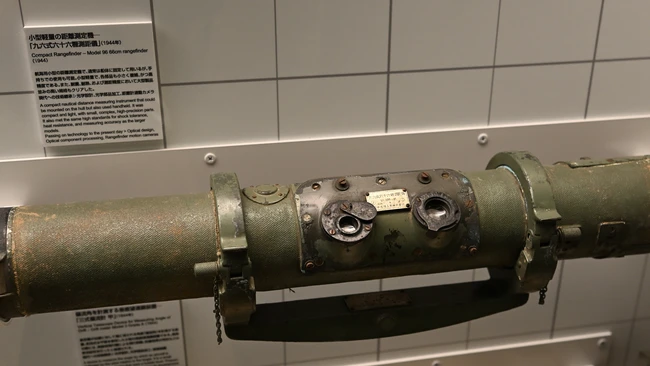
The lineage of many tools in a modern photographer’s kit, from the ubiquitous zoom lens to the precision of geotagging, often traces back to military requirements, but the nature of this connection is frequently oversimplified. While some photographic technologies were indeed born directly from military necessity, others were civilian innovations later adopted or bankrolled by defense, and a significant portion were simply pre-existing tools the military utilized first before their widespread civilian proliferation. This nuanced relationship, a complex interplay of strategic imperatives, scientific breakthroughs, and commercial adaptation, paints a far more intricate picture than the popular narrative often suggests, revealing a dynamic history where innovation flowed in multiple directions.
Sorting the true origins of these foundational technologies into their respective categories—those invented purely for military needs, those originating in civilian labs but scaled or classified by defense, and those simply adopted by the military first—is crucial to understanding the authentic historical trajectory of photography. This distinction helps to clarify which advancements genuinely owe their existence to wartime exigencies or strategic defense initiatives, and which merely found an early, high-profile user in the armed forces.
Born of Battlefield Needs: Technologies Invented for Military Purposes
Some of the most transformative advancements in photographic technology were conceived and developed under the direct impetus of military requirements, often driven by the urgent demands of conflict or strategic defense planning. These innovations addressed specific challenges faced by armed forces, from surveillance and targeting to reconnaissance and covert operations.
The Practical Zoom Lens: From Combat Viewfinder to Commercial Staple
The concept of variable focal length optics predates World War II, with inventors like Clile C. Allen patenting a focus-maintaining design as early as 1902 (US Patent 696,788). The Bell & Howell Cooke Varo 40-120mm even saw industrial production for 35mm movie cameras in 1932. However, these early iterations were complex, prone to focus shift, and never achieved widespread adoption, remaining niche tools for specialized applications. The breakthrough that cemented the zoom lens as standard equipment emerged from the wartime work of Austrian-born engineer Frank Back.
Back, who arrived in the United States in 1939, dedicated his wartime efforts to improving cameras and lenses for the US Army Signal Corps. His pivotal contribution was a variable-focus viewfinder, the PH-532/UF, designed for the Signal Corps’ version of the Bell & Howell Eyemo combat movie camera. Within this viewfinder, Back devised a revolutionary mechanical compensation scheme: a single-barrel linear movement that placed the moving optical elements in one sliding barrel, eliminating the intricate cams and gears that had plagued earlier zoom designs. While the viewfinder only needed to satisfy the human eye, film demanded greater precision. Back ingeniously adapted his design by adding a compensator element to the same barrel, fixed to the variator, ensuring the image remained in sharp focus throughout the focal length change.
He filed the civilian patent for this design on July 30, 1946, receiving US Patent 2,454,686 on November 23, 1948. The practical implications were immediate and profound. A prototype was famously used to cover a Brooklyn Dodgers game for WCBS-TV on July 21, 1947, marking its public debut in television. Later that year, Paramount newsreel cameramen adopted it to shoot the World Series, demonstrating its utility in fast-paced, dynamic environments. The still-photography version, the 36-82mm f/2.8 Zoomar, became the first zoom lens in regular production for 35mm cameras, sold through Voigtländer in 1959. While modern zoom optics, particularly those with sophisticated optical compensation mechanisms pioneered by Pierre Angénieux in 1956, have evolved beyond Back’s original mechanical design, it was Back’s wartime innovation that made the zoom lens a reliable, commercially viable, and ultimately indispensable tool for cinematography, television, and eventually still photography. His work fundamentally transformed the operational flexibility of professional image capture, setting the stage for its ubiquitous presence today.
Color Infrared Film: Unmasking Camouflage and Revealing Hidden Worlds
Infrared-sensitive photographic emulsions were not a military secret; Kodak’s Walter Clark had been a prominent researcher and publisher on infrared photography throughout the 1930s, with his definitive book on the subject appearing in 1939. The military’s specific need, however, spurred the development of a unique variant: false-color infrared film.
During World War II, Allied forces faced the challenge of detecting camouflaged enemy positions. Conventional photography struggled to differentiate between natural foliage and painted netting designed to mimic it. The key insight was that living vegetation strongly reflects near-infrared light, a property not shared by inert green paint or dyed netting. By developing a film that rendered near-infrared light as red, Kodak created a "camouflage detection film" under contract, supplied to Allied forces from 1942. This film, initially sold under names like Kodacolor Aero Film, Camouflage Detection, allowed military observers to distinguish a genuine hedgerow from a cleverly disguised tarpaulin at a glance, providing a critical advantage in aerial reconnaissance and battlefield intelligence.
The utility of this technology extended far beyond wartime. After the conflict, the false-color infrared film lineage continued with products like Ektachrome Infrared Aero Film in 1959 and later Aerochrome. These films found extensive and beneficial civilian applications in forestry, geology, environmental monitoring, and agricultural surveys, where the unique spectral rendering could highlight plant health, identify species, track pollution, and map geological features with remarkable clarity. For decades, it offered scientists and researchers an unparalleled tool for analyzing landscapes. Kodak eventually ceased production of its 35mm consumer version, Ektachrome Professional Infrared EIR, in 2007, and announced the end of Aerochrome III 1443 in October 2009. This scarcity has elevated surviving rolls to collector’s items. While contemporary digital infrared photography typically relies on converted cameras and infrared-pass filters (producing monochrome or channel-swapped images), the distinctive false-color palette of Aerochrome required a full-spectrum conversion combined with specialized filters to capture its unique blend of visible and infrared light, a testament to its singular design born from a specific military need.
Night Vision and the Image Intensifier: Piercing the Darkness
The quest to see in the dark has ancient roots, but practical night-sighting devices began to emerge as a military imperative during World War II. In the United States, work on the first practical American night-sighting device commenced in 1943 at the Army’s Engineer Board at Fort Belvoir, Virginia. Frankford Arsenal handled the telescope design, designated the T120, with RCA’s George A. Morton consulting on the crucial image tube.
The result was the Sniperscope, an active infrared device. Unlike modern passive systems, the Sniperscope actively flooded the scene with an invisible infrared beam and then detected the reflected return. The M1 and M2 versions were deployed to Okinawa in 1945, mounted on the T3 carbine, a specially adapted M1 carbine, offering a working range of approximately 70 yards. Around 1,700 Sniperscopes were manufactured during the war. Concurrently, Germany pursued its own active infrared sights, deploying the FG 1250 on Panther tanks and the ZG 1229 Vampir on the StG 44 assault rifle in the conflict’s final months. While German accounts claimed significant battlefield successes, particularly on the Eastern Front, British intelligence reports from captured units noted a lack of concrete evidence, suggesting many German units were primarily for training. The Sniperscope, therefore, represented a significant American wartime development.
The true revolution in night vision arrived with passive intensification, which amplifies ambient light (such as starlight or moonlight) rather than relying on an emitted infrared beam. This technology emerged with the first-generation AN/PVS-2, developed from 1964 and fielded in Vietnam by 1967. Subsequent generations, notably the second-generation devices utilizing microchannel plates in the 1970s, led to the development of compact, head-worn night vision goggles. While image intensifier tubes are still available and used by a niche community of astronomers to view faint nebulae directly, their impact on general photography is often overstated. Modern low-light digital photography primarily relies on highly sensitive silicon-based sensors with advanced architectures like stacked back-illuminated designs, which are distinct from the photocathode-based image intensifier tubes. The lineage of night vision is a direct military invention, but its influence on the broader photographic ecosystem is specific rather than pervasive.
Aerial Mapping Cameras and Photogrammetry: Precision from Above
The science of photogrammetry—creating maps and models from photographs—was born from a military engineer’s desire for greater efficiency and accuracy in surveying. Aimé Laussedat, an officer in the French army’s engineering corps, began experimenting with topographic mapping using photographs around 1849. He coined the term "metrophotography" and, by 1859, demonstrated to the Académie des Sciences that he could produce maps from images captured by a combined theodolite and camera, even lofting cameras on kites and balloons for aerial perspectives. Laussedat’s work was explicitly aimed at replacing the laborious and often imprecise methods of ground-based surveying with a faster, more accurate photographic alternative for military engineering applications. The French army funded his research for years, recognizing its strategic potential, though it did not immediately integrate the method into routine operations.
The idea gained industrial traction with Carl Pulfrich at Zeiss, who developed the stereocomparator in 1901, an instrument for precise measurement from stereo photographs. Eduard von Orel’s stereoautograph, invented in 1907 and produced by Zeiss from 1909 (with the widely sold Model 1911 following), further refined the process, enabling the creation of detailed contour maps from overlapping aerial images.
By World War II, photogrammetry was an established and indispensable military technology. The Fairchild K-17 aerial camera became the standard American wartime mapping camera, shooting large 9×9 inch negatives on 9.5-inch roll film through interchangeable lens cones. The 6-inch f/6.3 Bausch & Lomb Metrogon wide-angle lens, derived from the Zeiss Topogon, provided a 90-degree field of view, crucial for covering vast areas. Mapping units often flew three K-17s in a "trimetrogon cluster"—one vertical camera flanked by two obliques tilted 60 degrees—to achieve horizon-to-horizon coverage in a single pass. The crucial stereo effect for creating three-dimensional terrain models came from the substantial forward overlap (typically 60%) between successive frames along the flight line. This ensured that every point on the ground was captured from multiple perspectives. This methodology, perfected for military reconnaissance and mapping, is the direct ancestor of every modern drone mapping mission and Geographic Information System (GIS) application. Drones fly precisely patterned grids, capturing overlapping frames, and specialized software then uses the geometric relationships within these overlaps to rebuild highly accurate 3D terrain models and orthomosaics. Photogrammetry remains a vital tool for defense, but its broader civilian applications in urban planning, environmental monitoring, construction, and archaeology are a direct legacy of its military origins.
Civilian Ingenuity, Military Imperative: Innovations Classified or Bankrolled
Not all military-related photographic technologies were born ex nihilo from defense needs. Many originated in civilian research labs, driven by fundamental scientific inquiry or commercial potential, only to be classified, significantly funded, or rapidly scaled by military and defense budgets recognizing their strategic value.
Anti-Reflection Lens Coatings: Clarity for Combat, Brilliance for Photography
The problem of lens flare and light loss due to reflections at air-to-glass surfaces was a significant impediment to optical performance in the early 20th century. While minor for simple lenses, complex optical systems with many elements suffered substantial light reduction and contrast degradation. The solution emerged from civilian research, independently discovered on both sides of the Atlantic.
Alexander Smakula, working at Carl Zeiss in Jena, Germany, filed his groundbreaking patent for an anti-reflection coating on November 1, 1935. His innovation involved evaporating a thin, quarter-wave film onto glass in a vacuum, precisely tuned so that the reflection from its front surface canceled out the reflection from the glass surface behind it. The patent was granted in December 1939, and this process became Zeiss’s "T coating." Almost simultaneously, John Strong at Caltech published his work on single-layer evaporated coatings in the Journal of the Optical Society of America in 1936, and Katharine Blodgett at General Electric announced her nonreflecting glass in December 1938. Blodgett’s stacked molecular films were notable but less durable than evaporated coatings.
World War II rapidly transformed this civilian innovation into a critical military asset. The ability to reduce reflections dramatically improved the light transmission and contrast of essential military optics: submarine periscopes, aircraft gunsights, binoculars, and high-performance aerial reconnaissance lenses. These coated optics provided clearer, brighter images, giving Allied and Axis forces a tactical advantage. The war effort prioritized the application of these coatings to military equipment, meaning civilian consumers would not see coated lenses in quantity until after the conflict. It was only around 1947 that Kodak began labeling its fully coated optics "Lumenized," making this vital enhancement accessible to the broader photographic market. The T coating eventually evolved into Zeiss’s T* multi-coating in 1972, further enhancing performance. Thus, while anti-reflection coatings were a civilian scientific breakthrough, their rapid development, refinement, and initial widespread application were heavily influenced and accelerated by wartime defense needs.
The Digital Sensor: From Phone Company Lab to Orbital Reconnaissance
Perhaps no photographic technology has a more complex and frequently misattributed military connection than the digital sensor. The charge-coupled device (CCD), often credited as the progenitor of digital imaging, was famously sketched out by Willard Boyle and George Smith at Bell Labs in October 1969 during a brainstorming session that reportedly lasted only an hour. Their invention earned them the 2009 Nobel Prize in Physics. Bell Labs was a telephone company, not a defense contractor, underscoring the civilian origin of this core technology. Fairchild built the first commercial CCDs in 1973, including the 100×100 pixel array that Steven Sasson famously used in his 1975 Kodak prototype, often recognized as the first self-contained digital camera.
However, the CCD was not the first solid-state image sensor. IBM demonstrated the "scanistor" in 1964, and Westinghouse (an actual defense contractor) had a working camera built around a 50×50 array of phototransistors by 1965. Peter Noble at Plessey published designs for self-scanned silicon detector arrays with an amplifier inside every pixel in 1968, predating the CCD and foreshadowing the later CMOS sensor. Bell Labs’ achievement lay in developing a design that was exceptionally clean, efficient, and scalable, allowing the CCD to dominate solid-state imaging for the next two decades.
The chip found in most modern digital cameras, including smartphones, is actually a CMOS (Complementary Metal-Oxide-Semiconductor) active pixel sensor. This different architecture, which integrates an amplifier at each pixel site, was developed by Eric Fossum’s team at NASA’s Jet Propulsion Laboratory (JPL) in the early 1990s. This shifts the credit for contemporary digital camera sensors to a civilian space lab, rather than a military one.
The military’s role in digital imaging is significant but largely one of early adoption and funding for specialized applications, rather than invention of the core chip. The National Reconnaissance Office (NRO) launched the first KH-11 reconnaissance satellite on December 19, 1976. This electro-optical satellite marked a paradigm shift, sending images down as digital signals rather than dropping film canisters from orbit. However, this initial spacecraft used an array of silicon photodiodes in its focal plane, not a CCD. Robert Kohler, the CIA program manager for the KH-11, confirmed in a 2004 oral history that the transition to charge-coupled devices for these satellites occurred in 1978 and 1979, with Westinghouse in Baltimore serving as the CCD contractor. Figures of 800×800 pixels are often cited for the Block II KH-11 satellites of the 1980s, though specific declassified documents detailing these specifications are scarce.
Crucially, civilian space money also played a vital role. JPL collaborated with Texas Instruments from 1973 to 1979 on developing space-grade CCDs. JPL also produced what NASA considers the first astronomical image captured with CCD technology – a view of the south pole of Uranus – around 1975. Government programs were indeed capturing electronic pictures from orbit two decades before consumer digital cameras became widely available. However, they were leveraging and adapting existing or co-developed civilian chip technology, not inventing the fundamental sensor itself. The digital sensor’s journey underscores a complex interplay between academic research, corporate innovation, and strategic government investment, with NASA playing a more direct role in the camera chip lineage than the Department of Defense.
Lifted From the Gun Deck: Technologies Adopted Intact
Some photographic technologies were not invented for the military, nor were they heavily modified or secretly funded by defense. Instead, they were pre-existing or emerging technologies that the military found useful and simply adopted, often at a large scale, before their eventual transfer to civilian use. The military acted as an early, demanding customer, inadvertently paving the way for broader applications.
The Coincidence Rangefinder: Precision Aiming, Precision Focusing
The optical rangefinder, a device for measuring distance, was initially developed to address a critical need in naval gunnery: accurately aiming large cannons at distant, moving targets. Archibald Barr and William Stroud, professors of engineering and physics at Yorkshire College, responded to an advertisement in Engineering in 1888 for a short-base rangefinder for infantry. Their work caught the attention of the British Admiralty, which adopted their design in 1891 and awarded them a contract for six instruments in 1892. This led to the formation of Barr & Stroud’s Patents Ltd, which later became Barr & Stroud Ltd in 1913, a company dedicated to building rangefinders and fire-control instruments for navies worldwide. While Barr & Stroud pursued the coincidence principle, Zeiss took the stereoscopic route, developing its own stereo telemeter based on Hector de Grousilliers’ patent in the early 1890s, with a practical version demonstrated by Pulfrich in 1899.
The optical principle of the coincidence rangefinder is remarkably similar to what would later appear in cameras: two windows a known distance apart (the "base"), a moving prism or wedge, and a split image that snaps together into a single, coherent view when the mechanism is adjusted to the correct distance. This "solved naval gunnery problem" was ripe for miniaturization.
Kodak was among the first to shrink this technology for consumer use. The No. 3A Autographic Kodak Special, introduced around 1916, is widely considered the first production camera to feature a coupled rangefinder, based on J. E. Woodbury’s British patent 13421 of 1914. This innovation significantly simplified accurate focusing for amateur photographers. The idea truly revolutionized 35mm photography with the introduction of the Leica II in 1932, which integrated a coupled rangefinder, allowing photographers to focus with unprecedented speed and precision. There was no explicit transfer contract or government program; camera engineers simply recognized the utility of a robust, proven optical principle and adapted it for a new application. The coincidence rangefinder, a technology honed for maritime warfare, thus found a new life as an essential component in high-precision civilian cameras, a legacy that endures in modern rangefinder cameras like the Leica M11.
Gyroscopic Stabilization: Steadying Sights, Stabilizing Shots
The principle of gyroscopic stabilization, using a rapidly spinning flywheel to resist changes in orientation, found its initial high-impact applications in military and aviation contexts. Theodore Kenyon, an MIT graduate who joined Sperry Gyroscope in 1936, played a significant role in developing aviation instruments, including autopilots. His wartime work at Sperry, alongside figures like Charles Stark Draper, culminated in instruments such as the Mark 14 gunsight. Manufactured by Sperry in over 85,000 units, the Mark 14 allowed shipboard gunners to accurately track aircraft targets despite the rolling and pitching of the vessel beneath them, providing a crucial advantage in anti-aircraft defense.
In April 1950, Kenyon filed a patent for a gyro-stabilized sighting instrument specifically intended for hand-held binoculars, sextants, and cameras. Recognizing its broader commercial potential, he founded Kenyon Laboratories in Lyme, Connecticut, in 1953. Kenyon gyro stabilizers are still produced and sold today, finding a niche in professional handheld shooting from unstable platforms, such as helicopters or boats, where they provide mechanical stabilization far beyond what electronic systems can achieve in certain scenarios.
However, the direct lineage of Kenyon’s mechanical gyro stabilization largely stops there when considering the bulk of modern photographic image stabilization. The in-body image stabilization (IBIS) and in-lens optical image stabilization (OIS) systems prevalent in today’s cameras operate on fundamentally different principles. These modern systems utilize miniature vibrating-structure angular rate sensors (piezoelectric ceramics in early versions, now typically silicon MEMS—Micro-Electro-Mechanical Systems) to detect camera movement. This motion data then drives either a moving lens element (OIS) or a moving sensor (IBIS) to counteract the shake electronically and optically. These electronic stabilization systems descend primarily from consumer electronics and advancements in miniaturized sensor technology, rather than directly from the large mechanical gyroscopes found in gunsights. Thus, while Kenyon’s work provided an early example of applying gyroscopic principles to handheld optical devices, the vast majority of photographic stabilization today follows a separate, digitally driven evolutionary path.
Inherited Wholesale: Technologies Transferred Without Significant Modification
In some cases, the military simply adopted entire technologies or companies, leveraging existing capabilities for strategic purposes. These are instances where the invention and development were largely independent of military influence, but the military became a primary client or facilitator, leading to a later civilian transfer.
Nikon Itself: A Nation’s Optical Arsenal Turned Photographic Powerhouse
Nippon Kogaku K.K., the company that would become synonymous with the Nikon brand, was established on July 25, 1917. It was formed through the amalgamation of the optical instruments division of Tokyo Keiki, the mirror division of Iwaki Glass, and Fujii Lens Manufacturing, with substantial backing from Koyata Iwasaki of the Mitsubishi zaibatsu. The company’s genesis was a direct response to a national strategic imperative: Japan’s Imperial Navy sought a reliable domestic supplier for high-quality optical instruments, aiming to reduce its dependence on German imports, particularly in anticipation of future conflicts.
For nearly three decades, Nippon Kogaku’s principal customer was the Japanese military. The company manufactured a wide array of precision optical equipment essential for warfare, including binoculars, periscopes, bombsights, aerial cameras, and rangefinders. At its peak during World War II, accounts suggest Nippon Kogaku operated around 19 factories and employed roughly 23,000 people, a testament to its critical role in Japan’s war effort.
The post-war occupation dramatically reshaped the company’s trajectory. Severely curtailed and redirected towards civilian goods, Nippon Kogaku was reduced to a single plant and approximately 1,400 employees. This forced pivot led to the development of civilian cameras, with the first camera bearing the Nikon name shipping in 1948. This marked the transformation of a military-industrial complex into a world-renowned photographic brand.
It’s important to differentiate this from the origins of other major camera manufacturers. For example, Canon’s Precision Optical Instruments Laboratory was established in November 1933 with the explicit commercial goal of building a 35mm rangefinder camera, inspired by Goro Yoshida’s belief that Leica’s prices were unjustified. Its origin was purely commercial, not military. The irony, however, is that early Canon cameras, such as the Hansa Canon of February 1936, actually featured Nikkor 50mm f/3.5 lenses. Canon’s own museum confirms that Nippon Kogaku supplied the rangefinder optics and focusing mount, while Canon built the body and shutter. Thus, Canon’s first production camera, a commercial venture, relied on optics produced by a company fundamentally built and funded by the Japanese Navy. Nikon’s story is a clear example of a company whose very foundation and early existence were military-driven, subsequently transitioning its advanced optical expertise directly into the civilian market.
GPS and Geotagging: Global Positioning for Global Photography
The Global Positioning System (GPS) stands as perhaps the cleanest example of a technology developed purely for military purposes and then transferred wholesale, without modification, to civilian applications. Nothing about GPS was designed with photography in mind. The system’s primary objectives were to provide highly accurate, global positioning, navigation, and timing information for military operations, enabling precision-guided munitions, troop movement coordination, and replacing the disparate and often less accurate navigation systems previously used by various military branches.
The Department of Defense launched the first Block I NAVSTAR satellite on February 22, 1978. The constellation steadily grew, and the system was declared fully operational in 1995. GPS remains owned by the US government, operated by the US Space Force, and funded by the US taxpayer. Its core military purpose continues today.
The pivotal moment for civilian use, and specifically for photography, arrived on May 1, 2000. On this date, President Bill Clinton ordered the cessation of Selective Availability (SA), a deliberate degradation of the civilian GPS signal that limited accuracy to approximately 100 meters to preserve a military advantage. With SA switched off, predicted civilian accuracy improved dramatically, almost overnight, to about 20 meters. This sudden enhancement transformed GPS from a vaguely useful tool to a precision instrument.
Consumer geotagging—the automatic recording of latitude and longitude data into photo files—followed within a few years, becoming a standard feature in digital cameras and, more notably, smartphones. Every time
