
 By admin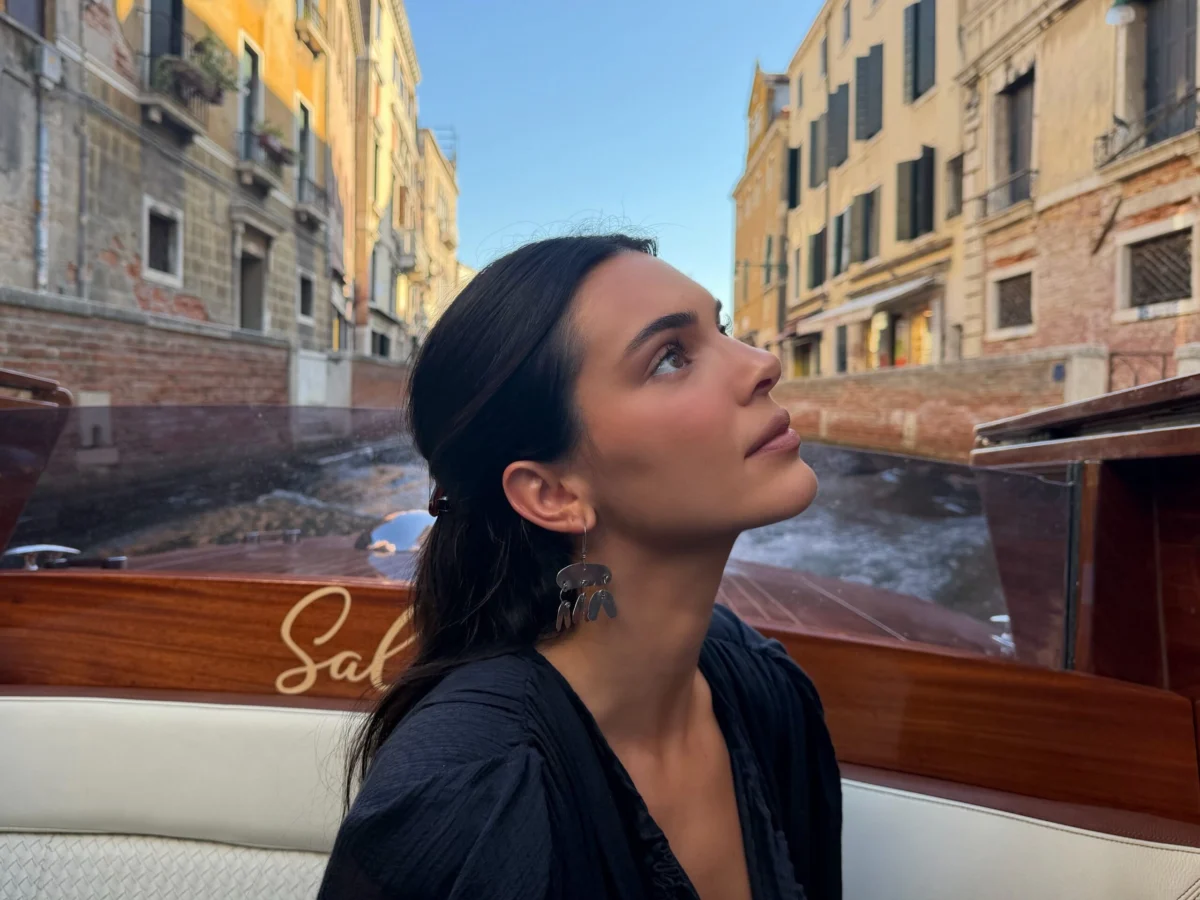
The 80th Venice International Film Festival, a beacon of cinematic artistry and sartorial splendor, once again drew the world’s gaze to the historic Lido. Amidst the customary spectacle of haute couture gowns, dazzling jewels, and dramatic water-taxi arrivals, a particularly discerning fashion statement by supermodel and entrepreneur Kendall Jenner offered a subtle yet profound nod to art history. Her choice of accessories—a pair of abstract silver earrings by American modernist Alexander Calder, dating back to 1955—represented a sophisticated "if you know, you know" moment, elevating her ensemble beyond mere trend-following into the realm of wearable art.
The Grandeur of the Venice Film Festival and its Fashion Narrative
The Venice Film Festival, or Mostra Internazionale d’Arte Cinematografica di Venezia, holds the distinction of being the oldest film festival in the world, founded in 1932. Annually held on the island of Lido, it serves as a prestigious platform for international cinema, premiering groundbreaking films and honoring industry legends. Beyond its cinematic purpose, Venice has long been synonymous with unparalleled glamour, its unique setting of canals and historic palazzi providing an ethereal backdrop for celebrity arrivals. This inherent theatricality has cemented the festival’s status as a major fashion event, where red carpets become runways for designers to showcase their most exquisite creations. Each year, the festival attracts hundreds of thousands of attendees, including filmmakers, critics, fashionistas, and tourists, contributing significantly to Italy’s cultural tourism and luxury markets. The media coverage generated from Venice is global, with fashion choices often scrutinised and celebrated with as much intensity as the films themselves. It is within this confluence of cinema, history, and high fashion that Jenner’s choice of accessory resonated deeply, appealing to an audience appreciative of both aesthetics and provenance.
Kendall Jenner’s Inaugural Lido Turn: A Study in Understated Elegance
For her first-ever appearance on the storied Lido, Kendall Jenner, present as an ambassador for Armani Beauty, embraced an aesthetic that perfectly balanced modern sophistication with a touch of vintage allure. Her chosen attire for a daytime event included a smoke-gray, bell-sleeved Vivienne Westwood dress, crafted from silky, sheer fabric that offered both fluidity and an ethereal quality. This was complemented by a woven Maison Ola basket bag, lending a touch of artisanal craftsmanship, and vintage Manolo Blahniks sourced from The Vintage Marché, a testament to her appreciation for timeless pieces. The overall look was distinctly aligned with Jenner’s personal style, often characterized by its pared-back elegance and an affinity for the minimalist, luxurious aesthetic championed by brands like The Row. However, it was the earrings that truly distinguished the ensemble, providing a discreet yet powerful statement for those with an educated eye.

The Alexander Calder Earrings: Miniature Works of Modern Art
At first glance, the abstract silver earrings might have appeared as simply an elegant, slightly unconventional addition to Jenner’s look. To the uninitiated, their abstract forms could be seen as contemporary adornments. Yet, their true significance lay in their heritage: they were authentic Alexander Calder creations, crafted in 1955 from hammered silver and steel wire. These weren’t mass-produced fashion accessories but rather miniature sculptures by one of the 20th century’s most influential artists. The choice to wear such a piece speaks volumes about Jenner’s evolving taste and her deeper engagement with the art world, where she is already a known collector.
The rarity and provenance of these earrings are paramount. They were not loaned from a mainstream jewelry house’s archive but acquired through Louisa Guinness, a London-based gallerist renowned for her decades-long dedication to collecting, commissioning, and dealing in artist-made jewelry. Guinness’s gallery specializes in unique pieces created by celebrated artists, bridging the gap between fine art and wearable sculpture. Her impressive roster includes luminaries like Man Ray, Niki De Saint Phalle, and Anish Kapoor, placing Calder’s jewelry within a distinguished artistic lineage.
The Acquisition Process: A Journey Through Art and Influence
The path to Jenner acquiring these particular Calder earrings was a testament to the specialized nature of the art market and the interconnectedness of its key players. The request originated from Jenner’s stylist, Danielle Goldberg, who, seeking specific Calder pieces, navigated a trail that led through the prestigious Calder Foundation, a New York collector, and ultimately to Louisa Guinness’s gallery. Guinness recounted to Vogue the precise nature of the request: "Her stylist said, ‘We’re looking for some Calder earrings.’ And so I sent her a small selection."
Guinness emphasized the scarcity of Calder’s earrings within his broader jewelry oeuvre. "I don’t have so many earrings left. Earrings are quite rare and rings are rare," she noted. This particular pair, she admitted, was especially difficult to part with due to her personal affection for them: "I love those earrings, they were hard to let go of!" Despite their artistic weight, Guinness found them exceptionally wearable, a quality she believes perfectly suited Kendall’s minimalist yet impactful style. Unlike some of Calder’s more imposing sculptural works, these earrings possess an understated elegance, making them accessible while retaining their artistic integrity.

Alexander Calder: Beyond Mobiles to Wearable Sculptures
Alexander Calder (1898–1976) is globally celebrated for revolutionizing modern sculpture with his pioneering abstract mobiles—kinetic sculptures that move with air currents—and his monumental stabiles. His playful Circus, a miniature, intricate ensemble of figures crafted from wire, cardboard, and everyday materials, further showcases his whimsical yet profound artistic vision. However, Calder’s foray into jewelry was far from a peripheral pursuit; it was an integral and continuous aspect of his artistic practice, stretching across his career.
His earliest known jewelry pieces were fashioned for his sister’s dolls, foreshadowing a lifelong fascination with wearable objects. By 1929, his jewelry was already garnering recognition, being exhibited in galleries alongside his larger sculptures. Over the ensuing decades, Calder consistently returned to creating wearable art, often using relatively humble materials such as brass and silver wire. He frequently made pieces spontaneously for friends, imbuing each creation with a personal touch. This hands-on approach is a critical distinction that elevates Calder’s jewelry. As Louisa Guinness highlighted, "They were made by him, by his fair hand. Nobody else’s." This contrasts with much artist-designed jewelry, where a goldsmith is typically involved in the fabrication process. Calder’s pieces bear the direct imprint of the artist, a tangible connection to his creative energy, making them particularly alluring to collectors.
Radical Modesty: Calder’s Jewelry and its Departure from Convention
Calder’s jewelry was considered deeply unconventional for its time. In an era dominated by opulent fine jewelry featuring diamonds, precious stones, and elaborate settings, his bold spirals, loops, hammered surfaces, and calligraphic lines represented a radical departure. His aesthetic prioritized form, movement, and the intrinsic beauty of the materials over intrinsic monetary value. This approach was almost out of step with traditional notions of luxury, yet it resonated profoundly within bohemian and avant-garde art circles. Many of his pieces, despite their modernity, evoke the timelessness of ancient artifacts, suggesting a universal aesthetic language. Their value was encoded not in their material cost, but in their artistic merit and conceptual innovation.
This paradigm shift in valuing jewelry was keenly understood by prominent figures of the art world, most notably Georgia O’Keeffe and, perhaps most famously, Peggy Guggenheim. These pioneering women embraced Calder’s creations as expressions of individuality and artistic sensibility, rejecting the conventional symbols of wealth and status.

The Enduring Influence of Peggy Guggenheim: A Venetian Connection
The choice of Venice as the backdrop for Kendall Jenner’s Calder moment added another layer of historical resonance, as noted by Louisa Guinness. Venice was the adopted home of Peggy Guggenheim (1898–1979), the legendary American art collector and patron who became a grand dame of the European art scene. Guggenheim was not only a fervent champion of Alexander Calder’s work but also an enthusiastic wearer of his jewelry. Her collection included several Calder earrings, and his monumental sculptural work, Silver Bedhead, once adorned her Venetian palazzo, now a centerpiece at the Peggy Guggenheim Collection museum in Venice.
Guggenheim’s embrace of artist-made jewelry was emblematic of her avant-garde spirit. Famously, when she opened her groundbreaking New York gallery, Art of This Century, in 1942, she made a striking sartorial statement: she wore one earring by Calder and another by Surrealist pioneer Yves Tanguy. This eccentric gesture was a deliberate demonstration of her allegiance to both abstraction and Surrealism, embodying her bold curatorial vision and her belief in the transformative power of modern art.
Kendall Jenner’s acknowledgment of this rich history was evident in other aspects of her Venice trip. She was spotted wearing dramatically flared, pointed sunglasses that directly recreated Guggenheim’s iconic eyewear, signaling a clear inspiration. Guinness observed, "I saw her wearing the glasses. The glasses got way more attention than the earrings, but for people who know, the earrings are very, very special. Calder jewelry is like a little club." This "club" refers to the discerning community of collectors and enthusiasts who recognize the unique artistic and historical value of Calder’s wearable sculptures.
A New Generation of Art Collectors and Market Implications
Significantly, Kendall Jenner didn’t just borrow the earrings for the event; she purchased them from Louisa Guinness. "So many people just ask to borrow them, but she actually was interested," Guinness revealed. "She’s interested in the art side of it, so I find that really interesting." This distinction underscores Jenner’s genuine commitment to art collecting, which already includes works by prominent contemporary artists such as James Turrell, Tracey Emin, Barbara Kruger, Richard Prince, Raymond Pettibon, Lauren Greenfield, and Sterling Ruby. Her acquisition of the Calder earrings positions her not merely as a fashion influencer, but as a serious patron of the arts, particularly those pieces that blur the lines between disciplines.

Jenner’s high-profile endorsement of artist-made jewelry has broader implications for the art market. It introduces a new generation, particularly her vast social media following (currently over 294 million on Instagram), to the concept of wearable art by historical masters. This exposure could spark renewed interest and broaden the collector base for a niche market that has traditionally appealed to a more specialized audience. Louisa Guinness expressed optimism about this development, noting, "There are lots of other artists that have made jewelry that people don’t know about." She sees Jenner’s purchase as a potential catalyst for exploring other artist-jewelers, perhaps suggesting minimalist-but-statement pieces she previously created with Anish Kapoor, or vintage wearable art by avant-garde figures like Lucio Fontana.
The timing of this moment also aligns with broader fashion trends. Calder’s brooches, for instance, are timeless pieces that could align with the burgeoning interest in pins and brooches, a trend observed on recent runways from Giorgio Armani to Tory Burch and Simone Rocha. Guinness mused on the potential for wider adoption, "I’d like to see more men wearing his pins. Maybe we’ll see Jacob Elordi in a pin…"
Conclusion: A Timeless Statement
Almost seven decades after their creation, Alexander Calder’s hand-wrought lines and abstract forms continue to exude a striking modernity. Kendall Jenner’s choice to wear these rare 1955 Calder earrings at the Venice Film Festival was more than a fashion statement; it was a curated moment of cultural dialogue. It highlighted the enduring legacy of an artistic giant, celebrated the pioneering spirit of figures like Peggy Guggenheim, and underscored the growing intersection of high fashion, art collecting, and celebrity influence. For those who understood the subtle message, it was a powerful affirmation that true style transcends fleeting trends, finding its deepest expression in the timeless beauty and profound narratives embedded within genuine works of art. This moment served as a vivid reminder that the most impactful accessories are not always the most glittering, but those that carry a rich history and speak to a discerning appreciation for artistic mastery.
