
 By Nila Kartika Wati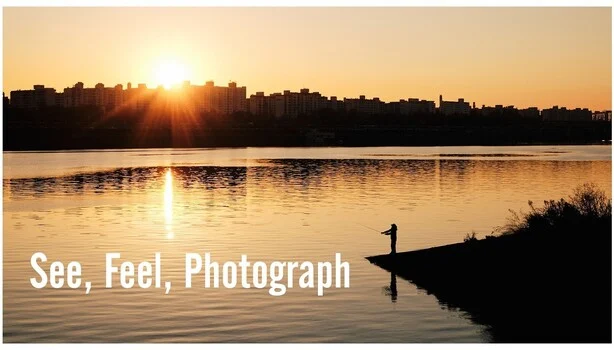
The traditional discourse surrounding photographic lighting, often bifurcated into "good" and "bad" categories, inherently restricts creative potential, subtly guiding photographers towards a narrow interpretation of what constitutes a successful image. This conventional framing, which frequently leads practitioners to disregard scenes deemed poorly lit, is being robustly challenged by photographers like Dylan Goldby, whose recent instructional series posits that all forms of light are inherently workable. By shifting the perspective from judgmental classification to creative adaptation, Goldby’s philosophy encourages visual artists to explore and capture moments in environments that many might instinctively overlook. This reinterpretation forms the bedrock of his three-part educational series on the fundamental elements of photography, with a dedicated installment meticulously dissecting the nuances of light.
Challenging the Conventional Wisdom of Light
Goldby’s central tenet is straightforward yet profound: there exists no intrinsically "good" or "bad" light, only light that either serves or detracts from the photographer’s intended vision. This perspective liberates the photographer from external constraints, emphasizing agency over circumstance. While the sun’s position is immutable, the photographer retains complete control over their vantage point relative to it, the subjects they choose to illuminate, and the technical parameters of their exposure. This adaptable mindset is particularly evident in Goldby’s professional practice; he acknowledges a pragmatic difference in his approach when shooting for clients—where flattering light is often paramount—versus personal projects, where the pursuit of mood and artistic expression takes precedence. Both scenarios, however, are united by a deliberate and conscious manipulation of available light to achieve a specific emotional or aesthetic outcome.
The historical trajectory of photographic education, particularly from the mid-20th century, often emphasized rigorous technical mastery, with systems like Ansel Adams’ Zone System providing a scientific framework for managing dynamic range and achieving precise tonal rendition. This system, developed primarily for black-and-white film, taught photographers to pre-visualize and meticulously meter scenes to ensure details were preserved across the full spectrum from deep shadows to bright highlights. While invaluable for its precision, such systems could, for some, foster a rigid adherence to technical "correctness" that inadvertently categorized certain lighting conditions as inherently problematic or unworkable. Goldby’s contemporary perspective, while not discarding technical knowledge, subtly reorients it as a tool for creative expression rather than a set of prescriptive rules.
Foundational Principles for a New Photographic Approach
Goldby anchors his philosophy in several key technical choices designed not as permanent dogma, but as pedagogical tools to cultivate a deeper understanding of light. He advocates for manual control over exposure and white balance during the learning phase. This isn’t a mandate for lifelong manual operation, but rather a deliberate exercise to deconstruct how the camera "sees" a scene versus how the human eye and brain interpret it. The human visual system constantly performs complex white balance corrections, making a white sheet of paper appear white under varying light sources. Cameras, in contrast, record light in absolute terms. By locking white balance to "daylight" mode throughout the day, Goldby suggests, photographers can intrinsically learn and internalize the subtle, yet dramatic, shifts in color temperature that light undergoes from dawn to dusk, and across different light sources. This disciplined practice helps develop an intuitive "eye" for light’s inherent qualities, bypassing the camera’s automated interpretations.
A significant point of divergence from contemporary photographic trends is Goldby’s nuanced stance on High Dynamic Range (HDR) photography. He openly pushes back against the automatic blending of multiple exposures, preferring instead to make decisive artistic choices: allowing highlights to blow out or shadows to crush when the scene’s dynamic range exceeds the sensor’s capabilities. For Goldby, this deliberate act of omission or emphasis is precisely where the photographer’s interpretation resides, transforming a technical limitation into a creative opportunity. To illustrate this, he presents a compelling side-by-side comparison, showcasing the same scene captured once with the HDR Plus setting on his Fujifilm X-T50 and then again within the sensor’s normal dynamic range. The stark difference in the emotional impact and visual character between the two renditions underscores his argument, highlighting how automated HDR, while technically proficient, can sometimes homogenize the artistic narrative. This approach contrasts with the prevailing industry trend, where computational photography in smartphones and advanced cameras increasingly aims to capture and present a wider dynamic range as a default, often at the expense of interpretive choice.
Mastering Diverse Lighting Scenarios: A Practical Walkthrough
The core of Goldby’s instructional video unfolds as a practical guide to navigating and exploiting various lighting conditions. He meticulously demonstrates how to expose for and creatively utilize each type of light:
- Overcast Days: Often perceived as challenging due to their soft, even, and sometimes monotonous illumination, Goldby teaches techniques to introduce drama and shape. He advises seeking out natural light modifiers such as overhangs, doorways, tunnel mouths, or dense foliage to block light from specific directions, thereby sculpting it and adding depth to an otherwise flat scene. The goal is to create contrast and directionality where none inherently exists.
- Low, Directional Sun: This is Goldby’s preferred lighting condition, revered for its ability to create long shadows, rich textures, and dramatic interplay of light and dark. He recounts an illustrative session along Seoul’s Han River, where he generated an entire series of distinctive images within a mere ten-meter radius, simply by altering his position relative to the low sun. This demonstrates the immense creative leverage gained by understanding directional light and its impact on form and mood.
- Backlight: Often a source of frustration for photographers, backlight is transformed into a powerful creative tool under Goldby’s guidance. When exposing for the bright sky, a subject against the light can yield striking silhouettes, emphasizing form and graphic appeal. Conversely, exposing for the subject’s skin can create a luminous, ethereal glow, particularly when combined with the intentional flaring of more affordable, third-party lenses—a characteristic Goldby notes is often suppressed in premium Fujifilm glass, allowing for a deliberate artistic choice.
- Sidelight: This type of illumination is exceptional for revealing texture, form, and dimensionality. Goldby illustrates how even subtle shifts in a photographer’s position—just a few degrees closer to a 90-degree angle relative to the light source—can drastically alter the dynamic range challenges and the way texture is rendered, making subjects appear more three-dimensional and tactile.
- Midday Sun: Universally reviled by many photographers for its harshness, high contrast, and unflattering shadows, midday sun receives a passionate defense from Goldby. He demonstrates how to embrace its intensity, seeking out graphic shadows cast by man-made structures. By exposing to retain detail in the bright highlights and allowing the deep shadows to go pure black, he constructs compelling abstract frames into which subjects can be strategically placed. He vividly recounts waiting patiently for runners and cyclists to pass, only for a serendipitous moment when a white bird landed perfectly within his shadow pattern, completing a powerful composition.
- Specialized Lighting Scenarios: Goldby further extends his analysis to overhead venue lighting, offering strategies for managing its often-unflattering qualities. He touches upon capturing pastel scenes with a touch of deliberate overexposure to enhance their soft, dreamy aesthetic. Finally, he explores the fleeting "blue hour," that narrow window after sunset but before full darkness, where it’s possible to balance the artificial glow of city lights against the fading ambient sky in a single, well-executed exposure.
The Evolution of Photographic Craft: Technology’s Role and Educational Implications
The quiet, yet profound, lesson woven throughout Goldby’s instruction is underscored by an anecdote about a friend. When asked how he metered a particularly harsh, side-lit scene on an old DSLR, his friend’s genuine response was, "What’s a light meter?" Unburdened by traditional metering techniques, his friend’s images were nonetheless stunning. This narrative encapsulates a pivotal shift in photographic education and practice, especially with the advent of modern mirrorless camera technology.
For decades, photographers learning on film or early digital cameras relied heavily on external light meters, the camera’s built-in reflective meter, or the intricate calculations of the Zone System. The ritual involved metering various parts of a scene, adjusting for desired tonal rendition, perhaps adding two-thirds of a stop for subjective brightness, and often bracketing exposures to ensure a usable shot. This process demanded a deep theoretical understanding and methodical execution.
Mirrorless cameras have fundamentally altered this paradigm. Their electronic viewfinders (EVFs) and rear LCD screens provide a real-time, accurate preview of the exposure before the shutter is released. This means the laborious process of metering and calculating has largely dissolved into an intuitive act: turning a dial until the on-screen preview visually matches the photographer’s desired aesthetic. This is a monumental shift in how individuals learn the craft. A new generation of photographers is emerging without ever needing to internalize the complexities of the Zone System or the mechanics of a handheld meter. The skill that now replaces these traditional habits is the ability to emotionally read a scene, to intuitively understand its visual potential, and to adjust camera settings until the digital preview aligns perfectly with that felt impression.
For photographers who began their journey with film or early digital, unlearning ingrained habits and retraining themselves to trust the live preview over complex mathematical calculations is one of the most accessible and impactful upgrades available. This technological liberation frees mental energy and attention that was once dedicated to technical minutiae, redirecting it towards the more artistic and interpretive aspects of composition and capturing the decisive moment. The cognitive load reduction allows for greater creative flow and responsiveness to dynamic scenes.
Broader Implications and the Future of Visual Storytelling
Goldby’s philosophy and the technological shifts supporting it have far-reaching implications for the broader photographic landscape. The democratization of photography, already accelerated by smartphone cameras, is further enhanced by mirrorless technology that simplifies technical mastery. This ease of learning lowers the barrier to entry, potentially fostering a more diverse and expansive community of visual storytellers. The emphasis shifts from who can master the most complex technical systems to who can articulate the most compelling visual narrative.
This contemporary approach aligns with a growing sentiment in the creative industries that prioritizes emotional connection and artistic expression over rigid adherence to technical norms. While technical proficiency remains valuable, it is increasingly seen as a means to an end, rather than the end itself. Goldby’s work implicitly suggests that a photograph’s power lies not in its perfect technical rendition across all parameters, but in its ability to evoke a feeling, tell a story, or capture an essence, even if that means embracing what was once considered a technical imperfection.
For those seeking deeper theoretical grounding, Goldby recommends Michael Freeman’s seminal book "Capturing Light," which categorizes light into a far more intricate taxonomy than a single video can cover. He also thoughtfully acknowledges that his "find-it-as-you-go" method is not the only valid approach, citing Nick Carver’s highly planned, pre-visualized style as a powerful, albeit contrasting, alternative. This recognition of diverse creative processes further reinforces the idea that there is no single "right" way to approach photography, only effective ways to achieve one’s artistic goals.
In conclusion, Dylan Goldby’s advocacy for an unconditional approach to light represents a significant philosophical recalibration within photography. By dismantling the "good versus bad" dichotomy, embracing modern technological capabilities, and prioritizing emotional interpretation, he not only unlocks greater creative freedom for photographers but also offers a compelling vision for the future of visual storytelling—one where adaptability, intuition, and artistic intent supersede rigid technical prescriptions. The full depth of each lighting setup and exposure choice, demonstrated with real-world images, provides a compelling visual argument for this transformative perspective.
