
 By Nila Kartika Wati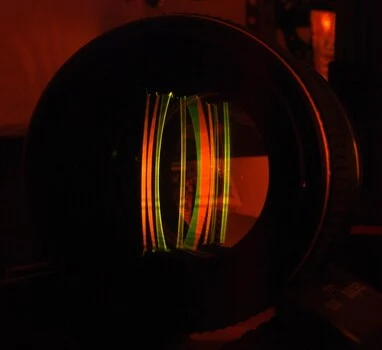
Every interaction between light and a lens surface presents an opportunity for interference. At its most fundamental, a bare, uncoated air-to-glass surface inherently reflects approximately 4 percent of the light striking it, sending it back towards its origin. In a contemporary professional zoom lens, such as a 24-70mm f/2.8, this interaction multiplies across roughly 30 air-to-glass surfaces. Unchecked, this cumulative reflection would mean less than a third of the light entering the front element would successfully reach the sensor to form an image. The majority of the remaining light would either be lost or, more critically, scatter internally, leading to a phenomenon broadly termed "flare" – non-image-forming light that arrives at the sensor by unintended paths. This stray light manifests primarily in two distinct forms: discrete "ghosts" and diffuse "veiling glare," each with its own characteristics and challenges for optical designers.
The Intricate Dance of Light: Understanding Ghosts and Veiling Glare
Lens flare is an umbrella term for any light that reaches the camera’s sensor without contributing to the intended image. This light follows paths that the optical designer meticulously sought to avoid, arriving out of focus, in the wrong place, or simply washing out the scene. The distinction between the two primary types of flare – ghosts and veiling glare – is crucial for both mitigation and understanding.
Ghosts: Reflections with an Even Count
Ghosts are the result of specular reflection, where light bounces off an element’s surface instead of passing directly through. While a single bounce typically directs light back out of the lens, an even number of reflections (most commonly two or four) can redirect that light back towards the sensor. These multi-bounced rays, however, are severely out of focus and misaligned with the intended image. Optical engineers dedicate significant effort to mapping and minimizing these two-bounce and four-bounce ghost paths during the design phase.
The appearance of ghosts is rarely amorphous. Many manifest as defocused images of the lens’s aperture, particularly when reflections occur on opposite sides of the diaphragm. This is because the aperture blades, even when influencing stray light bundles, still define their boundaries. When the lens is stopped down to smaller apertures like f/16, these aperture-shaped ghosts sharpen into hard-edged polygons, their number of sides corresponding to the diaphragm’s blade count. Conversely, at wide-open apertures such as f/1.4, the blades retract, allowing these ghosts to appear softer and rounder. For instance, the Sony FE 24-70mm f/2.8 GM II, a complex lens featuring 20 elements arranged in 15 groups and an 11-blade diaphragm, will produce 11-sided, aperture-shaped ghosts when stopped down. The distinction between elements and groups is vital: a group consists of one or more elements cemented together, reducing air-to-glass interfaces. While 20 separate elements would present 40 air-to-glass surfaces, cementing five into groups replaces ten faces with five internal joints, leaving 30 significant air-to-glass surfaces. The index step between glass and optical cement is minimal, reflecting only a tiny fraction of a percent, thus emphasizing the 30 air-to-glass surfaces as the critical count for reflection calculations.
The placement of these ghost artifacts is not random but geometrically predictable. Given a camera lens’s rotational symmetry around its optical axis, ghosts formed by reflections between internal surfaces will align along a line extending from the bright source, through the center of the frame, and out the opposite side. If the sun is in the top right corner, a chain of ghosts will march diagonally down towards the bottom left. This characteristic linear arrangement is the most recognizable form of lens flare, widely emulated by digital effects plugins.
The imaging surface itself can also contribute to ghosting. In the era of film, light could bounce off the emulsion and pressure plate back into the lens. Digital sensors, however, are often more reflective and possess a structured surface. A bright light source can strike the sensor, reflect back into the rear element or filter stack, and then return to the sensor as a ghost. In some mirrorless camera and lens combinations, where the rear element is positioned very close to the sensor and light encounters it at steep angles, the sensor’s regularly spaced microlens grid can transform this round trip into a distinct lattice of small, often red, dots encircling the light source. This phenomenon is a direct consequence of the modern optical path and the materials involved.
Veiling Glare: The Formless Wash
In contrast to the structured appearance of ghosts, veiling glare is a shapeless, diffuse form of flare caused by scattered light. This light does not follow a predictable, even-numbered reflection path but instead bounces off various internal surfaces in a chaotic manner. Sources include the ground edges of lens elements, the interior of the lens barrel, the diaphragm blades themselves, the sensor stack, and even microscopic imperfections or contaminants on the front element, such as fingerprints, dust motes, or micro-scratches.
None of this scattered light contributes to an image. Instead, it spreads across the entire frame as a broad, even wash, subtly yet significantly degrading image quality. The primary effects of veiling glare are a raised black point, meaning true blacks appear as dark gray, and a severe reduction in overall contrast. A backlit scene, for example, might appear flat and desaturated, even without any discernible ghost artifacts, simply due to veiling glare. This haze smears away local contrast, making it impossible to fully restore through simple post-processing adjustments like dragging the black slider. Fingerprints are particularly notorious offenders, acting as diffuse light scatterers directly on the optical path’s first surface.
Ninety Years of Making Glass Disappear: The Anti-Reflection Revolution
The challenge posed by the 4 percent light loss per uncoated surface is not anecdotal; it is a fundamental optical principle derived from the Fresnel equations, which describe the reflection and transmission of light at an interface between two optical media. For light striking ordinary optical glass (with a refractive index near 1.5) head-on from air (index 1.0), approximately 4 percent is reflected. This figure can climb to 5 percent or more for higher-index glasses or light hitting the surface at steeper angles, a factor lens designers must constantly contend with.
When this seemingly small loss is compounded across the numerous surfaces of a modern lens, the arithmetic becomes brutal. For a 30-surface lens without any coatings, only about 29 percent of the incoming light would pass straight through to form the image. This calculation, however, only accounts for the desired straight-through path. A more comprehensive energy budget reveals that roughly 44 percent of the entering light would ultimately reach the sensor, meaning an additional 15 percent arrives via unplanned routes. This 15 percent is not a bonus; it is precisely the raw material for ghosting and veiling glare, arriving defocused and misaligned. The remaining 56 percent genuinely leaves the lens and is lost.
This stark reality underscored the urgent need for anti-reflection technologies, which fundamentally reshaped lens design and performance. Coatings didn’t just make lenses brighter; they dramatically collapsed the pool of misdirected light, which had historically washed out contrast and severely limited the complexity of viable lens designs.
A Chronology of Coating Innovation:
-
1935: The Dawn of Anti-Reflection Coatings
The breakthrough arrived in 1935 when Alexander Smakula, a physicist working at Carl Zeiss in Germany, patented a practical vacuum-deposition process. This innovation involved laying an extremely thin, low-index film onto a lens surface. Smakula’s initial worked example utilized calcium fluoride, but the industry soon standardized on the more durable magnesium fluoride (MgF2), which possesses a refractive index of approximately 1.38 – an ideal intermediary between air (1.0) and typical optical glass (around 1.5). Applied at a thickness precisely one-quarter of the wavelength of light, this single layer cleverly exploits wave interference: the reflection off the top surface of the film and the reflection off the bottom surface (at the glass interface) are designed to cancel each other out. This single-layer coating reduced surface reflection from about 4 percent to roughly 1.3 percent for the wavelength it was tuned for. Initially, Germany restricted the technology for military optics, delaying the public publication of Smakula’s patent until December 1939, just as World War II began. Its widespread adoption after the war revolutionized photographic optics. -
1971: The Multi-Coating Revolution
While single-layer coatings were effective, their performance was optimized for a narrow range of wavelengths. This often resulted in single-coated lenses exhibiting a colored flare, as different colors of light were reflected unevenly. The next major leap was multi-coating, which involved stacking multiple films of varying refractive indices and thicknesses. This allowed for significantly lower and more uniform reflectance across the entire visible spectrum. Asahi Optical, later known as Pentax, was instrumental in bringing this technology to amateur photographers at scale in 1971. Drawing on patents from the American firm Optical Coating Laboratory, Inc. (OCLI), Asahi introduced its "Super-Multi-Coated Takumar" lens line, clearly marketing the advanced coating to highlight its benefits. This pioneering seven-layer process reduced reflection at each air-to-glass surface to approximately 0.2 percent, a monumental improvement that dramatically enhanced image contrast and color fidelity. -
The Nanostructure Era: Pushing the Boundaries of Transparency
Even multi-layer thin films still create distinct boundaries where refractive indices change. Modern coatings, however, have moved beyond this, aiming to eliminate the "edge" itself. The early 21st century saw the emergence of nanostructure coatings, which employ biomimicry – drawing inspiration from natural structures like the anti-reflective properties of a moth’s eye.- Canon’s Subwavelength Structure Coating (SWC): Announced in September 2008 and first deployed in the EF 24mm f/1.4L II USM lens, SWC involves growing a "forest" of wedge-shaped aluminum oxide structures, each only about 220 nanometers tall, directly onto the glass surface. Because these structures are smaller than the wavelength of visible light, light does not "resolve" individual spikes. Instead, it perceives a gradual transition in refractive index from air to glass, effectively eliminating the sharp boundary that causes reflection. Canon claims SWC reduces residual reflection to an astonishing 0.05 percent.
- Nikon’s Nano Crystal Coat (NCC): Introduced earlier, Nikon’s NCC builds a porous film of nanometer-scale particles with air gaps in between. These air gaps lower the effective refractive index of the layer, bringing it closer to that of air, thereby reducing reflection.
- Nikon’s Meso Amorphous Coat (MAC): Building on NCC, Nikon’s MAC, introduced in 2022, uses even smaller amorphous particles to create an ultra-fine mesoporous structure with more air gaps, pushing the effective index even lower for superior anti-reflection performance.
- Canon’s Air Sphere Coating (ASC): Similar to Nikon’s approach, ASC suspends 10 nm air spheres within a silica layer to achieve a similar graded index effect.
- Sony’s Nano AR Coating: Sony employs a regular nanostructure, with its second-generation version engineered for even application over large, steeply curved elements.
- Fujifilm’s Nano-GI (Gradient Index) Coating: Fujifilm specifically grades the refractive index at the surface to optimize performance for light arriving at oblique angles, a common challenge for wide-angle lenses.
These advanced coatings represent the pinnacle of optical engineering, enabling the design of lenses with unprecedented complexity and performance. A modern 20-element zoom lens can maintain remarkable contrast even with a bright light source just outside the frame, a feat utterly impossible for a four-element uncoated lens from the 1920s. However, despite these advancements, every additional surface remains a potential point of failure, and each coating is meticulously tuned for specific angles and wavelengths. This explains why two lenses with identical specifications can behave quite differently when confronted with challenging light conditions, such as a strong sun at the frame edge.
Sunstars: The Art of Diffraction, Not Reflection
Often grouped under the broad term "flare," the starburst patterns radiating off bright point light sources (like streetlights) when a lens is stopped down, known as sunstars or starbursts, originate from entirely different physics: diffraction. Unlike ghosts and veiling glare, which are products of reflection and scatter, sunstars are formed when light waves bend as they pass the straight edges of the aperture blades. Each straight edge causes light to spread perpendicularly to that edge, producing a pair of spikes 180 degrees apart.
This principle provides a simple rule for predicting the number of spikes:
- A diaphragm with an even number of blades (e.g., 6 or 8) will produce a number of spikes equal to the blade count. This occurs because the pair of spikes generated by each blade aligns with and merges with the pair from the blade directly opposite it. Thus, a 6-blade aperture yields 6 spikes.
- A diaphragm with an odd number of blades (e.g., 7, 9, or 11) will produce twice the number of spikes. Since no blade has a direct opposite, each blade’s spike pair remains distinct. An 11-blade diaphragm, such as that in the Sony FE 24-70mm f/2.8 GM II, will produce 22 spikes. Some older lenses with fewer, straight blades are celebrated for producing bold, clean sunstars.
The shape of the aperture blades is as critical as their count. Manufacturers often round the blades to ensure that out-of-focus highlights (bokeh) remain circular and pleasing at moderate apertures. However, a rounded edge is a poor diffractor. Lenses praised for creamy bokeh typically produce softer, "mushier" sunstars. Conversely, straight blades yield crisp, well-defined spikes but may result in slightly polygonal bokeh. This represents a real design tension, though not an absolute one. Some manufacturers, notably Pentax, engineer diaphragms that remain nearly circular at wider apertures (where bokeh is most scrutinized) but become more polygonal as they close down (where sunstars are desired), offering a deliberate compromise. The specific balance a lens strikes is rarely explicitly stated on its packaging.
The Aesthetic Divide: When Flaw Becomes Feature
While most photographers strive to eliminate flare, a significant segment of the visual arts, particularly cinematography, has embraced and even intentionally cultivated it as a powerful narrative and aesthetic tool.
Anamorphic Flair:
Anamorphic cinema lenses, characterized by cylindrical elements that compress a wide field of view horizontally onto a standard sensor or film frame, create a unique type of flare. These cylindrical elements impart optical power in only one axis, and they affect stray light similarly. What would be a compact, round ghost in a spherical lens is stretched along the horizontal axis into a distinctive, elongated streak. When the image is "de-squeezed" in post-production, this streak is further exaggerated. The characteristic blue tint often associated with anamorphic streaks is not an inherent property of the geometry but rather the residual color left behind by the anti-reflection coatings on those cylindrical elements, which is why the streak color can vary significantly between manufacturers and lens vintages.
J.J. Abrams and the Intentional Bloom:
Filmmaker J.J. Abrams famously popularized intentional lens flare as a stylistic signature, particularly in his 2009 "Star Trek" reboot. Working with cinematographer Dan Mindel, Abrams deliberately sought out and enhanced flares, even employing crew members to wave high-powered flashlight beams at the lens during takes to induce the effect. While initially embraced for its visceral, futuristic aesthetic, Abrams himself later acknowledged overdoing it. In a 2013 interview, he apologized for the excess in "Star Trek Into Darkness," even recounting a "moronic" decision to have Industrial Light & Magic remove flare from some shots, only to regret it.
This shift highlights a fundamental philosophical divergence. Flare, when used intentionally, serves as visual information about the light source, implying its presence and intensity even if it’s off-camera. A veiled or streaking frame can convey heat, power, or atmosphere, contributing to the scene’s mood and realism. A surgically clean frame, while technically perfect, might feel sterile in certain narrative contexts. The industry has responded by offering tools to achieve this effect at every price point, from "streak filters" like the Tiffen Blue Streak (which use parallel optical elements to generate streaks from point sources) to the deliberate use of uncoated or single-coated vintage lenses, and even gaffers strategically positioning lamps just outside the frame to graze the front element. Post-production software also offers robust capabilities for digitally recreating these effects. For photographers transitioning into video, this aesthetic divergence often marks one of the first significant differences in what constitutes a "good" frame. Both perspectives are valid, as the artifact itself remains unchanged; only the intent behind its inclusion or exclusion differs.
Practical Strategies for Flare Mitigation
Despite the extraordinary advancements in anti-reflection coatings, the photographer’s role in managing unwanted flare remains critical. Effective mitigation often relies on fundamental techniques that address the light source before it ever interacts with the lens’s complex internal optics.
-
Utilize Your Lens Hood: The lens hood, often included with your lens, is arguably the most effective and cost-free tool for flare control. Its primary function is to block oblique light rays from ever reaching the front element. By preventing this extraneous light, the hood eliminates veiling glare before any coating has to perform its job. It is crucial, however, to ensure the hood’s inner surface remains matte and free of wear; a shiny or worn interior can itself become a reflective surface, ironically directing light back towards the front element.
-
Maintain Impeccable Cleanliness: Grease, dust, and smudges on the front element are major contributors to scatter and veiling glare. A fingerprint on the outermost surface can degrade contrast far more significantly than a small scratch buried deep within an internal lens group. This is because the front element is the first point of contact for light, especially from bright sources outside the frame, and any scattering here will spread across the entire image. Regular, careful cleaning of the front element is paramount.
-
Reconsider Protective Filters: While often used to safeguard the front element, a clear protective filter introduces two additional air-to-glass surfaces at the most exposed point of the optical system. This not only adds more opportunities for reflection but also introduces a unique failure mode not present in the bare lens. The filter’s flat, optically parallel rear surface can act as a mirror for light reflecting off the sensor. This can cause light to bounce off the sensor, reflect straight back off the filter’s rear surface, and then return to the sensor, producing a ghost that is a mirror image of the bright source, inverted through the center of the frame, and often surprisingly sharp. Cheap filters are particularly prone to this, though even high-quality filters cannot entirely eliminate the possibility. This ghosting is most easily triggered at night with a fast lens wide open – precisely when photographers least desire it.
-
Flag the Light Source: For precise control, particularly with challenging light, actively "flagging" the light source is highly effective. Using your hand, a hat, a piece of black card, or a dedicated flag held just outside the frame line can block specific light sources with greater precision than a lens hood, reaching sources the hood cannot. While flagging, constantly monitor the frame edge to ensure your shadow doesn’t inadvertently creep into the shot.
-
Reposition Yourself: Sometimes the simplest solution is the most effective. A slight change in your shooting position – a step to the left or right, or a slight adjustment in elevation – can tuck a problematic light source (like the sun) behind an object in the scene, such as a tree branch, a lamppost, or a roofline. By entirely pulling the light source out of the optical path, this technique simultaneously shuts down both ghosting and veiling glare at their source.
Modern lens coatings are indeed a marvel of engineering, enabling optical designs that were once unimaginable. Yet, they do not negate the fundamental physics of light. The photographer carefully screwing on a lens hood and the cinematographer intentionally applying a streak filter are, in essence, conducting the same experiment from opposite ends, both wrestling with the question of how much of the light source belongs in the final picture. The glass itself is indifferent; it simply responds to the light it receives, making the photographer’s intent the ultimate arbiter of what constitutes an artifact or an aesthetic choice.
The broader impact of these optical advancements extends beyond individual images. The continuous refinement of lens coatings and designs has fueled the evolution of photography and cinematography, enabling new creative expressions and technical possibilities. As computational photography continues to advance, integrating software-based flare correction and simulation, the lines between optical and digital solutions will further blur. Yet, the foundational understanding of how light interacts with glass will remain indispensable, guiding both the design of future optics and the choices made by image-makers in the field.
