
 By Nila Kartika Wati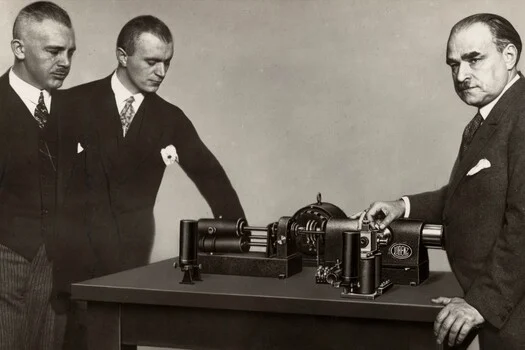
In October 1906, a portrait of the German Crown Prince embarked on an unprecedented journey from Munich, traversing approximately 1,800 kilometers of telegraph line not as a physical object, but as a flickering electric current, ultimately materializing at its destination as a perfectly recognizable photograph. No train, no courier, no envelope, and no pre-shipped negative for darkroom development were involved. Remarkably, this widely celebrated feat was not the first instance of such a transmission; it was, in fact, an encore. Two years prior, the same inventor’s equipment had already facilitated the quiet passage of a photograph between Munich and Nuremberg. The world, it seemed, merely needed to witness an image survive the wire-length of an entire country before fully grasping the revolutionary potential. This is the intricate story of Arthur Korn, the visionary who dedicated years to perfecting the art of teaching a wire to perceive and transmit the nuanced spectrum of grays, the ingenious and patient machinery that accomplished this marvel, and the foundational images that first made this extraordinary trip.
The Era of Telegraphy: A World Rearranged, But Visually Limited
By the dawn of the 20th century, the telegraph was no longer a novelty but an established pillar of global communication. For over five decades, telegraph operators had been tapping out messages across continents and beneath oceans, fundamentally altering the pace of information exchange. Words, once bound by the speed of physical transport, could now outrun trains, transforming commerce, diplomacy, and news reporting. The telegraph, however, excelled at one specific task: translating information into a binary stream of on/off pulses, long or short, which Morse code ingeniously compressed into linguistic data.
A photograph, with its inherent complexity, presented a formidable challenge to this established paradigm. A human face, a landscape, or a news event captured on film is not a collection of discrete dots and dashes. Instead, it is a continuous field of tone – black seamlessly transitioning into charcoal, then through a hundred gradations of gray, finally resolving into paper white. The critical information within a photograph resides precisely in these subtle tonal shifts. To transmit such an image down a wire necessitated answering a question that had eluded engineers for decades: how does one convert continuous light and shadow into an electrical signal, and subsequently, how does one faithfully reconstruct that image from the signal without significant loss of detail or fidelity?
The eventual solution, when it arrived, comprised two interdependent halves. The first was scanning. Given the impossibility of pushing an entire picture down a single wire simultaneously, the image had to be deconstructed into a sequential stream of data. This involved reading the image systematically, much like reading a page of text, one narrow line at a time, meticulously sampling its brightness at regular intervals. The second half was conversion. This required a device capable of "feeling" light in an analogous way a microphone "feels" sound – a material or mechanism whose electrical properties would vary directly in response to changes in light intensity. A bright patch on the photograph would thus leave a distinct electrical mark compared to a dark patch. When both these processes were synchronized perfectly at both the sending and receiving ends, a picture could effectively travel as a "river of values," to be meticulously "poured back" into a recognizable image at a distant location. Every machine developed in this quest represented a unique attempt to master these two fundamental challenges.
Early Forays: Mechanical Telegraphy and the Quest for Image Transmission
The dream of transmitting images over distance predates even the widespread adoption of photography in newsrooms. As early as 1843, Alexander Bain, a Scottish clockmaker and inventor, patented what he termed an "electric printing telegraph." This groundbreaking device already contained a crucial conceptual element: scanning. Bain’s apparatus featured a stylus suspended from a swinging pendulum, designed to sweep line by line across a prepared pattern of conducting and insulating material, where metal contacts represented the marks of a message. A precisely matched pendulum at the receiving end, maintained in perfect synchronicity by synchronized clocks, would redraw each contact onto chemically treated paper. This methodical "sweep, step down, sweep again" constituted the first conceptualization of scanning, developed decades before its application to photographic transmission.
While Bain’s machine, despite its ingenuity, never achieved widespread commercial success, its electrochemical recording method directly influenced subsequent inventions. The English physicist Frederick Bakewell presented a refined version, his "image telegraph," at the seminal Great Exhibition in London in 1851. Bakewell ingeniously replaced Bain’s pendulums with synchronized rotating cylinders, a more robust and elegant mechanism that would become a standard feature in most later image transmission devices. The concept then found its first true commercial application through the efforts of Italian physicist Giovanni Caselli. His "pantelegraph," a towering contraption centered around a two-meter pendulum, inaugurated a commercial line between Paris and Lyon in 1865 under the patronage of Emperor Napoleon III. This service later extended to Marseille in 1867, annually transmitting thousands of messages, primarily handwritten documents and line drawings.
The lineage of these mechanical picture telegraphs continued to evolve, reaching the very threshold of newsrooms. By the late 1890s, Ernest Hummel, a watchmaker from St. Paul, Minnesota, had deployed his "Telediagraph" in newspaper offices, including the prestigious New York Herald, enabling the wiring of pictures between American cities years before Korn’s definitive breakthrough. However, Hummel’s machine, like its predecessors, operated under significant constraints. Each picture first required manual preparation as a conductive original, meticulously copied in shellac onto metal foil, before the telegraph wire could interpret it. A photograph might inspire the image on the foil, but the photograph itself never directly traversed the wire.
An American inventor, Noah Steiner Amstutz of Ohio, came even closer to direct photographic transmission in the 1890s with his "electro-artograph." This machine was specifically designed for sending photographs by telegraph, and in one sense, it succeeded: the received image genuinely originated as a photograph. Amstutz’s clever "trick" involved a preliminary conversion: the photograph was first remade as a physical relief, its continuous tones translated into varying physical depths. A stylus, tracing the contours of this sculpted surface, could then translate high and low points into strong and weak electrical currents. Yet, even here, the wire never directly engaged with the photograph itself, only with its sculpted proxy. Every image paid for its transmission with this laborious preparatory step.
This fundamental limitation was shared by all these pioneering machines, from Bain’s pendulums to Hummel’s conductive copies and Amstutz’s reliefs. None could "read" a photograph in its native state. Caselli’s pantelegraph, for instance, required messages or sketches to be drawn on metal foil using a special non-conducting ink. The stylus would then detect the difference between bare metal (conductive) and inked metal (non-conductive), effectively an on/off signal. This worked perfectly for handwriting and line drawings, which are inherently binary (pure black on white). It faltered completely with a photograph, which possesses no discrete inked lines to trace. Even Amstutz’s ingenious reliefs merely bypassed this problem by transforming the image into a physical surface a needle could "feel." These were machines that read by touch, and for a photograph to travel down their wires, it had to be painstakingly rebuilt into something tangible: inked foil, shellac, or a sculpted relief. The true barrier was the inability to read the photograph itself, with nothing but light mediating between the image and the machine. Continuous tone, read directly, remained the insurmountable wall.
The Photoconductive Revelation: Selenium Learns to See Gray
The seemingly insurmountable "wall" of continuous tone finally crumbled thanks to an unassuming element that most people have never consciously encountered: selenium. In 1873, Willoughby Smith, an English telegraph engineer, was conducting routine tests on materials for underwater cables, specifically utilizing rods of selenium for their characteristically high electrical resistance. An assistant, Joseph May, observed a peculiar phenomenon: the electrical resistance readings varied significantly depending on whether light was falling upon the selenium. Smith, intrigued, pursued this anomaly, and the results were unequivocal and, at the time, utterly baffling. Selenium’s electrical resistance demonstrably decreased when exposed to light. In shade, current struggled to pass through; bathed in light, current flowed more freely. Smith promptly reported this groundbreaking discovery in the journal Nature that February.
This was the missing piece of the puzzle. Selenium was a substance that "felt" light and responded with a measurable electrical change – precisely the converter that the entire problem of photographic transmission demanded. The implications were immediately apparent to certain visionary minds. If a bright area of a photograph caused selenium to pass more current, and a dark area caused it to pass less, then a strip of selenium moved across an image, or an image moved across it, would generate an electrical current that would rise and fall in perfect synchronicity with the picture’s inherent light and shade. Scanning, as a concept, had existed since Bain’s time. Now, there was finally a practical means to scan with.
Shelford Bidwell, an English physicist, was among the first to successfully integrate these two concepts into a working demonstration. In 1881, he presented a lecture at the Royal Institution, showcasing a "scanning phototelegraph." This apparatus featured a selenium cell mounted inside a rotating cylinder with a pinhole, which slowly traversed a brightly lit image. Simultaneously, a receiving cylinder meticulously rebuilt the picture in step. The critical caveat, as Bidwell himself acknowledged, was that his sending and receiving cylinders were mounted on the same shaft. This arrangement deliberately sidestepped the then-unsolved problem of maintaining precise synchronization between two machines located in different cities. Thus, Bidwell’s demonstration was a crucial proof of principle, not a working transmission system for distant stations. He successfully reproduced silhouettes and simple outlines. While his apparatus was never refined for commercial deployment and the original resides in the Science Museum in London, he had publicly validated the core principle. The far more arduous task that remained was transmitting not a mere silhouette, but a genuine photograph with all its delicate middle grays intact, over a significant distance, with enough reliability to be commercially viable.
Arthur Korn and the Birth of the Bildtelegraph
The individual who ultimately achieved this monumental feat was Arthur Korn, a German physicist born in Breslau in 1870. Working in Munich during the nascent years of the 20th century, Korn engineered the machine that this entire historical narrative had been building towards, bestowing upon it the straightforward German name: the Bildtelegraph, or "picture telegraph." Where his predecessors were content with copying marks, Korn was driven by the ambition to transmit an actual photograph, complete with its continuous tones. By approximately 1904, he had succeeded. Those initial transmissions, though lacking the dramatic flair of later public demonstrations, represent the quiet, definitive answer to the question posed by this article’s title. Machines had wired pictures before, even pictures that originated as photographs, but always through a prepared intermediary: a tracing, a conductive copy, or a sculpted relief. The very first time a photograph itself made the journey, its grays directly interpreted by light, it was Korn’s machine that sent it: a portrait of Bavaria’s Prince Regent Luitpold, transmitted from Munich to Nuremberg in 1904 and subsequently published in the Illustrierte Zeitung the following year.
Korn’s machine, though complex, is conceptually straightforward to visualize, transforming an abstract idea into a tangible process. He meticulously wrapped a photographic transparency around a glass drum. This drum was then set to spin rapidly within a cylinder that featured a single, precisely engineered small opening. A bright, steady lamp shone through this opening. As the drum rotated and simultaneously advanced slowly along its axis, a fine point of light meticulously traveled across every part of the image in a tight helical path. This light passed through the photographic film, emerging on the other side dimmed proportionally by whatever shade of gray it had just traversed. A prism then expertly steered this modulated light beam onto a selenium cell. A bright spot on the original photograph yielded more current; a dark spot, less current. The photograph had been successfully transformed into a fluctuating electrical signal, a signal that could now journey wherever a wire could reach.
Reconstructing the image at the receiving end required a second, equally sophisticated apparatus operating in perfect lockstep. At the distant station, another drum, meticulously synchronized, rotated at precisely the same speed, carrying a sheet of unexposed photographic film in a darkened enclosure. The incoming electrical current from the sending station was routed through a string galvanometer – a delicate wire suspended in a magnetic field. The movement of this wire, responsive to the fluctuating current, acted as a precise light valve, modulating the beam from a local Nernst lamp onto the receiving film. Consequently, the receiving film was exposed brightly where the original had been bright, and faintly where it had been dark. Developing this film revealed the photograph, meticulously rebuilt line by line, a portrait meticulously reconstructed from a continuous stream of analog values that were never explicitly written down as numbers. The entire efficacy of this "trick" resided in absolute synchronization. Even a minute drift between the two drums would result in a smeared, unrecognizable image. A substantial portion of Korn’s arduous labor was dedicated to perfecting the mechanisms for maintaining this marriage of machines across hundreds of miles.
Selenium, for all its revolutionary potential, possessed a maddening inherent flaw: it reacted to light slowly. This sluggishness meant it lagged behind rapid changes in light intensity, causing a bright detail immediately followed by a dark one to "smear" together, blurring precisely the fine tonal edges that define a recognizable face. Korn battled this inherent sluggishness on multiple fronts, tirelessly refining the selenium cell itself, employing a powerful Nernst lamp to drive the scanning point, and meticulously tuning the entire apparatus to ensure the electrical current could faithfully keep pace with the intricate details of the picture. His early results were often muddy and indistinct, but each progressively cleaner transmission he coaxed from the system served as a powerful testament to the idea’s not just possibility, but its practical usability.
The process was undeniably slow and temperamental, but it worked. Korn relentlessly pushed the boundaries of distance. Early attempts produced blurred images after transmission times of twenty minutes. He systematically reduced this to approximately six minutes for a picture sent across a thousand miles of line. The crowning achievement, the demonstration that opened this story, occurred in October 1906: the portrait of the Crown Prince, pushed through some 1,800 kilometers of circuit. This was achieved by looping the line between Munich and Nuremberg back on itself and deliberately loading it with resistance, simulating the electrical equivalent of crossing the entire German nation. While the first photograph had indeed made the Munich-Nuremberg run two years prior, this 1906 transmission solidified the undeniable reality of picture telegraphy. A photograph, a genuine photograph, had traversed the electrical equivalent of a country’s breadth as an electrical current and reappeared, perfectly intact, as itself.
Beyond the Lab: A Photograph That Could Chase a Man
What transformed Korn’s remarkable invention from a mere laboratory marvel into a globally significant news story was the dawning realization that a wired photograph could accomplish tasks utterly beyond the capabilities of a traditional telegram. In 1907, Korn successfully established a functioning commercial service, initiating regular Munich-to-Berlin trials that April, followed by commercially organized installations in major newspaper offices in Berlin, Paris, and across the Channel in London by November. Newspapers were captivated by the prospect, as were law enforcement agencies, for the first time, a human face could travel almost as swiftly as a name.
A detailed account published in The New York Times in February 1907 vividly outlined the system’s burgeoning capabilities. It reported that portraits of King Edward VII and Queen Alexandra, photographed in Paris, were successfully received in London within a mere two hours. The Kaiser’s likeness traveled between Munich and Paris. And in a detail that sent a ripple of excitement through editorial offices, the paper described how photographs of a wanted bank embezzler, captured from three different angles, were wired from Stuttgart to London in a matter of hours. This enabled police forces abroad to immediately recognize the fugitive’s face. While the exact narrative details of this particular manhunt may vary slightly across historical accounts, serving as a popular illustrative anecdote of the era rather than a strict court record, the underlying capability it dramatized was undeniably real. For the first time, a photograph had become a practical tool that could be dispatched ahead of a fugitive, dramatically enhancing the speed and effectiveness of international law enforcement.
Korn himself was not shy about prognosticating the future trajectory of his innovation. The same New York Times account relayed his profound conviction that the leap from transmitting still pictures to transmitting moving images was a small one, asserting that "television," or "seeing by telegraph," was only a year or two away. He was, as many inventors in the throes of a working prototype tend to be, wildly optimistic regarding the timeline. Practical, widespread television was still decades away. However, his directional foresight was absolutely prescient. He had already accomplished the genuinely arduous part: proving conclusively that an image, any image, could be meticulously dismantled into a transmittable signal and faithfully reconstructed elsewhere.
From Bildtelegraph to Wire Services: The Industrialization of Image Transmission
Once the fundamental principle of image transmission was irrefutable, the machines themselves began to multiply and rapidly improve. In France, the inventive Édouard Belin made significant strides in making picture transmission portable. Interestingly, his early apparatus, first demonstrated in 1907, showcased how persistent older ideas could be: it read a specially prepared relief of the photograph with a stylus, a refinement of Amstutz’s earlier approach. A portable version followed by 1913. It wasn’t until around 1927 that the "Belinograph" finally adopted the photoelectric scanning method that Korn had pioneered. Along the way, it shrunk into a suitcase-sized field unit, compact enough to be transported directly to a news event rather than requiring the news event to be brought to it. The "Belino" quickly became a ubiquitous newsroom shorthand across Europe for any wired picture.
A distinct and even stranger branch of image transmission emerged in 1920. Two engineers, Harry Bartholomew and Maynard McFarlane, devised a system specifically designed to send pictures across the Atlantic via submarine cable. Instead of transmitting a smoothly varying, analog current as Korn did, they ingeniously chopped each picture into a grid of discrete cells. Each cell was then coded as one of a handful of predefined gray levels, which were then punched onto telegraph tape. Their "Bartlane" system, a portmanteau of their names, successfully transmitted its first pictures across the Atlantic in 1921. The transatlantic cable leg ran from London to Halifax, Nova Scotia, with the images then continuing on to New York through the terrestrial telegraph network. This process dramatically reduced transmission time from the week a physical print required aboard a ship to under three hours. Initially, the Bartlane system operated with five shades of gray, later expanding to fifteen. Because it fundamentally converted an image into discrete, coded values, historians of technology frequently cite Bartlane as the very first digitally coded picture-transmission system, a full generation before anyone even conceived of "digital" in the modern computer sense. The first truly digital image in the context of modern computing would await Russell Kirsch’s scanner at the National Bureau of Standards in 1957; Bartlane was digital coding without a computer at either end.
From these pioneering efforts, the through-line runs directly into the newspaper industry as we know it. Throughout the 1920s, American telecommunications giants like AT&T and RCA industrialized the idea, successfully transmitting photographs by wire and, increasingly, by radio across the Atlantic. The truly decisive moment for photojournalism, however, arrived on January 1, 1935, when the Associated Press (AP) officially switched on its revolutionary "Wirephoto" network. This system comprised a vast array of leased telephone lines, meticulously wired into specialized scanning machines located in member newsrooms across the country. The very first picture transmitted over this network was perfectly ordinary news: an aerial view of the snowy spot on Pine Mountain, near Morehouseville, New York, where a small airliner had been forced down three days earlier on December 28, 1934. Miraculously, no one was hurt. The image, captured on December 31, 1934, reached dozens of newspapers across the nation within half a day. A photograph taken in remote, snowy backcountry could now appear on breakfast tables across the country before the story itself had gone cold. This was Arthur Korn’s Bildtelegraph, fully grown, refined, and deployed for the demanding realities of global news dissemination.
The Enduring Legacy: How a Photograph Travels Today
Picking up the narrative where the Wirephoto network leaves off, the modern version of image transmission appears nothing short of magic by comparison, yet at its core, it harnesses the same fundamental principles. A photographer today might capture a wedding, a protest, or a ballgame using a full-frame mirrorless camera like the Sony a7 V, with the high-resolution file landing on a CFexpress Type A card. Within minutes, that image can be on an editor’s screen an ocean away, whisked across continents via Wi-Fi or a cellular signal. There are no spinning drums, no sensitive selenium cells, no chemical developing baths at the receiving end. And yet, the underlying "bones" of the process remain remarkably the same.
The camera’s sensor, a two-dimensional grid of millions of pixels, captures a single exposure and instantly converts it into millions of discrete brightness values – no slow, crawling point of light required. The resulting digital file is an incredibly long, ordered stream of these numerical values. The vast global network of the internet, via fiber optics and radio waves, carries this stream of data. Finally, a screen somewhere – be it a laptop, a tablet, or a smartphone – meticulously "pours" these values back into a coherent, recognizable image. The core concept remains: break the picture into manageable pieces, move those pieces, and then rebuild the picture. Korn engaged in the same fundamental bargain, albeit in a different currency. He had no numbers at all, just a single point of light creeping through the image in a tight helix, generating a current that rose and fell in smooth, analog sympathy. His "screen" was a sheet of film on a drum, turning in the dark. While the specific representation has undergone a complete transformation – from wavering analog current then, to precise coded bits now – the foundational idea of dismantling an image into a stream that can travel and be honestly rebuilt has not changed since that initial breakthrough in Munich.
The seemingly vast distance between 1906 and the present day is not truly a chasm of principle. It is primarily a distance of staggering speed, unparalleled convenience, and miniaturization. A photographer in Arthur Korn’s era would watch, awestruck, as a face slowly materialized line by painstaking line from a wire over six long minutes, understanding it as an undeniable miracle. A contemporary photographer, by contrast, fires off a burst of high-resolution images and might grumble impatiently if the upload takes a mere thirty seconds. The miracle, as miracles often do once they become commonplace and work unfailingly, has simply grown quiet. But the next time an image instantly appears on your phone from the other side of the planet, remember that you are witnessing the direct descendant, the great-grandchild, of a humble spinning glass drum in Munich, a strip of responsive selenium, and the tenacious spirit of a physicist who steadfastly refused to believe that gray was, after all, an insurmountable wall.
