
 By Nila Kartika Wati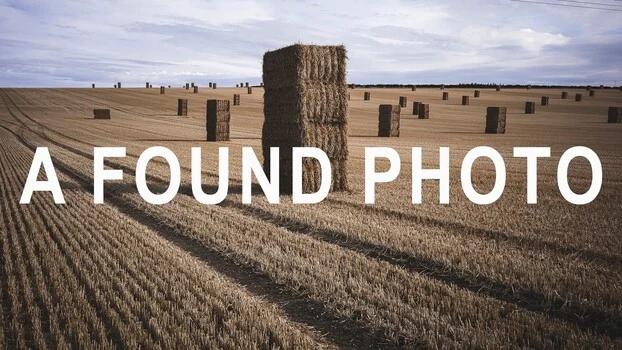
In an era where digital imaging has democratized access to photography, fostering both unprecedented creativity and a pervasive homogenization of visual content, the approach pioneered by veteran photographer Craig Roberts offers a compelling counter-narrative. While the prevailing paradigm for many photographers involves meticulous planning—scouting locations, timing light, and pre-visualizing the exact viewpoint—Roberts advocates for an entirely different methodology: one that begins with a deliberate void of preconception, a departure from the home with no fixed agenda regarding the subject matter. This radical shift, explored in detail on the e6 Vlogs channel, marks Roberts’ evolution from a highly structured, commercially driven practice to a fluid, intuitive engagement with the overlooked and the everyday.
A Career Defined by Precision: The Early Years (1997-2014)
Roberts’ professional journey commenced in 1997, a period when the commercial photography landscape was markedly different from today. His work during this time primarily revolved around travel and landscape photography, a genre traditionally demanding rigorous preparation. This involved an exhaustive process of researching maps, meticulously scouting potential viewpoints, and assiduously checking weather patterns to ensure optimal conditions for capturing the "perfect shot." The objective was clear and commercially driven: to produce images suitable for sale to magazines, calendars, and photo libraries. This model, which Roberts himself describes as the "typical approach," was undeniably effective, yielding a livelihood from carefully crafted, aesthetically pleasing images.
The late 1990s and early 2000s represented a golden age for such commercial landscape photography. Print publications still commanded significant market share, and stock photography agencies served as vital conduits between photographers and a global clientele hungry for high-quality, reproducible imagery. Photographers like Roberts were, in essence, visual cartographers, tasked with rendering the world’s iconic vistas in a way that met specific client briefs and broad aesthetic expectations. This often meant chasing "honeypot views"—locations already famous for their beauty, whose photographic representation was almost codified. The demand was for predictable beauty, grand vistas, and universally appealing scenes that could sell widely. Roberts’ mastery of these fundamentals—composition, light, exposure, and the technical precision required by large format cameras—was the bedrock of his success during this period.
The Catalyst for Change: Technology and Creative Dissatisfaction
However, by 2014, Roberts found himself at a creative crossroads. The very success of his traditional approach began to feel creatively restrictive. He grew increasingly disinclined to photograph the "honeypot views" that countless others had already captured, seeking a more personal and less comparative form of expression. This internal shift coincided with, and was partly catalyzed by, significant advancements in photographic technology.
A pivotal factor in Roberts’ transformation was the evolution of camera gear, specifically the dramatic improvements in image stabilization (IS) technology. Historically, Roberts relied on larger format cameras, often medium format, which inherently demanded the use of a tripod due to their size, weight, and the necessity for precise, often longer, exposures to achieve optimal image quality. Handholding such equipment was rarely a viable option, cementing a static, considered approach to composition. Image stabilization, both optical (OIS) within lenses and in-body (IBIS) within camera bodies, began to offer unprecedented freedom. By compensating for camera shake, IS systems allowed photographers to handhold cameras at significantly slower shutter speeds than previously possible, extending the usable range by several stops. This technological leap meant that the rigid requirement for a tripod diminished, especially for photographers adopting smaller, more agile camera systems.
Roberts describes the consequence of abandoning the tripod as a move towards a "less static and more fluid" photographic practice. This newfound mobility freed him from the constraints of fixed positions, allowing him to explore subjects that other photographers, still tethered to traditional methods, often overlooked. He terms this new aesthetic "less pretty, more gritty"—a conscious pivot away from idealized beauty towards a raw, often industrial, or mundane reality. His early forays into this new style began with subjects like wind turbines, an embodiment of modern industrial landscapes that are rarely celebrated in the same vein as natural wonders. These subjects were unplanned, discovered in the moment, reflecting a true improvisation.
The "Found Photo" Philosophy: A New Paradigm
Roberts’ current methodology centers around the concept of the "found photo," a term he intentionally links to the literary practice of the "found poem." A found poem is crafted from existing non-poetic sources—such as news articles, social media comments, or advertising copy—recontextualizing and re-editing them to create a new artistic statement. Comedian Dave Gorman’s work is cited as a modern example of this principle in action, applying a similar recontextualization to everyday information.
However, Roberts highlights a crucial distinction: while a found poem borrows its raw material, a found photo "hands you nothing." The photographer does not start with an existing image or even a predetermined subject. Instead, they must supply everything: the vision, the technical skill, an open and receptive mind, and the acute appreciation for light, color, shape, and form in subjects that most people would simply walk past. It is an act of creation from an apparent void, transforming the mundane into the meaningful through the photographer’s unique lens. This process stands in stark contrast to the traditional landscape photography he once practiced, where the "found" element was often the pre-existing beauty of a renowned location.
The Foundation of Freedom: Discipline as a Prerequisite for Improvisation
A profound insight embedded within Roberts’ journey is the notion that early career constraints are instrumental in building the instincts and foundational skills that later enable true creative freedom. For years, he meticulously perfected the fundamentals of photography—mastering light, composition, exposure, and understanding client expectations—on subjects with clear, established rules. This disciplined period, focused on delivering precise, expected outcomes, instilled in him an unparalleled technical proficiency and an intuitive understanding of visual language.
This mastery of the "boring" work, as he might term it, is precisely what allows him to improvise now. He can walk out with no preconceived idea, yet possess the intrinsic ability to slow down, observe, and compose a scene that nobody else has bothered to photograph. This isn’t accidental abandonment of rules but a deliberate, informed choice made possible by having internalized those rules so completely. A "found photo," born from this process, carries no comparisons, no preconceptions, and therefore, the resulting image belongs solely and uniquely to the photographer. It is a pure expression of individual vision, untainted by the collective visual noise of social media or the commercial dictates of the past.
Broader Implications: A Movement Towards Authenticity
Roberts’ philosophy tracks with a broader, significant movement within the photographic community, particularly in the wake of the digital revolution and the omnipresence of social media. The phenomenon of "overshot locations" – iconic landmarks endlessly photographed and shared, often with diminishing returns in terms of originality – has led many photographers to seek new avenues for expression. There is a growing inclination towards personal projects, exploring overlooked subjects, and developing a distinctive photographic voice rather than chasing trends or replicating popular aesthetics.
- Decline of Traditional Markets: The landscape of commercial photography has undergone a dramatic transformation. The traditional print magazine industry has shrunk significantly, and the once-dominant photo libraries and stock agencies have faced unprecedented challenges from microstock platforms and the sheer volume of free or low-cost imagery available online. This shift has necessitated photographers to find new ways to differentiate their work and generate income, pushing them towards fine art sales, workshops, and unique commissions.
- Social Media’s Double-Edged Sword: While platforms like Instagram have democratized photography, they have also created a powerful feedback loop that can stifle originality. The pressure to conform to popular aesthetics to gain likes and followers often leads to a proliferation of visually similar content. Roberts’ approach directly challenges this conformity, encouraging photographers to look inward and around them, rather than outward at what is trending.
- The Rise of the "Everyday Sublime": The movement towards "found photos" and overlooked subjects reflects a broader cultural shift towards valuing authenticity and the beauty in the mundane. This aligns with contemporary art trends that explore the ordinary and elevate it through thoughtful observation and artistic interpretation. Photographers are increasingly seeking to tell personal stories or evoke universal feelings through localized, unique perspectives.
Expert Perspectives and Industry Resonance
Photography educators and curators largely resonate with Roberts’ perspective. Dr. Eleanor Vance, a prominent photography historian, notes, "Roberts exemplifies a crucial pivot in contemporary photography. The digital age, while making photography accessible, also created a vast echo chamber. To break free, artists must often return to fundamental observational skills, moving beyond spectacle to discover the extraordinary in the ordinary. This is not a rejection of technical mastery but its ultimate liberation."
Many working photographers, particularly those navigating the saturated digital landscape, find Roberts’ call to move beyond the well-trodden path deeply inspiring. "It’s a re-evaluation of what constitutes a ‘successful’ photograph," comments emerging street photographer, Anya Sharma. "Is it validation from a crowd, or is it the profound satisfaction of creating something uniquely yours, something that speaks to your personal vision?" This re-evaluation often leads to a more sustainable and fulfilling creative practice.
Roberts’ Workshops: Cultivating the Unseen Eye
Roberts actively shares his philosophy through workshops built around this exact process. Unlike traditional workshops that often lead participants to picturesque locations and guide them through settings, Roberts encourages a more immersive and independent approach. Participants are challenged to find the image themselves, to cultivate their own "unseen eye," with Roberts providing guidance on working through settings and composition in the field as they encounter their unique subjects. This pedagogical method reinforces the idea that true photographic insight comes from within, rather than from external instruction on a pre-determined scene.
Conclusion: The Enduring Value of Personal Vision
Craig Roberts’ evolution from a highly structured, commercially focused photographer to an advocate for the "found photo" represents more than just a personal creative shift; it embodies a significant philosophical reorientation within the broader photographic world. It is a powerful testament to the idea that mastering the fundamentals, even the "boring" and constrained work, ultimately grants the freedom to abandon conventional rules with purpose, not by accident. In a world saturated with visually similar content, the "found photo" offers a potent antidote, providing an unparalleled sense of ownership and personal expression. As Roberts demonstrates, the true success of a photograph often lies not in its adherence to popular aesthetics or commercial viability, but in its unique ability to capture a moment, a detail, or an emotion that belongs solely to the vision of its creator. For those seeking to break free from the checklist of famous viewpoints and the homogenizing pull of social media, Roberts’ journey offers a compelling blueprint for discovering a genuinely individual photographic voice. Readers are encouraged to watch the e6 Vlogs video for Roberts’ detailed insights into how he determines the success of a "found photo."
