
 By admin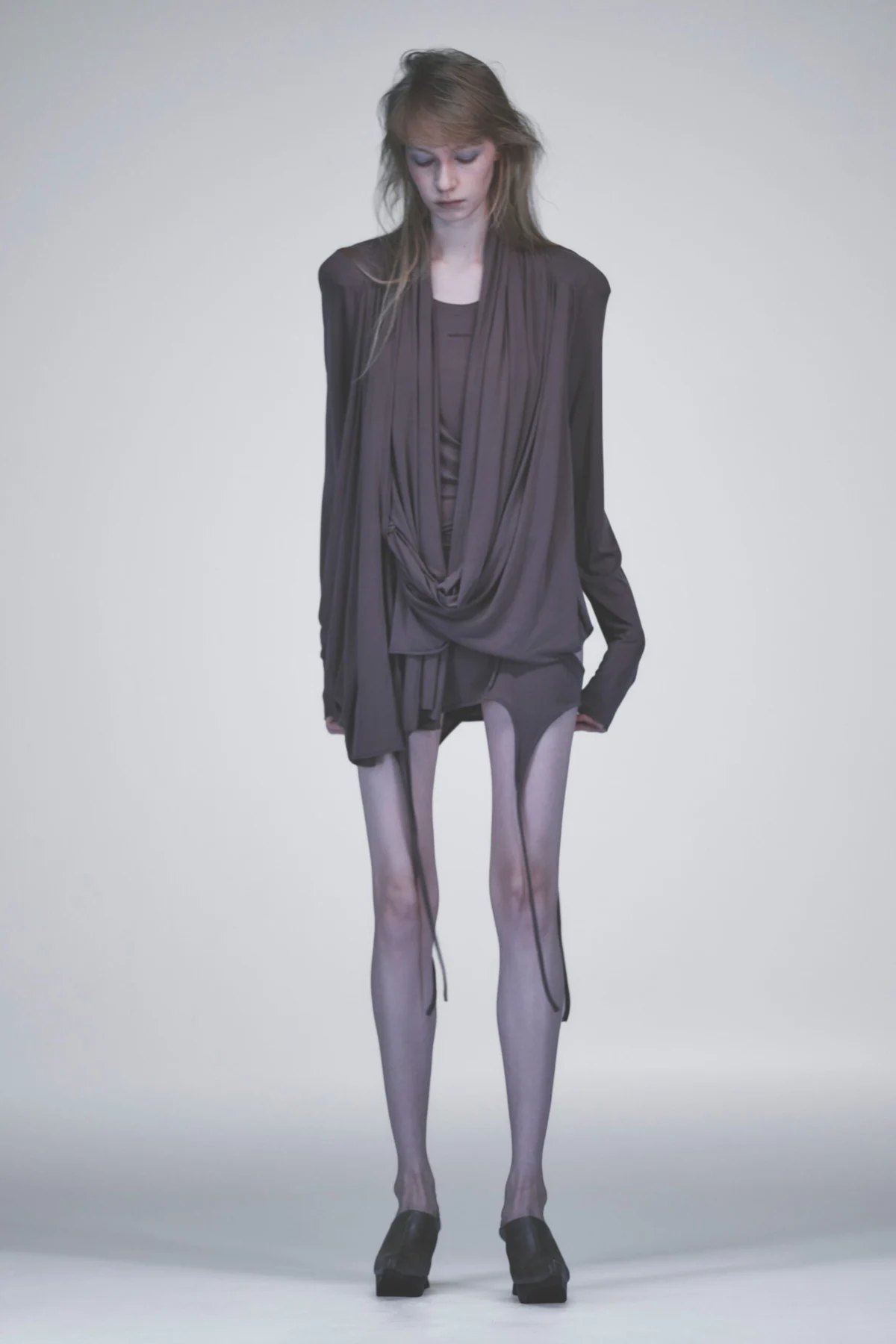
The Mukcyen brand, under the visionary direction of Yuka Kimura, presented its sixth collection, aptly titled "Low Energy," at the Tokyo Spring 2027 fashion week, offering a profound commentary on the pervasive psychological toll of modern industrialization and the ceaseless hum of digital noise. This collection marks a pivotal moment for the burgeoning brand, solidifying its reputation for crafting garments that transcend mere aesthetics, delving into the emotional and psychological landscapes of contemporary existence. Kimura’s latest offering serves as both a reflection and a proposed solution to the overwhelming sensory inputs of the 21st century, translating abstract feelings of exhaustion and the need for protection into a tangible, wearable form.
The Genesis of "Low Energy": A Cinematic and Societal Mirror
Yuka Kimura’s inspiration for the "Low Energy" collection stems directly from Michelangelo Antonioni’s seminal 1964 film, Red Desert. This cinematic masterpiece, renowned for its exploration of alienation, environmental decay, and the psychological fragility of individuals navigating an industrial wasteland, resonated deeply with Kimura. Antonioni’s protagonist, Giuliana, played by Monica Vitti, struggles with profound unease and mental distress amidst the stark, pollution-ridden landscapes of Ravenna, Italy. Her internal turmoil is often mirrored by the bleak, monochromatic industrial backdrop, symbolizing humanity’s disconnect from nature and itself in an increasingly mechanized world.
Kimura adeptly draws a parallel between the mid-20th century industrial grind depicted in Red Desert and our present reality, where the clatter of machinery has been largely supplanted by the relentless, invisible drone of digital noise. "A messy, overwhelming variety of inputs," Kimura articulated, describing the deluge of information, notifications, and virtual interactions that define modern life. This constant digital bombardment, she observes, has led to a collective state of heightened sensitivity and, ultimately, profound exhaustion among individuals. "People are becoming increasingly sensitive to this kind of noise, or simply exhausted by it," she stated, adding, "I created this collection to express that feeling." This conceptual framework provides a rich foundation for the collection’s design philosophy, positioning the garments not just as fashion statements, but as a form of psychological defense.
Mukcyen’s Evolution: A Chronology of Artistic Expression
Mukcyen, founded by Yuka Kimura, has rapidly ascended within the avant-garde segment of the Tokyo fashion scene since its debut. While specific dates for Mukcyen’s initial launch are often closely guarded within the designer’s narrative, the brand’s rapid progression to its sixth season signifies a consistent output of innovative and conceptually driven collections. Kimura, a striking 28-year-old known for her distinctive aesthetic – featuring white hair, white eyebrows, and long nails often painted ash gray – brings a deeply personal and introspective approach to her design process. Her earlier collections, though distinct, consistently hinted at a burgeoning interest in challenging conventional beauty standards, exploring the complexities of human vulnerability, and creating garments that serve a deeper, often psychological, purpose beyond mere adornment.
Previous seasons often explored themes of urban decay, the ephemeral nature of beauty, and the interplay between strength and fragility, frequently utilizing deconstructed forms, unconventional layering, and a muted, often somber color palette. Each collection has built upon the last, progressively refining Mukcyen’s signature aesthetic: a blend of raw, almost post-apocalyptic sensuality with meticulously crafted silhouettes. The brand has cultivated a loyal following among those who seek clothing that speaks to a more profound identity, resonating with a demographic that values intellectual engagement and artistic expression in their wardrobe choices. The "Low Energy" collection represents a mature evolution of these foundational themes, directly confronting the contemporary malaise of digital fatigue with a sartorial response that is both elegant and fiercely protective.
Deconstructing "Low Energy": Garments as Psychological Armor
The "Low Energy" collection is characterized by its strategic use of form, fabric, and detail to embody the themes of introspection, protection, and a quiet defiance against overwhelming external stimuli. A prominent motif throughout the collection is the hood, which sprang organically from the shoulders of tailored jackets or draped elegantly, Alaïa-style, from bodycon tops. These hoods are not merely utilitarian; they serve as symbolic cocoons, offering a literal and metaphorical retreat. Kimura’s candid remark, "Good for when you don’t want to talk to anyone," encapsulates the protective ethos, suggesting a desire for personal space and a respite from constant social engagement. This design element speaks volumes about the collection’s core message: providing a sartorial shield in a world demanding constant openness.
Kimura’s meticulous attention to the female form is evident in her approach to silhouettes and fabrics. She emphasizes creating pieces that "flatter the body," considering "which areas women might want to hide or reveal." This nuanced understanding of the body’s topography and its relationship to clothing forms "the core of what I do." A significant innovation within the collection is her concept of "second-skin" pieces. These are tight, sheer garments designed to envelop the form, creating a sensation akin to a body "tangled in bedsheets." Far from being merely provocative, these pieces are intended to foster a deep sense of self-awareness. "The idea is that by having the fabric cling to the skin rather than hanging loosely, it creates a sense of facing oneself," Kimura explained. This intimate embrace of the body, rather than obscuring it, is meant to encourage introspection and a powerful connection to one’s own physical and emotional being, a quiet assertion of self in a noisy world.
The collection further explores asymmetry and deconstruction. Asymmetric corsets and skirts were adorned with disheveled hems of lace, suggesting both vulnerability and a defiant refusal of pristine perfection. The deliberate imperfection of these details mirrors the "messy, overwhelming variety of inputs" that inspired the collection. Sheer black dresses draped fluidly from the throat to the ankles, combining ethereal lightness with a somber elegance. These pieces evoked a spectral beauty, a ghost-like presence that could slip through the modern world unnoticed, protected by its very fluidity.
Fabric choices underscored the collection’s themes. While specific material compositions were not detailed, the prevalence of sheer fabrics suggests a play on transparency and concealment, vulnerability and strength. The use of lace, often frayed or "disheveled," added a tactile dimension of delicate decay. A particularly striking element was the incorporation of scarves covered with newspaper print, tied around the torso with rope. This detail powerfully links the collection back to its intellectual origins: the ceaseless flow of information (newspaper print) and the raw, often binding nature of modern existence (rope). It’s a direct visual metaphor for the digital noise that wraps around us, sometimes suffocating, sometimes defining.
Stylistic Nuances and the Intimidation Factor
The collection’s aesthetic was completed by its distinctive styling. T-shirts with neckbands stretched across the sternum or ingeniously opened in holes to flash a sliver of hip were another bold statement. These seemingly small details created unexpected lines and revealed strategic glimpses of skin, emphasizing the body’s natural architecture while maintaining an overall sense of guardedness. The stretched neckbands could be interpreted as a metaphor for the tension and constriction felt in daily life, while the cut-outs offered a momentary, controlled release.
Footwear played a crucial role in shaping the collection’s assertive posture. Every look was styled with heeled mules that featured elongated toes. These were "not quite spikes," as the article noted, but the cumulative effect was undeniably one of "intimidation." This choice of footwear grounds the "Low Energy" concept in a subtle yet powerful assertion of self. It suggests that while the wearer might be seeking protection or respite, they are far from passive. Instead, they navigate the world with a deliberate, confident stride, projecting an aura of quiet strength and an unwillingness to be easily swayed. The elongated toes add a predatory elegance, a sharp edge to the otherwise introspective garments, signaling that this "low energy" is a deliberate choice, not a weakness.
The Philosophy of Clothing as Transformation
At its core, the "Low Energy" collection champions a philosophy of personal agency and self-empowerment. The idea was to cultivate a feeling of being "attractive and confident, but protected—enjoying your own body but squarely on your own terms." This nuanced perspective challenges the traditional dichotomy of fashion as either purely aesthetic or purely functional. For Kimura, clothing is a transformative tool. "I want the wearer to change a little through the clothes," she affirmed. "Even a small shift in mindset, that’s something only clothing can really do." This statement encapsulates the profound belief that fashion holds the power to influence internal states, to shift perception, and to equip individuals with a psychological advantage.
Mukcyen’s "Low Energy" collection builds upon the "grungy, post-apocalyptic sensuality" that has become a hallmark of Kimura’s brand. It is an aesthetic that acknowledges the imperfections and challenges of the modern world, not by shying away from them, but by integrating them into a coherent and compelling visual language. For the brand’s "steadily growing community," this collection offers not just clothes, but "some armor to help them battle through the days, even when they don’t feel like it." This concept of clothing as "armor" resonates deeply with contemporary anxieties, providing a tangible means for individuals to navigate the complexities of daily life with a renewed sense of self-possession and resilience.
Broader Implications and Industry Resonance
The "Low Energy" collection by Mukcyen at Tokyo Spring 2027 is poised to have significant implications for the broader fashion landscape, particularly within the avant-garde and conceptual design spheres. It underscores a growing trend in fashion to address not just outward appearance, but also the wearer’s inner state and psychological well-being. This shift reflects a deeper cultural conversation about mental health, digital detox, and the search for authenticity in an increasingly superficial world.
Fashion critics are likely to laud Kimura for her intellectual rigor and her ability to translate complex societal anxieties into compelling sartorial narratives. Industry analysts may view Mukcyen as a bellwether for a new wave of designers who are less concerned with transient trends and more focused on creating lasting, meaningful connections with their audience through deeply resonant concepts. The collection’s emphasis on introspection and protection could also influence mainstream trends, leading to a greater incorporation of hooded elements, strategic layering, and fabrics that offer both comfort and a sense of enclosure.
Furthermore, Mukcyen’s approach highlights the increasing importance of narrative and artistic collaboration in fashion. By drawing inspiration from classic cinema like Red Desert, Kimura positions her brand within a rich cultural lineage, elevating fashion beyond commerce to a form of art commentary. This multidisciplinary approach is increasingly valued by discerning consumers who seek depth and intellectual engagement in their purchases.
The Tokyo fashion scene, known for its experimental and boundary-pushing designers, provides an ideal platform for Mukcyen’s continued growth. "Low Energy" solidifies Mukcyen’s position as a leading voice in this creative ecosystem, demonstrating how fashion can serve as a powerful medium for cultural critique and personal empowerment. In an era defined by sensory overload and existential fatigue, Yuka Kimura’s "Low Energy" collection offers not a surrender, but a sophisticated, elegant, and ultimately empowering form of resistance. It is a reminder that even in exhaustion, there is strength, and in quiet contemplation, a profound sense of self can be rediscovered and fiercely protected.
