
 By admin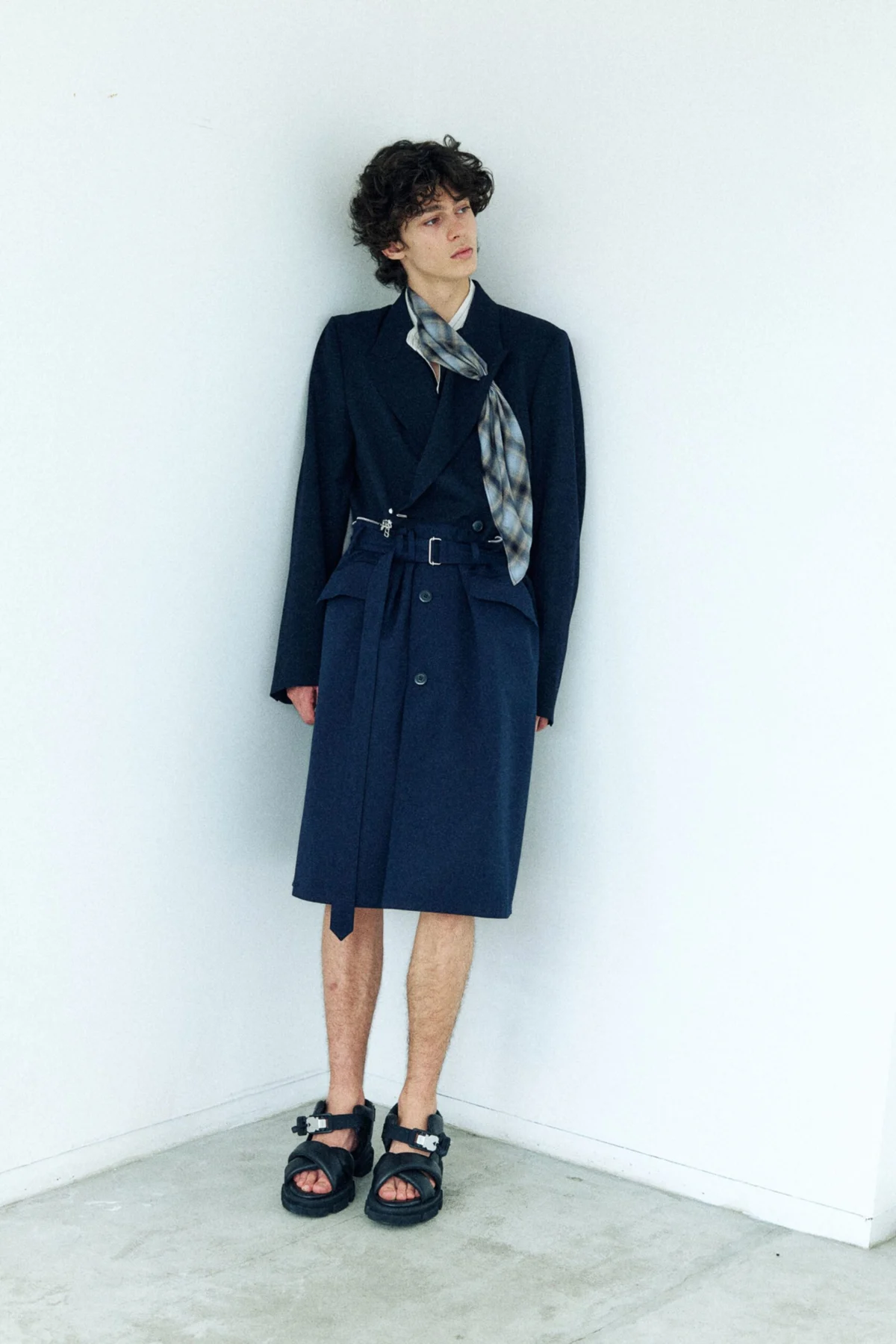
In the intricate lexicon of Japanese fashion, a term frequently employed yet largely unfamiliar in Western discourse is "docking." This concept precisely encapsulates the practice of seamlessly integrating disparate elements from two distinct garments into a singular, cohesive item—a technique that forms the very cornerstone of Tatsuya Tamada’s innovative work with his label, Tamme. Unlike simple layering or patchwork, docking involves a more profound structural fusion, where the identity of the original pieces is both preserved and transformed, resulting in a hybrid garment that defies conventional categorization. Examples range from a utilitarian nylon jacket meticulously joined with a classic cotton shirt to the unexpected synthesis of a sneaker with a loafer, demonstrating a playful yet sophisticated approach to garment construction that challenges established sartorial norms.
The Philosophy of “Docking”: A Japanese Fashion Lexicon
The term "docking" (ドッキング, dokkingu) has gained significant traction within Japanese fashion circles, reflecting a unique design sensibility deeply rooted in the country’s artistic and cultural landscape. While Western fashion often refers to similar processes as deconstruction, reconstruction, hybridisation, or even upcycling, "docking" specifically emphasizes the joining or interlocking of components, creating a new entity that retains echoes of its constituent parts. This method is not merely about combining materials; it is about merging narratives, functionalities, and aesthetic codes. It speaks to a broader cultural appreciation for craftsmanship, innovation, and a nuanced understanding of textile manipulation. The prevalence of docking in Japan can be attributed to a long history of sartorial experimentation, a willingness to push boundaries, and the influence of designers who have consistently challenged traditional garment structures, transforming utilitarian items into avant-garde statements. This technique allows designers to comment on identity, uniformity, and the evolving nature of personal style, offering a visual metaphor for the complexities of modern life.
Tatsuya Tamada’s Journey: From Sacai to Tamme
Tatsuya Tamada’s distinctive approach to design is not without significant lineage. Before establishing Tamme, Tamada honed his craft under the tutelage of one of contemporary fashion’s most influential figures: Chitose Abe, the visionary founder of Sacai. Abe is widely recognized as a preeminent practitioner of what could be considered the global equivalent of "docking," a veritable queen of hybrid garment construction. Her signature style involves the masterful deconstruction and reassembly of classic silhouettes, blending disparate fabrics and functionalities to create garments that are simultaneously familiar and revolutionary. Sacai’s groundbreaking work, which often sees denim jackets merging with trench coats or knitwear interwoven with chiffon, profoundly impacted the fashion landscape, popularizing the aesthetic of sophisticated hybridity. Tamada’s tenure at Sacai undoubtedly provided him with an invaluable education in this intricate art form, allowing him to internalize the principles of deconstruction, material juxtaposition, and the creation of unexpected harmonies. This formative experience laid the groundwork for his own label, Tamme, where he now translates these lessons through his unique lens, forging a distinct identity while honoring the legacy of his mentor.
The Paternal Muse: Authority and Ambiguity
Since its inception, Tamme has been characterized by a conceptual depth, often drawing from deeply personal narratives. Beginning last season, Tamada embarked on a profound exploration of the image of his own father, a police officer. This paternal inspiration serves as the central pillar of Tamme’s recent collections, providing a rich tapestry of symbolism to weave into his designs. The police uniform, by its very nature, is a powerful emblem of authority, order, and societal structure. It represents a clear demarcation of roles, a visible manifestation of power and discipline. Tamada, however, is not simply replicating these uniforms. Instead, he is dissecting their hallmarks—the rigid lines, the specific fabrics, the functional details, the implied posture—and fusing them into more casual, streetwise pieces. This deliberate juxtaposition blurs the traditional lines between the smart and the scuzzy, the buttoned-up and the blasé, the formal and the informal.
This season, Tamada has delved even deeper into this paternal inspiration, adopting what he describes as a "softer approach to docking." He articulated his design philosophy, stating, "Take the three-panel construction of a jacket, or the standard pairing of a suit jacket and trousers with a dress shirt. I wanted to take those familiar elements and soften the finish." This softening is achieved through nuanced adjustments to silhouettes, a departure from the strictures of traditional uniform design. He rounds out shoulders, adjusts lengths, and reconfigures proportions to intentionally blur "the rigid outlines typical of uniform-style garments." This process transforms the inherent stiffness of authority into something more pliable, more ambiguous, and ultimately, more wearable within a contemporary context. It’s an inquiry into the nature of authority itself—how it is perceived, how it is worn, and how it can be subtly subverted without losing its essence.
Deconstructing Uniformity: A Softer Approach to Design
Tamada’s methodology involves a meticulous deconstruction of the archetypal uniform, followed by its recontextualization through the lens of modern streetwear and elevated casualwear. The structural integrity of a traditional jacket, often built with sharp angles and defined edges, is deliberately softened. Shoulders, typically padded and squared to project an image of strength and formality, are rounded, creating a more relaxed and fluid line. This subtle alteration dramatically changes the garment’s perceived formality, transforming a potentially intimidating silhouette into one that is inviting and adaptable. Similarly, lengths are adjusted—perhaps shortened for a more contemporary, cropped feel, or extended to create an unexpected drape—further disrupting the conventional expectations associated with uniform-inspired attire.
This "softening" technique extends beyond mere aesthetic tweaks; it’s a conceptual endeavor to dismantle the psychological rigidity often associated with uniforms. By softening the finish and blurring the outlines, Tamada invites wearers to reconsider the inherent power dynamics embedded within clothing. The resulting garments retain a hint of their authoritative origins but are infused with an ease and versatility that encourages individual expression rather than strict adherence to a code. It’s an exploration of how authority can be expressed in a more nuanced, less confrontational manner, aligning with a broader cultural shift towards more fluid identities and less rigid dress codes in professional and social settings alike.
Signature Pieces: A Fusion of Form and Function
The collection showcases several compelling examples of Tamada’s innovative docking and softening techniques. A striking duo of grayish-blue button-up shirts, typically symbols of corporate or institutional attire, are ingeniously layered and fused into a single, complex piece. This creates a multi-dimensional garment that offers both visual depth and an intriguing play on conventional shirting. The layering isn’t simply decorative; it integrates the functionality and aesthetic of two separate items into one, challenging the wearer to discern where one shirt ends and the other begins.
Another standout is the khaki sport coat, a staple of smart-casual wear, which undergoes a remarkable mutation into a field jacket. This transformation marries the tailored structure of the sport coat with the utilitarian details and relaxed silhouette of a military-inspired field jacket. The result is a garment that bridges formal and informal domains, suitable for a range of occasions from a semi-formal meeting to an urban expedition. Blazers, traditionally symbols of professional decorum, are re-imagined as hoodies, a fusion that epitomizes the blurring of lines between high fashion and streetwear. This hybrid item maintains the structured front of a blazer while incorporating the comfort and casual appeal of a hooded sweatshirt, creating a truly versatile and contemporary piece.
Furthermore, Tamada elevates the humble sweatpant, cutting it with an elegant drape and flare typically reserved for tailored trousers. This subversion of expectation transforms a loungewear item into a sophisticated piece capable of holding its own in a more formal ensemble, exemplifying the ongoing trend of "athleisure" but with a distinctly elevated, thoughtful execution. Perhaps the most poignant details appear on polo shirts and zip-ups, which feature crest-shaped cutouts on the chest. These voids are designed to appear as though badges of authority—the very symbols of rank and belonging found on a police uniform—have been deliberately torn away. Beneath these symbolic absences, layers of striped shirting are revealed, suggesting a narrative of uncovering, of peeling back the layers of imposed identity to reveal something more personal and perhaps rebellious beneath. This design choice is a powerful metaphor for shedding external expectations and embracing an authentic, layered self.
The Sartorial Palimpsest: Layers of Meaning
The ultimate result of Tamada’s meticulous process is a wardrobe that functions as a "sartorial palimpsest." In literary terms, a palimpsest is a manuscript on which original writing has been erased to make room for new writing, but where traces of the original are still visible. Similarly, Tamme’s garments are not merely new creations; they are products layered with history, intent, and subtle narratives. They present as a "gently grungy" wardrobe, imbued with a relaxed, lived-in feel, yet they unmistakably retain "traces of authority." This delicate balance positions the collection in a compelling space, "hovering between conservative uniformity and individual rebellion."
Tamada encapsulates this vision succinctly: "It’s about peeling back existing layers. What I’m aiming for is one look, where different intentions and layers overlap to form a single, cohesive whole." This statement underscores the philosophical depth of his work. The garments are not monolithic statements but rather dialogues between opposing forces: tradition and modernity, structure and fluidity, public persona and private self. The wearer becomes a participant in this dialogue, embodying the complexities of contemporary identity where roles are fluid, and self-expression is paramount. This layered approach resonates with an audience increasingly seeking clothing that reflects their multifaceted lives, offering versatility and narrative depth beyond fleeting trends.
Broader Implications: Redefining Modern Menswear
Tamme’s work, particularly its embrace of "docking" and its conceptual engagement with uniforms, holds significant implications for the broader landscape of modern menswear. The blurring of dress codes, a trend accelerated by shifting work environments and a global embrace of more casual lifestyles, has created a demand for garments that can effortlessly transition between various contexts. Tamada’s designs, with their inherent hybridity and softened formality, perfectly cater to this need. They offer a sophisticated alternative to both rigid tailoring and overly casual streetwear, occupying an elevated middle ground.
Furthermore, Tamme contributes to the ongoing conversation about sustainability and conscious consumption in fashion. By recontextualizing existing forms and emphasizing enduring design principles over fleeting trends, Tamada promotes a thoughtful approach to clothing. His garments are designed to be cherished, to tell a story, and to adapt to the wearer’s evolving lifestyle, rather than being discarded after a single season. The conceptual depth—drawing from personal history and exploring themes of authority and identity—also elevates the collection beyond mere aesthetics. It positions clothing as a medium for storytelling and self-reflection, appealing to consumers who seek meaning and connection in their purchases. Tamme represents a forward-thinking vision for menswear, where personal narrative, technical innovation, and a nuanced understanding of cultural codes converge to create clothing that is both profoundly relevant and aesthetically compelling.
Conclusion: Tamme’s Vision for the Future
Tatsuya Tamada’s Tamme is more than just a fashion label; it is a conceptual project that challenges perceptions of clothing, identity, and authority. Through the art of "docking" and a deeply personal exploration of his paternal inspiration, Tamada has forged a unique aesthetic that is both innovative and resonant. His ability to deconstruct the rigid outlines of uniform-style garments and infuse them with a softer, more ambiguous finish positions Tamme at the forefront of contemporary design. The collection’s sartorial palimpsest—where traces of authority meet individual rebellion—offers a compelling narrative for the modern individual navigating a world of fluid identities and evolving dress codes. As the fashion industry continues to seek authenticity, versatility, and deeper meaning, Tamme’s thoughtful and meticulously crafted approach stands as a testament to the power of personal vision in shaping the future of style.
