
 By admin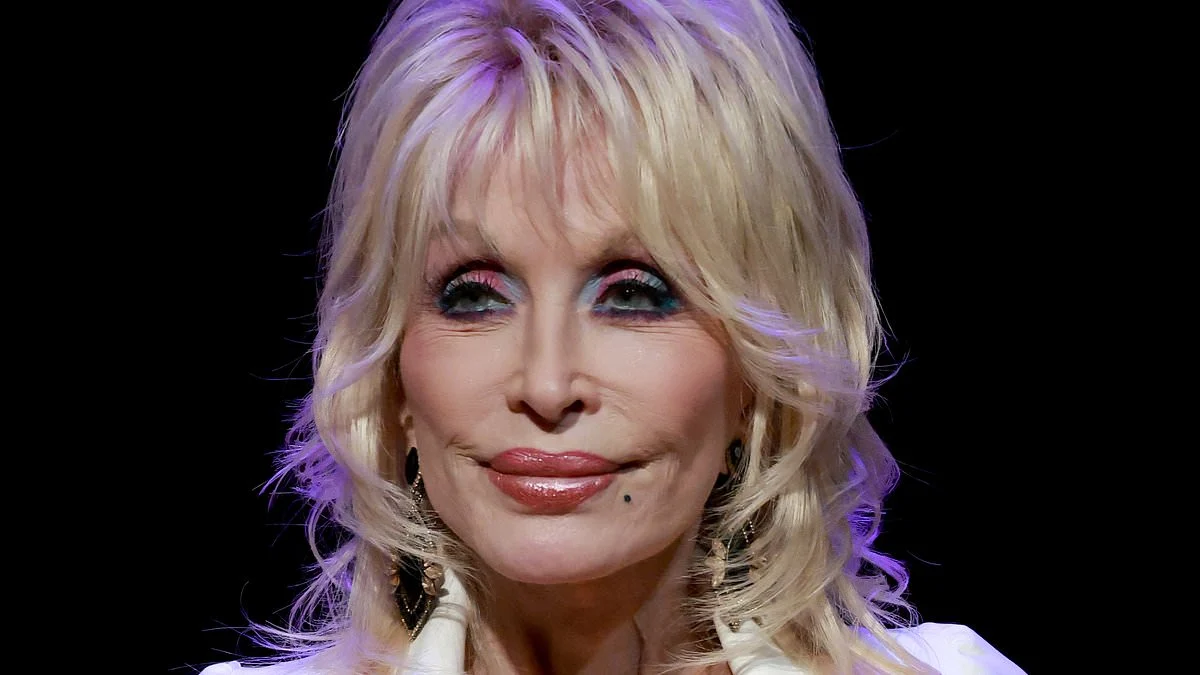
Dolly Parton, the transcendent icon of country music whose influence spanned six decades and reached every corner of global popular culture, has died at the age of 80. The news of her passing was confirmed via an emotional video statement posted to Instagram by her nephew, bringing an end to a monumental era in American music. Often hailed as the "Queen of Country," Parton’s transition from a child of Appalachian poverty to a billionaire philanthropist and entertainment mogul remains one of the most storied trajectories in the history of the performing arts. Her death follows a period of mounting health concerns that had led to the postponement of major professional commitments, leaving fans and the music industry in a state of mourning for a woman who was as famous for her razor-sharp business acumen as she was for her distinctive soprano and "Backwoods Barbie" aesthetic.
The Passing of an American Icon
The announcement of Parton’s death comes after several months of speculation regarding her physical well-being. Throughout the latter half of 2024 and the early months of 2025, the singer had noticeably stepped back from the public eye. In September, she took the difficult step of postponing her highly anticipated Las Vegas residency at the Colosseum at Caesars Palace, which had been slated for December. At the time, Parton cited "health challenges" and the necessity of undergoing several medical procedures. In a characteristic display of the wit that endeared her to millions, she described the situation as a "100,000-mile check-up," reassuring her followers that she was not retiring but merely "slowing down" on divine advice.
However, the gravity of her condition became more apparent in October when her sister, Freida Parton, made a public appeal for prayers on social media. Although Freida later attempted to temper the public’s alarm by stating that Dolly was simply "under the weather," the subsequent silence from the Parton camp fueled anxieties. The confirmation of her passing marks the conclusion of a life defined by relentless creativity and an unwavering connection to her Tennessee roots.
From the Smoky Mountains to Global Superstardom
Born on January 19, 1946, in a one-room cabin in Pittman Center, Tennessee, Dolly Rebecca Parton was the fourth of 12 children born to Robert Lee and Avie Lee Parton. Her upbringing in the Great Smoky Mountains was characterized by extreme financial hardship—a "dirt poor" existence where the family slept on straw-filled mattresses and lived without electricity or running water. This environment, however, served as the primary wellspring for her songwriting. Tracks like "Coat of Many Colors" would later immortalize the dignity and love her family maintained despite their lack of material wealth.
Parton’s musical talent was evident from her earliest years. Encouraged by her mother, she began performing on local radio and television programs in East Tennessee as a young child. At the age of 13, she recorded her first single, "Puppy Love," for a small label in Louisiana and appeared at the Grand Ole Opry. The day after her high school graduation in 1964, she moved to Nashville, carrying her belongings in cardboard luggage. Her initial success came as a songwriter, frequently collaborating with her uncle, Bill Owens, before she was recruited by Porter Wagoner to appear on his syndicated television show. This partnership would propel her into the national spotlight, though her eventual departure to pursue a solo career would inspire one of the greatest songs in the English language.
The Architect of the Modern Country Hit
Parton’s solo career in the 1970s redefined what was possible for a female country artist. In 1973, she released "Jolene," a haunting plea to a romantic rival that showcased her ability to blend traditional country themes with a sophisticated, melodic sensibility. The song was inspired by a real-life encounter with a red-headed bank teller who had a "terrible crush" on Parton’s husband, Carl Dean. "Jolene" became a global phenomenon, eventually being covered by hundreds of artists across multiple genres.
In 1974, she followed this success with "I Will Always Love You," written as a professional farewell to Porter Wagoner. The song’s history serves as a testament to Parton’s legendary business instincts. When Elvis Presley expressed a desire to record the track, his manager, Colonel Tom Parker, demanded 50 percent of the publishing rights—a standard practice for the "King." Parton, recognizing the value of her intellectual property, famously refused. "I cried all night," she later recalled, "but I just couldn’t give up my publishing." Her resolve was vindicated decades later when Whitney Houston’s 1992 cover became one of the best-selling singles of all time, generating tens of millions of dollars in royalties for Parton.
Crossover Success and Cinematic Influence
The 1980s saw Parton transition into a multifaceted media mogul. She made her film debut in the 1980 comedy 9 to 5, starring alongside Jane Fonda and Lily Tomlin. The film’s title track, which Parton wrote on set by clicking her acrylic fingernails together to create a rhythmic "typewriter" sound, became an anthem for the burgeoning women’s labor movement. The song earned her an Academy Award nomination and two Grammy Awards, solidifying her status as a crossover pop star.
Throughout her career, Parton garnered a staggering array of accolades, including 11 Grammy Awards from 50 nominations, ten Country Music Association Awards, and three Emmy Awards. She was one of the few individuals to receive at least one nomination from the Academy Awards, Grammy Awards, Tony Awards, and Emmy Awards (EGOT status). In 2022, she was inducted into the Rock & Roll Hall of Fame, an honor she initially demurred, feeling she had not "earned" the right to be called a rock artist, before ultimately embracing the induction and releasing a successful rock album, Rockstar, in 2023.
A Legacy of Philanthropy and the "Imagination Library"
Beyond her musical and cinematic contributions, Parton’s legacy is inextricably linked to her philanthropic endeavors. In 1986, she opened Dollywood, a theme park in Pigeon Forge, Tennessee, which became the state’s most-visited ticketed attraction and a major economic engine for the Appalachian region.
Perhaps her most enduring contribution to society was the Dolly Parton Imagination Library, founded in 1995. Inspired by her father’s inability to read or write, the program mails a free, high-quality book every month to children from birth until they begin school. To date, the program has gifted over 200 million books to children in the United States, Canada, the United Kingdom, Australia, and the Republic of Ireland. During the COVID-19 pandemic, Parton also became a symbol of scientific hope when it was revealed she had donated $1 million to Vanderbilt University Medical Center, which helped fund the development of the Moderna vaccine.
Personal Life and the Loss of Carl Dean
Despite her highly public persona, Parton maintained a notoriously private personal life. She married Carl Thomas Dean, a road-paving contractor, on May 30, 1966, in Ringgold, Georgia. Dean famously shunned the limelight, attending only one of his wife’s award ceremonies in nearly 60 years of marriage. Parton often joked that their differing temperaments—he a "homebody" and she a "social butterfly"—were the secret to their longevity.
The couple, who never had children of their own, instead focused their energy on raising several of Parton’s younger siblings in Nashville. The union remained steadfast until Dean’s death in March 2025 at the age of 82. Those close to the singer suggest that the loss of her husband of nearly 59 years had a profound impact on her own health. In her tribute to him, she noted that "words can’t do justice to the love we shared."
Broader Impact and Industry Implications
The death of Dolly Parton leaves a void in the entertainment industry that many analysts believe is impossible to fill. She was a rare unifying figure in a polarized cultural landscape, admired by conservative country fans and progressive LGBTQ+ advocates alike. Her ability to navigate complex social issues with humor, grace, and a "love-first" philosophy allowed her to remain relevant across generations.
Industry experts anticipate a significant surge in the consumption of her catalog. According to data from music analytics firms, streaming numbers for Parton’s hits are expected to rise by over 500% in the 48 hours following the announcement. Furthermore, her estate, which includes the lucrative Dollywood company and an expansive song catalog, is estimated to be worth over $650 million. The management of her intellectual property will likely serve as a blueprint for artist-owned estates in the future.
Conclusion: The Eternal Glow of the Smoky Mountain Star
Dolly Parton’s life was a masterclass in authenticity. She often remarked, "It costs a lot of money to look this cheap," a self-deprecating nod to her flamboyant appearance that masked one of the sharpest minds in show business. She was a songwriter first, a businesswoman second, and an icon always.
As news of her passing continues to spread, tributes are pouring in from world leaders, fellow musicians, and the millions of fans who saw her as a beacon of kindness and resilience. While the "Queen of Country" has left the stage, her voice—preserved in thousands of recordings and the pages of millions of books—will continue to resonate. In her own words, she didn’t want to be "just a singer," she wanted to be a "spirit." Today, the world acknowledges that she succeeded. Her journey from the straw beds of the Smoky Mountains to the pinnacle of global fame is complete, leaving behind a legacy that is, and will always be, "I Will Always Love You."
