
 By admin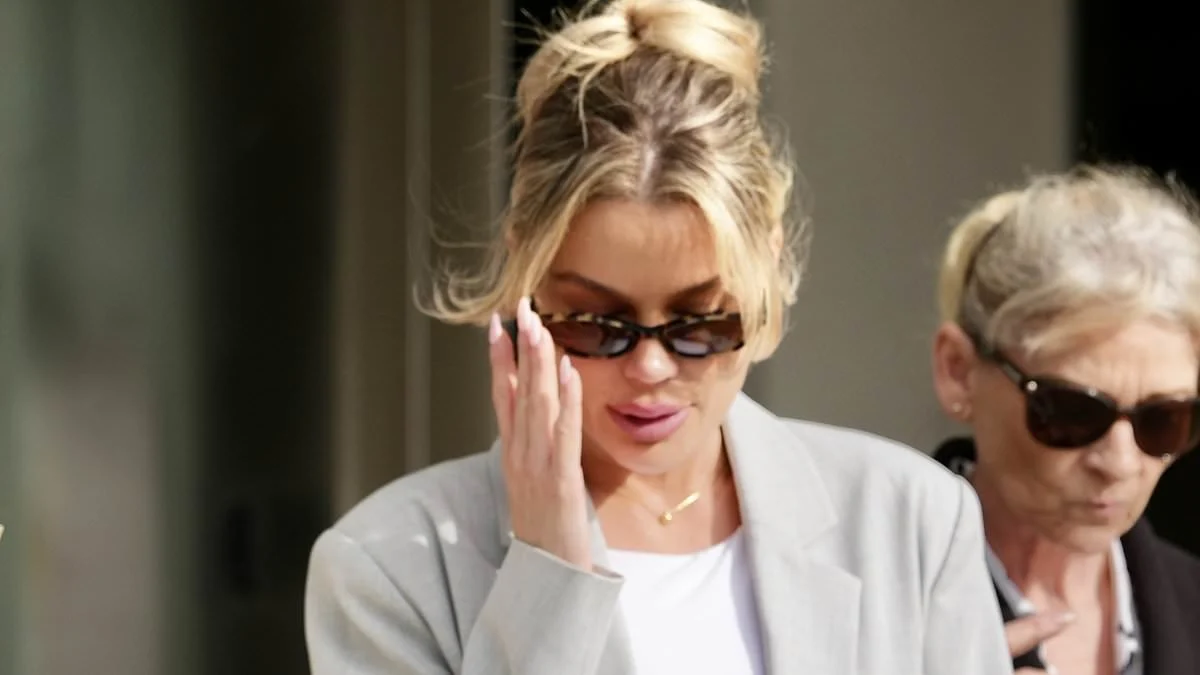
Skye Wheatley, the prominent Australian television personality and social media influencer, has been disqualified from driving for five months and ordered to pay a $700 fine after pleading guilty to being in charge of a motor vehicle while over the middle-range alcohol limit. The sentencing, which took place at the Southport Magistrates Court on Monday, follows an incident on the Gold Coast that saw police intervene after the former reality TV star was found unresponsive in her vehicle. The court proceedings offered a detailed look into the personal struggles preceding the event, highlighting the intersection of mental health challenges and the legal consequences of alcohol-related offenses.
Details of the Incident at Southport McDonald’s
The court heard that the incident occurred after Wheatley, 32, had spent several hours inside her vehicle in the parking lot of a McDonald’s restaurant on the Gold Coast. According to police reports, a concerned passerby alerted authorities after observing Wheatley’s vehicle stationary for approximately four hours. When officers arrived at the scene, they discovered the mother-of-two passed out inside the car.
Upon tapping on the windows to rouse her, officers noted signs of significant intoxication. Subsequent testing revealed a blood-alcohol concentration (BAC) of 0.119, which falls within the "mid-range" category under Queensland traffic law. It was revealed during the hearing that Wheatley had consumed a full bottle of Jim Beam bourbon while sitting in the vehicle over the course of the afternoon. While the car was not in motion at the time of the police arrival, the legal definition of being "in charge" of a motor vehicle applies to individuals who have the intent and the immediate means—such as possessing the keys—to operate the vehicle while impaired.
Mitigating Factors and Mental Health Disclosures
Wheatley’s legal representative, Belinda Robinson, provided the court with extensive context regarding the defendant’s state of mind leading up to the arrest. Robinson argued that the incident was the culmination of a period of intense personal distress and physical exhaustion. The court was informed that Wheatley had returned from a trip to Melbourne on August 8 and was suffering from severe sleep deprivation.
More significantly, the defense highlighted Wheatley’s recent separation from her long-term partner, Lachlan Waugh. The dissolution of the high-profile relationship had reportedly triggered a downward spiral in Wheatley’s mental health, leading to bouts of acute anxiety and depression. Robinson stated that in the week preceding the incident, Wheatley had barely eaten, further exacerbating the effects of the alcohol she consumed on that day.
"She was experiencing significant anxiety about returning home and facing the reality of her domestic situation," Robinson told the magistrate. The defense emphasized that Wheatley’s actions were out of character and were a "cry for help" rather than a flagrant disregard for public safety.
A Proactive Approach to Rehabilitation
In an effort to demonstrate remorse and a commitment to reform, Wheatley has already engaged in several rehabilitative measures. The court heard that since August 20, she has been an active participant in a police-led traffic offender program designed to educate drivers on the dangers of drink driving and the impact of road trauma.
Furthermore, Wheatley has sought professional psychological counseling to address her underlying mental health issues and her relationship with alcohol. Her lawyer confirmed that she has commenced a regimen of medication prescribed for anxiety and depression. The magistrate took these proactive steps into account when determining the sentence, noting that the defendant appeared to be taking the matter with the requisite level of seriousness.
The Legal Landscape: Being ‘In Charge’ of a Vehicle in Queensland
The case highlights a specific aspect of Queensland’s transport operations legislation that often surprises the public. Under the Transport Operations (Road Use Management) Act 1995, a person can be charged with a drink-driving offense even if they are not actively steering or moving the vehicle. Being "in charge" typically refers to a situation where a person is in control of the vehicle and could potentially drive it.
For a mid-range offense (a BAC between 0.10 and 0.149), the penalties are stringent. A first-time offender faces a mandatory license disqualification of at least six months in many cases, though magistrates have some discretion based on the circumstances of the plea. Wheatley’s five-month ban reflects a slight reduction, likely due to her early guilty plea and her lack of a significant prior criminal history. Additionally, the $700 fine serves as a financial deterrent aimed at reinforcing the gravity of the offense.
Public Image and the Impact of Reality TV Fame
Skye Wheatley first rose to national prominence as a contestant on the 2014 season of Big Brother Australia. Known for her bubbly personality and candid nature, she parlayed her television success into a lucrative career as a digital creator and influencer, amassing hundreds of thousands of followers across platforms like Instagram and YouTube.
However, the transition from reality star to public figure brings with it a high degree of scrutiny. Following the news of her charge, Wheatley addressed her followers directly, describing the experience as "the worst two days of my life." She expressed a sense of being "numb and in shock" while attempting to process the legal and social fallout.
In a statement provided to the media earlier this month, Wheatley took full responsibility for her actions, eschewing the opportunity to make excuses despite the personal hardships she was facing. "I made a really poor decision and I’m deeply disappointed in myself," she said. "There isn’t an excuse for what happened. I take responsibility for my actions and I know I have to deal with the consequences."
Analysis of Influencer Accountability and Social Responsibility
The case has sparked a broader conversation regarding the role of influencers in promoting responsible behavior. Given Wheatley’s large audience—many of whom are young women who view her as a role model—her public handling of the incident is seen as a critical component of her professional survival.
By choosing to be transparent about her mental health struggles and her "poor decision-making," Wheatley aligns herself with a growing trend of "authentic" influencing, where creators share their failures as well as their successes. However, crisis management experts suggest that the long-term impact on her brand will depend on her sustained commitment to the rehabilitative path she described in court.
Her advice to her followers—urging them to use ride-sharing services like Uber or call a friend rather than risking a drive when uncertain of their sobriety—serves as a pragmatic takeaway from the ordeal. "Whatever inconvenience that causes is nothing compared to what can happen when you make the wrong decision," Wheatley noted, echoing road safety campaigns frequently seen across Australia.
Statistics on Drink Driving and Mental Health in Australia
Wheatley’s situation reflects broader societal trends in Australia. According to data from the Australian Institute of Health and Welfare (AIHW), there is a significant correlation between psychological distress and risky alcohol consumption. In Queensland specifically, mid-range drink driving remains one of the most common traffic offenses brought before the magistrates’ courts.
Road safety statistics indicate that alcohol is a factor in approximately 25% of all fatal crashes on Australian roads. While Wheatley’s vehicle was stationary, the risk of an intoxicated individual deciding to enter traffic remains a primary concern for law enforcement. The Gold Coast region, known for its vibrant nightlife and tourism, sees a high volume of RBT (Random Breath Test) operations, and the Southport Magistrates Court handles a substantial portion of the state’s traffic-related litigation.
Conclusion and Future Outlook
The sentencing of Skye Wheatley concludes the legal chapter of an incident that has profoundly affected her personal and professional life. The five-month driving ban will undoubtedly pose logistical challenges for the mother-of-two, but the court’s decision emphasizes that the law applies equally, regardless of celebrity status.
As Wheatley continues her psychological treatment and participates in road safety education, her journey will likely remain in the public eye. Her case serves as a stark reminder of the dangers of using alcohol as a coping mechanism for mental health struggles and the far-reaching consequences of a single lapse in judgment. For the Gold Coast community and her national fan base, the outcome of the Southport hearing reinforces the message that road safety and mental health awareness are inextricably linked, and that taking responsibility is the first step toward recovery.
