
 By Nila Kartika Wati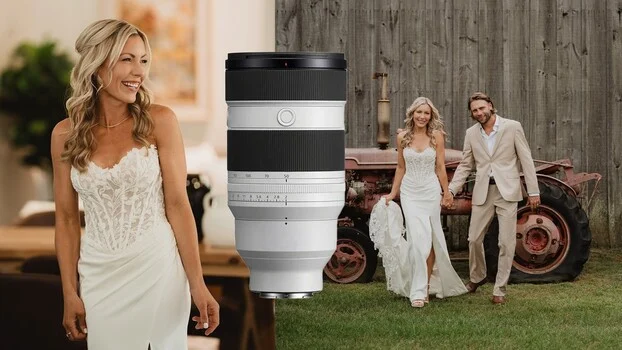
The demanding task of single-handedly managing both photography and videography for a full wedding day, traditionally a role for two or more specialists, was recently undertaken by seasoned creative Taylor Jackson, whose successful execution highlights evolving industry practices and technological advancements. What began as a strategic gamble, entirely contingent on the ambient lighting conditions, culminated in the spontaneous decision to produce a highlight film alongside still imagery, a testament to the forgiving environment and Jackson’s adeptness. This case study provides a compelling narrative for the contemporary wedding media landscape, where versatility, technical acumen, and efficient workflows are increasingly paramount.
The Hybrid Professional: A Growing Trend
The wedding industry has witnessed a significant shift in recent years, with couples increasingly seeking comprehensive media packages that encompass both high-quality photography and cinematic videography. This demand has spurred the rise of the "hybrid" professional, an individual capable of delivering both services, often at a more consolidated cost than hiring separate teams. However, the execution of such a role presents formidable challenges, requiring not only mastery of two distinct crafts but also an intimate understanding of workflow optimization, gear selection, and time management under pressure. Jackson’s experience exemplifies the pinnacle of this trend, demonstrating how careful planning, informed technical choices, and a pragmatic approach can transform a perceived limitation into a competitive advantage.
Chronology of a Solo Wedding Day: From Dawn to Dance Floor
The day began with an assessment of the lighting conditions, a critical factor for any solo shooter contemplating a dual role. Jackson’s decision to add a highlight film was made on arrival, indicating a fluid and responsive approach to his work. From the intimate moments of preparation to the grandeur of the ceremony and the jubilant chaos of the reception, Jackson navigated the day with a Sony kit, primarily built around the versatile Sony 50-150mm f/2 lens.
The early hours involved capturing the "getting ready" phase, where the 50-150mm f/2 proved invaluable for its ability to isolate subjects with a shallow depth of field, even in potentially cramped or challenging lighting conditions. As the day progressed to the ceremony, Jackson relied on the lens’s reach to capture candid moments without being intrusive, maintaining a respectful distance while still achieving intimate framing. The internal zoom mechanism of the 50-150mm, a feature Jackson particularly values, allowed for smooth focal length adjustments without altering the camera’s balance or drawing undue attention, a subtle yet significant advantage when operating solo.
During the portrait sessions and the golden hour leading up to sunset, the f/2 aperture became a creative tool, offering exceptional light-gathering capabilities and beautiful bokeh that enhanced the romantic ambiance. As the evening transitioned to the reception and the dance floor, the Sony 24mm GM entered the rotation. Its wide field of view was essential for capturing the dynamic energy of crowded rooms and the celebratory, often unpredictable, moments of dancing. Complementing his digital arsenal, Jackson also carried a Ricoh R1s film camera, a discreet tool that added an element of serendipity with its characteristic light leaks, injecting a unique, artistic flair into select shots. This blend of modern digital precision and analog charm underscored a creative approach that prioritizes artistic expression alongside technical excellence.
Technical Backbone: The Sony Ecosystem and Strategic Gear Choices
Jackson’s primary tool for the day was the Sony a7S V, a camera lauded for its video capabilities. His choice to shoot in 4K 60p without any crop was a deliberate one, capitalizing on the camera’s full-frame sensor performance. This is a critical distinction from its predecessor, the a7 IV, which imposes an APS-C crop at that frame rate. For a solo shooter relying on a single zoom lens like the 50-150mm, avoiding a crop is paramount, as it preserves the lens’s intended focal length range. An APS-C crop would transform the 50-150mm into a less versatile 75mm-plus equivalent, severely limiting its wide-angle utility.
A key technical decision involved stabilization. Jackson opted for active stabilization throughout the day, rather than dynamic stabilization. While dynamic stabilization offers a more aggressive crop for maximum stability, it sacrifices the wide end of the lens, which is crucial for a solo operator who needs versatility. Active stabilization provides a balance, ensuring smooth footage without overly restricting the field of view.
Perhaps one of Jackson’s more unconventional choices was to entirely forgo ND filters, traditionally considered indispensable for video shooters adhering to the 180-degree shutter rule. This rule dictates that the shutter speed should be double the frame rate (e.g., 1/120th for 60fps) to achieve natural-looking motion blur. Jackson’s workaround is pragmatic: he treats video shots much like still photographs, setting up a stable composition, hitting record, and allowing the motion to unfold within the frame. This approach minimizes the need for motion blur, especially in documentary-style wedding videography where moments are paramount, and it streamlines the workflow by eliminating the constant adjustment of filters.
The Megapixel Debate: Resolution vs. Practicality
Jackson’s approach also offers valuable insights into the ongoing debate surrounding sensor resolution in professional photography. While many cameras now boast 45 or even 60 megapixels, Jackson’s use of a crop mode feature on his Sony system provides a useful reality check. He maps a custom button to instantly switch into crop mode, reducing his 33-megapixel files to approximately 14 megapixels. On a 4K monitor, he notes no discernible difference between the cropped and full-resolution frames, and crucially, 14 megapixels is still more than sufficient for large prints.
This strategy aligns with a broader industry trend where professionals are increasingly prioritizing optimal lighting, lens quality, and capturing the decisive moment over raw megapixel count. A full-frame sensor, even with a moderate megapixel count (like 24-33 MP), offers ample room for in-camera or post-production cropping without compromising final delivery requirements, whether for digital display or large format printing. Jackson’s emphasis on this point serves as a practical counter-narrative to the marketing-driven push for ever-higher resolutions, reminding practitioners that the "actual limits" of what is needed for professional output are often lower than perceived.
Business Acumen: Outsourcing, Turnaround, and Service Expansion
Beyond the technical execution, Jackson also shared valuable business insights for creatives looking to expand into hybrid services. His most emphatic advice is to outsource video editing early in the process, rather than attempting to learn color grading and complex editing workflows while already overwhelmed with existing commitments. This strategic delegation allows the professional to focus on their core strengths—shooting—and ensures timely delivery of high-quality products.
Jackson highlights the critical importance of turnaround times in a competitive market. He boasts a 14-day delivery window for highlight edits during most of the year, extending to roughly two months at peak season. Such rapid delivery is a significant marketing advantage, directly addressing a common pain point for couples who often hear "horror stories" of wedding films arriving six months or even a year late. This efficient post-production workflow, facilitated by outsourcing, transforms a potential client frustration into a compelling selling point.
For photographers contemplating adding video services, Jackson advocates a measured, phased approach. He suggests starting by messaging already booked couples about a month out, offering a short, one-minute highlight film as an initial offering. This low-risk entry point allows the photographer to gain experience and build confidence without over-promising. Crucially, he advises against committing to a three-minute film before successfully producing a shorter version, emphasizing the importance of building skills and refining workflows incrementally. This pragmatic business strategy minimizes risk and maximizes the likelihood of successful service expansion.
Implications for the Wedding Media Industry
Taylor Jackson’s solo wedding shoot offers several significant implications for the broader wedding media industry. Firstly, it underscores the increasing viability and demand for hybrid photographers and videographers. As technology advances, cameras become more capable, and workflows become more streamlined, the ability of a single individual to capture both stills and motion with high quality becomes not just possible but a competitive necessity for many.
Secondly, it challenges conventional wisdom regarding gear and technique. Jackson’s willingness to deviate from established norms, such as skipping ND filters or prioritizing practical resolution over maximal megapixels, suggests a maturity in the industry where outcome and efficiency take precedence over rigid adherence to traditional rules. This encourages other professionals to critically evaluate their own practices and adapt based on real-world effectiveness rather than dogmatic principles.
Finally, the emphasis on smart business practices—outsourcing, efficient turnaround times, and strategic service expansion—serves as a blueprint for sustainability in a dynamic market. In an era where client expectations are high and competition is fierce, the ability to deliver quality content promptly, while managing one’s workload effectively, is as crucial as technical prowess.
Jackson’s successful solo endeavor is more than just an impressive feat of multi-tasking; it is a microcosm of the evolving wedding media landscape, demonstrating how technological innovation, creative adaptability, and sound business strategies converge to redefine the standards of professional service. His experience provides a valuable roadmap for aspiring hybrid creatives and a benchmark for the industry as a whole.
