
 By Nana Wu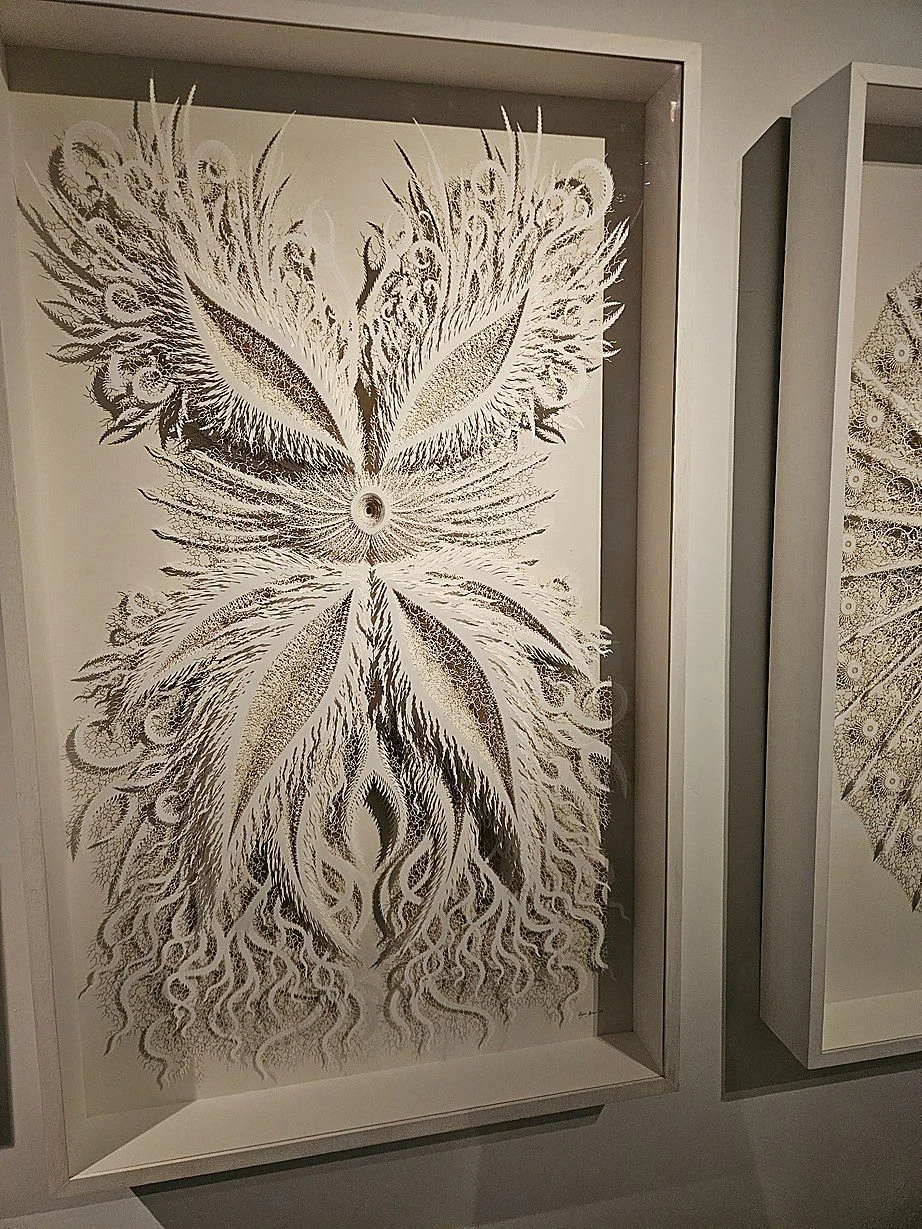
Since founding her label in 2007, Iris van Herpen has consistently challenged the traditional boundaries of the fashion industry. Her work is characterized by a relentless pursuit of new materials and construction methods, often bridging the gap between the artisanal traditions of French haute couture and the cutting-edge possibilities of the digital age. This exhibition at the Brooklyn Museum captures that duality, presenting a body of work that feels simultaneously ancient and futuristic. The garments on display do not merely sit on mannequins; they appear to breathe, undulate, and evolve within their environments, suggesting a future where clothing is an extension of the wearer’s biological and spiritual essence.
A New Paradigm for Fashion Exhibitions
The curatorial framework of "Sculpting the Senses" departs from the standard "look-book" approach to fashion history. Curated by Cloé Pitiot and Louise Curtis, in collaboration with the Brooklyn Museum’s own curatorial team, the exhibition is organized around nine thematic chapters that trace Van Herpen’s inspirations across various disciplines. By integrating fashion with scientific specimens—such as intricate coral structures, fossils, and microscopic photography—the exhibition highlights the designer’s deep fascination with the invisible forces of nature.
Visitors are greeted by an atmosphere that is both sterile and organic, mirroring the "lab-atelier" environment where Van Herpen develops her collections. The inclusion of works by contemporary artists such as Philip Beesley, Casey Curran, and Rogan Brown provides a broader cultural context, illustrating how Van Herpen’s aesthetic language is part of a larger movement toward "bio-design." This approach ensures that the garments are seen not just as luxury items, but as intellectual inquiries into the nature of movement, gravity, and the human form.
Chronology of a Visionary Career
To understand the magnitude of the Brooklyn Museum exhibition, one must look at the trajectory of Iris van Herpen’s career over the last two decades. After graduating from the ArtEZ University of the Arts in Arnhem and completing internships with Alexander McQueen and Claudy Jongstra, Van Herpen launched her eponymous label in Amsterdam in 2007. Her early work immediately signaled a departure from the minimalism that dominated much of the Dutch design scene at the time.
In 2010, Van Herpen made international headlines with her "Crystallization" collection, which featured the first-ever 3D-printed garment to appear on a haute couture runway. This moment was a turning point for the industry, proving that digital fabrication could achieve a level of complexity and beauty comparable to hand-stitching. By 2011, she was invited to become a guest member of the prestigious Chambre Syndicale de la Haute Couture in Paris, a title that solidified her status as a global leader in high fashion.
The Brooklyn exhibition meticulously documents this evolution, showcasing pivotal pieces from collections such as "Escapism" (2011), which explored the digital world’s impact on the psyche, and "Magnetic Motion" (2015), which utilized the power of magnets to shape garments. The timeline presented to viewers is one of constant experimentation, where each collection serves as a laboratory for testing new hypotheses about what clothing can be.
The Intersection of Nature and Advanced Technology
Central to Van Herpen’s work is the marriage of organic inspiration and mechanical precision. The exhibition highlights her pioneering use of 3D printing, laser cutting, and injection molding. However, "Sculpting the Senses" goes to great lengths to demonstrate that these technologies are used to enhance, rather than replace, the human touch. Many of the garments require hundreds of hours of hand-finishing, blending traditional pleating and embroidery with synthetic resins and stainless steel fabrics.
One of the standout sections of the exhibition focuses on "Water," a recurring motif in Van Herpen’s oeuvre. Growing up in the Dutch countryside near water, Van Herpen developed an early obsession with the fluid state of matter. Her 2010 "Water Dress," created using a heat-gun and hand-molding techniques to mimic a splash of water frozen in time, remains one of the most iconic images in contemporary fashion. In the gallery, this piece is positioned near marine biological specimens, emphasizing the designer’s ability to capture the unpredictability of the natural world through rigid materials.
The exhibition also delves into Van Herpen’s collaboration with architects and scientists. Her work with Neri Oxman of the MIT Media Lab and architect Philip Beesley has resulted in "living" textiles that respond to the environment. These collaborations represent a shift in the fashion industry toward interdisciplinary research, where the goal is not just to create a silhouette, but to develop new materials that could potentially have applications in medicine or environmental science.
Supporting Data and Technical Innovation
The sheer scale of the technical data associated with Van Herpen’s work is staggering. According to museum records, some of the 3D-printed pieces in the "Sculpting the Senses" exhibition took upwards of 500 hours to print and an additional 200 hours to assemble by hand. The materials used range from sustainable bioplastics and recycled ocean waste to delicate silk organza and laser-cut Mylar.
Data provided by the Iris van Herpen Atelier indicates that the studio has collaborated with over 20 different scientific institutions and engineering firms over the past decade. This commitment to research-based design is a core theme of the exhibition. For example, the "Earthrise" collection (2021), featured prominently in the museum, utilized 3D-mapping technology to create garments that mirror the topographical patterns of the Earth as seen from space. This data-driven approach to aesthetics provides a factual foundation for the "mysterious" and "extraterrestrial" qualities often attributed to her work.
Official Responses and Institutional Impact
The arrival of "Sculpting the Senses" in New York has been met with significant enthusiasm from the artistic and academic communities. Anne Pasternak, the Shelby White and Leon Levy Director of the Brooklyn Museum, noted in a statement that Van Herpen’s work "transcends the boundaries of fashion, inviting us to see the world through a lens of wonder and scientific curiosity." The museum expects the exhibition to draw record crowds, particularly among younger demographics interested in the intersection of tech and creativity.
Critics have praised the exhibition for its "unsettling beauty," a phrase often used to describe the way Van Herpen’s designs evoke both the skeletal remains of the past and the bionic possibilities of the future. The Brooklyn Museum’s decision to keep the exhibition open through December 2026 reflects a long-term commitment to showcasing fashion as a primary art form, equal in cultural weight to painting or sculpture.
Industry analysts suggest that exhibitions of this caliber have a tangible impact on the fashion market, driving interest in "slow fashion" and haute couture as a counter-narrative to the fast-fashion cycle. By highlighting the labor-intensive and research-heavy nature of Van Herpen’s work, the Brooklyn Museum is participating in a broader conversation about value, sustainability, and the future of the luxury sector.
Broader Implications: The Dissolution of Boundaries
The ultimate takeaway from "Sculpting the Senses" is the dissolution of traditional silos between art, science, and industry. Van Herpen’s garments serve as a proof of concept for a future where design is informed by biological systems—a field known as biomimicry. As the fashion industry faces increasing pressure to address its environmental impact, Van Herpen’s exploration of sustainable materials and digital manufacturing offers a potential roadmap for a more conscious form of creation.
Furthermore, the exhibition challenges the viewer to reconsider the human body. By dressing the form in shapes that evoke jellyfish, nerve systems, or crystalline structures, Van Herpen strips away the social markers of fashion (status, gender, season) and replaces them with a universal language of biology. The "unsettling" nature of the exhibit arises from this confrontation with our own physicality; the clothes remind us that we are part of a complex, fragile, and magnificent natural system.
As "Iris van Herpen: Sculpting the Senses" continues its residency at the Brooklyn Museum through December 6, 2026, it stands as a testament to the power of imagination when coupled with rigorous technical inquiry. The exhibition does not just show what fashion looks like today; it suggests what humanity might look like tomorrow—a blend of the organic and the artificial, moving in harmony with the rhythms of the natural world. For the visitor, the experience is less about observing a wardrobe and more about entering a laboratory of the soul, where the senses are indeed sculpted by the hands of a visionary.
