
 By Jia Lissa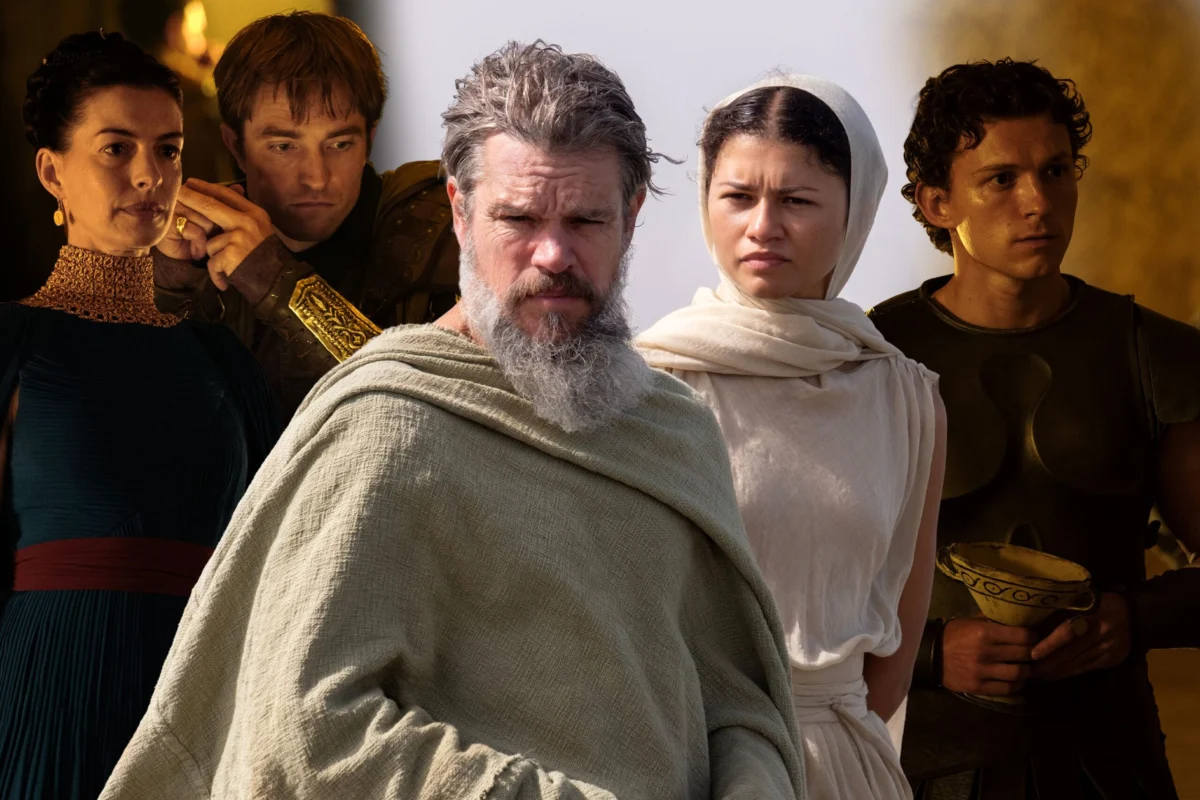
"It is a time of apparent magic…." These words, stark against a black screen, mark the beginning of Christopher Nolan’s ambitious cinematic interpretation of Homer’s epic poem, The Odyssey. Nolan’s film plunges viewers into a world brimming with mythological wonder – from the monstrous Cyclops and the hydra-headed dog to the memory-altering lotus flowers and the chilling transformation of Odysseus’s men into swine by the sorceress Circe. In an era where digital effects often dominate, Nolan’s renowned commitment to in-camera practicalities places a profound emphasis on the artistry of hair and makeup to manifest this "apparent magic" on screen. The intricate details crafted by hair department lead Gloria Pasqua Casny and makeup department head Luisa Abel were not merely aesthetic choices; they were fundamental to grounding the fantastical narrative and evoking the human spirit at its core, a feat that has seemingly reignited public fascination with the millennia-old tale.
Ancient Echoes and Modern Interpretations: The Foundation of the Visual Narrative
The visual language of The Odyssey is deeply rooted in the rich, often repeated, descriptive passages of Greek mythology. Figures like Athena, the goddess of the "bright owl-eyes," and Calypso, the "nymph with the lovely braids," are painted in vivid detail. The poem itself offers poetic imagery, such as Athena rejuvenating Odysseus and making his "hair grow thick on top of his head and flow down in curls like hyacinth blooms." These classical descriptions served as a vital, yet not exhaustive, wellspring of inspiration for Casny and Abel. However, their creative process was also guided by Nolan’s specific vision: to imbue the sprawling epic with "an earthy narrative." This directive pushed the team to translate the grandeur of the 65mm film format, the scale of fantastical creatures, and the visceral intensity of naval battles and skirmishes into an intimate, human experience. The hair and makeup designs became instrumental in achieving this delicate balance, weaving a tapestry of authenticity that resonated deeply with audiences.
Research and Reinvention: Discovering the Ancient Greek Aesthetic
The journey to authentically portray the world of The Odyssey began with meticulous research. Both Casny and Abel delved into the visual records of ancient Greece, studying pottery, murals, and paintings to glean insights into the hairstyles and facial features of the era. Abel’s examination of these artifacts provided a crucial understanding of the available cosmetics and their application. This historical immersion was then seamlessly integrated with modern technological capabilities. Abel focused on testing contemporary products that could effectively mimic the colors and textures of ancient cosmetics while offering the lightweight, flawless finish required for IMAX projection.

Casny’s exploration of ancient Greek hairstyling practices yielded surprising discoveries that significantly informed her work. A visit to the Brooklyn Museum revealed evidence of curling irons dating back 3,000 years, and the existence of ancient Greek barbershops. These revelations underscored the sophisticated, established practices of grooming in the ancient world, influencing the styles adopted by both principal cast members and the extensive background actors.
The Significance of Curls: Symbolism in Ancient Greek Hair
Curly hair held profound symbolic weight in Greek mythology, often signifying vitality, beauty, heroism, and even divinity. The poem itself frequently alludes to this, describing Odysseus’s hair as "curling hair like hyacinth petals." While actor Matt Damon retained his natural texture for his portrayal of the cunning warrior, the film embraced and amplified the natural curls of many characters. This emphasis on natural texture aimed to create a more grounded and relatable portrayal of the epic heroes and heroines.
A notable example of this approach is Tom Holland’s depiction of Telemachus, Odysseus’s son. Casny expressed her delight upon seeing Holland’s natural, bouncy curls during initial tests. "Tom has great curly hair, and when he came in [for tests], I just shook his hair up and was like, ‘You are not cutting it or wearing it straight,’" she recalled. The styling for Holland’s character involved a judicious use of mousse, often from the R+Co line, and argan oil to enhance his natural texture and provide definition on set, ensuring his appearance aligned with the mythological descriptions while feeling organic.
Adornments of Antiquity: Recreating Bronze Age Accessories
The film’s elaborate hair accessories drew direct inspiration from Bronze Age artifacts, adding layers of authenticity and storytelling. For Persephone, Odysseus’s long-suffering wife, portrayed by Anne Hathaway, Casny found inspiration in Bronze Age hairpins adorned with small bird motifs. These were meticulously recreated by the film’s props department. Furthermore, a jewelry maker in Morocco, where significant portions of the film were shot, crafted gilded flowers based on similar ancient designs discovered by Casny.

Lupita Nyong’o’s dual role as Helen of Troy and Clytemnestra, depicted as twins in Nolan’s adaptation, provided a unique creative challenge. Casny adorned both characters’ hair with gold thread sourced from the costume department, alongside beads and gold strips acquired from Etsy. For Clytemnestra specifically, a bespoke hairpiece was designed, featuring a bird motif that symbolized her longing for freedom from her husband, Agamemnon, who had forced her to sacrifice their daughter. Casny explained, "We were saying that this is her symbol of freedom, of which he had no idea… her own secret little pin." This intricate detail added a layer of psychological depth to the character, subtly conveying her hidden desires and defiance.
Grounding the Divine: A Humanized Pantheon
In Nolan’s vision, the gods of The Odyssey are deliberately understated. Deities like Zeus and Poseidon are hinted at through environmental cues – thunder and tempestuous seas – rather than direct visual representation. When gods do appear, they are not depicted with an ethereal glow or ostentatious adornments. Instead, their portrayals are intentionally pared down, rugged, and fundamentally human. This deliberate choice, as explained by Casny, was central to Nolan’s desire for "him having it grounded."
Charlize Theron’s portrayal of Calypso, a recluse dwelling on a remote island, exemplifies this approach. Casny described the character’s aesthetic as having "almost like Survivor vibes." The challenging filming conditions in Morocco, with winds ranging from 30 to 50 mph, inadvertently contributed to Calypso’s disheveled, windswept appearance. Stylists used mousse to create a "gritty look" in her hair, while Virtue Labs leave-in conditioner and serum were employed to maintain a perpetually wet appearance, a detail enhanced by the natural humidity of the island setting. Calypso’s hair was often tied back using gauze strips from her costume, creating an effect that suggested she would style it herself, reinforcing her self-sufficiency. Abel’s makeup for Calypso was similarly earthy, characterized by a tanned, "broken down" look that emphasized her outdoor existence and "warrior, self-sufficient aspect."
The Allure of the Understated: Circe and Athena
Samantha Morton’s Circe, the sorceress known for transforming men into pigs, was envisioned by Casny as adopting a disheveled disguise to lure and exploit Odysseus’s men. This interpretation emphasized the deceptive nature of her character, requiring a look that suggested both vulnerability and cunning.

Zendaya’s portrayal of Athena presented a unique challenge, as the goddess appears to Odysseus in a form that reflects a tragic memory. Casny explained, "I think the whole thing with Athena [in this film] is that she is the image of the young village girl killed [during the Battle of Troy], and that’s what stayed in Odysseus’s mind… that’s the form she took in his imagination… and it helped a lot with how her look ended up." Zendaya’s bob was styled with a middle part, divided into two small braids tucked away and covered by a headscarf. Abel’s makeup for Athena was a subtle, pared-back version of the look Zendaya wore to the film’s premiere, focusing on a "flawless while maintaining a grounded quality." A "youthful, translucent look" was achieved using sheer makeup products, notably Merit blush, enhancing her natural beauty without appearing overly stylized.
Battling the Elements: Practical Challenges and Ingenious Solutions
The hair and makeup teams faced formidable environmental challenges, including the intense humidity and 50 mph winds of Morocco, the driving rain of Iceland, and the freezing temperatures and turbulent waters encountered during numerous boat sequences. "I was so thankful Christopher didn’t want wigs," Casny remarked with a laugh, acknowledging the immense difficulty such a requirement would have presented.
Maintaining the illusion of perpetually soaked hair and skin for scenes set on the sea was a constant battle. While the natural elements often provided ample moisture, hair inevitably dried and became unruly. To combat this, Casny relied heavily on hair wax. This product was crucial for recreating the effect of sweat clinging to the skin and keeping hair plastered down. For Matt Damon, in particular, Casny described a painstaking process: "I went through every hair and smashed it in… coats and coats of it so it didn’t move."
The Argan Oil Advantage: A Secret Weapon for Authenticity
The unsung hero of the film’s beauty department, particularly for maintaining the appearance of wet and sweaty hair, was natural argan oil. The team utilized "vats of it." Casny explained, "One of our hairstylists [on set] has a farm that grinds the argan nuts, and so we had this gallon of brilliant virgin argan oil that we put in little containers." This oil was applied liberally to Odysseus, his men, Telemachus, and all 1,300 background actors. Its efficacy lay in its ability to keep hair looking wet and pliable, preventing it from drying out even when subjected to repeated water applications.
.jpg)
The Art of Dirt: Creating Gritty Realism
The film’s commitment to realism extended to the pervasive presence of dirt. Abel noted, "There wasn’t a single scene in the film in which the characters didn’t have varying levels of ingrained dirt." The makeup department developed custom dirt products, meticulously researched to match the specific colors and textures of each filming location. These products were designed to be sheer, natural-looking, and waterproof. Abel elaborated, "Every sequence and place has different colors and textures of dirt, too… This was all researched in detail and products were custom-made to match the red and pale sands of Troy, the black and gray tones in Hades, the green and brown tones with the Laestrygonians, and the white pale sands of Calypso."
The hair department worked in tandem with makeup to achieve this gritty realism. For a particularly striking scene on the black-sand beaches of Iceland, representing the shores of Hades, Casny’s team developed an innovative technique. They mixed black pigment into inexpensive hair gel and sifted fine and coarse granules of black sand into it. Casny described the application: "We mixed the fine sand into the hair gel as well, and then I would put the coarser pieces on my hand and stick them on the surface of the hair to get that crusty effect of Icelandic sand." This hands-on approach ensured a tactile and visually convincing representation of the harsh environments the characters endured.
The Passage of Time: Hair and Makeup as Narrative Tools
Both Homer’s epic and Nolan’s cinematic adaptation play with the concept of time, presenting Odysseus’s 20-year journey home in a nonlinear fashion. Hair and makeup played a crucial role in visually communicating these temporal shifts to the audience. For Penelope, Abel employed specific techniques to differentiate her youthful and aged appearances. She utilized products like Typology Glow Drops for the younger Penelope, focusing on "illumination, specific cheek placement, and the use of age spots" to visually narrate Penelope’s enduring journey.
The aging of Odysseus himself was achieved through careful manipulation of Matt Damon’s hair. Casny dyed Damon’s hair brown for scenes set during the Battle of Troy and then meticulously glued loose gray pieces into his natural hair for later sequences, visually representing the passage of two decades.

The Herculean Task of Aging: John Leguizamo’s Transformation
The transformation of John Leguizamo’s character, Eumaeus, Odysseus’s loyal servant, presented a significant challenge due to the actor’s naturally dark hair. Achieving a convincing white-haired appearance for Eumaeus required a complex and time-consuming bleaching process. Standard practice dictates gradual bleaching over several days or even weeks to prevent hair damage. However, the production timeline offered limited flexibility.
After initial bleaching attempts, Leguizamo’s hair retained a yellow tinge, a common occurrence. Casny and her team deployed strong purple shampoos, specifically Fanola and Kérastase, known for their effectiveness in neutralizing brassiness. For touch-ups on set, silver art pens were utilized. A crucial period of recovery was afforded to Leguizamo when he returned to New York for a month between filming segments. Casny provided his wife with an extensive regimen of Olaplex products, emphasizing diligent use to repair and strengthen the hair. Upon Leguizamo’s return to Los Angeles, the team was finally able to achieve the desired bright white shade.
Denoting Status and Revealing Backstory: A Visual Hierarchy
Throughout The Odyssey, hair and makeup served as powerful visual cues for social status and character backstory. The hair of servants was deliberately kept simple, uniform, and unadorned, contrasting sharply with the intricate and individualized styles of royalty. Even within the royal ranks, beauty choices subtly illuminated character differences.
Penelope’s aesthetic was characterized by elegance and restraint. Casny explained the rationale: "One thing we were thinking is that she’s trying to stay put-together because she thinks Odysseus is going to come home any minute, but she also doesn’t want to give the impression to her suit[or]s, ‘I’m available.’" Casny opted for a series of center-parted updos for Anne Hathaway, with approximately seven distinct changes throughout the film. A collection of braids and hairpieces allowed for daily variations, all maintaining a "simple, classic aesthetic." Davines hairspray and a Mason Pearson brush were essential tools in Casny’s arsenal for styling Penelope.

In stark contrast, Helen of Troy’s beauty looks were more opulent and elaborate, mirroring the architectural grandeur of the castles of Ithaca and Sparta. Lupita Nyong’o’s skin was rendered vibrant and luminous, with Abel creating a custom contour that provided dimension without appearing anachronistic. For Helen’s hair, the styling was inspired by Nyong’o’s own sisterlocks, cut into a bob. To achieve the desired length, Nyong’o wore 50-inch sisterlocks specially made in Kenya, extending down to her calves. Casny then latch-hooked these extensions to the ends of Nyong’o’s sisterlocked bob. This choice was a deliberate tribute to Nyong’o’s heritage, drawing inspiration from "African queens [of the time,] as opposed to the Greek aesthetic." This decision underscored Helen’s regal presence and her distinct cultural identity within the narrative.
