
 By admin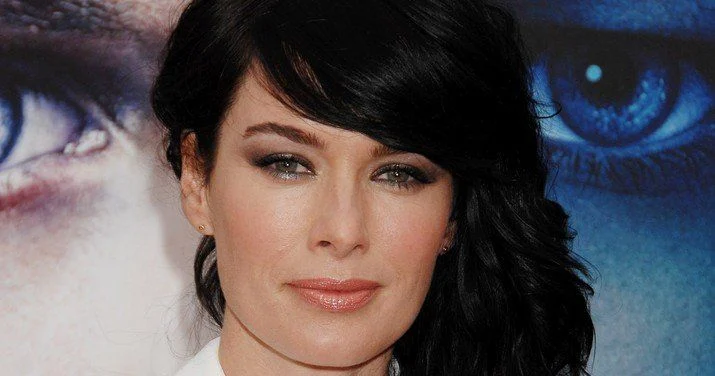
Actress Lena Headey, globally recognized for her indelible portrayal of Cersei Lannister in HBO’s monumental series Game of Thrones, has recently offered a candid glimpse into the often-unseen facets of a career in Hollywood, touching upon deeply personal struggles with self-image, the transient nature of fame, and the persistent challenges faced by women in the entertainment industry. Speaking with The Telegraph, Headey, now 52, articulated a profound shift in perspective, moving from youthful insecurities rooted in external validation to a mature focus on meaningful storytelling and authentic representation for women. Her reflections resonate widely, providing a stark contrast to the polished facades often presented by celebrity culture and sparking renewed dialogue on the industry’s ingrained dynamics.
The Evolution of Self-Perception: From Insecurity to Empowered Authenticity
Headey’s journey through the labyrinth of self-perception is a narrative familiar to many, yet amplified by the relentless scrutiny of public life. She revealed a significant struggle with confidence in her younger years, confessing, "When I was younger, I felt really uncomfortable." Despite being widely perceived as beautiful, a quality often fetishized and demanded of actresses, Headey admitted she never truly internalized this perception. Compliments, rather than fostering confidence, frequently exacerbated a sense of pressure to conform to an external ideal, creating a disconnect between her public image and private reality. This struggle is not isolated; numerous actresses, from early Hollywood icons like Marilyn Monroe to contemporary stars, have voiced similar battles against the industry’s often unforgiving beauty standards. For women in entertainment, physical appearance can often overshadow talent, leading to a relentless pursuit of an unattainable ideal and profound personal discomfort.
Now in her early fifties, Headey has embraced a new paradigm, one that prioritizes inner conviction over outward expectations. Her current philosophy, as she describes it, is less about meeting someone else’s definition of beauty or success and more about engaging with work that genuinely inspires her and contributes to a broader, more authentic narrative for women. This maturation reflects a growing trend among female artists who, having navigated the demanding terrains of youth and early career, are increasingly using their platforms to redefine success on their own terms, advocating for depth, character, and artistic integrity over superficial appeal. This shift is particularly significant in an industry historically criticized for its ageism, especially towards women, often sidelining them from prominent roles once they pass a certain age threshold.
A Career Forged in Complexity: Headey’s Consistent Pursuit of Depth
Headey’s career trajectory itself offers compelling evidence of her commitment to emotionally complex and often morally ambiguous roles, long before her recent public statements. Her filmography is replete with characters who defy easy categorization, showcasing resilience, vulnerability, and a fierce independence. From Queen Gorgo in Zack Snyder’s stylized epic 300 (2006) to the ruthless Ma-Ma in Dredd (2012), and the resilient mother in The Purge (2013), Headey has consistently gravitated towards roles that demand significant emotional and psychological investment. She has portrayed women who are powerful, flawed, and deeply human, resisting the temptation of one-dimensional heroines or damsels in distress.
This discerning approach reached its zenith with her portrayal of Cersei Lannister in Game of Thrones. Cersei, a character of immense depth, ambition, and tragic vulnerability, became one of television’s most iconic figures. Headey’s nuanced performance, which earned her five Emmy Award nominations, transformed a character who could have easily been a cartoonish villain into a complex, sympathetic, and terrifying monarch. Her ability to convey Cersei’s love for her children, her strategic brilliance, and her descent into paranoia and cruelty, all while maintaining a regal composure, cemented her status as a formidable talent. The show itself, which premiered in 2011 and concluded in 2019, became a global cultural phenomenon, consistently breaking viewership records and garnering critical acclaim for its intricate storytelling and character development. Headey’s contribution was central to its success, proving that complex female characters, when given due prominence and executed with such skill, can captivate vast international audiences.
Navigating the Aftermath of Global Stardom: Fame and its Ephemeral Nature
Despite Game of Thrones becoming one of the most watched and talked-about television series in history, Lena Headey maintains a remarkably grounded perspective on the impact of its global success on her individual career. She asserts that while the show brought undeniable perks, such as widespread public recognition and increased visibility, it did not fundamentally or permanently transform the underlying dynamics of her profession. Headey’s observation that fame “didn’t eliminate the challenges of finding quality acting roles” speaks volumes about the ephemeral nature of celebrity in Hollywood, particularly for women.
Her point underscores a harsh reality for many actors: even after participating in a global phenomenon, the grind of auditioning and competing for new opportunities remains a constant. The industry, notoriously fickle, often moves on quickly once a major project concludes. This phenomenon is often more pronounced for female actors. Data from studies on gender representation in film and television consistently show a drop-off in leading roles for women over 40. For instance, reports by organizations like the Center for the Study of Women in Television and Film at San Diego State University frequently highlight that women account for a significantly smaller percentage of protagonists in major films, and this percentage decreases with age. While male actors often find their careers sustaining or even flourishing into their later years with diverse, prominent roles, their female counterparts frequently face a more limited pool of opportunities, often relegated to supporting roles as mothers, grandmothers, or secondary characters. Headey’s experience, therefore, serves as a poignant reminder that even peak success does not guarantee perpetual security or an endless stream of compelling work in an industry still grappling with ageism and gender bias.
The Gender Divide in Hollywood: A Persistent Challenge
Headey’s critique extends beyond personal career trajectory to address the broader structural inequalities within the entertainment industry. She openly expressed concern about gender inequality, arguing that despite recent conversations and some incremental progress, television and film continue to provide a disproportionately higher number of leading opportunities for men than for women. This observation is supported by a wealth of empirical data. Studies consistently reveal significant disparities across various facets of the industry. For example, the aforementioned Center for the Study of Women in Television and Film’s "It’s a Man’s (Celluloid) World" report series has repeatedly shown that women comprise only about a third of speaking roles in top-grossing films and an even smaller percentage of protagonists. The imbalance is even starker behind the camera, with women making up a minuscule percentage of directors, cinematographers, and composers.
While movements like Time’s Up and Me Too have brought crucial awareness to issues of harassment, discrimination, and the need for greater representation, Headey’s statements suggest that the fundamental shift in opportunity and narrative focus is still lagging. The call for more "authentic stories centered on women’s experiences" is not merely about having more female characters, but about portraying them with depth, agency, and complexity, moving beyond traditional stereotypes. This includes stories about women from diverse backgrounds, ages, and life stages, reflecting the multifaceted reality of the global female population. Headey’s voice adds to a chorus of industry figures, including Reese Witherspoon, Meryl Streep, and Ava DuVernay, who are actively working to dismantle these systemic barriers and create a more equitable and representative landscape in entertainment.
The "Walk of Atonement" Controversy: Artistry, Autonomy, and the Body Double
One of the most talked-about and controversial scenes in Game of Thrones was Cersei Lannister’s "Walk of Atonement" in Season 5. This pivotal moment, depicting Cersei’s public humiliation as she is stripped naked and paraded through King’s Landing, was met with intense viewer reaction. When it was revealed that a body double, Rebecca Van Cleave, performed portions of the nude sequence, Lena Headey faced a degree of criticism from some corners, questioning her commitment to the role.
Headey, however, steadfastly defended her decision, clarifying that her choice was not rooted in an objection to nudity itself—a stance she has maintained throughout her career, having performed nude scenes in other projects. Instead, her rationale was purely artistic and character-driven. She explained that using a body double allowed her to remain entirely focused on the profound emotional and psychological trauma Cersei was experiencing. "I believed using a body double allowed her to remain emotionally focused on portraying Cersei’s humiliation and psychological trauma rather than worrying about the physical demands of the scene," Headey stated. This decision allowed her to channel her energy into conveying the character’s internal agony, resilience, and the sheer degradation of the moment, thereby elevating the performance’s impact. The result was a scene widely praised by critics for its powerful portrayal of vulnerability and defiance, solidifying its place as one of the series’ most unforgettable moments.
The use of body doubles in film and television is a long-standing practice, employed for various reasons ranging from dangerous stunts to specific physical attributes, and increasingly, to accommodate an actor’s comfort level or artistic focus. Headey’s explanation highlights the professional considerations behind such decisions, emphasizing the actor’s autonomy and the director’s strategic choices in achieving the most compelling cinematic outcome. Her defense also subtly pushed back against the often-gendered expectation for female actors to perform nudity without question, asserting a professional boundary that prioritizes performance integrity.
Championing Female Narratives: Headey’s Advocacy Beyond the Screen
Beyond her acclaimed acting performances, Lena Headey has emerged as a vocal proponent for more robust and authentic female representation in entertainment. Her belief is unequivocal: audiences deserve narratives that explore women as multifaceted, complex individuals rather than reducing them to mere supporting characters, romantic interests, or symbols of beauty. This advocacy is not a new development but a consistent thread woven throughout her career choices and public statements.
Headey’s consistent selection of roles featuring resilience, emotional depth, and moral complexity—qualities that made Cersei Lannister so compelling—underscores her commitment to this principle. She actively seeks out characters that challenge stereotypes and reflect the diverse experiences of women in the real world. This dedication extends to her work behind the camera as well, with Headey venturing into directing, further demonstrating her commitment to shaping narratives from a female perspective. For instance, her directorial debut with the short film "The Trap" at the Tribeca Film Festival showcased her interest in exploring complex emotional landscapes.
As Hollywood continues its slow but perceptible evolution, Headey’s hope is that more women will be afforded the opportunities to create, lead, and influence stories that genuinely mirror real-life experiences. This push is crucial for fostering an inclusive industry that truly reflects its global audience. The impact of high-profile figures like Headey speaking out cannot be underestimated; their voices lend weight to the ongoing discourse, influencing studio executives, producers, and screenwriters to invest in and greenlight projects that prioritize diverse female voices and narratives. This collective effort is slowly but surely reshaping the entertainment landscape, moving towards a future where women’s stories are not just told, but told authentically and with the depth they deserve.
The Broader Implications: A Catalyst for Change?
Lena Headey’s candid reflections are more than just a personal account; they serve as a powerful commentary on the state of Hollywood and a potential catalyst for further change. Her willingness to discuss the uncomfortable realities of self-image, the fleeting nature of fame, and the persistent gender inequalities within the industry provides valuable insight for both aspiring actors and the wider public. By demystifying the glamorous facade of celebrity, she highlights the systemic issues that continue to challenge artists, particularly women, in their pursuit of meaningful and sustained careers.
Her advocacy for authentic female stories aligns with a broader industry movement demanding greater diversity and inclusion. The implications are far-reaching: from encouraging more nuanced character development in scripts to pressuring studios to invest in female creators and directors. Headey’s journey, from struggling with self-perception to embracing an empowered, authentic voice, offers a compelling narrative of personal growth intertwined with professional integrity. As Hollywood continues to grapple with its past and strive for a more equitable future, voices like Headey’s are essential in pushing the conversation forward, ensuring that the progress made is not merely superficial but leads to fundamental, lasting transformation in how women are perceived, represented, and valued within the entertainment world. Her continued influence promises to shape a landscape where talent and authenticity truly take precedence over fleeting fame and restrictive beauty standards.
