
 By Nana Wu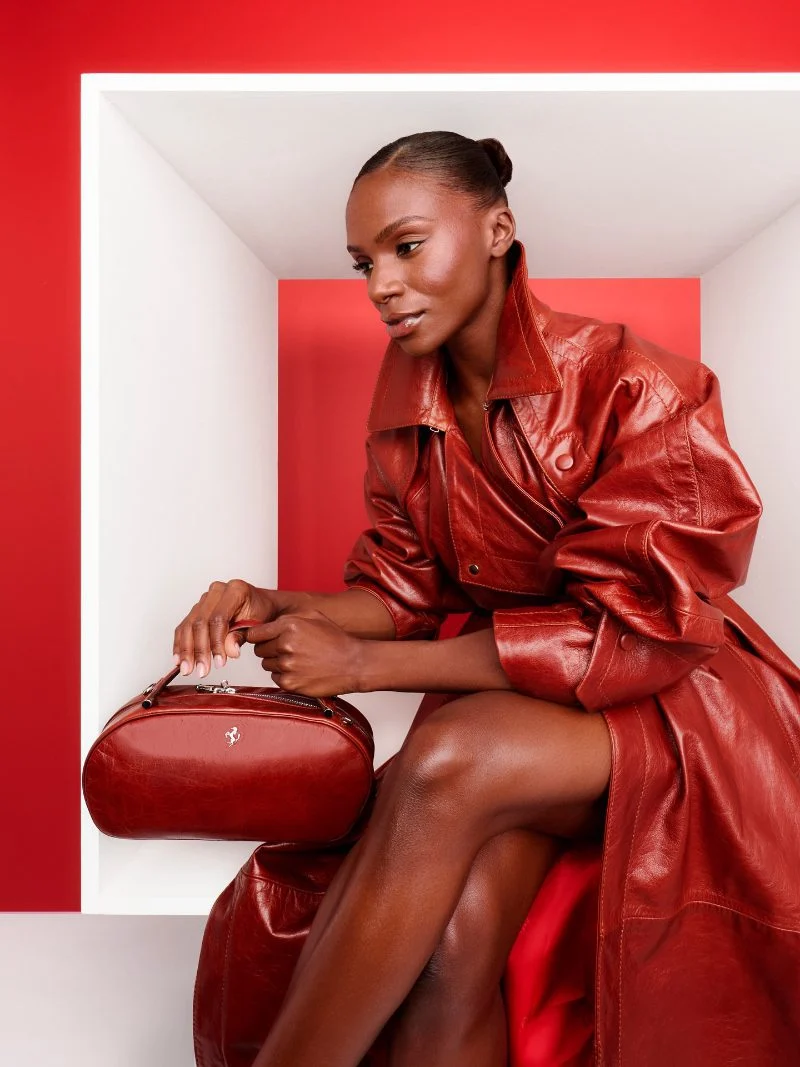
The Italian luxury automotive manufacturer Ferrari has officially accelerated its expansion into the global high-end fashion market with the launch of its latest accessory centerpiece, the Dino Bag. This strategic move, punctuated by a high-profile marketing campaign featuring British Olympic sprinter Dina Asher-Smith and captured by the lens of renowned photographer Rankin, marks a significant milestone in the brand’s evolution from a niche supercar manufacturer to a comprehensive luxury lifestyle house. Under the creative stewardship of Rocco Iannone, the brand is successfully translating the aerodynamic language and mechanical precision of its automotive heritage into a sophisticated ready-to-wear and accessories vision.
The Evolution of Ferrari’s Lifestyle Architecture
The trajectory of Ferrari’s high-end fashion line began in earnest in June 2021. In a move that signaled a departure from licensed merchandise toward authentic haute couture and luxury ready-to-wear, the company hosted a 52-look runway show directly on the assembly lines of its historic Maranello factory. This event was not merely a promotional stunt but a declaration of intent, showcasing a collection that blended technical fabrics with artisanal Italian tailoring.
Since that debut, the house has meticulously built a brand identity that mirrors the exclusivity of its vehicles. The appointment of Rocco Iannone, whose pedigree includes significant tenures at Giorgio Armani and Pal Zileri, was a calculated decision to ensure the fashion line possessed the requisite gravitas to compete with established Parisian and Milanese houses. Iannone’s vision focuses on "fast luxury," a concept that integrates the ergonomic requirements of speed with the aesthetic demands of high fashion.
The current campaign featuring the Dino Bag represents the "heating up" of this vision. By selecting Dina Asher-Smith, the fastest British woman in recorded history, Ferrari creates a direct parallel between the performance of its engines and the physical prowess of elite athletes. The campaign, shot by Rankin, utilizes high-contrast lighting and dynamic posing to emphasize the bag’s structural integrity and its relationship to the human form in motion.
Design Philosophy: The Heritage of the Dino Silhouette
The Dino Bag is more than a seasonal accessory; it is a structural homage to one of the most beloved chapters in Ferrari’s automotive history. The bag’s curved silhouette and distinct lines are directly inspired by the vintage Ferrari Dino sports cars of the late 1960s and early 1970s. Named after Enzo Ferrari’s son, Alfredo "Dino" Ferrari, the original Dino 206 GT and 246 GT were celebrated for their soft, flowing contours—a departure from the more aggressive angles of contemporary sports cars.
In reworking these shapes for a contemporary fashion audience, Iannone has created a range that includes multiple iterations:
- The Mini Dino: Designed for day-to-night versatility, focusing on essentialism and compact elegance.
- The Crossbody Tote: A functional piece that integrates the brand’s "technical luxury" aesthetic with daily utility.
- The Classic Bowling Style: A nod to mid-century travel aesthetics, providing ample volume while maintaining the signature aerodynamic curve.
The materials used in the construction of the Dino Bag reflect the same commitment to quality found in Ferrari’s car interiors. Utilizing premium Italian leathers and hardware that mimics the brushed metal finishes of a cockpit, the collection bridges the gap between industrial design and personal adornment.
Strategic Market Positioning and Retail Expansion
The release of the Dino Bag coincides with an aggressive expansion of Ferrari’s physical retail footprint. Unlike the brand’s previous "fan shops" which focused on mass-market apparel and memorabilia, the new flagship stores are designed as high-concept boutiques.
- Milan: Located in the heart of the fashion capital, the Milan flagship serves as the primary hub for the brand’s seasonal collections.
- London: The Regent Street location brings the Maranello aesthetic to the UK market, targeting a cosmopolitan demographic that values both heritage and innovation.
- New York City: The SoHo showroom serves as a strategic touchpoint for the North American market, providing a space where fashion editors and high-net-worth individuals can experience the collection in a curated environment.
Financial analysts note that Ferrari’s push into luxury fashion is part of a broader corporate strategy to diversify revenue streams. The company has previously stated a goal for its lifestyle category to contribute up to 10% of its total profits within the next decade. By moving upmarket and distancing itself from low-margin licensing deals, Ferrari is protecting its brand equity while tapping into the lucrative "hard luxury" and leather goods sectors.
The Intersection of Performance and Aesthetics
The choice of Dina Asher-Smith as the face of the Dino Bag campaign is a masterclass in brand alignment. Asher-Smith, a multiple-time Olympic medalist and world champion, embodies the "pursuit of excellence" that defines the Ferrari ethos. In the campaign imagery, she is seen with the Dino Bag in a series of powerful, kinetic compositions.
Rankin, the photographer behind the campaign, is known for his ability to capture the intersection of personality and product. His work on this project emphasizes the bag’s texture and form, treating the leather surfaces with the same reverence one might afford the bodywork of a Ferrari Roma or SF90 Stradale. This collaboration reinforces the idea that Ferrari fashion is not an afterthought, but a serious contender in the luxury space, capable of attracting top-tier creative talent.
Chronology of Ferrari’s Fashion Integration
To understand the significance of the Dino Bag launch, it is essential to view it within the timeline of Ferrari’s brand transformation:
- 2019: Ferrari announces its intention to significantly reduce its licensing agreements by 50% and eliminate 30% of its product categories to focus on higher-quality, luxury-oriented goods.
- 2020: Rocco Iannone is tasked with developing a cohesive aesthetic that aligns with the brand’s "DNA of elegance and performance."
- June 2021: The inaugural runway show in Maranello debuts, featuring a mix of unisex designs, high-tech fabrics, and primary colors (Giallo Modena and Rosso Corsa).
- 2022-2023: Expansion of the retail network and the introduction of seasonal collections at Milan Fashion Week, gaining praise for the use of "carbon fiber-inspired" textiles and sculptural silhouettes.
- 2024 (Present): The launch of the Dino Bag and the "Performance in Motion" campaign, solidifying the brand’s status in the competitive leather goods market.
Broader Implications for the Luxury Industry
Ferrari’s successful pivot into fashion represents a broader trend in the luxury industry where the boundaries between sectors—automotive, hospitality, and apparel—are becoming increasingly porous. Other marques, such as Bugatti and Bentley, have attempted similar transitions, but few have committed to the level of creative independence and structural investment shown by Ferrari.
By establishing its own design house rather than relying on third-party collaborations, Ferrari maintains total control over its narrative. The Dino Bag is the physical manifestation of this control. It is an object that appeals to the "Ferrari-phile" who owns the cars, but also to a younger, fashion-forward demographic that may never drive a supercar but aspires to the brand’s Italian craftsmanship and cultural prestige.
Official Responses and Industry Reception
While Ferrari’s corporate office maintains a focus on the technical specifications of their products, internal sources suggest a high level of satisfaction with the fashion line’s trajectory. Inferred statements from the creative department indicate that the Dino Bag is viewed as a "heritage bridge"—a product that honors the past while utilizing modern manufacturing techniques.
Fashion critics have noted that Iannone has successfully avoided the "merchandise trap." Instead of placing large logos on generic items, he has used subtle branding and structural cues that are recognizable only to those who understand the Ferrari design language. The Dino Bag, with its lack of overt "Prancing Horse" branding in favor of sophisticated lines, is a testament to this mature approach.
Future Outlook: The Road Ahead
As the Dino bags become available on Ferrari’s online store and in global flagships, the brand shows no signs of slowing down. Plans for additional store openings in Asian markets, particularly in luxury hubs like Tokyo and Shanghai, are rumored to be in development.
The success of the Dino Bag will likely serve as a blueprint for future accessory launches. We can expect to see further explorations of Ferrari’s vast archive, with design elements from iconic models like the Testarossa or the GTO being reinterpreted into footwear, eyewear, and luggage.
In conclusion, Ferrari’s fashion lane is no longer a side project; it is a high-speed venture that is quickly gaining ground on its competitors. The Dino Bag launch, supported by the star power of Dina Asher-Smith and the creative vision of Rocco Iannone, proves that when it comes to luxury, Ferrari is just as capable of winning on the runway as it is on the racetrack. The brand has successfully translated the "red dream" into a tangible, wearable reality that honors its storied history while looking firmly toward a stylish, diversified future.
