
 By admin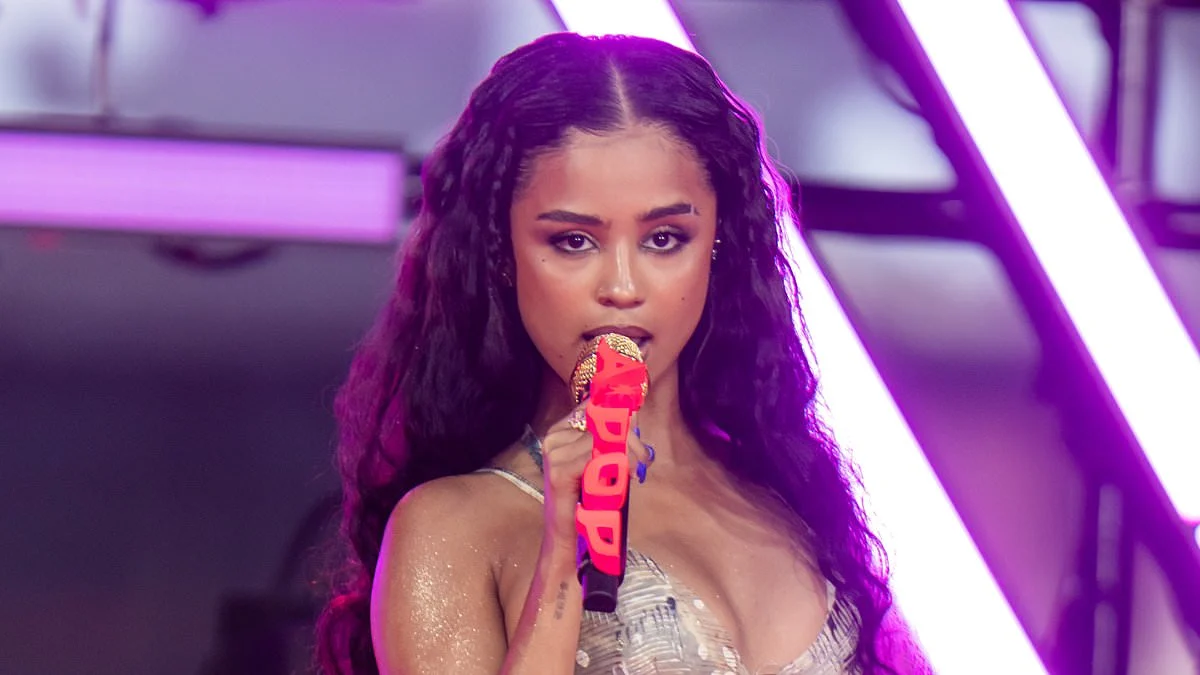
The intersection of global stardom and localized cultural identity has placed South African singer Tyla at the center of an intense international debate regarding racial terminology and historical context. Tyla, whose full name is Tyla Laura Seethal, recently addressed the significant backlash she faced after identifying herself as "coloured," a term that carries vastly different connotations in her home country of South Africa compared to the United States. At 22 years old, the Johannesburg-born artist has achieved unprecedented success, becoming the youngest African artist to win a Grammy Award, yet her rise to fame has been shadowed by a persistent "culture war" rooted in the linguistic and historical nuances of two different continents.
The controversy stems from a 2020 TikTok video that resurfaced in late 2023, just as Tyla’s hit single "Water" was dominating global music charts. In the video, Tyla is seen styling her hair into Bantu knots and wearing traditional beaded jewelry, with a caption stating, "I am a coloured South African." For many American viewers, the word "coloured" is inextricably linked to the Jim Crow era of racial segregation, where it was used as a tool of oppression and is now widely considered an offensive slur. However, in the South African context, "Coloured" is a recognized ethnic identity and a legal category with a complex history that predates and survived the Apartheid regime.
The Historical Divergence of Racial Terminology
To understand the friction caused by Tyla’s self-identification, it is necessary to examine the disparate histories of South Africa and the United States. In the United States, the term "colored" was the primary designation for African Americans during the late 19th and early 20th centuries. It was the label affixed to segregated water fountains, waiting rooms, and schools. Following the Civil Rights Movement of the 1960s, the term was rejected in favor of "Black" or "African American," as it was viewed as a relic of white supremacy and systemic exclusion. Today, using the term in the U.S. is generally perceived as an act of racial insensitivity or a direct slur.
Conversely, in South Africa, "Coloured" (often capitalized) refers to a distinct multiracial ethnic group with ancestry from various sources, including indigenous Khoisan and Xhosa peoples, European settlers, and enslaved people from Madagascar, Indonesia, and India. Under the Population Registration Act of 1950, one of the pillars of Apartheid, the South African population was legally divided into four main racial groups: White, Black (then referred to as Bantu), Indian, and Coloured. While these categories were created to enforce white minority rule and "divide and conquer" the non-white population, the Coloured community developed a unique cultural identity, encompassing specific dialects (such as Afrikaans and Kaaps), culinary traditions, and musical styles.
Tyla’s own heritage reflects this complexity. Her father is of Indian and Mauritian descent, while her mother has Irish and Zulu roots. For Tyla, the term was never a slur but a factual description of her heritage and the community she was raised in. During an interview with Apple Music, she explained that for the first 22 years of her life, "coloured" was simply what she was. It was the box she checked on official documents and the culture she celebrated.
The Viral Incident and the Digital Backlash
The resurgence of Tyla’s 2020 video coincided with her breakthrough into the American market. As "Water" climbed the Billboard Hot 100, reaching the top 10, U.S. social media users began scrutinizing her past content. The reaction was swift and polarized. Some American critics called for a boycott of her music, arguing that her use of the term was harmful to Black Americans and suggested a desire to distance herself from "Blackness." One widely shared post on X (formerly Twitter) warned that her career would end before it began if she insisted on using the term in the American market.
The BBC characterized the situation as a "culture war," highlighting the difficulties of maintaining a local identity while pursuing a global career in the age of social media. The backlash forced Tyla into a position where she had to explain her existence to an audience that lacked the historical context of her upbringing. She noted that initially, the experience was "very difficult" because she had never been asked to justify her identity before.
"When I was able to travel the world and learn more about the world, I then learned just how big the world is and how different each country is, how different context is," Tyla told Apple Music. She acknowledged that learning about the American history of the word made her realize why it was "triggering" for people in the States. She even drew a parallel to South African history, noting that her country has its own derogatory terms (such as the "K-word") and that she would understand if a visitor using a similar-sounding term would cause pain.
A Nuanced Stance on Identity
In her efforts to bridge the gap between her South African roots and her global audience, Tyla has refined her public stance on identity. She has emphasized that while "Coloured" is her specific cultural heritage, she also identifies as Black in a broader sense. "I know that being coloured is like my culture, you know, it exists in my context, but I’m also Black," she stated. This dual identification is common among many South Africans who view "Black" as a political and pan-African identity while retaining specific ethnic labels.
Tyla also addressed the pain inherent in her heritage, acknowledging that the Coloured identity was forged through the "very painful" history of South African segregation. "We were separated from each other and given these names and color became our culture," she said. Despite this origin in systemic oppression, she noted that the community remains "very prideful" of the culture that emerged from those circumstances.
In an interview with The Times, Tyla signaled a desire to move past the controversy, describing it as a "conversation that’s never ending." She stated, "Everywhere you go it means something else… I’m off that train." This sentiment reflects the exhaustion many international artists feel when their local identities are flattened or misinterpreted by the dominant cultural export of the United States.
Career Milestones and the Rise of Amapiano
Despite the controversy, Tyla’s professional trajectory has remained upward. Her music career began in earnest in 2019 with the independent release of "Getting Late," a track that showcased her blend of pop sensibilities and South African rhythms. Before her music career took off, she was studying Mining Engineering, a path she abandoned to pursue her creative passions—a decision that has since been validated by her global success.
The single "Water" became a cultural phenomenon in 2023, fueled by a viral dance challenge on TikTok that showcased the "Bacardi" dance style. The song’s success was not just a personal victory for Tyla but a milestone for South African music. At the 66th Annual Grammy Awards in 2024, Tyla won the inaugural award for Best African Music Performance. In her acceptance speech, she emphasized that while African music is often grouped under the "Afrobeats" umbrella, it is a diverse continent with many distinct genres.
Tyla specifically champions Amapiano, a genre that emerged from South African townships in the mid-2010s. Amapiano—a Zulu word for "the pianos"—is a hybrid of deep house, jazz, and lounge music, characterized by synths, airy pads, and wide, percussive basslines. By centering Amapiano in her work, Tyla acts as a cultural ambassador, bringing the specific sounds of Johannesburg to a global stage. Her second studio album, APop*, and recent hits like "Push 2 Start" continue to build on this foundation.
Broader Implications for Global Pop Culture
The Tyla controversy serves as a case study for the challenges of cultural globalization. As artists from the "Global South" increasingly dominate mainstream charts, the traditional U.S.-centric views on race and language are being challenged. The incident highlights a form of "cultural imperialism" where American linguistic standards are imposed on international artists, often ignoring the local histories that shaped them.
From a sociological perspective, the debate underscores the limitations of digital platforms like TikTok and X in facilitating nuanced cross-cultural dialogue. Complex histories of Apartheid and Jim Crow are often reduced to soundbites or 280-character posts, leading to misunderstandings that can threaten the careers of emerging artists.
However, Tyla’s resilience and her willingness to engage in these difficult conversations have also provided an educational opportunity. By explaining the South African context, she has prompted many of her international fans to learn about the history of Apartheid and the specificities of South African demographics. According to the 2022 South African Census, the Coloured population makes up approximately 8.2% of the country’s 60.6 million people, representing a significant and distinct portion of the nation’s "Rainbow Nation" identity.
In conclusion, Tyla’s journey from a Johannesburg engineering student to a Grammy-winning global pop star illustrates the complexities of identity in the 21st century. While she has accepted that the conversation regarding her self-identification may never be fully resolved to everyone’s satisfaction, she remains committed to representing her culture. As she continues to release music and tour internationally, Tyla’s career will likely remain a focal point for discussions on how the world navigates the delicate balance between local heritage and global stardom.
