
 By Nila Kartika Wati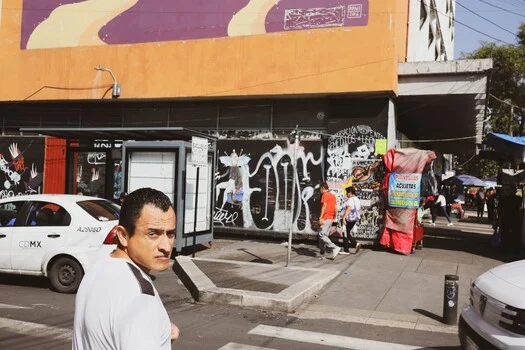
A distinct school of photographic practice emerges not from meticulous planning or pre-visualized outcomes, but from a deliberate embrace of the unknown, an intentional state of disorientation. This methodology posits that profound visual narratives often begin the moment a photographer acknowledges being lost within an environment and consciously chooses to persist in that state of exploration. Mexico City, a megalopolis renowned for its sprawling complexity and vibrant street life, serves as an ideal crucible for this approach, readily absorbing the wanderer and subtly reconfiguring their perceptual framework.
This photographic philosophy eschews traditional assignments and rigid itineraries, instead prioritizing an unguided immersion. While a camera is an indispensable tool, the true instrument is the conscious decision to forgo a complete understanding of one’s destination. This deliberate relinquishment of narrative control over a walk marks the genesis of the photographic process, preceding the act of raising the camera. It is a commitment to observation born from surrender, allowing the city to dictate the terms of engagement.
The Philosophy of Disorientation
At its core, this approach to street photography is an active rejection of mapping and pre-conception. Instead of seeking specific landmarks or pre-determined compositions, the photographer commits to a journey of discovery that prioritizes the organic unfolding of urban life. This is not merely aimless wandering but an intentional methodology designed to bypass cognitive biases and familiar shortcuts, forcing a fresh engagement with the environment. Mexico City, with its population exceeding 22 million in its metropolitan area and its vast geographic spread of over 1,485 square kilometers, offers an unparalleled canvas for this kind of immersive exploration. Its chaotic beauty, rich historical layers from Aztec foundations to Spanish colonial overlays and modern architectural expressions, provide an inexhaustible source of visual friction and unexpected juxtapositions. The city, in this context, becomes an active participant, its very density and cultural dynamism acting as a catalyst for internal rearrangement, a gradual reprogramming of the photographer’s attention rather than a dramatic, sudden shift.
A Chronology of Discovery: The Unfolding Journey
The typical progression of such a photographic endeavor can be charted through several distinct phases, each contributing to the final visual outcome.
- Initial Departure and Relinquishment of Control: The process commences with the conscious decision to embark without a specific assignment or a clear idea of what to seek. This is often described as the most honest mode of operation, allowing for genuine encounters rather than forced narratives. The camera, though present, is secondary to the mental preparation of accepting the unknown. This initial step involves a deliberate detachment from comfort zones and an openness to whatever the urban environment might present.
- Entering the Uncharted Territories: As the walk progresses, the photographer invariably finds themselves in neighborhoods that defy easy categorization or mental mapping. These are places that resist the city’s more coherent, planned aesthetics, instead presenting an architecture of accumulation: layers of additions, paint over decay, and lives interwoven in a manner that resists simplistic interpretation. This physical displacement from familiar mental grids is crucial, as it marks the beginning of the internal reorientation.
- The Reciprocal Gaze and Ethical Stance: A pivotal moment arises just before the act of photographing, when the environment "looks back." This is not metaphorical; it is the practical reality of people noticing the photographer’s presence. At this juncture, a critical decision must be made: whether to attempt invisibility – a comforting but ultimately fictitious concept – or to embrace presence, becoming an acknowledged observer or even a participant. The ethical framework here emphasizes honesty: acknowledging one’s place within the system being entered, rather than pretending to be an unseen entity. This forms the basis for genuine engagement and mutual respect in public spaces.
- Investigative Wandering and the Pursuit of Friction: The walk evolves into a form of investigative wandering, where streets become compelling not for their conventional beauty but for their resistance to expectation. The photographer actively seeks "friction" – the subtle tension between people and space, intention and accident, the idealized function of a place versus its lived reality. This nuanced search moves beyond superficial aesthetics, aiming to capture the inherent struggles and adaptations that define urban existence. This phase is characterized by a slow, deliberate pace, contrasting with the rapid, often goal-oriented movements of typical city dwellers.
Navigating Uncertainty: The Role of Discomfort and Risk
The practice of unplanned street photography, particularly in dynamic urban environments like Mexico City, inherently involves a negotiation with discomfort. This discomfort is rarely synonymous with danger, a term often exaggerated in discussions of urban exploration. Instead, it manifests as uncertainty: the slight tension of not knowing if one truly belongs in a particular space, coupled with the conscious choice to remain there until that feeling normalizes.
This process involves a specific kind of risk – not the cinematic, high-stakes variety, but a quieter, more pervasive social risk. It encompasses the possibility of misinterpretation, of being perceived incorrectly in a context where the photographer lacks established background or identity. However, for practitioners of this methodology, such signals are not deterrents but rather indicators of fertile ground for meaningful work. It suggests a departure from the familiar, a venture into spaces where conventional narratives might not apply, thus opening avenues for fresh perspectives.
The introduction of a camera into these encounters subtly but significantly alters the temperature of interaction. People recalibrate their behavior; some become guarded, others more open, and most adopt a form of "negotiated neutrality," an unspoken agreement to acknowledge each other’s presence without overtly disrupting the scene. This dynamic, though subtle, is where images truly begin to form. It is not merely about composition or exposure settings, but about recognition – the moment a place transcends being a mere background and asserts itself as an active presence within the frame, captured through a gesture, a posture, or a fragment of overheard conversation that spills into the street.
The Internal Landscape: Photographing Adaptation
A profound realization often emerges during such expeditions: the photographer is not merely documenting the external environment but also their own internal adaptation to it. The focus shifts to how attention recalibrates, how the body adjusts its pace to the rhythm of the new surroundings, and how initial hesitation gradually merges with burgeoning curiosity. This internal transformation is particularly pronounced when operating in unfamiliar territories, especially those often characterized as "rough" or working-class neighborhoods, such as those on the north side of Mexico City – areas typically avoided by many photographers seeking picturesque scenes. The choice to engage with these less-traveled areas underscores a commitment to documenting a broader, more authentic spectrum of urban life.
Operating slightly outside one’s linguistic and cultural comfort zones brings a unique clarity. It forces a cessation of prediction and an activation of reactive observation. In this interstitial space, a more honest and unfiltered understanding of reality often emerges. This approach challenges the notion that street photography is about asserting control over reality; instead, it advocates for a sustained surrender to reality’s terms, allowing one to grasp its internal logic. Every neighborhood, even those appearing chaotic at first glance, possesses an underlying order and rhythm, and it is through this immersive surrender that such logic becomes discernible.
Mexico City’s Dynamic Canvas: A Deeper Look
Mexico City’s unique urban fabric plays a critical role in facilitating this photographic method. As one of the largest cities in the world, its sheer scale guarantees an endless supply of novel environments. Its history, spanning millennia from pre-Hispanic civilizations to a bustling modern metropolis, is visibly imprinted on its streets, offering layers of social, economic, and cultural narratives. The city’s informal economy, vibrant street markets, diverse architectural styles ranging from pre-Columbian ruins to Art Deco and brutalist structures, all contribute to an environment ripe for unexpected encounters.
The choice to explore "rough places" and working-class neighborhoods is particularly significant. These areas, often overlooked or misrepresented in mainstream media, possess a raw authenticity and resilience that can yield powerful photographic narratives. Engaging with these communities requires a heightened sense of ethical awareness and a commitment to respectful interaction. The "honest presence" approach, where the photographer acknowledges their role and avoids covert photography, fosters a more ethical relationship with subjects, even if brief. This methodology implicitly suggests that the most compelling stories are often found where life is lived most visibly, unvarnished by tourist-centric beautification. Data indicates that these neighborhoods, despite perceived challenges, are often communities with strong internal dynamics and unique visual characteristics that defy monolithic categorization.
Broader Implications for Photographic Practice
This immersive, unplanned approach has significant implications for the broader field of photography, challenging conventional wisdom and fostering a more adaptable mindset. It suggests that valuable photographic instincts can be cultivated across various genres, not just street photography. The ability to surrender to an environment, to negotiate discomfort, and to adapt one’s perception are skills transferable to portraiture, documentary work, landscape photography, and even commercial assignments, where an unexpected element can often elevate the final product. Educational resources, such as "The Well-Rounded Photographer: 8 Instructors Teach 8 Genres of Photography," often advocate for such cross-disciplinary skill development, emphasizing adaptability over rigid specialization.
This philosophy shifts the paradigm from a photographer-as-controller model to a photographer-as-interpreter model. The lasting impact of this approach is that the resulting images carry an indelible blend of objective observation and subjective experience. They transcend mere documentation, becoming artifacts of a profound personal and perceptual journey. The photographer’s emotional and cognitive responses to the environment become embedded in the visual narrative, enriching the viewer’s understanding and offering a more nuanced portrayal of the urban landscape.
Conclusion: The Rewritten Gaze
Eventually, the initial sense of being lost begins to dissipate. Patterns emerge, familiarity sets in, and the environment starts to orient itself. This return to cognitive mapping typically signals the conclusion of the most productive phase of such a photographic endeavor. The work, in this context, is not about mastering the space but about meeting it at the threshold of its unfamiliarity, before it fully yields to predictability.
Upon reflection, the photographer often finds it impossible to separate what was objectively seen from what was subjectively felt. The images, regardless of conscious intent, inevitably carry both dimensions. This fusion of observation and internal experience is arguably the fundamental purpose of this photographic method: not merely to document a place, but to allow that place to temporarily, yet profoundly, rewrite the very way one perceives the world. It is a testament to the transformative power of intentional disorientation in the pursuit of authentic visual storytelling.
