
 By admin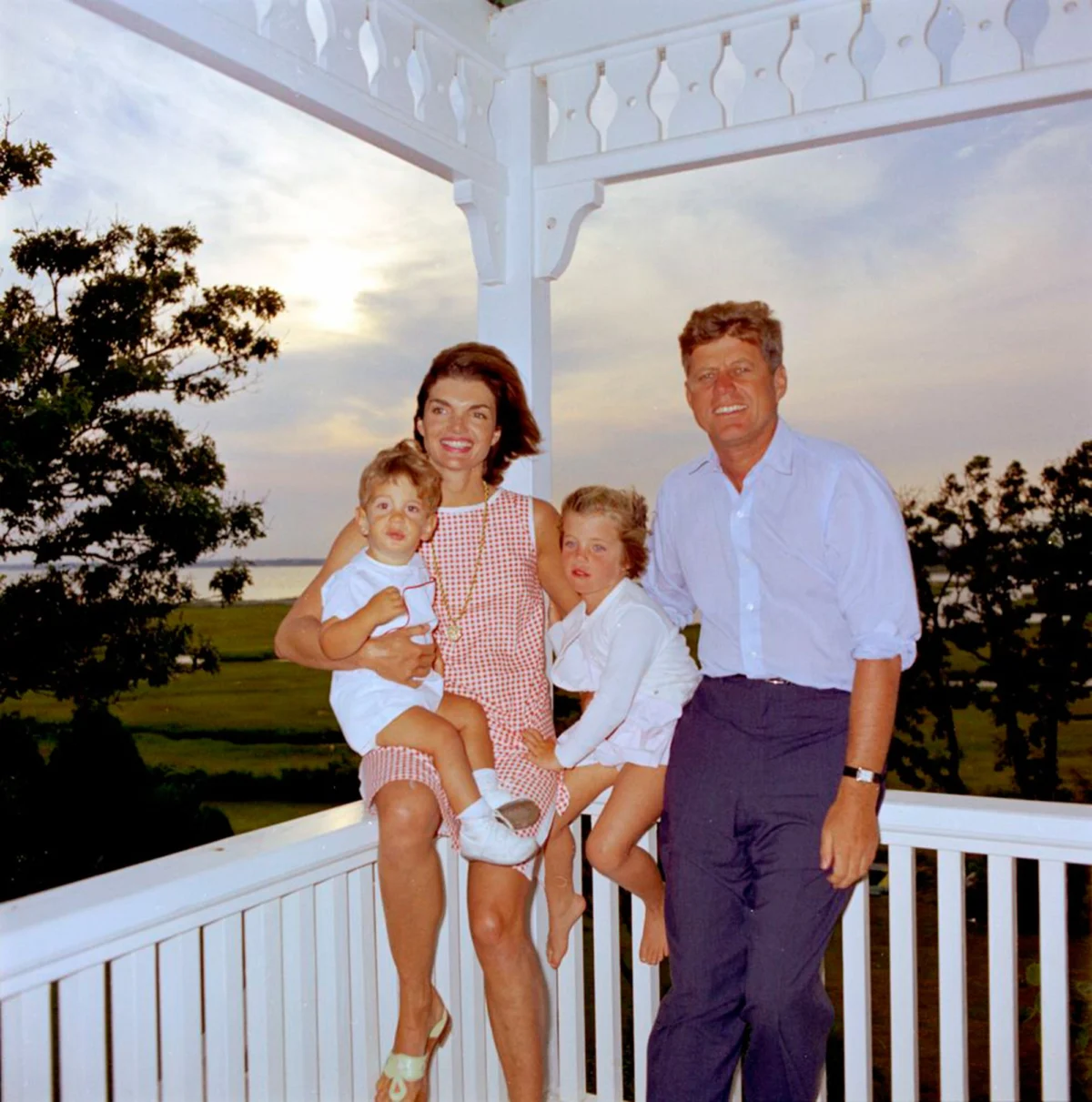
As the summer season unfolds, marked by family reunions and celebratory gatherings, public attention invariably turns to one of America’s most iconic and enduring families: the Kennedys. Their political dynasty has captivated global audiences for decades, not only through their significant political endeavors but also through glimpses into their personal lives and leisure pursuits. Central to this enduring fascination are their large family gatherings, particularly their storied Fourth of July celebrations at the historic Kennedy Compound in Hyannis Port, Massachusetts, a site that has become synonymous with the family’s legacy and American political lore.

The compound, famously dubbed the "Summer White House" during John F. Kennedy’s presidency, experienced a resurgence in public interest this year following its feature in the FX television series Love Story, reaffirming its status as an enduring symbol of the "Camelot" era. More than just a collection of homes, the Kennedy Compound represents a unique intersection of American history, political power, and familial tradition, drawing visitors and scholars alike to understand the environment that shaped one of the nation’s most influential families.

The Genesis of a Dynasty’s Retreat: Founding the Hyannis Port Compound
The origins of the Kennedy Compound trace back to 1926 when Joseph P. Kennedy Sr., the patriarch of the family, and his wife, Rose Fitzgerald Kennedy, leased a summer cottage at 50 Marchant Avenue in Hyannis Port, Massachusetts. Impressed by the tranquil charm and maritime spirit of Cape Cod, Joseph Sr. purchased the property in 1929, transforming it from a seasonal rental into the foundational piece of what would become a sprawling family retreat. This initial acquisition marked the beginning of a deliberate effort to establish a central gathering place for his growing family, a place where his nine children—Joseph Jr., John, Rose, Kathleen, Eunice, Patricia, Robert, Jean, and Edward—could convene, bond, and be instilled with a strong sense of family unity and competitive spirit.

As the family expanded and the children married and started their own families, the need for more space became apparent. In 1956, John F. Kennedy, then a U.S. Senator from Massachusetts, purchased the house adjacent to his parents’ property, located at 65 Harrison Avenue. This home, along with its separate guesthouse, would become his primary residence when in Hyannis Port. A few years later, in 1959, his younger brother, Robert F. Kennedy, who was serving as chief counsel for the Senate Labor Rackets Committee, acquired a third property at 49 Marchant Avenue, completing the trio of homes that comprise the core of the Kennedy Compound. These three houses, interconnected by sprawling lawns, private beaches, and shared recreational facilities, formed a private enclave that offered both solitude and a communal atmosphere essential for the large and boisterous Kennedy clan. The thoughtful arrangement allowed each family branch a degree of privacy while ensuring easy access for impromptu gatherings, sports, and shared meals.

Hyannis Port During the "Camelot" Era: The Summer White House
The Kennedy Compound’s profile reached unprecedented heights during John F. Kennedy’s presidency (1961-1963), when it officially earned the moniker "The Summer White House." This designation was not merely symbolic; Hyannis Port served as a fully functional extension of the Oval Office during the warmer months. President Kennedy frequently conducted official business from his Hyannis Port home, holding press conferences on the lawn, hosting foreign dignitaries, and making critical policy decisions against the backdrop of Nantucket Sound.

The "Summer White House" era allowed the American public an intimate, albeit carefully curated, look into the life of their young, charismatic president and his family. Photographs and news reels from this period frequently depicted President Kennedy sailing his boat, the Victura, with his wife Jacqueline and their children, Caroline and John Jr., or engaging in lively games of touch football with family members and aides. These images helped cement the "Camelot" myth – a vision of a youthful, energetic, and glamorous administration that blended political gravitas with an appealing informality. The compound became a tangible representation of this ideal, a place where the serious work of governing was seamlessly integrated with the joys of family life and leisure.

During these years, the compound was equipped with state-of-the-art communication systems, including secure telephone lines and a teletype machine, ensuring the President remained constantly connected to Washington D.C. and global events. Journalists were often present, though typically kept at a respectful distance, to capture moments that humanized the presidency and contributed to the public’s perception of a vigorous and approachable leader. The strategic use of the compound for both work and play was a masterstroke in public relations, fostering a connection between the First Family and the American people that few presidencies before or since have achieved.

Summer Traditions and Activities: A Tapestry of Family Life
The Kennedy Compound was more than just a political hub; it was the vibrant heart of the family’s social and recreational life. Summers at Hyannis Port were defined by a rich tapestry of traditions and activities that fostered a unique blend of camaraderie and fierce competition. Sailing was perhaps the most iconic of these pursuits. Joseph P. Kennedy Sr. had instilled a deep love for the sea in his children, and the waters off Hyannis Port became their playground. John F. Kennedy, a skilled sailor, often took to the waves, sometimes with his family, sometimes with political advisors, using the quiet solitude of the ocean for reflection and informal discussions. The family’s passion for sailing extended to competitive races, a testament to their inherent drive to excel in all endeavors.

Beyond sailing, the compound’s expansive lawns were the site of legendary games of touch football, a tradition that became synonymous with the Kennedys. These games were not mere casual pastimes; they were intense, high-energy contests involving multiple generations of Kennedys, their spouses, friends, and even Secret Service agents. The games were characterized by their physicality, strategic plays, and the family’s unyielding desire to win, offering a glimpse into their competitive spirit that extended from the playing field to the political arena. Other activities included swimming in the ocean or the compound’s pool, tennis, and long walks along the beach.

The Fourth of July celebrations were particularly renowned, embodying the essence of Kennedy family life. These annual gatherings were grand affairs, bringing together dozens of family members, close friends, and often, notable public figures and celebrities. The festivities typically included barbecues, clambakes, impromptu talent shows, and culminated in spectacular fireworks displays over Nantucket Sound. In 2012, for instance, the presence of pop superstar Taylor Swift at the family’s Independence Day festivities garnered significant media attention, underscoring the enduring blend of political prominence and celebrity allure associated with the Kennedys. These celebrations were not just parties; they were reaffirmations of family bonds, a display of unity, and a continuation of traditions that spanned generations, all set against the backdrop of American patriotism.

A Nexus of Power and Celebrity: The Compound’s Social Significance
Throughout its history, the Kennedy Compound has served as an unofficial salon for some of the most influential figures of the 20th century. During JFK’s presidency and in the decades that followed, its guest list read like a who’s who of politics, arts, and culture. World leaders, renowned authors, Hollywood stars, and prominent journalists were frequent visitors, drawn by the unique blend of intellectual discourse, relaxed atmosphere, and the undeniable charisma of the Kennedy family.

The compound offered a rare environment where high-stakes political discussions could unfold informally on a sailboat or over a backyard barbecue. This blurred line between official and personal life contributed to the mystique of the Kennedys, suggesting a family whose public service was deeply intertwined with their private passions. The ability to attract and host such a diverse array of guests speaks volumes about the family’s extensive network and their position at the nexus of American power and cultural influence. Beyond the aforementioned Taylor Swift, historical accounts detail visits from figures ranging from British Prime Minister Harold Macmillan to literary giants like John Steinbeck and numerous figures from the civil rights movement, reflecting the family’s broad interests and impact. These interactions often led to informal collaborations, cultural exchanges, and solidified relationships that extended beyond the compound’s walls.

The Compound’s Enduring Cultural Resonance
Even decades after John F. Kennedy’s assassination, the Hyannis Port Compound continues to exert a powerful pull on the American imagination. It remains a potent symbol of a bygone era, a physical embodiment of "Camelot" and the aspirational spirit of the Kennedy family. Its continued relevance is periodically highlighted by cultural productions and historical narratives. The FX television series Love Story, which featured the compound, is a recent example of how popular media keeps the Kennedy legacy and its iconic settings in the public consciousness. Such portrayals contribute to renewing interest among new generations who seek to understand the allure and complexities of this extraordinary family.

The compound has been the subject of countless books, documentaries, and articles, each attempting to unravel the layers of glamour, ambition, and tragedy that define the Kennedy narrative. Its image, whether through archived photographs of family gatherings or contemporary cinematic depictions, evokes a specific period in American history marked by idealism, political ferment, and profound societal change. It serves as a visual anchor for the collective memory of the Kennedys, a place where their public image and private lives converged.

The Kennedy Legacy: Beyond the Compound
While the compound is a crucial backdrop, the Kennedy legacy extends far beyond its physical boundaries. The family’s impact on American political and social life is immense and multifaceted. From Joseph P. Kennedy Sr.’s early business ventures and ambassadorship to John F. Kennedy’s presidency, Robert F. Kennedy’s civil rights activism, and Edward M. Kennedy’s decades of legislative work in the Senate, the Kennedys have consistently shaped national discourse and policy.

The values fostered at the compound—a strong emphasis on public service, intellectual curiosity, competitive drive, and unwavering family loyalty—were instilled early on. These values, combined with their wealth and political acumen, propelled them to the forefront of American life. The compound served as both a sanctuary from the pressures of public life and a training ground for future leaders, where debates were sharp, expectations were high, and the importance of contributing to society was paramount. This environment undeniably contributed to the development of a political machine capable of enduring generations of public scrutiny and personal hardship.

Preserving the Past, Inspiring the Future
Today, the Kennedy Compound is not just a private residence but also a site of significant historical importance. In recognition of its place in American history, the Joseph P. Kennedy House, which was the family’s original home and the main residence, was designated a National Historic Landmark in 2005. This designation underscores the compound’s enduring significance and ensures its preservation for future generations.

While the compound remains privately owned by various members of the Kennedy family, efforts are made to share its history with the public through archives, museums, and historical societies. The John F. Kennedy Presidential Library and Museum in Boston, for instance, houses extensive collections related to the family and the "Summer White House" era, providing invaluable resources for scholars and the public. The continued maintenance and occasional public access, whether through media or historical tours, serve to remind Americans of a pivotal family and a transformative period in their nation’s story.

Conclusion
The Kennedy Compound in Hyannis Port stands as a testament to the enduring power of family, the allure of political ambition, and the complex tapestry of American history. From its humble beginnings as a summer retreat purchased by Joseph P. Kennedy Sr. to its zenith as the "Summer White House" during John F. Kennedy’s presidency, it has been a silent witness to moments of great joy, profound sorrow, and pivotal political decisions. Its lawns have hosted presidents and pop stars, witnessed fierce games of touch football, and celebrated countless Fourth of July traditions. The compound is more than just real estate; it is a living monument to the Kennedy legacy, a place where the private lives of America’s most famous family intersected with the public imagination, forever cementing its place in the annals of American lore as a symbol of aspiration, power, and an unforgettable era.
