
 By admin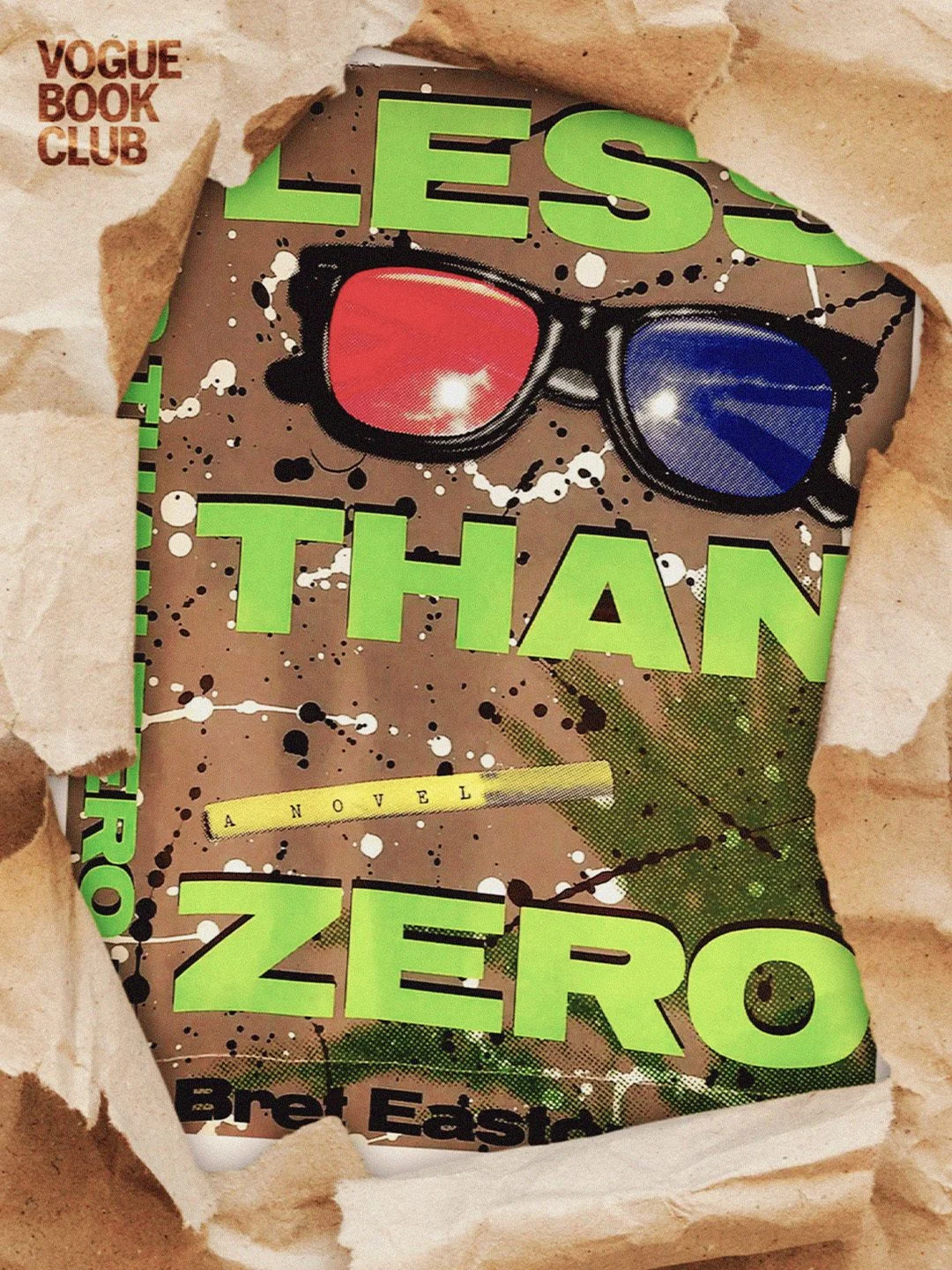
The prestigious Vogue Book Club has announced its third literary selection, turning its gaze to a foundational text of late 20th-century American literature: Bret Easton Ellis’s chilling 1985 debut novel, Less Than Zero. This choice signals a deep dive into the cultural landscape of 1980s Los Angeles, inviting readers to explore themes of disaffection, consumerism, and existential ennui that continue to resonate four decades after its initial publication. The announcement positions Vogue not merely as a fashion arbiter but as a significant voice in contemporary literary discourse, curating reads that reflect on society’s complexities.
The Chosen Work: Less Than Zero
Published when Ellis was just 21 and still an undergraduate at Bennington College, Less Than Zero quickly became a literary sensation and a cultural touchstone. The novel follows Clay, a privileged college student returning home to Los Angeles from an unnamed New Hampshire institution for Christmas break. Over four weeks, Clay navigates a landscape populated by his equally affluent, emotionally detached friends, immersing himself in a world defined by rampant drug use, casual sex, extravagant parties in exclusive enclaves like Holmby Hills, and an pervasive sense of nihilism.
Ellis’s narrative style in Less Than Zero is distinctively spare, marked by declarative, hypnotic sentences that owe a clear debt to his stated literary heroes, Joan Didion and Ernest Hemingway. This minimalist prose mirrors the emotional numbness of its characters, creating a disquieting atmosphere where material wealth coexists with spiritual emptiness. The novel meticulously details the specificities of 1980s Southern California life: meetups at iconic diners like Du-par’s, shopping sprees at the Galleria, drives along Wilshire Boulevard and out to a "ghostly" Palm Springs. Brand names—from cars to clothing, movies in multiplexes to music on the radio—are name-checked with an almost anthropological precision, painting a vivid, if bleak, portrait of a generation adrift in a sea of plenty. The narrative follows Clay’s increasingly disturbing encounters, particularly his efforts to reconnect with his on-again, off-again girlfriend Blair and to understand the escalating crisis surrounding his friend Julian, whose descent into drug addiction and male prostitution forms the novel’s harrowing core.
A Provocative Debut: Bret Easton Ellis’s Emergence
Bret Easton Ellis emerged onto the literary scene at a pivotal moment, quickly becoming associated with a group of young, often controversial authors dubbed the "Literary Brat Pack." This cohort, which included authors like Jay McInerney (Bright Lights, Big City) and Tama Janowitz (Slaves of New York), captured the zeitgeist of the 1980s with their portrayals of urban alienation, hedonism, and the darker side of affluence. Ellis, however, distinguished himself with a colder, more detached gaze, presenting a world where moral boundaries were blurred and human connection seemed almost impossible.
Born in Los Angeles in 1964, Ellis drew heavily from his own experiences growing up in a wealthy, fractured family in Sherman Oaks and attending The Buckley School, before heading east to Bennington College in Vermont. It was during his time at Bennington, a crucible for many experimental writers, that he penned Less Than Zero. The novel’s raw depiction of teenage life in affluent Los Angeles shattered romanticized notions of Californian youth, instead exposing a stark reality of privilege coupled with profound despair. His influences, particularly Didion’s sharp observations of California’s cultural decay and Hemingway’s stripped-down prose, are evident throughout the novel, contributing to its stark realism and unsettling power.
Critical Acclaim and Controversy
Upon its release in 1985, Less Than Zero was met with a mix of fascination, horror, and critical praise. Michiko Kakutani, the indomitable book critic for The New York Times, famously declared it "one of the most disturbing novels I’ve read in a long time." Her review, along with others, cemented the book’s reputation as a significant, albeit unsettling, literary achievement. It swiftly became a bestseller, propelling Ellis to a level of celebrity that often blurred the lines between his fictional world and his public persona. The novel’s unflinching portrayal of drug use, sexual promiscuity, and moral decay sparked considerable debate, with some critics decrying its content as gratuitous and others hailing it as a powerful, necessary reflection of a generation.
The book’s impact extended beyond the literary world. In 1987, a film adaptation of Less Than Zero was released, starring Andrew McCarthy as Clay, Jami Gertz as Blair, and Robert Downey Jr. in a breakout role as Julian. While the film took significant liberties with the novel’s plot and tone, offering a more redemptive arc than Ellis’s bleak original, it further cemented the story’s place in popular culture and introduced its themes to an even wider audience. The film, despite its narrative changes, managed to capture some of the novel’s atmospheric dread and iconic Los Angeles settings.
The Enduring Legacy of Bret Easton Ellis
Less Than Zero was just the beginning of a prolific and often controversial career for Bret Easton Ellis. He followed his debut with The Rules of Attraction (1987), another collegiate narrative exploring similar themes of decadence and emotional detachment. His most infamous work, American Psycho (1991), became a global phenomenon, initially canceled by its first publisher, Simon & Schuster, pre-publication due to its graphic and horrific content. Vintage Books eventually picked it up, and despite widespread protests and critical condemnation for its violence and misogyny, American Psycho became a cult novel, a subject of intense academic study, and later, a successful film adaptation and even a Broadway musical.
Ellis continued to explore the dark underbelly of contemporary society in novels such as Glamorama (1999), a satirical take on celebrity culture and terrorism, and Lunar Park (2005), a meta-fictional horror story that blurs the lines between author and character. His work consistently dissects themes of identity, consumerism, media saturation, and the elusive nature of reality, often through the lens of wealthy, morally ambiguous protagonists. In 2023, Ellis made a significant return to the environs and stylistic approach of Less Than Zero with The Shards. This novel, set in 1981 Los Angeles, revisits many of the themes and the distinctive atmosphere of his debut, focusing on a group of privileged high school students amidst a series of gruesome murders. The Shards has garnered considerable attention, not least because of an upcoming buzzy Ryan Murphy adaptation for FX, set to debut in August and starring Kaia Gerber and Homer Gere, signaling a renewed cultural fascination with Ellis’s early world.
Why Less Than Zero Now? A Contemporary Lens
The Vogue Book Club’s selection of Less Than Zero for its third installment is particularly timely. Forty years after its publication, the novel’s themes—emotional numbness in an era of material excess, the pervasive influence of media, the search for meaning in a seemingly superficial world, and the anxieties of youth—remain strikingly relevant. In an age of digital saturation, social media performance, and persistent questions about authenticity and connection, Clay’s detached observations and his friends’ struggles with addiction and identity feel eerily prescient.
The novel serves as a potent commentary on the darker side of American affluence, a critique that resonates as strongly today amidst widening wealth gaps and ongoing discussions about privilege and responsibility. Ellis’s detached, satirical view of California’s glamorous yet ominous underbelly continues to be indelible. The opening line, "People are afraid to merge on freeways in Los Angeles," acts as a metaphor for the characters’ inability to connect emotionally, a sentiment that speaks to contemporary issues of isolation despite hyper-connectivity. By revisiting Less Than Zero, Vogue encourages its readership to reflect on the cyclical nature of societal anxieties and the enduring power of literature to capture the essence of an era. The choice also underscores Vogue‘s commitment to featuring works that are not only culturally significant but also provoke thought and discussion, moving beyond purely aesthetic considerations to engage with deeper cultural currents.
Participating in the Vogue Book Club
For those eager to delve into this iconic novel, Vogue has outlined a clear reading schedule and provided an exclusive discount. Readers are encouraged to pick up a copy of Less Than Zero, preferably the 1998 Vintage Contemporaries edition, and follow along. The reading guide is structured into two main parts:
- July 30 – August 6: Pages 9 ("People are afraid…") to 118 ("For some reason I believe this and unroll the window and we drive to After Hours."). This initial segment introduces Clay’s return to Los Angeles, his initial encounters with his friends, and the unfolding of his disquieting reality.
- August 7 – August 13: Pages 119 ("The girl I’m sitting next to…") to the end. This section delves deeper into the escalating conflicts, the darker revelations about Julian, and Clay’s ultimate confrontation with the emptiness of his world.
To facilitate participation, Vogue has partnered with Bookshop.org, an online bookstore that supports independent booksellers. Readers can purchase their copy through Bookshop.org and use the code Vogue15 for a 15% discount. Throughout the reading period, Vogue will be posting stories and discussions about Less Than Zero on the Vogue app, fostering a community of readers and providing additional context and analysis. This interactive approach aims to enrich the reading experience, allowing participants to share their insights and engage with the novel’s complex themes in a collective setting.
The selection of Less Than Zero for the Vogue Book Club is more than just a nod to a classic; it’s an invitation to engage with a work that powerfully critiques the very fabric of affluent society and the psychological toll of unchecked hedonism. As readers embark on this journey through Bret Easton Ellis’s Los Angeles, they will undoubtedly find themselves contemplating not just the 1980s, but the enduring echoes of its disquiet in the present day.
