
 By Jia Lissa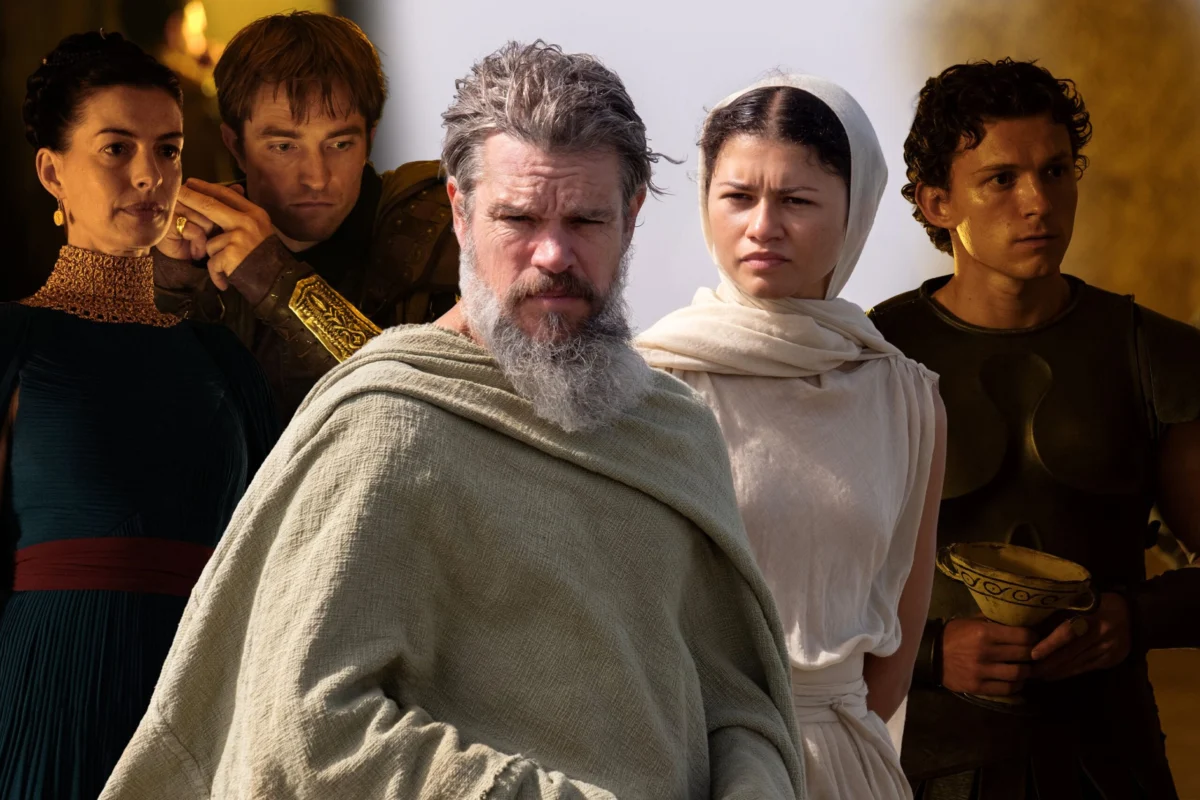
Christopher Nolan’s cinematic adaptation of Homer’s epic poem, The Odyssey, transcends mere visual spectacle, immersing audiences in a world where apparent magic is meticulously crafted through the artistry of hair and makeup. As the film opens with the stark declaration, "It is a time of apparent magic…," viewers are immediately transported to an era steeped in gods, goddesses, spells, and fantastical transformations. From the monstrous Cyclops and the multi-headed dog to the memory-altering lotus flowers and Circe’s chilling metamorphosis of men into swine, Nolan’s commitment to in-camera effects is palpable. This dedication places an immense emphasis on the nuanced work of the hair and makeup departments, led by Gloria Pasqua Casny and Luisa Abel respectively, who were tasked with translating ancient descriptions into tangible, yet grounded, on-screen realities.
Ancient Roots, Modern Vision: The Research and Inspiration
The creative team delved deep into the rich tapestry of Greek mythology, drawing inspiration from centuries-old texts and visual artifacts. "Greek mythology is full of colorful, physical descriptions, often repeated over and over again," noted Casny, referencing epithets like Athena’s "bright owl-eyes" and Calypso’s "lovely braids." The iconic description of Athena de-aging Odysseus, making his "hair grow thick on top of his head and flow down in curls like hyacinth blooms," served as a significant touchstone.
Historical Deep Dive:

- Artistic Recreations: Casny and Abel meticulously studied ancient Greek art, including pottery, murals, and paintings. Abel explained, "we examined pottery, murals, and paintings that showed what facial hair and people’s faces looked like at the time." This allowed for an authentic representation of ancient physiognomy.
- Cosmetic Palettes: Abel also researched the available cosmetics in ancient Greece, aiming to replicate the colors using modern products that could achieve a "lightweight, flawless look that we wanted for IMAX." This involved extensive testing to find formulations that met both historical accuracy and technical requirements.
- Surprising Discoveries: Casny’s research unearthed fascinating historical details. "After a trip to the Brooklyn Museum, she found that 3,000 years ago, there were curling irons," and that "the ancient Greeks also had barbershops." These revelations directly informed the styling choices for both principal and background actors, adding an unexpected layer of authenticity.
Nolan’s overarching directive was to create "an earthy narrative," a vision that guided Casny and Abel in their efforts to balance the epic scale of the film with an intimate, human quality. Despite being shot on 65mm film and featuring colossal creatures and complex nautical scenes, the 3,000-year-old epic poem, in Nolan’s hands, was intended to resonate on a deeply personal level. The hair and makeup designs were instrumental in achieving this delicate equilibrium.
Hair as a Herald of Vitality and Divinity
In ancient Greek culture, hair was far more than mere adornment; it was a powerful symbol of vitality, beauty, heroism, and divinity. The frequent literary references to curly hair, described as "curling hair like hyacinth petals" for Odysseus, provided a rich foundation for the film’s aesthetic.
Embracing Natural Texture:
- Matt Damon as Odysseus: For the titular hero, Matt Damon largely retained his natural hair texture, a choice that aligned with the mythological descriptions and contributed to the grounded portrayal.
- Tom Holland’s Telemachus: The casting of Tom Holland as Telemachus proved fortunate, as his naturally curly hair was an asset. Casny recalled, "Tom has great curly hair, and when he came in [for tests], I just shook his hair up and was like, ‘You are not cutting it or wearing it straight.’" Her approach involved enhancing his natural texture with products like R&Co mousse and argan oil, ensuring a vibrant and authentic look.
Adornments of Antiquity:

- Bronze Age Inspiration: Many of the hair accessories, rendered in bronze and gold, were directly inspired by artifacts from the Bronze Age.
- Persephone’s Pins: For Penelope, played by Anne Hathaway, Casny incorporated hairpins featuring small birds, meticulously recreated by the props team from Bronze Age designs.
- Gilded Flowers: A jewelry maker in Morocco, where much of the film was shot, crafted gilded flowers based on historical finds, adding a touch of exquisite detail to the characters’ hairstyles.
- Lupita Nyong’o’s Dual Roles: For Lupita Nyong’o’s portrayal of both Helen of Troy and Clytemnestra, Casny utilized gold thread from the costume department, along with beads and gold strips sourced from Etsy. For Clytemnestra, a distinctive hairpiece featuring a bird was designed. Casny explained the symbolic significance: "We were saying that this is her symbol of freedom, of which he had no idea… her own secret little pin." This element subtly conveyed Clytemnestra’s inner turmoil and desire for autonomy.
Grounding the Divine: Humanizing the Gods
In Nolan’s The Odyssey, the gods are rarely seen in their full celestial glory. Instead, their presence is often implied through natural phenomena like thunder and storms. When deities do appear, they are depicted with a rugged, human quality, eschewing ostentatious displays of gold and jewels. This deliberate choice, as articulated by Casny, was central to Nolan’s vision of a "grounded" narrative.
Calypso’s Island Exile:
- Charlize Theron as Calypso: Portrayed by Charlize Theron, Calypso is presented as a recluse on a remote island, akin to a modern survivalist. The challenging filming conditions in Morocco, with winds reaching 30-50 mph, naturally contributed to Calypso’s untamed aesthetic.
- Textured and Wet Look: Casny achieved a "gritty look" for Calypso’s hair using mousse, while leave-in conditioner and serum from Virtue Labs (a brand associated with Theron’s personal hairstylist, Adir Abergel) were employed to maintain a perpetually wet appearance. Gauze from Theron’s costume was used to tie her hair, creating a look that appeared self-styled.
- Abel’s Makeup Approach: Abel’s makeup for Calypso was deliberately "tanned and broken down, with a more outdoor feel," emphasizing the character’s self-sufficiency and warrior-like nature.
Circe’s Deceptive Guise:
- Samantha Morton as Circe: Casny envisioned Circe’s disheveled appearance as a deliberate ploy to lure and deceive Odysseus’s men, facilitating their transformation. The subtle details of her disguise were crucial for conveying her manipulative intent.
Athena’s Ethereal Manifestation:

- Zendaya as Athena: Zendaya’s portrayal of Athena was inspired by the image of a young village girl killed during the Trojan War, a memory that profoundly impacted Odysseus. Casny explained, "that’s what stayed in Odysseus’s mind—that’s the form she took in his imagination—and it helped a lot with how her look ended up."
- Subtle Styling: Zendaya’s bob was styled into two small, tucked braids and covered with a headscarf. Her makeup, a pared-back version of her premiere look, featured blush and minimal enhancement. Abel aimed for a "flawless while maintaining a grounded quality" for Athena, achieving a "youthful, translucent look that we achieved with sheer makeup, such as Merit blush."
Battling the Elements: The Rigors of On-Set Production
The hair and makeup teams faced an "epic-sized journey" themselves, contending with extreme weather conditions across diverse filming locations. From the humidity and fierce winds of Morocco to the sideways rain in Iceland and the frigid temperatures of the North Atlantic during boat sequences, their work demanded resilience and ingenuity.
The Challenge of Wet Hair:
- Wax as a Staple: To maintain the appearance of constantly soaked and sweaty sailors, particularly for Matt Damon and the ensemble cast, copious amounts of hair wax were employed. This product was essential for replicating the effect of sweat adhering to the skin and ensuring hairstyles remained in place throughout demanding scenes.
- Argan Oil: The Secret Weapon: The true hero of keeping hair perpetually looking wet and well-conditioned, especially for the extensive background cast of 1,300 actors, was natural argan oil. Sourced from a stylist’s farm, this "brilliant virgin argan oil" was used generously to prevent hair from drying out, even when repeatedly doused with water.
The Ubiquity of Dirt:
- Custom Dirt Formulations: Abel developed custom-made dirt products that possessed a "sheer, natural quality" while remaining waterproof. The team meticulously researched and matched the colors and textures of dirt to each specific location, from the red sands of Troy and the dark tones of Hades to the earthy hues of the Laestrygonians and the pale sands of Calypso’s island.
- Icelandic Sand Texture: For the scene depicting Odysseus’s landing in Hades on a black-sand beach in Iceland, the hair team went to extraordinary lengths. Casny mixed black pigment into hair gel and incorporated both fine and coarse granules of the actual Icelandic sand to create a "crusty effect" on the actors’ hair, a testament to the team’s dedication to visceral realism.
Chronology and Transformation: Depicting the Passage of Time
Homer’s Odyssey spans twenty years, and Nolan’s adaptation employed a nonlinear narrative structure, making the visual cues of time passage crucial for audience comprehension. Hair and makeup played a pivotal role in conveying these temporal shifts.
.jpg)
Penelope’s Enduring Grace and Aging:
- Anne Hathaway’s Dual Portrayal: Abel designed two distinct beauty looks for Penelope: one youthful and vibrant, representing her early days and enduring hope, and another depicting significant aging.
- Illumination and Age Spots: For younger Penelope, products like Typology Glow Drops were used to enhance radiance. For older Penelope, specific cheek placement and the strategic application of age spots were employed to visually communicate the toll of time and longing.
Odysseus’s Evolving Appearance:
- Matt Damon’s Transformation: Casny achieved the aging effect for Odysseus by first dyeing Damon’s hair brown for scenes set during the Trojan War. Subsequently, loose gray hair pieces were meticulously glued into his natural hair for scenes depicting him twenty years later, a subtle yet effective method of aging the character.
Eumaeus’s Herculean Hair Transformation:
- John Leguizamo’s Whitening Process: The aging of John Leguizamo’s character, Eumaeus, presented a significant challenge due to his naturally dark hair. The process of bleaching dark hair to a bright white typically requires multiple sessions over an extended period to prevent damage.
- Time Constraints and Solutions: Faced with limited time, the team conducted two rounds of bleaching, which still left a yellow tinge. They then utilized Fanola and Kérastase purple shampoos to neutralize brassiness. For touch-ups, silver art pens were employed.
- Olaplex and Extended Bleaching: During a break in filming, Leguizamo returned home to New York. Casny provided his wife with an extensive at-home care regimen involving Olaplex products to maintain hair health. Upon his return to Los Angeles, the team was finally able to achieve the desired bright white shade for Eumaeus’s hair.
Status and Subtlety: Hair and Makeup as Social Signifiers
Beyond character aging, hair and makeup served as powerful indicators of social status and individual backstories within the film’s hierarchical society.

Servants’ Simplicity vs. Royalty’s Grandeur:
- Uniformity for Servants: The hair of servants was intentionally kept simple, uniform, and unadorned, contrasting sharply with the intricate and individualized styles of royalty.
- Royal Distinctions: Even among the royal characters, subtle variations in beauty choices highlighted their distinct personalities and circumstances.
Penelope’s Restrained Elegance:
- Awaiting Odysseus’s Return: Casny described Penelope’s look as "elegant and restrained," reflecting her hope for Odysseus’s imminent return while simultaneously signaling to her suitors that she was not available.
- Varied Updos: Anne Hathaway’s Penelope featured a series of center-parted updos, with slight variations daily to maintain a sense of classic simplicity. Davines hairspray and a Mason Pearson brush were key tools in styling Penelope’s hair.
Helen’s Opulent Persona:
- Luminous Skin and Contouring: In stark contrast to Penelope, Helen’s beauty was characterized by opulent and elaborate looks. Nyong’o’s skin was rendered luminous, with Abel creating a custom contour that added dimension without appearing artificial or modern.
- African Heritage Inspiration: For Helen’s hair, Nyong’o’s own sisterlocks were augmented with 50-inch extensions, created in Kenya, to achieve significant length, inspired by traditional African braids and the regal imagery of African queens. Casny latch-hooked these extensions to Nyong’o’s sisterlocked bob, allowing the look to extend to her calves. This choice was a deliberate salute to Nyong’o’s heritage, aligning Helen’s portrayal with African royalty rather than a purely Greek aesthetic.
The meticulous and inventive work of Gloria Pasqua Casny and Luisa Abel, deeply rooted in historical research yet boldly reimagined for the cinematic screen, was instrumental in bringing The Odyssey‘s mythological world to life. Their contributions, often unseen but profoundly impactful, underscore the vital role of hair and makeup in narrative storytelling, transforming ancient epics into compelling, visually resonant modern experiences. The "apparent magic" viewers witness is, in fact, a testament to profound artistic skill, historical understanding, and a collaborative vision that celebrated both the grandeur and the intimate human drama of Homer’s timeless tale.
