
 By Nila Kartika Wati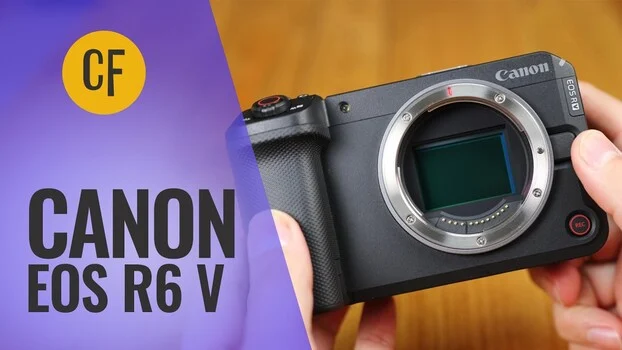
The Canon EOS R6 V, Canon’s inaugural full-frame V-series hybrid camera, has been officially released, carrying a body-only price tag of $2,500. Positioned specifically for video makers who nonetheless require robust still imaging capabilities, this new entrant navigates a highly competitive segment of the market where purchasing decisions represent significant professional commitments. Its introduction signifies a strategic evolution in Canon’s mirrorless lineup, aiming to capture the burgeoning segment of content creators who demand advanced video features without entirely forsaking high-quality photographic potential.
A New Breed: Canon’s V-Series and the Hybrid Imperative
The launch of the EOS R6 V is not merely an incremental update but rather a distinct strategic move by Canon to further segment its successful EOS R mirrorless system. Historically, hybrid cameras have attempted to balance the demands of both still photography and videography, often leading to compromises in one area or the other. With the "V-series" designation, Canon appears to be explicitly acknowledging and catering to a video-first workflow, while retaining core photographic competencies derived from its established R6 lineage. This approach addresses a growing demographic of professional and prosumer users—filmmakers, documentarians, vloggers, and multimedia journalists—who increasingly require cameras optimized for moving images, yet still value the ability to capture high-resolution stills for supporting content or alternative deliverables.
The EOS R6 V can be conceptually understood as a specialized variant derived from the Canon EOS R6 Mark III platform, a hypothetical next-generation iteration building upon the highly regarded EOS R6 and R6 Mark II. Independent reviewer Christopher Frost, in a comprehensive hands-on video analysis, described the camera as fundamentally "stripped of its mechanical shutter and viewfinder," and subsequently "rebuilt with video-specific features layered in." This design philosophy points towards a deliberate engineering choice to optimize for video performance, potentially reducing cost, complexity, and weight associated with traditional still-centric components, while enhancing elements crucial for extended video capture. The absence of a mechanical shutter, for instance, simplifies the camera’s internal mechanism, reduces potential points of failure, and can contribute to a quieter, more durable operation, especially in high-frame-rate video modes. The integrated active cooling fan is perhaps the most salient indicator of this video-first design, directly addressing the critical issue of overheating that has plagued many high-resolution, internal-recording mirrorless cameras in recent years.
Engineering for the Videographer: Core Specifications and Design Philosophy
At the heart of the EOS R6 V lies a 32-megapixel full-frame sensor, a significant upgrade in resolution compared to the 20.1MP sensor in the original R6 and the 24.2MP sensor in the R6 Mark II. This sensor not only powers the capture of detailed raw still images but also drives the camera’s headline video feature: 7K open gate recording at up to 60 frames per second (fps) in raw format. "Open gate" recording utilizes the full width and height of the sensor, providing maximum resolution and flexibility for post-production cropping, reframing, and stabilization. This capability positions the R6 V as a formidable tool for cinematographers seeking high-fidelity footage for demanding productions.
Crucially, the aforementioned internal active cooling fan is a game-changer for sustained high-resolution video recording. Frost’s review highlights that this fan enables the R6 V to maintain continuous 7K footage capture for over two hours without encountering overheating issues—a performance metric that sets it apart from many competitors and even some of Canon’s own previous offerings. The ability to shoot in Canon Log 2, a highly flexible gamma curve, further enhances the camera’s professional appeal, allowing users to extract approximately 15 stops of dynamic range from their footage. This extensive dynamic range is vital for preserving detail in both highlights and shadows, offering immense latitude for color grading and post-production manipulation, ensuring cinematic quality and creative control.
Beyond its internal processing, the EOS R6 V boasts a suite of physical design elements tailored for the professional video shooter. The camera includes a side-mounted tripod socket, a thoughtful ergonomic addition that facilitates vertical video shooting without requiring external L-brackets or complex rigging, streamlining workflows for social media content creation and other vertical-first platforms. Twelve customizable buttons provide extensive user control over various functions, allowing operators to quickly adapt the camera to specific shooting scenarios. A front-facing tally lamp, a standard feature in broadcast and cinema cameras, offers clear visual indication when the camera is recording, benefiting both the operator and on-screen talent. A second, conveniently placed record button further enhances operational flexibility. The inclusion of a zoom rocker lever, compatible with Canon’s power zoom lenses such as the RF 20-50mm f/4 L, simplifies zoom control and allows for smooth, precise adjustments during video capture, a feature traditionally found on dedicated cinema cameras.
Dual-Slot Efficiency: Storage and Power Management
Memory card slots on the EOS R6 V feature a hybrid configuration, pairing a CFexpress Type B slot with an SD card slot. This combination optimizes for both speed and versatility. CFexpress Type B cards are essential for handling the immense data rates generated by 7K raw video recording, ensuring consistent performance and preventing dropped frames. The SD card slot, while slower, provides a cost-effective solution for less demanding footage or for simultaneous proxy recording. The camera’s capability to record a 2K proxy file to the SD card concurrently with 7K open gate footage to CFexpress is a significant workflow enhancement. Proxy files are lower-resolution, lower-bitrate versions of the original footage, much easier to edit on less powerful systems, saving considerable time and resources in post-production.
Power management is another critical aspect addressed in the R6 V’s design. The camera utilizes Canon’s newer LP-E6P battery. Frost’s review notes a specific detail regarding battery compatibility: users employing the older LP-E6NH battery will experience limitations, specifically losing access to 40 fps continuous still shooting and the innovative pre-capture mode. This emphasizes the importance of using the latest battery technology to unlock the camera’s full performance potential, particularly for high-speed still photography. The LP-E6P battery likely provides more stable power delivery or higher burst current required for these demanding modes, indicating Canon’s optimization efforts.
Still Image Prowess: Bridging the Gap from Video Focus
Despite its pronounced video-centric design, the EOS R6 V does not neglect its still imaging capabilities. The 32-megapixel sensor delivers raw files that Frost found to be "sharp and detailed with clean Canon color rendition and no visible moiré." This high resolution offers ample cropping flexibility and ensures excellent print quality, catering to users who require images for promotional materials, social media, or archival purposes alongside their video projects. Noise performance is well-controlled up to ISO 1600, maintaining image integrity in moderately low light. ISO 3200 and 6400 are deemed "usable in a pinch," providing flexibility in challenging lighting conditions, though Frost cautions that ISO 12,800 and above begin to show significant degradation, a common characteristic for many full-frame sensors pushing these sensitivities.
Dynamic range for stills is also strong, with raw files demonstrating the ability to recover significant detail from near-black shadows, offering photographers considerable latitude for post-processing adjustments and correcting exposure errors. The autofocus system on the R6 V is Canon’s current top-tier implementation, inheriting capabilities from flagship models like the EOS R3 and R5. This advanced system features comprehensive subject recognition and tracking, capable of identifying and following humans, animals, and vehicles with impressive accuracy and tenacity. The inclusion of a pre-capture mode for stills—which records images up to half a second before the shutter button is fully pressed—is particularly valuable for capturing fleeting moments in sports, wildlife, or fast-paced events, underscoring the camera’s hybrid utility.
Navigating Video Performance: Strengths, Limitations, and Future Prospects
While the 7K open gate footage stands out for its quality, particularly at high ISOs where it retains commendable detail and low noise, Frost’s review also delves into the nuances of other video modes. The 4K 120p and 2K 180p modes, while offering impressive slow-motion capabilities, do exhibit "meaningful quality trade-offs." These trade-offs, often involving a reduction in sharpness, increased noise, or aliasing artifacts, are common in high-frame-rate modes across many cameras due to increased processing demands and potential line-skipping or pixel-binning strategies. Frost directly addresses these with test footage, providing valuable insight for potential buyers.
Other identified limitations include a "moderate rolling shutter presence" in open gate mode. Rolling shutter is an artifact where fast-moving subjects or quick camera pans can cause straight lines to appear skewed or wobbly, a common issue with CMOS sensors that read data sequentially rather than globally. While moderate, this is a factor videographers must consider for specific types of fast-action or handheld work. Frost also flags an ergonomic concern: a rear control dial that is "prone to accidental presses," potentially leading to unintended setting changes during operation. Finally, the camera’s initial release lacks flash compatibility, a notable omission for a hybrid camera. However, Canon has acknowledged this and "confirmed a firmware fix is coming," indicating their commitment to addressing early user feedback and enhancing the camera’s versatility.
Competitive Landscape: The R6 V in a Crowded Arena
The EOS R6 V enters a hotly contested market segment populated by both traditional mirrorless cameras with strong video features and compact cinema cameras. Christopher Frost draws a direct comparison between the R6 V and Canon’s own EOS C50 cinema camera, breaking down their differences in features, size, and price. This comparison is invaluable for professionals deliberating between a highly capable hybrid and a dedicated cinema camera, as it highlights the specific advantages and trade-offs of each. The R6 V’s $2,500 price point positions it competitively against offerings like the Sony FX3 (often considered a video-centric Alpha series camera), the Panasonic Lumix S5IIX (known for its robust video features), and the Nikon Z8 (a high-resolution hybrid).
Within Canon’s own ecosystem, the R6 V occupies a unique niche. It stands apart from the R5, which offers 8K internal recording but lacks the R6 V’s dedicated cooling system and video-centric physical controls, and the R6 Mark II, which is a more balanced stills/video hybrid. It also differentiates itself from the higher-tier EOS C70, which is a full-fledged cinema camera with more advanced professional I/O and features, and the more compact C50. The R6 V appears to be designed to bridge the gap between Canon’s advanced mirrorless R-series and its more accessible Cinema EOS line, offering a full-frame sensor and raw internal recording at a price point that is significantly more approachable than most dedicated cinema cameras.
Market Impact and Strategic Implications for Canon
The introduction of the EOS R6 V underscores a significant shift in the camera market, where the lines between stills and video cameras are increasingly blurring, driven by the pervasive demand for high-quality video content across all platforms. Canon’s decision to launch a "V-series" product indicates a clear recognition of this trend and a strategic effort to cater to the specific needs of video creators, a demographic that has shown strong growth and a willingness to invest in specialized tools.
The R6 V’s emphasis on sustained 7K raw internal recording with active cooling sets a new benchmark for hybrid cameras at its price point. This feature alone could sway many professionals who have been frustrated by overheating issues in other high-resolution mirrorless cameras. Its blend of advanced video capabilities, robust still image quality, and thoughtful ergonomic design positions it as a compelling option for independent filmmakers, documentary creators, and high-end content producers. Industry analysts suggest that this targeted approach could help Canon strengthen its foothold in the professional video market, potentially drawing users who might otherwise consider competitors like Sony’s FX line or Blackmagic Design’s cinema cameras.
Furthermore, the R6 V’s existence hints at Canon’s future product development strategy. It suggests that future R-series cameras might also see specialized "V" variants, or that core video-centric features like active cooling could become more common across the lineup. This focused innovation allows Canon to address specific market demands without forcing all features into a single, potentially compromised, flagship model. By offering distinct tools for distinct workflows, Canon aims to broaden its appeal and solidify its ecosystem for a diverse range of visual storytellers.
Conclusion: A Focused Tool for the Modern Creator
The Canon EOS R6 V represents a pivotal development in the hybrid camera landscape. By shedding traditional still-centric elements like the mechanical shutter and optical viewfinder in favor of dedicated video enhancements such as active cooling, 7K open gate raw recording, and ergonomically optimized controls, Canon has delivered a highly specialized tool. Its $2,500 price point makes advanced cinematic capabilities more accessible to a wider professional audience, while its strong still image performance ensures it remains a versatile option for multimedia production. While minor limitations exist, such as rolling shutter and initial flash incompatibility, Canon’s proactive approach to firmware updates indicates a commitment to refining the user experience. For video makers making a serious commitment to their craft, the EOS R6 V offers a compelling and future-forward solution designed to meet the rigorous demands of modern content creation.
