
 By admin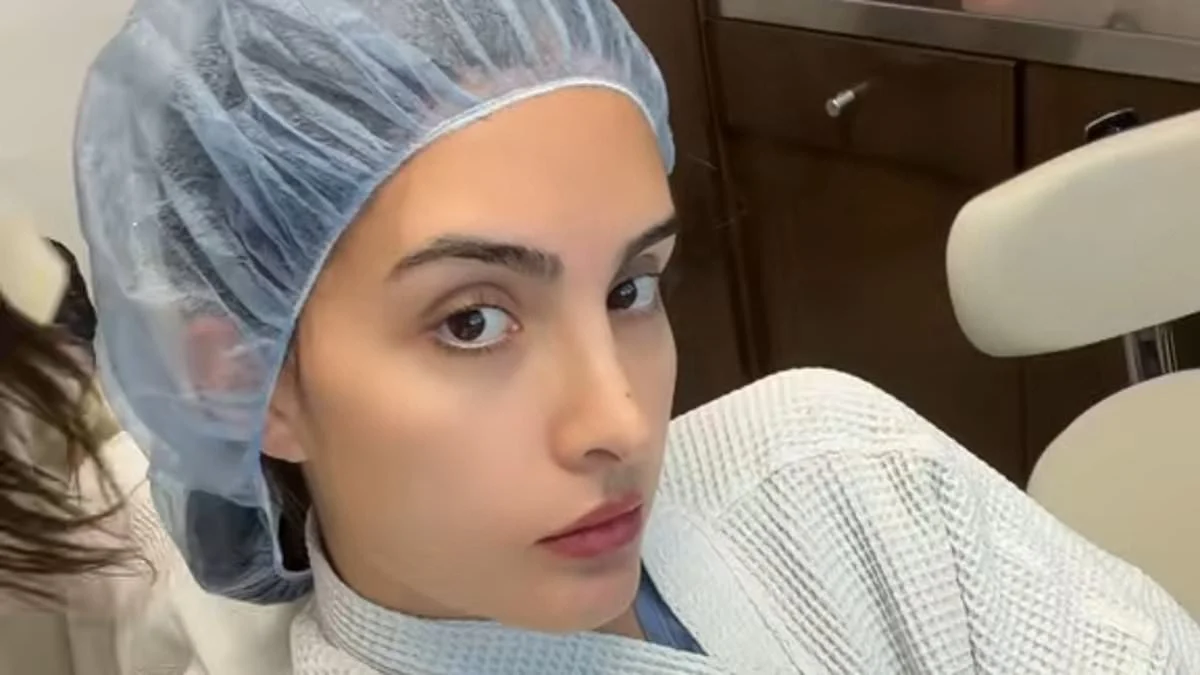
Sophia Umansky, the 26-year-old daughter of "The Real Housewives of Beverly Hills" star Kyle Richards and prominent real estate mogul Mauricio Umansky, has recently undergone a surgical breast lift to address physical changes resulting from significant weight fluctuations. The social media influencer and former real estate staffer documented the surgical journey across her digital platforms, attributing the necessity of the procedure to the side effects of Mounjaro, a medication primarily prescribed for Type 2 diabetes that has gained widespread notoriety for its off-label use in weight management.
The procedure, performed by board-certified plastic surgeon Dr. Steven Teitelbaum in Santa Monica, California, marks a significant moment of transparency for the Umansky-Richards family, who have frequently utilized their public platforms to discuss personal health and aesthetic choices. Umansky’s decision to undergo the surgery followed a year-long period of weight instability, a common occurrence for individuals utilizing GLP-1 (glucagon-like peptide-1) receptor agonists.
Clinical Rationale and Procedural Overview
The primary motivation behind Umansky’s surgery was the loss of skin elasticity and breast volume, which she described as "hanging real low" following a period of rapid weight loss and subsequent stabilization. In clinical terms, rapid weight loss—especially that induced by pharmacological interventions like tirzepatide (the active ingredient in Mounjaro)—can lead to ptosis, a condition where the skin loses its ability to retract around diminished fat deposits, resulting in a sagging appearance.
Umansky opted for a mastopexy, commonly known as a breast lift, rather than a traditional augmentation involving saline or silicone implants. To restore lost volume in the upper pole of the breast, Dr. Teitelbaum performed an autologous fat transfer. This technique involves harvesting adipose tissue from one area of the patient’s body—in this case, Umansky’s hips—and injecting it into the breast tissue.
"I’m just getting a lift. I’m not getting any implants or anything," Umansky informed her followers via TikTok. She further clarified the surgeon’s strategy, noting that while she was satisfied with the appearance of her hips, the excess fat in that region provided a natural resource to enhance breast volume without the introduction of foreign materials. This "natural" approach to augmentation is increasingly popular among younger demographics who seek to avoid the long-term maintenance and potential complications associated with breast implants.
The Role of Mounjaro in Aesthetic Trends
The context of Umansky’s surgery is deeply rooted in the current pharmacological landscape of Hollywood. Mounjaro, an FDA-approved medication for the treatment of Type 2 diabetes, has become a cornerstone of the "weight loss drug" phenomenon. Unlike Ozempic and Wegovy, which only target GLP-1 receptors, Mounjaro (tirzepatide) also targets GIP (glucose-dependent insulinotropic polypeptide) receptors, often leading to even more pronounced weight loss results.
Umansky’s transparency regarding her year-long use of the drug highlights a growing trend of "Ozempic Body" or "Mounjaro Body" corrections in the plastic surgery industry. When patients lose 15% to 25% of their body weight in a short timeframe, the skin often lacks the collagen density to bounce back. This has led to a surge in demand for "body contouring" procedures, including tummy tucks, arm lifts, and mastopexies.
In her public statements, Umansky addressed the criticism surrounding her use of the medication. "People who are telling me that I don’t need to be on it, they don’t know what they’re talking about. They’re not doctors," she stated in an interview with People magazine. She emphasized the importance of honesty in the influencer sphere, suggesting that being open about her medical and surgical journey is preferable to maintaining a facade of "natural" results.
Chronology of the Procedure and Family Involvement
The timeline of Umansky’s transformation began in early 2024, following a year of fluctuating weight on Mounjaro. By mid-2025, after transitioning from her role at her father’s real estate firm, The Agency, to a full-time career in content creation, Umansky decided to address the aesthetic consequences of her weight loss.
The surgical day was documented with the assistance of her mother, Kyle Richards. Richards, who has been open about her own cosmetic procedures—including a breast reduction performed by Dr. Teitelbaum in 2022—acted as a primary caregiver and advocate during the process. In video clips shared with fans, Richards was seen helping her daughter prepare for the operation at the Santa Monica clinic.
Richards’ endorsement of Dr. Teitelbaum was a decisive factor in the choice of surgeon. "I would not trust anyone else to do the surgery on my child," Richards remarked, emphasizing the importance of board certification and a proven track record in corrective aesthetic surgery.
In an unusual move to maximize her recovery time, Umansky also underwent "lip blushing" simultaneously with her breast lift. Lip blushing is a semi-permanent cosmetic tattooing technique that enhances the natural color and shape of the lips. Umansky noted that because the lip procedure involves a period of scabbing and peeling, it made logistical sense to recover from both the surgery and the tattoo at the same time.
Public Reaction and the Ethics of Influence
The announcement of the surgery sparked a polarized response on social media. While many followers praised Umansky for her candor regarding the realities of weight loss and cosmetic intervention, others voiced concerns over the message such procedures send to younger audiences. Critics described the decision as "insane and sad" for a woman in her mid-20s, arguing that she was already "gorgeous" without surgical intervention.
However, the trend toward "radical transparency" in the influencer community suggests a shift in how cosmetic surgery is consumed by the public. By documenting the "before," the "why," and the "how," influencers like Umansky are moving away from the "perfect" image and toward a more clinical, transactional view of beauty.
From a psychological perspective, Umansky stated that the goal of the surgery was self-confidence. "I know getting this done will make me so much more confident in my body and that’s always the goal obviously," she shared. This sentiment reflects a broader societal shift where cosmetic surgery is framed as a tool for mental well-being and bodily autonomy rather than merely a pursuit of vanity.
Broader Implications for the Cosmetic Industry
The case of Sophia Umansky serves as a high-profile example of a new era in plastic surgery: the "post-GLP-1" correction era. As medications like Mounjaro and Ozempic become more accessible, the plastic surgery industry is bracing for a sustained increase in demand for skin-tightening and volume-restoration procedures.
Data from the American Society of Plastic Surgeons (ASPS) suggests that while traditional augmentations remain popular, there is a rising interest in "hybrid" procedures that combine lifts with fat grafting. Umansky’s choice to eschew implants in favor of her own adipose tissue aligns with a broader consumer preference for "biocompatible" enhancements.
Furthermore, the involvement of reality television personalities in these medical narratives continues to drive consumer behavior. The "Richards-Umansky effect" in real estate and fashion now extends into the medical spa and surgical suite. When a high-profile family endorses a specific surgeon or a specific medication, it often results in a measurable "halo effect" for those brands and practitioners.
Analysis of the "Honesty" Narrative
Sophia Umansky’s insistence on "honesty" regarding her medical choices marks a departure from the traditional Hollywood "omertà" regarding plastic surgery and weight loss. For decades, celebrities attributed dramatic physical changes to "drinking water" or "yoga." The new generation of influencers, perhaps emboldened by the investigative nature of social media sleuths, appears to find more social capital in being "real" about their "fake" enhancements.
This transparency, however, carries its own set of risks. By normalizing the cycle of "medication-induced weight loss followed by surgical correction," influencers may inadvertently set a standard of beauty that is only achievable through significant financial investment and medical intervention. At 26, Umansky’s journey highlights the lowering age at which individuals are engaging with complex medical and surgical "stacks" to maintain a specific aesthetic.
In conclusion, Sophia Umansky’s recent breast lift is more than a personal health update; it is a reflection of the intersection between modern pharmacology, aesthetic surgery, and the digital economy of influence. Supported by her family and documented for millions, her procedure underscores the evolving relationship between the public and the medical means of self-transformation. As she enters her recovery phase, the conversation she has sparked regarding Mounjaro, skin elasticity, and the ethics of transparency continues to resonate across social and traditional media platforms.
