
 By admin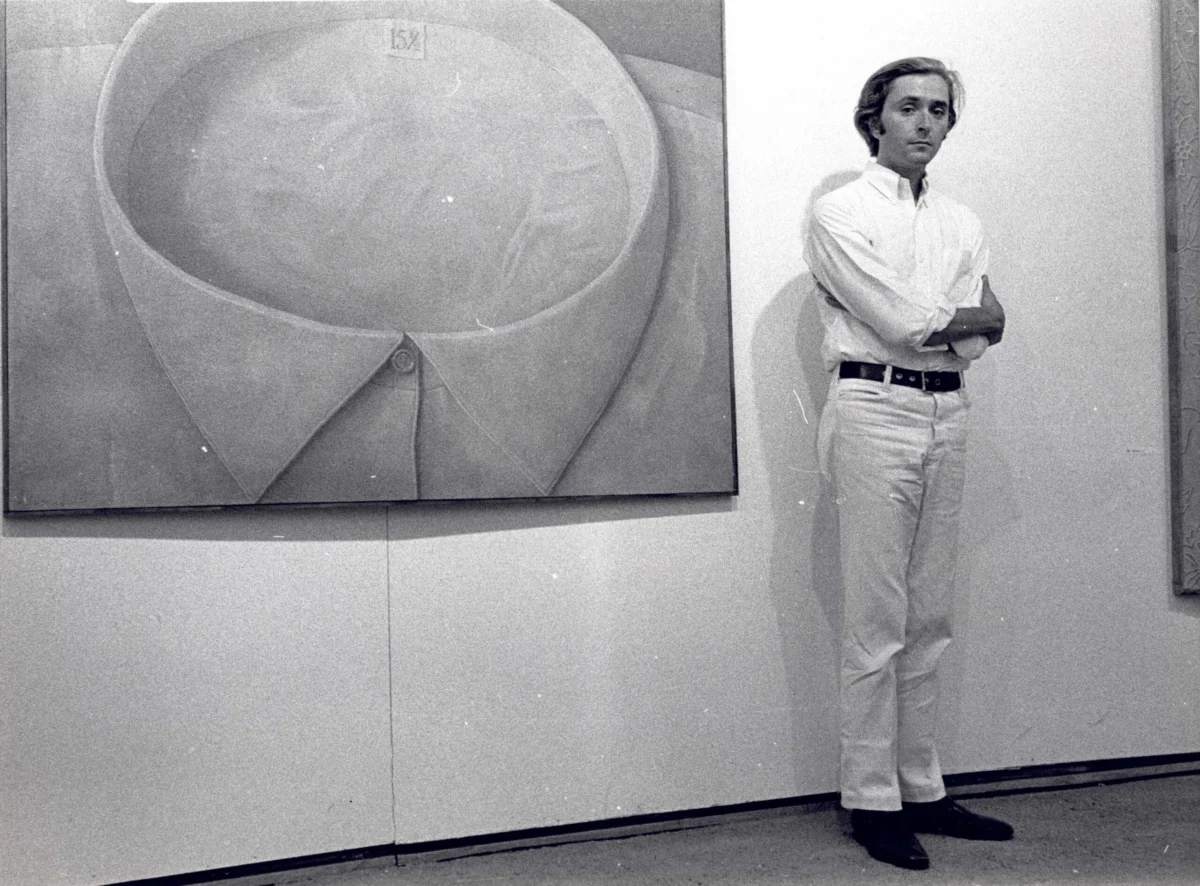
New York City’s art scene is currently host to a rare and compelling survey, "The Adventure of Domenico Gnoli," at Lévy Gorvy Dayan, marking the largest American exhibition of the Italian artist’s oeuvre since 1969. This meticulously curated show offers an immersive journey into the enigmatic world of Domenico Gnoli, an artist whose tragically short life (1933-1970) yielded a profound and singular body of work that continues to captivate and challenge perceptions. Gnoli’s art, characterized by its hyperrealist magnification of mundane details, invites viewers into a meditative space where the familiar becomes monumental, and the ordinary is imbued with extraordinary psychological depth. The exhibition, running through May 23, is not merely a display of paintings but a comprehensive re-evaluation of an artist whose influence subtly permeates contemporary art, even as his direct recognition in the United States has long been overdue.
The Art of Magnified Mundanity: Gnoli’s Singular Vision
At the heart of Gnoli’s distinctive style lies an almost obsessive focus on the overlooked minutiae of everyday life. Visitors to the exhibition are immediately confronted with this phenomenon, perhaps most strikingly by works such as Red Tie Knot (1969). Initially, the viewer might grapple with the abstract quality of the five-foot square canvas, struggling to identify the subject. It is only upon stepping back, gaining distance from the intensely rendered surface, that the image resolves into its true form: a tightly cropped, cherry-red tie knot, punched in with such precision that its ribbed fabric takes on a sculptural presence. This initial perceptual disorientation, followed by a sudden revelation, is a signature "trick" of Gnoli’s, a deliberate trompe-l’oeil effect that compels a deeper engagement with the canvas.

Gnoli’s technique, often involving a meticulous application of paint to create rhythmic, almost three-dimensional textures, draws comparisons to the Korean artist Park Seo-Bo’s Ecriture series, where repeated pencil lines carve into wet surfaces. This sculptural quality, achieved through paint and an inventive use of materials, elevates his subjects beyond mere representation. His works frequently depict fragments of clothing—zippers, buttons, collars, the backs of shoes, or even sections of hair—isolated and magnified to an imposing scale. This "isolation of the detail," as gallerist Amalia Dayan notes, pushes the boundaries of representation, touching on both abstraction and minimalism through its reductive precision.
Beyond technique, Gnoli’s artistic philosophy centered on finding "the magic of [the object’s] presence." He once stated, "My themes come from the world around me, familiar situations, everyday life; because I never actively mediate against the object, I experience the magic of its presence." This approach aligns him with certain tenets of Surrealism, where ordinary objects are dislocated from their contexts to reveal an uncanny reality, and Pop Art, with its embrace of consumer culture and everyday imagery. However, Gnoli’s work possesses a unique gravitas, often lacking the ironic detachment of Pop or the dreamlike narratives of pure Surrealism. Instead, his hyper-focused gaze imbues these commonplace items with a quiet monumentality and a profound psychological charge, hinting at the human presence that once animated them.
A Storied Life: The Brief but Brilliant Trajectory of Domenico Gnoli
Born in Rome in 1933 into a family steeped in culture and the arts, Domenico Gnoli’s destiny seemed intertwined with creative expression from the outset. His mother was a ceramicist, his father an esteemed museum curator and art historian, and his namesake grandfather a celebrated poet and friend of literary giants like François-René de Chateaubriand. This rich lineage provided a fertile ground for Gnoli’s multifaceted talents, which initially found outlets beyond painting. He began his career as a highly successful illustrator for prominent magazines, including Sports Illustrated and Life, demonstrating an early mastery of precision and narrative economy. This experience undoubtedly honed his ability to distill complex forms into striking, impactful images—a skill that would later define his painting. Concurrently, he excelled as a costume and set designer for theatre and opera, a pursuit that instilled in him an acute awareness of fabric, texture, and the dramatic potential of sartorial details, themes that would become central to his mature artistic output.
.%2520Private%2520Collection%2C%2520courtesy%2520of%2520HomeArt.%2520courtesy%2520of%2520Le%25CC%2581vy%2520Gorvy%2520Dayan%2C%2520New%2520York%2520%25C2%25A9%25202026%2520Artists%2520Rights%2520Society%2520(ARS)%2C%2520New%2520York_SIAE%2C%2520Rome.jpg)
The late 1950s and early 1960s saw Gnoli’s career take a pivotal turn towards painting, a shift significantly influenced by his time in New York. As his widow, Yannick Vu, a French-Vietnamese artist herself and daughter of the eminent painter Vu Cao Dam, emphasizes, New York was "vital" for Gnoli. It was here, during a vibrant period of artistic innovation, that he believed an artist could truly develop. His first marriage to model Luisa Gilardenghi provided an entrée into the city’s intellectual and creative circles, introducing him to luminaries like photographer Richard Avedon and editor Bob Silvers.
Crucially, it was in New York that Gnoli forged a lasting friendship with Diana Vreeland, the legendary Vogue editor-in-chief and Met Costume Institute consultant. Vreeland became a fervent admirer and collector of his work, recognizing the unique vision he brought to fashion and the human form. Her support was instrumental, culminating in Gnoli’s seminal solo presentation at the Sidney Janis Gallery in 1969, an event Vu describes as a "consecration." Vreeland’s endorsement further amplified his visibility, with photographs from the Janis opening featured in the "People Are Talking About…" section of Vogue‘s January 15, 1970 issue, cementing his place in the cultural zeitgeist of the era.
Following a divorce, Gnoli moved to Paris in 1962 on the advice of his friend Ben Jakober, a fellow artist. It was in France that he met and married Yannick Vu in 1965. The couple eventually settled for significant periods in Majorca, the Spanish island that proved to be a crucible for Gnoli’s most significant artistic developments. "Domenico found the freedom to really express himself there," Vu recounts. It was in Majorca that he innovated his distinctive technique of blending local beach sand with vinyl glue and pigments. This unique medium imparted a rustic, fresco-like texture to his canvases, a tangible connection to the earth and a further layer of sensory engagement for the viewer. This grainy texture is notably evident in works like Il grand letto azzurro (1965), where close inspection of the teal bedspread reveals a subtle tan floral pattern intricately formed from unpigmented sand.

Tragically, Gnoli’s burgeoning career was cut short by cancer in 1970, at the age of 36. His untimely death left behind a relatively compact but incredibly impactful oeuvre, consisting of only 160 to 170 mature paintings. This scarcity, coupled with the profound impact of his work, has contributed to what Amalia Dayan terms "the cult of Gnoli."
"The Adventure of Domenico Gnoli": A Curatorial Triumph
The exhibition at Lévy Gorvy Dayan is a testament to the enduring appeal and scholarly significance of Domenico Gnoli’s work. Presenting 17 exemplary paintings from the height of his career (1965-1969), alongside rarely seen drawings, etchings, notebooks, and ephemera, the show offers an unparalleled insight into his creative process. The monumental task of assembling these works cannot be overstated, given that most of Gnoli’s paintings reside in private collections, with owners famously "very reluctant to let his works go, even as loans," as Amalia Dayan tells Vogue. This challenge necessitated close collaboration with both the Domenico Gnoli Archives in Majorca, spearheaded by Yannick Vu and her current husband Ben Jakober (Gnoli’s close friend), and the Archivio Domenico Gnoli in Rome, led by the artist’s sister, Mimì Gnoli, and the Livia Polidoro-Gnoli Archive. The exhibition, therefore, represents a significant achievement in art historical scholarship and curatorial dedication, offering a rare opportunity for public engagement with these elusive masterpieces.
The gallery space is thoughtfully organized to guide visitors through the various facets of Gnoli’s practice. On display are his characteristic sartorial images, such as Striped Trousers (1969) and Red Dress Collar (1969), which continue to resonate with contemporary artists like Issy Wood, known for her grayscale paintings of domestic objects and clothing. Another striking example, Curly Red Hair (1969), with its undulating locks, finds a modern echo in the portraits of young women by Anna Weyant, who openly cites Gnoli as a favorite painter. Weyant articulates Gnoli’s enduring appeal, praising his "restraint—everything feels clear and deliberate—and his simplified, sculpted forms with subtle distortions." She adds, "He had a brilliant way of turning mundane and familiar objects and scenes into magnetic and psychologically charged images," also appreciating the subtle humor found in his work, particularly in an upstairs room dedicated to his drawings, where a sketch depicts emotive visages covering each breast.

The exhibition also delves into Gnoli’s more conceptual explorations. A room on the first floor features works that stretch the boundaries of perception, including a trompe-l’oeil painting of the back of a canvas, a vivid yellow armchair, a brick-wall corner, and the iconic Apple (1968). Dayan highlights Apple as a personal favorite, noting its rich symbolism: "It touches on the history of still life, Surrealism, femininity, and womanhood without having a figure of a woman. It’s got sexuality, it’s morbid—it has it all." This work exemplifies Gnoli’s ability to imbue inanimate objects with profound allegorical meaning, inviting multiple layers of interpretation.
Another compelling section of the exhibition explores Gnoli’s preoccupation with "presence and absence" through his bed paintings. An upstairs room showcases six of these works, most of which deliberately omit human figures. Dayan describes the experience of this room as "spiritual," reflecting on the universal significance of the bed as a site for life’s most fundamental experiences: birth, love, and death. This series, with its profound yet understated emotional resonance, served as a key inspiration for Maurizio Cattelan’s powerful installation All (2007), which features nine marble sculptures resembling dead bodies covered by sheets, underscoring Gnoli’s lasting impact on conceptual art.
The final space in the exhibition returns to Gnoli’s fascination with clothing, a natural extension of his background in costume design and his exposure to the fashionable circles of his first wife. Pieces like the crisp white collar and the maroon Purple Bust (1969) showcase his masterful command of color and texture, transforming fabric studies into objects of monastic contemplation. Yannick Vu remembers Gnoli as "a very elegant person with a magnetic personality, and he liked to dress well." Remarkably, Gnoli painted these intricate details not from life, but from his "fabulous visual memory," a testament to his "incredible eyes" and his unique ability to perceive and render details that eluded others.
.%2520Private%2520Collection%2C%2520courtesy%2520of%2520Le%25CC%2581vy%2520Gorvy%2520Dayan%2C%2520New%2520York%2520%25C2%25A9%25202026%2520Artists%2520Rights%2520Society%2520(ARS)%2C%2520New%2520York_SIAE%2C%2520Romejpg.jpg)
Legacy and Influence: A Timeless Resonance
The Lévy Gorvy Dayan exhibition arrives on the heels of the critically acclaimed Fondazione Prada retrospective in Milan (2021-22), which featured over 100 paintings and an equal number of drawings, championed by collectors Miuccia Prada and Patrizio Bertelli. This earlier show significantly bolstered Gnoli’s profile in Europe, and the New York exhibition is poised to achieve similar recognition in the United States.
Gnoli’s work, created in the crucible of the 1960s, transcends its historical context, demonstrating a timeless appeal that continues to resonate with contemporary audiences and artists alike. His singular style, which masterfully blends the precision of hyperrealism with the conceptual depth of Surrealism and the formal boldness of Pop Art, positions him as a unique figure in 20th-century art history. The "cult of Gnoli" is not just about the scarcity of his works but also about the profound, almost addictive, quality of engagement they provoke. Once viewers "delve in, and… understand his complex universe, it becomes an obsession," as Amalia Dayan aptly puts it.
The implications of this exhibition are significant. For the art market, it reinforces the enduring value of unique artistic voices and the potential for re-evaluation of overlooked masters. For art history, it solidifies Gnoli’s place as a pivotal figure whose work anticipated and influenced later movements and artists, bridging gaps between seemingly disparate aesthetic philosophies. Amalia Dayan’s ambition for a proper museum show in America is well-founded, as an exhibition of this caliber undoubtedly warrants a broader institutional platform to fully explore and disseminate Gnoli’s profound legacy.

"The Adventure of Domenico Gnoli" is more than just an art exhibition; it is an invitation to slow down, to observe, and to rediscover the extraordinary hidden within the ordinary. Through Gnoli’s magnified lens, a tie knot becomes a sculpture, a bed becomes a stage for life’s dramas, and an apple embodies a universe of meaning. Thanks to Lévy Gorvy Dayan’s spellbinding presentation, the "cult of Gnoli" is certainly poised to gain a fervent new following among New Yorkers and beyond, ensuring that this singular artist’s adventure continues to unfold.
